The Great Secret of Magick Part 1: Science, Psudoscience and Occult Science

Happy new year! I wanted to start 2021 off with a experience from a ritual, as is classic for this blog. Then I thought perhaps there are other, more pressing matters in people’s lives. But now, intuition had guided me to write about something I consider to be of great importance to all magicians in this time. This is going to be either a 3 or 4 part series of articles describing, to the best of my ability, the most important secret of Magick and the Occult. The actual key to manifestation. Before I can get to the matter itself, I shall give about 2-3 posts of background material, of which this is the first.

So, let’s get on with it, shall we? Keep an open mind, and feel free to take your time to understand everything. Remember, the Internet is your friend when it comes to terms and concepts that you aren’t familiar with. I try explain things as completely as possible, but people have different levels of familiarity with various subject matters. Knowledge is power, and the growth of knowledge, is the growth of power.

What Exactly is Science

Some of you might scoff at the title. Allow me to explain.

These days, many New Agers, Neo-Pagans and even full fledged occultists create various theories about spiritual and occult experiences. This is nothing new, since ALL science emerged as the result of people trying to explain the Unknown.

But then, we have materialists, skeptics, and sometimes scientists dismiss many of these explanations as “pseudo-science”, due to lack of peer reviewed evidence and the inability to replicate results. While they may be right, in the end they are simply motivated by their own biases. Then the new agers angrily insist that it is “science” after all, because there is an established cause and effect, as well as physical evidence. They are also largely motivated by their beliefs, and claim this quite proudly, and then the other side insists that all beliefs are nonsense, and they they “believe” in science (an idiotic idea).

Many of you in the West are likely familiar with this, due to the hard line between science and religion in Abrahamic/ Atheistic nations, as well as the deep divides between spiritual, religious and secular ways of thinking.

Secondly, you may have heard about people in ancient, classical and medieval times who came up with some ideas long before modern scientists, such as evolution, atoms, the idea of parallel universes, planets etc
As I’m Indian, you can imagine that I’ve basically heard this argument my whole life, and I’m sure anyone in any non western country that is sufficiently ancient, especially in the Middle East, the Orient and the Mediterranean, has heard it too. For example, “why should we credit Darwin with evolution when the ancient Greeks had a similar concept”, or “why credit Dalton with atomic theory when the ancient Indians had a similar idea”, or even “why credit Einstein with quantum mechanics when the Vedas speak of the various different lokas and the supposed relativity of time?”

This has led me to realise that many, many people don’t actually understand what is meant by “science” and how something becomes a “science” in modern times. This is a problem not just when discussing the occult, but any other field. In fact, these days it seems to be a particularly important issue, where people’s opinions and ideologies are so divided that we cannot even sit down and agree upon a single set of facts, let alone debate their interpretation.

So what is science?

First off, to say that you “believe” in science is a very, very stupid statement that I hear often from atheists. I draw a clear line between “scientists” and “science cheerleaders”. Anytime I hear people angrily defending science, I usually find that they are ‘cheerleaders’, because they often aren’t up to date in their scientific knowledge, and often don’t even understand what science is. To them, “science” is like a religion. Similarly to Christian fundamentalists who think everything can be answered by the Bible, these “cheerleaders” read the basics of Newtonian physics, some biology and maybe chemistry in school, and they’ve turned these into tenets.

Whenever they encounter someone who disagrees with them, they just angrily dismiss their ideas because it contradicts what THEY think are real facts. They often use science as a shield, but usually are not scientists at all, not even having any scientific or academic training. This is the type of person who thinks Carl Jung is too “out there”. As magicians, you will most likely meet such people throughout your life. My general advice is to avoid them and not get into it, since you won’t convince them of anything, anymore than you can convince a religious zealot that the modern English Bible was not literally written by God 6000 years ago.

So, back to the question. What is science? Let’s look at the most crude, basic and easily accessible source for knowledge, Wikipedia.

Science is a systematic enterprise that builds and organizes knowledge in the form of testable explanations and predictions about the universe. 

~Some dude who writes for Wikipedia

In other words, a science means the study of things, or the expansion of human knowledge. Any field of study into some specific field is a “science”, and the sum total of this endeavor is scientific knowledge. So yes, you could say that it goes back as far as the birth of human civilisation, and even before. However, when we usually talk about Science, we are often referring to modern science.

We can draw a line between the natural curiosity of early man, the academic endeavors of ancient man, and the research conducted by modern people.

Modern science is conducted via the scientific method. A lack of understanding of what the scientific method means, is at the root of all these debates and misunderstandings by spiritualists, occultists and new agers, as also the general populations.

People often think the scientific method means providing physical evidence. This is why you have new agers insist that something is “scientific” if they have been able to provide material evidence, or at least established cause and effect. For example, claiming that a person can do telepathy because they were able to correctly predict what is present another room.

But this is wrong. There are many scientific theories, especially regarding interstellar objects, for which no physical evidence can be provided, and many areas of science where cause and effect are poorly understood or not at all, such as regarding gravity and dark matter.

Basically, people think that science involves creating a hypothesis, and then trying to prove that it exists.
However, the scientific method is the exact opposite. First, you create a hypothesis. Then, you actively try to disprove it. In other words, you test your hypothesis. If it stands up to all the scrutiny, not just by you but by others, then it becomes a theory (I’m simplifying it a lot here. Remember I’m not a scientist or researcher either, this is just my own understanding of it).
This does not mean that it is now proven. Much more evidence will be needed for that. This is why you often have different theories regarding the same thing within science, which contradict each other.

Do you understand now, why so much “research” conducted by New Agers is dismissed? This is because many New Age and alternative science theories do not follow this method of scrutiny, nor are they peer reviewed. Often, they are entirely based on one person or group trying to prove something they already believe, which in turn is often based on scriptures. This results in conformation bias. And as all of you practicing magick know, when you really want something to happen, your entire perception conspires to make it happen for you. So if you REALLY want to prove something to be true, you’ll probably succeed, at least in convincing yourself, and maybe others too.

And then, whatever the findings are, the new agers try to extrapolate very, very broad conclusions. For example, let’s say you freeze a camera and take a picture with it. This results in the appearance of “bubble” like structures around the pictures of people. New Agers take this as proof of the aura. While I personally believe in the aura, you have to remember that this doesn’t actually “prove” anything. You have proven that frozen cameras take pictures where living things appear to have a bubble around them. That is all, and all the remaining interpretations are based on belief. You cannot jump from there to “the aura is a bio-magnetic energy field generated by the heart of every living thing” so easily.

Like it or hate it, this is how the scientific method works. I’m not saying I fully agree with every aspect, nor that it is suitable to understand all of reality. But hey, it is responsible for many of our modern inventions and discoveries. It made possible things like this blog.

Opinion: In fact, I personally disagree with identifying the aura as “bio-electric” or “bio-magnetic”. Personally, I think the etheric energy which makes up the aura has no electro-magnetic basis. If it did, I should see interference with electrical appliances at the height of a particularly powerful ritual. Now, there are cases of lights going out or appliances going haywire when people do magick. I’ve seen it, others I know have seen it, and even some readers have reported this. But then again, why would it affect the lights of my building, but not my cellphone? Why isn’t it more “localised”. There’s something else going on there, something far greater which we cannot even begin to comprehend.

The Problem With Modern Science

On the other hand, while I trust in science, scientists can lie. Here, I agree with new agers. At the end of the day, scientists and academics are human beings. Like any person, they can be biased, bought over, manipulated or corrupted. You would honestly be surprised how often scientists have been bribed and threatened into suppressing information, or how often they allow their bias to cloud their pursuit of the truth. Did you know professional academics were once bribed and threatened into assuring people that smoking was safe, or that it was okay to use radium in paints, or that petroleum stored in lead barrels was not causing lead poisoning en masse? Keep in mind, how “scientific” knowledge and data were distorted during the Chernobyl incident, or how the world was lead to believe for centuries that our diets should have high carbs and low protein, and that fats and oils were the cause of obesity (when it truth it is sugar). Now Chernobyl is going to be radiated for another 120,000 years, and 40 years of high carb diets laced with artificial sweeteners have left us with soaring levels of obesity and diabetes.

After all, one of their most important goals is to secure funding for their research. In this sense, the modern scientific establishment have become nearly like the medieval Catholic Church. They are the arbiters of truth, and we are entirely beholden to them. We cannot cross check or test any of their claims ourselves, especially now that science has progressed well beyond what a person can do at home. We simply have to take them at their word, and truth that they’re telling the truth about their discoveries. We can only hope that there’s government or corporate sponsored suppression of information.

Well, would you look at THAT! The world is currently in the midst of a global pandemic that got out of control due to suppression of scientific information at an INTERNATIONAL level.

Now yes, the existence of an entire global network of scientists, all competing with one another, ensures that there’s only so far that deception can go. If a certain groups of scientists make a claim, another group from another country may be quick to dispute this. But that is precisely where we are now, and it’s actually a bigger problem. In the 21st century, the scientific landscape is littered with contradictory claims about even the most simplest of things.

I’d once heard it said that “the greatest embarrassment of modern science is that it cannot even give us simple, conclusive information on which diet is best”.

Go ahead, try to find out what is the best type of diet. Keto, carnivorous, high carb, high fat, vegan or something else? You’ll quickly realise that you can find “scientific” claims to support anything and everything you want to believe. Besides truly outlandish claims like the flat earth, you would honestly be surprised at how often we lack concise scientific knowledge on something as simple as diet, lifestyle and disease. Let us say that one scientists claims that he can prove with “evidence” that a high carb, low protein diet is great, and another says that a high protein, low carb one is great, and both claim the other is full of crap. Tell me, is this so different from medieval theologians arguing about witches, werewolves and possessions? At the end of the day, we cannot test the evidence ourselves. We are simply reliant upon the testimony of a person who has been given the authority to decide these things. And who gave them this authority?

An institution? One which seems “credible” to us, much like Catholic Church seemed “credibe” to medieval peasants. After all, the members of the Church were much more educated than the average peasant, and yet they were still routinely wrong, and more often they actively distorted facts.

Perhaps people in the future will laugh at us the way we laugh at the ignorance medieval peasants. Are we any different? Do we have much of a choice? We wonder why people in medieval Europe practiced bloodletting as a cure to illnesses. Did they not realise that it was making matters worse? Well, perhaps in the future they’ll say:

“ha ha ha, you’re telling me those primitve 21st century folk WILLINGLY created environments that made people depressed, wrongly diagnosed depression as a genetic disorder for decades, then gave them medicines that made matters worse? Were they just stupid?”.

Well maybe we are.

And let’s be totally honest. If tomorrow some crazy dude managed to create some sort of miracle cure in his garage, or find evidence of aliens, or successfully summon a demon, you think that stuff wouldn’t immediately be suppressed?

To be honest, I’m not discrediting modern science. I still believe that the scientific method is one of the best tools we have for conducting research, and so far there is no real reason to challenge it. I’m simply pointing out some issues with it, and that “scientific knowledge” isn’t as reliable as we think it is. At the end of the day, we aren’t all that different than we were in previous eras of human history. Many scientific and philosophical truths that we cling to, may simply be scoffed at and criticized, the way we criticize medieval superstitions. On the other hand, some of those medieval superstitions may turn out to be very true after all.

Scientists are regularly proven wrong about various theories and predictions they had, and this is largely thanks to the scientific method itself. If you actually follow scientific news on a daily basis, you’d be amazed how many firmly held facts are frequently shown to be untrue. Many of the facts you learned in school are probably not true anymore.

For example, did you know that water IS actually blue, and not colourless?

Ancient Modes of Science

We saw how modern science is built upon the scientific method, which began to be used only about 500 or so years ago, towards the end of the Islamic Golden Age, and became common during the European Enlightenment.

So what did people do before then? And why don’t we consider the various philosophical works of Greece, Rome, India, China and the Middle East to be “science”?

Well, you may have picked up on one word: philosophy. Science that was practiced before the scientific method is regarded as “natural philosophy”. The distinction is important, with regards to how this knowledge was gained. Starting around the time of ancient Mesopotamia and Egypt, people began to make extensive records and write books about various topics regarding the natural world. The tools used varied from time to time, but most common were logic and math, and also theology and reason in more sophisticated eras.

Science was considered a branch of Philosophy, and so the way people came up with scientific theories and concepts was through, well, philosophizing. If you’ve ever read any philosophical works, you’ll notice they do not use the scientific method. Instead, it is based on logical reasoning, discourse and insight. Basically, a person literally thinks their way to conclusions. Now, this works quite well for some branches of philosophy, such as moral or existential philosophy. Certainly, many achievements of humanity, such as art, literature, political and legal systems and yes, even the scientific method, are the product of philosophy. Secular reason and scientific method were born out of the the philosophies of Ibn al-Haythan, Rene DeCartes and John Locke.

And yet, philosophical methods were simply not good enough for a objective study of the material world. In truth, it was like an elaborate method of trial and error, based on how things seemed to be. For example, the reason why people of Ancient Europe and the Middle East believed that the Earth was the centre of the Universe was because that’s just what it looked like to them. Based on their “logic”, it made perfect sense for the Universe to be made of seven concentric rings. And you might ask, what “logic”. Well, religious logic (theology).

What annoys me when people say that quantum physics and atomic theory are mentioned in the Vedas, or that the Greeks understood evolution, or that the ancient Arabs and Persians practiced chemistry, is how often people forget how these discoveries were made.

For example, an ancient Indian Sadhu was once walking along the banks of a river. There, he saw grains of rice floating in the water, and how they would clump together. In that instant, he had a realisation that the whole world around him was also made of similar particles, which attracted to each other. He concluded that these must be like magnets, being of opposite poles. This led to the creation if Vedic atomic theory, where it was believed that all things in the Universe were made of two particles, armanu and parmanu. The Greeks also had similar conclusions, calling these particles “atomos”. And these are remarkable accurate.

But notice how this entire encounter was the result of insight. Natural philosophy was entirely dependent on such insights, followed by logical reasoning. Only exceptionally creative, intelligent and skilled people could do it, and only those who had both time, and an education, meaning the society they lived in needed to be both prosperous and progressive. If you ever ended up in a situation where such people were lacking, or suppressed (such as the European dark ages, or by things like the Indian caste system), a whole society could completely decline in it’s scientific understanding.

Besides, it really was just a case of belief. If enough people believed the natural philosopher, or couldn’t produce a counter argument, they just went with it.

This is the case with Aristotle. Many of you have probably heard of him. For someone who was consistently wrong about almost everything, he seems to be very popular. He is the one came up with the geocentric model, and the idea that planets were made of ether. You see, he was a very gifted speaker. He was so good at logical reasoning, and so confident, that most people just assumed that he knew what he was talking about. Despite being wrong, and having little evidence for his claims, it was assumed he was right because his conclusions appeared logical.

Now, let us take a hypothetical example. The ancient Hindus placed a great emphasis on purity and cleanliness. Some people claim that this was because they understood germ theory, but it’s more likely due to observation. They observed that people who stayed clean and lived in clean environments stayed disease free and lived longer. Why do you think the concept of untouchability came around?
Perhaps some day a priest observed a leather tanner coming to the temple. Perhaps this leather tanner had just finished his work, and his hands were still dirty from working with animal carcasses and skins. Perhaps, as was custom, he washed his hands and feet in the Temple basin before going inside, contaminating them. Perhaps, following this several people who used the basic or drank water from the same well fell ill and died. Maybe many such events happened.

The priest must have quickly consulted a local theologian, who drew the “logical” conclusion that leather tannery was a sinful, and impure profession, and all who were engaged in it were polluted. This led to this job being designated to the weak and ostracized members of society, and perhaps resulted in centuries of stigma against their tribes and communities, even toward those that did not work in leather tanning. This is the product of “natural philosophy”.

Logic and perception are not always true. Even the logical conclusions of gifted minds can be wrong. Yes, many of the insights they gained happened to be correct, because these are messages from the Divine, but they were also wrong very often, since not every thought the Ego has are divine messages. Often it’s just noise.

That is the fundamental difference between natural philosophy and the scientific method. In fact, in the early Enlightenment even the scientific method was reliant upon insights by gifted individuals. People like Newton and Einstein would have sudden insights that would suddenly and greatly increase human knowledge. But we cannot rely completely on such insights to develop human understanding forever. Yes, these still happen, but science now is also a profession. While the insights of brilliant individuals propel use forward from time to time, scientific research is also conducted side by side. Unlike insight, research is slow and incremental, but anyone can do it. Technically, you could study science and become a researcher in any field. You do not even need to have a very high IQ. As long as you are good at logical analysis and math, you can become a researcher and contribute to our slow and steady growth on knowledge. And even if you’re not all that good at math, there’s probably still some fields you can participate in, such as geology or archeology.

Some of you fellow magicians may feel bitter that people are overly cynical and skeptical of magick. But let me remind you, that very skepticism is what stops things like the Salem witch trials from happening. Since the scientific method places doubt and critical enquiry as the highest value, people cannot just get away with making stuff up. As far as the ordinary masses are concerned, it is better for them to disbelieve, than believe too easily. Can you imagine if tomorrow some crazy, charismatic cult leader came around and said he had a vision from Jesus and that the world would end in 3 years unless all the “heretics” were purged?

Heck, that still happens, despite such people being unable to prove anything. Think how much worse it would be if modern science was replaced with the insights, experiences and musings of gifted individuals, many of whom may not be all that benevolent.
In fact, the whole reason the witch hunts in Europe stopped was because a certain group of Dominican friars adopted skepticism over Church dogma. These friars insisted that just because someone was having strange experiences, did not mean they were a witch, and just because someone claimed to be in league with the devil, did not mean they really were. To us this may seem obvious, but thanks to this the Church was able to stop using forced confessions as evidence for devil worship.

Personally, I think the scientific method is the best toll we currently have for advancing human knowledge, at least until something better come along.

Occult Science

Now, let’s talk about matters that are important to us. What about our sacred science? And what of pseudo-science?

Personally, I think the line between pseudo-science and natural philosophy is quite blurry. You could say that pseudo-science is simply natural philosophy that came around after the scientific method. Many spiritualists, occultists and new-agers get accused of pseudo-science, largely due to the methodology. Even when they use math and logic, the lack of critical enquiry is the problem. That is to say, very rarely do people actively attempt to disprove what they have found, or get their work peer reviewed. But this isn’t all that different from ancient natural philosophy, and as we know the natural philosophers often stumbled upon truths about the Universe which were very deep, such as atomic theory, without being able to prove or understand it beyond a superficial level.

It is very difficult, even for an occultist, to say exactly how much that was given to us by our predecessors is literally true, how much is metaphor, and how much is willful distortion of secret knowledge, either to hide it or destroy it. Similarly, it is difficult to say how many non-scientific ideas present within the spiritual and occult community are true. For example, is the Aura really a bio-electric or electromagnetic field, or not? Are crystals really better at conducting magical energy, or would using plastic or metal have the same effect? In fact, what even is magical energy, and is it “energy” in the same way that the word is understood by science (i.e. kinetic energy), or is it simply a word we use for an entirely different kind of substance?

Do binaural beats truly work, or is it simply the belief in them? Do different metals have attributions to Planetary energies, or is it some totally unknown process? If all of these are true, then how do we justify the contradictions that exist within different traditions of magick?

I’m not saying that these questions have or don’t have clear answers, just posing some obvious questions that many occultists may considered.

One obvious answer would be that we cannot know for sure, and that we should subject all our findings to the scientific method. But then we run into another problem. The scientific method is built upon one single, extremely fundamental idea: that our thoughts and beliefs do not directly affect objective reality. After all, since the scientific method is based on critical enquiry, it works on the assumption that the result of any experiment will be the same regardless of the beliefs of a scientist. It is thanks to this that the scientist can actively seek to disprove something, in an attempt to prove it.

Now, all you who practice any kind of magick will see how amusing this problem is. Occult wisdom and practical experience with magick tells us that beliefs and thoughts are the SINGLE and perhaps ONLY factor that shapes and guides our reality. Objective reality is fluid, and I wonder how much it even exists. Anyone who has had spiritual experiences will know how quickly “reality” appears to shift and fall apart.

This is a major problem in uniting occult science with modern science. Modern scientific research often involves research on very subtle levels of reality, especially with fields like quantum physics, astrophysics and psychology. These are not simple and material fields where things can be easily tested and physically observed.

The result of this clash is that scientists simply disregard the occult (even though all science is and continues to be born out of delving into the occult) while occultists and spiritualists disregard science itself (even though without critical thinking we are simply left with unproven claims). Personally, for me this is a very major contradiction. I am a strong supporter of science and the scientific method, and yet I know that objective, material reality is fluid and illusory.

So, what is to be done? Well , nothing for now. For the time being, the scientific method reigns supreme. Until someone can come up with something better, we occultists should abide by it, at least publicly.

My personal approach has always been to keep my personal spiritual and occult experiences to myself. Yes, I write about them on this blog, but my approach is never to convince someone of anything, nor present any alternative frameworks to modern science. In fact, often I present them within the framework of modern science. My experiences are my own, as are my beliefs and understanding. I know what is true for me, and I know it may not be for others.

In my opinion, I suggest the same to all of you. Making claims beyond the realm of science, or trying to understand things we yet cannot is simply the Ego trying to pretend that it controls everything. And in fact, you may be wrong at times, or misunderstood by the masses, and unwillingly cause new dogmas and incorrect beliefs to persist, much like Aristotle.

The pursuit and study of Occult knowledge is a good thing, but it is kept secret for a reason. If you must share it, as I do, simply share experiences and leave it up to the reader to form their own opinions. True occult wisdom often falls within the realm of philosophy, which is far more flexible and open ended than science. Sometimes it is best to answer philosophical questions instead of forcing some sort of new scientific understanding onto others, unless you have some really ground breaking evidence.

Magickal Innovation

To end it off, I just want to say a few things regarding genuine innovation in magick.

To say that magick is opposed to science is a fallacy. As I have explained, a lot of people who talk like this don’t understand these words very well, and are strongly influenced by modern American politics. It never ceases to amaze me just how much the petty disputes among the American leadership affect and shape global culture.

Science is the study of the world. Occult simply refers to all that which is yet Unknown to humanity. Not necessarily just scientific knowledge, but also philosophical ideas and creative concepts can fall within the realm of “occult”.

Religion is something else entirely, and is not even in the same category as “science” or “history”. Religion is more like a collective set of beliefs, artforms, values, philosophies, mythologies, folktales, and histories possessed by any group of people. It is inherently linked to the culture from which it comes. I genuinely do not understand where the whole “science vs religion” thing comes from. If you think about it, it truly makes no sense. It’s like saying “music vs history”. A meaningless comparison. I suppose the correct terms would be “Theology vs Rationalism” or “Traditionalism vs Progressivism” or even “Mentalism vs Materialism”. But this would force both sides to actually have an honest discussion!

Spirituality is the development and evolution of the individual, and often within the framework of religion. After all, a set of symbols needed for spiritual growth and magick. And before the Internet, people simply HAD to rely on their own culture and religion to supply these symbols.

Spiritual development takes place when a person encounters the Unknown/ Occult. For the ancient people, this may have meant venturing into the dark forest or staring up at the sky. For us, it may mean using psychadelics or performing invocations. In the future, it may involve exploring the cosmos and understanding the nature of reality. By encountering the Unknown, the process of spiritual development is initiated (do you get it? That’s why spiritual Adepts are called ‘Initiates’. The word “initiate” means to “begin a process”. When you undergo Initiation, you are initiating this process!)

I suppose we can say magick/ yoga is simply an advanced state of spirituality. A person who is sufficiently developed spiritually, becomes able to detatch himself from the perspective of the world that he has inherited from his culture, or developed throughout his life without thinking much about it.

By doing this, the person is entirely left on their own, free to define their own reality and form an entirely unique and independent world-view. By altering their world view, they can literally alter reality according to their Will. This is true magick. (Keep this in mind, it’ll be really important in the next post)

I stated that all that is Unknown to us is “Occult”. But that word also means “Secret”, referring to the Secret knowledge held by Magicians. When magcians encounter the Unknown, they come into possessions of new understandings, ideas and information. Sometimes, they may also discover new phenomena of Nature. But revealing this to ordinary people usually leads to persecution, or worship. Often both together.

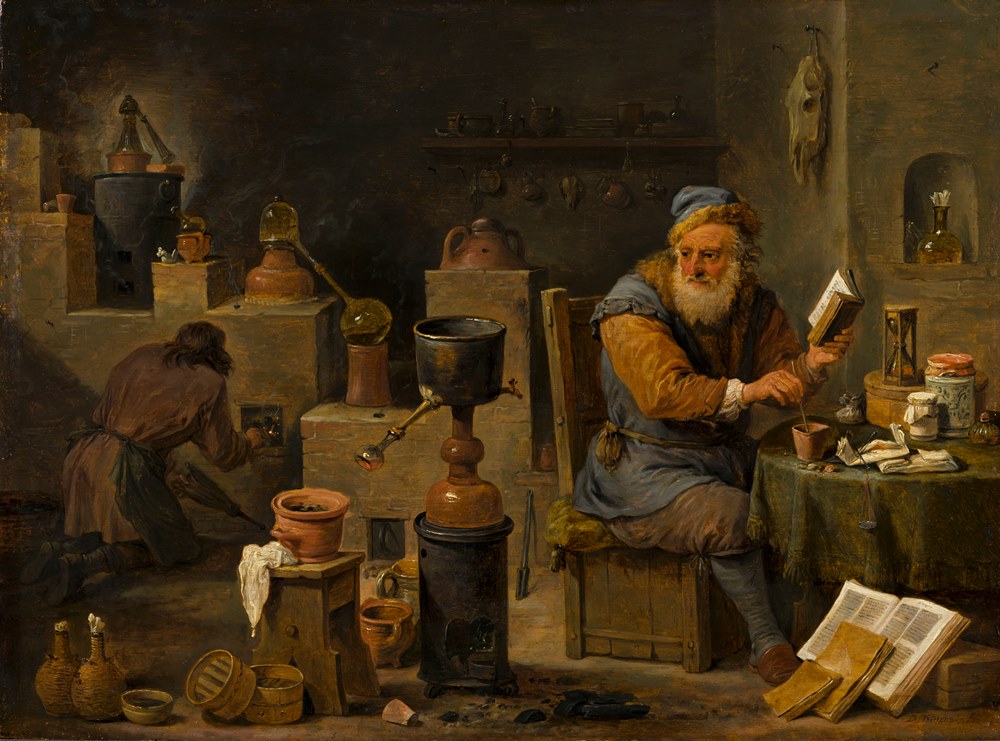
Think about the ancient alchemists. They made demonstrations of chemical processes, at a time when no one understood this. They had come into possessions of this knowledge through ancient teachings that were passed on to them, which they expanded upon. At times, they would become worshipped, butoften they would be tortured and persecuted out of fear. People desired their knowledge and tried to steal it, or simply reviled them for their knowledge. Often, the moment alchemical knowledge leaked out, pretenders would show up trying to make a quick profit, and this would tarnish the name of alchemy as a whole, and confuse the masses . As a result, the alchemists kept such knowledge secret and passed it on, and with each generation it expanded. By leaving social norms and tenets behind, those who chose to be alchemists would have been exceptionally brave, inquisitive and humble. They did not have text books or chemistry, and had to painstakingly decode secret knowledge left to them in form of metaphors and ciphers. This required tremendous patience, persistence and skill. Sitting by the fire of the furnace for long hours, gazing into flasks of boiling liquid, they entered an almost meditative trance. Every experiment was a new step into the Unknown. They would contemplate and learn about themselves, they would see how the chemical processes resembled their own trials and tribulations. Their strange experiments and observations became a canvas onto which the projected their inner Being. They combined this with prayers, hymns and chants. They built philosophies and stories to pass on their knowledge and wisdom. In the purification of gold ore, they saw the story of the magician himself becoming purified. In the production of herbal tinctures through repeated extarction, they saw how man’s spirit itself was reborn countless times. These insights initiated the spiritual process, and they became enlightened. It was also dangerous. Some metals were toxic, some experiments explosive. Only those who were undeterred and brave could proceed. Some did not make it. It was like Mother Nature revealing her mysteries to they who were chosen, amidst the seeming Chaos. Kalki turning into Durga. Black Isis turning to White Isis. Order from Chaos. Think of all the motifs! Of lady Venus appearing shrouded in veils, revealing herself to the worthy!

Do you see now?! It was never about the chemical processes! It was not the physical purification of metals or the herbal tinctures that contained the magick. The Magick was in the alchemist himself, not in some external object!

Finally, there came an especially progressive and open minded era, when many people became interested in this stuff, and humanity underwent a sudden burst of mass spiritual growth. The knowledge had grown to the point where it could be made public. The alchemists of the 17th and 18th century, who were able to formalise all this “occult” knowledge and reveal it to the world, made it the standard science known as chemistry. Now imagine this same process in every other occult and scientific field. It happened for astrology when it became astronomy, or for herbalism when it became biology, or even psychicism which became psychology.

Currently, the same is happening in the field of psychadelics, mediation, breathwork and deep psychology. Did you know, last month there was even a scientific paper that proved the similarities between neurons in the human brain and the web of galaxies in the Universe? After decades of being called a pseudo-science, some researches actually managed to prove these things through the scientific method.

Some day, the same may happen for invocations and evocations, sigils, crystals, psychic healing etc. And besides, who says all the secrets of alchemy or herbalism have been revealed? Even now, there are many experiments recorded by alchemists that have yet to be reproduced.

And, we ourselves may be wrong about many of these things. For example, when we invoke an archangel using sigils and incense, we only have a vague idea of what is happening. Due to our lack of understanding, we are forced to rely on archaic metaphors, passed down to us by our predecessors, where we recite Latin hymns to these “winged beings”. For all you know, in the future there will be a simple and straight forward method for contacting these “angels”, much like how simple chemistry is compared to the archaic and elaborate methods of ancient alchemy. Therefore, we should always keep an open mind and never get bound down by dogma and tradition. If something doesn’t work, we need to be more willing to cast it aside, as well as adopt new techniques that work better. This is how the knowledge grows and becomes refined with each generation.

My approach is to be completely open minded about magick, and not try to force pseudo-scientific dogmas of others, or even ancient religious dogmas of my predecessors, upon it. I form my own understanding and techniques, and keep developing my own frameworks and theories. A lot of it is based on intuition and insight, which is how the beings on the higher planes communicate with us and guide us. Remember, tradition is the preservation of the fire, not worship of the ashes. My suggestion to you ALL is to be completely free and open in your magick, and do not allow modern science or pseudo-science to limit it. What we are doing IS the sacred science.

It is good to be in touch with mainstream science (so you can think criticially), and good to at least understand the more popular theories in alternative science (since many of them may turn out to be true). But ultimately, be inquisitive and free thinking. If a magician combines critical thinking with open mindedness, they will truly be one among few, and very powerful. Save your energy, and don’t waste it arguing with zealots, materialists or anyone simply not open to new ideas.

That has been my take on science and magick. Hopefully you enjoyed this first part, and next time we shall look at philosophy.

Until Next Time
~White Raven Invictus
The Distortion of Indo-European Spirituality

About 2.3 million years ago, the first beings who could be called “human” came to walk this Earth. As they competed amongst one another, as well as other primates, the homo sapien, or Thinking Man, emerged victorious. This marks the birth of our humanity.

At first, we lived as nomads, eating berries, fruits and nuts, and some meat. Over time, humanity came to discover fire and invent the wheel, and this enabled them to make better tools, hunt, cook their food, and create better clothes. They were able to live together in groups.

Humans also had one thing that separated them from all other creatures: the ability to self reflect (Mind). They had all sorts of visions and experiences, and they began to wonder about their own existence. At first, they expressed this in rituals, song and dance. Eventually, they began to record their experiences and spiritual visions in art that they made on cave paintings. According to anthropologists, the emergence of cave paintings marks the end of what we call “pre-history” and the beginning of history.

Modern schools still teach the outdated notion that cave paintings were simply a depiction of things that these ancient people saw, or scenes from daily life. The truth is far from it. Proper studies of these paintings have confirmed that the activities shown are spiritual and occult in nature. We find depictions of shamans, rituals, spirits, animal totems and psychedelic visions. This is loosely known as animism, which gradually evolved into shamanism.

Eventually, a long, long time after this, humanity invented agriculture. This is usually called the beginning of civilisation, and it happened around 10,000 B.C.E (before common era). Humans finally began to settle down, since they no longer had to hunt and gather food. They began to develop religion, and some form of social hierarchy as well as trade.

However, many historians consider the invention of writing to be the true birth of Civilisation. This happened between 5000 and 3000 B.C.E, and here we find the emergence of homogenous societies, walled cities, the division of labour, institutional religion and record keeping.

For a long time, historians and anthropologists believed that human Civlilisation began in one single place. For some weird, Eurocentric reason, they decided that this must have been Hellenic Greece. After all, the art in the Renaissance depicted things from classical Greece, and everyone knew that the Greek gods predated Christianity, and after all, philosophy and writing and math and religion and everything else must have been from Hellenic Greece….right?

I mean…what about Alexander the Great (who wasn’t even Greek, but Macedonian)!. And so, for a staggeringly long time, Greece was called the ‘Cradle of Civilisation’. At this time they didn’t know that Greece itself was about 2500 years older than they thought, and Hellenic culture was preceded by Minoan, Cretan and Mycenaean culture. I kid you not, they used to think that Angkor Wat was built by Alexander. Before Carl Jung himself, people of the 19th century thought of ‘ancient’ history as being about 500 – 1000 years old.

But then you see, the British decided that they really, really liked digging. The dig sites in Egypt, the Middle East and Indus Valley pushed our knowledge back thousands of years. And it was discovered that Civilisation was actually much older.

Most of you probably learned in school that Mesopotamia (or Sumeria) is the Cradle of Civilization. However this is also wrong. Recently, anthropologists have begun to agree that Civilisation did not start in a single place at a single time. Honestly, I’m surprised it took this long.

Civilisation started gradually, and in several places independently. It did not start with a singular city/ kingdom like Egypt, Sumeria or Greece, but rather in regions. All of these regions are located along the equator, and thus served as places with a good climate and plenty of water, which is perfect for farming and building cities.

All civilisation can be traced back to essentially six ‘cradles’, and spread outward to other communities and tribes: the Mediterranean, Mesopotamia, China, the Indus Valley, West Africa and the Mesoamerican region.

And yet, there was a seventh, which acted like a kind of ‘binding’ or unifying force, connecting the other six.

A seventh group of people emerged around the same time as all these cultures. Unlike their civilized counterparts, these people emerged in a relatively colder climate. They did not know agriculture, and did not record their language. These people’s understanding of the world was more primitive, and more mystical. They engaged in ritual warfare, blood sacrifice, and consumed a variety of psychedelic substances.

While less sophisticated for their time (living as nomads while everyone else was building cities, as late as 2000 B.C.E), these people had mastered one art: war. And they waged it without restraint, developing entire cults of elite warriors, and expanding like a wild fire across the Eurasian steppe.

Unlike Rome, Egypt and China, their influence is not immediately obvious. We do not talk about their philosophies, marvel at their art, sing songs about them or learn about them in school. And yet, every human being alive today most likely has traces of their blood in his or her veins. Even those who do not, most likely speak a language descended from theirs, or lives in a culture influenced by them. In the collective consciousness of humanity, there is a shamanic current of magick that can be tapped into by every living man and woman, as powerful as the currents of Pagan, Abrahamic, Dharmic and Totemic magick. In fact, you’re reading this blog post in a language that was probably similar to theirs.

So settle in, because today i’m going to tell you a story. A story of war, drugs and deviance. A story of magick, of blood, and the strange things that happen at the very edge of civilisation. This is the story of the Indo-Europeans, and their magick, and how it is hidden away from most modern magicians.

Why Indo-Europeans

Despite many political ideologies claiming otherwise, the Indo-Europeans are not actually very ancient. They are also not the only shamanic culture (obviously), and similar traditions can be found in basically ALL ancient cultures.

Understand that Shamanism died out a pretty long time ago, and got replaced by the more organised cults we recognize. Practically all cultures were originally shamanic and animistic. While such cultures may have been technologically backward, they represent the most spiritually connected humanity has ever been. Today, we basically have no way to study such periods in our cultures. Even if we look back at the oldest records from, say, Egypt, we find organised religious cults, with priesthoods and temples. Yes, we can find some remnants of shamanic cultures in Siberia, Africa and America, but these are already on the verge of disappearing.

However, the Indo-Europeans were a peculiar set of cultures, and they remained shamanic until very late. The latest Indo-European shamanic tradition to die out was Norse paganism (heathenism), which was around until just 1000 years ago. It was soon replaced by the Christianised, Nordic culture we recognize today.

Now yes, you could say that parts of Africa and the Americas remained shamanic until much more recently, but due to colonisation these traditions disappeared really quickly, as Christianity and Islam rapidly spread through the regions. As strange as this sounds, the British were the only colonial power that had some interest in studying and recording the shamanic cultures they encountered. This is why there are still some tribal cultures in India left. But India being India, it’s probably going to be another century until someone gets around to properly studying the non Indo European, Adivasi traditions of India and detailing them.

The rest, such as Spain, Germany and France, either did not understand the importance of this or did not care. They quickly converted local populations, and spread their language. Now there are the Australian aborigines who actually seem to have a fully intact shamanic culture, preserved roally with astonishing accuracy and going back 60,000 years, possibly even before the last ice age. But for whatever reason people act like the Aborigines don’t exist. That is to say, I haven’t found enough relevant information to put it into the context of shamanic magick. Perhaps someone else will do a better job.

I hope what I’m saying makes sense. If we look at a majority of cultures today, it is impossible to say what is a remnant of shamanism.

With the Norse, we have this unique case where a culture was encountered by the ‘civilised’ world, but remained intact long enough for detailed records to be taken. By studying what was recorded of Norse culture, we have a great way of doing a comparative study with other cultures, and slowly piecing together Indo-European traditions and culture, such as the Slavic, Avestan, Vedic, Ainu, Tocharian, Baltic, Germanic and Italo-Celtic. Of course, as we will see in this post, most of what is recorded about Norse paganism is ALSO completely wrong, hence the title. But, it’s better than nothing. Another such culture is the Germanic one, which was recorded to some degree by the Romans. However, this too is biased and distorted.

So, to reiterate, I’m not saying the Indo-Europeans are the only ones who had these ideas, or that they are superior to others. All i’m saying is: ancient shamanism represents magick and spirituality at it’s most potent form, and Indo-European shamanism is one of the best ways to study it, because the Indo-Europeans were 1. very profilic and widespread, 2. very recent, and 3. the only ones which are well documented (norse and germanic). Due to this, we have reconstructed and studied their beliefs better than basically ANY shamanic culture.

We have been studying Indo-Europeans for over 100 years now, while we have only begun to study the shamanic past of other cultures. Also, due to the current existence of Hinduism, and by extension the Vedas, Indo-European shamanism is the only shamanic culture which has authentic written records. Parts of the Vedas are essentially the only written records of an ancient shamanic religion in existence. There was the Avesta, but the book was lost at one point and what we have today is a reconstruction made from oral accounts by the later Persians. As we have discussed before, the Norse Sagas were recorded by Christians, while Germanic culture was recorded by Romans.

Dark Origins

I’m not going to delve into the exact details of the Indo-European migration pattern. You can watch this video to watch a time lapse of how they spread, and the cultures that are their closest successors. Also, this post is about Indo-European culture, not ethnicity, and these concepts are not limited just to those who have more Indo-European ancestry. If you like a spiritual practice or idea, you’re free to use it.

The Indo Europeans were an ethno-linguistic group of people that first emerged around the 4th millennium B.C.E, though they are most likely about twice as old as that. Technically, we should call them ‘proto-Indo-European’. The word ‘Indo-European’ is simply a word that refers to the cultures of North India, Persia, Europe, Central Asia and Russia (and some others). Technically, all modern people of these regions are Indo-European. The people we are talking about were the common ancestor to such cultures, hence the word ‘proto’.

However, to save me the trouble of having to write ‘proto-Indo-European’ again and again, I’m just going to call them Indo-European.

Contrary to popular belief, we don’t actually know exactly where they came from. There are many hypothesis, the most common being that they originated from Anatolia, Armenia or (most popularly) around the Caspian.

They were tribal nomads, with a heavy emphasis on war. To understand the Indo-European world view, we must understand their cosmology.

Many of you may be aware of the Indian caste system. This system began in the Vedic period. Although over the millenia it has become vast and complex, in the VEdic age it included just 4 ‘castes’. These were the Brahmins (preists), Kshatriyas (warriors), Vaishyas (Merchants) and Shudhras (labourers). However, originally there were only the first 3 (mentioned in the Rigveda), and ‘shudhra’ is a much later addition.

Thus, the idea of a triple hierarchy is fundamental to the Indo-European mindset. They used this to organise their societies and also to understand and approach their Gods and spirits. Indo-European society was divided into 3 classes. At the top were the priests and kings, in the middle were warriors, and at the bottom were merchants and craftsmen. We can imagine that slaves, prisoners and other such people would fall outside the class system. In India, this idea would reemerge ‘untouchables’ in the middle ages. In other words, the Indo Europeans very much believed in an ingroup vs outgroup mentality. If you ever wondered why the Vikings raided foreign cultures with such brutality and lack of mercy, this should explain it.

This system determined social status. Thus, Indo-European cosmology also divided the world into 3 groups: the heavens, the earth and the underworld. We can actually see some remnants of this in the Greek gods Zeus, Poseidon and Hades ruling the sky, the sea and underworld respectively. Many Indo-European cultures have 3 gods who play a primary role in creating the Universe.

Another common motif is sacrifice. These societies were highly sacrificial, and animal sacrifice in the performance of various rituals was common. It seems even human sacrifice took place, but we’ll get to that later. In the Vedas and Norse poetic eddas, such rituals of sacrifice are recorded. It also appears that at times, in some places, cannibalism may also have occurred.

Therefore, most Indo-European mythology also talks about the 3 primary Gods ‘sacrificing’ a being to create the world. You are all probably familiar with the Greek story of Zeus, Poseidon and Hades killing their father Kronos and casing him into Tartarus. However, the original story probably involved his pieces being used to make the world. In Vedic mythology, the brothers Indra, Agni and Varuna sacrifice the primordial giant Purusha (meaning ‘man’) to create the world. In Norse mythology, this is done by Odin and his brothers to the giant Ymir.

The Indo Europeans believed heavily in spirits, and spirits most likely were more important than Gods. Look at Russia and Central Asia today, where people still largely believe in all sorts of spirits and urban legends derived from them, despite being Christian.

Finally, the Shaman was a vital figure in Indo-European culture. To us modern occultists, this figure is the one that most closely resembles us. The Shaman was not a priest. Instead, they lay outside the social heirarchy, a figure both feared and revered.

The Indo-Europeans expanded rapidly because of the importance they placed on war. Many of them had elite groups of warriors, whose sole job was to live in packs and conduct raids on foreign tribes. This is most likely the precursor to the Norse idea of the Berserker, as well as werewolves (man-wolf).

They also focused heavily on developing their techniques of warfare. One of the reasons why the Indo-Aryans came to dominate Northern India, was because they had swords and war chariots. The natives of the Indus Valley could not counter this with their spear infantries. Infact, the Swastika which was a symbol of war and violence, became a symbol of peace and prosperity only in recent times. To the Indo-Europeans, ‘prosperity’ meant raiding and war. This idea continued well into the modern era, with the Vikings raids being the last example of such aggression. In India, cows are considered sacred because they are used in agriculture. However, the horse was the precursor to the cow. In the Vedas, horses are depicted as the primary sacred animal. Cows were sacred too, but as a sacrificial animal. All Indo European cultures venerated the sacred cow, and even the solar bull. However, as the Indo-Europeans became agrarian, the cow became a symbol of agriculture. Killing cows probably became taboo to stop farmers from killing their own cows in times of hardship, or perhaps so that people would not steal agricultural cows and kill them for meat.

However, the Indo-Europeans lacked stability. The average life expectancy was probably around 30 years. While most warlke cultures assimilate others into their ranks, the opposite happened to the Indo-Europeans. They themselves became assimilated into the larger societies they encountered. The relationship was not just of war, but also trade, cultural interaction and the exchange of ideas and technology. The Indo-Europeans brought weapons, psychadelics and mythology, while the cultures they encountered had agriculture, math and systems of economy and religion.

Contrary to popular belief, there are no ‘pure’ Indo-Europeans. The people of Russia, Europe and North India are a complex admixture of different groups. Therefore, we cannot call them ‘white’, ‘aryan’ or ‘asiatic’. They simply spread across the world and assimilated into all the cultures they encountered. Even in Northern Europe, which appears to be ‘pure’, there were people living there prior to the Indo-European migration. These are often called Eastern and Western hunter gatherers. The Western hunter gatherers came from Africa, while the Eastern ones were native to Europe. The Indo Europeans merged into these two cultures, producing the various cultures of Europe we see today.

Culture is not race. Ethnicity, language and culture are linked, yes, but they do not define each other.

This is why I called them a ‘unifying’ or ‘binding’ force. The Indo-Europeans even expanded into East Asia, and the Tocharians of China, as well as the native Ainu people of Japan are examples of Indo-European cultures.

One distinctive trait of Indo-European culture is how colourful it is. While seemingly not as elegant as the cultures it merged into, the use of bright colours and psychedelic patterns is noteworthy. This is something Hollywood often forgets in depictions of Vikings, showing them wearing dark, grungy clothes and using a lot of black, when in reality they are always described in accounts as wearing brightly colored clothing.

This may be the reason why North Indian culture has so much emphasis on bright colours and psychedelic patterns, while South Indian clothing and culture is usually more minimalist and serene.

The Figure of the Shaman

The Shaman was an occultist. They would impart both wisdom, as well engage in obscenities.

A shaman did not choose to become a shaman, but instead he was chosen. There is evidence that this happened in all Indo-European cultures. Once chosen by the spirits, the shaman had little choice in whether he or she would accept. In fact, it seems in some cultures the choices were: accept your role and die.

However, it’s not all that bleak. When we look at siberian shamans, it seems that the people who become shamans are outliers anyways. According to Dr. Jordan Peterson regarding Siberian shamans, the people who become shamans are already intuitive and sensitive, and already have spiritual experiences. For the Siberians the people who are to be shamans would have unusual or eccentric traits, having an affinity for ritual and expression, and preferring to spend time alone in places like graveyards or forests. They develop a kind of “mania” where they go off into the forest and live as animals. It is the job of the shamanic initiate to overcome these trials, get past their mania, and integrate their experiences into their own culture, so that they may return and become guides to their tribes. When people encounter something they don’t understand, they turn to the shaman for answers.

As Terrence McKenna once noted, the shaman was like a figure whose designated job was to ‘be weird’. He would be allowed to do what he wanted, and live at the edge of the village, and come when called. He would tell people how they were meant to interact with the unknown, and how to read omens, and what decisions to make in times of great upheaval. A Shaman was someone who ‘generated culture’. I agree with this notion.

In Germany, Shamans would sometimes take autistic or deviant children under their wing, and use their specific inclination for visionary experiences, training them to be shamans. In other words, these ancient societies wanted to ensure that each and every person had a role to play in society. Even people who could not live as normal, had to be given a place in the world. This is the exact opposite of what we do today. While we can easily point to Christianity and blame them, it was in fact the Hellenic Greeks who were the first to ban certain types of magick and spiritual practices that offended their puritan and aesthetic sensibilities. Rome took this to the extreme at times, and as well all know, the Church was born out of the dying legacy of Rome, and retained this tendency for puritanism.

According to Peterson, the difference between a true shaman and someone who’s simply gone mad, is the ability to integrate their experiences. By the way, this is why occult traditions like kabbalah, rosicrucianism, neo-paganism, satanism, vedanta etc. have a religious basis. Religion and culture gives a framework within which an occultist can place his experiences, and convey them to others. Anybody who has practiced magick for long enough, knows that eventually you run out of words to describe your experiences. The ancient sufi mystics struggled with this, so they chose to express themselves in song and dance. Without religion, we would have no way to tell others what was going on. By falling back on mythologies, folk legends and scripture, we can express ourselves, and also convey the gravity and importance of magick. “I invoked the Archangel Mikhael” carries a lot more weight that “I had a strange experience where something unspeakable communed with me”.

One great example is St. Jerome, who had a terrifying vision of a flaming face that threatened to completely shatter his sanity. It was only because he could fall back on religion, and express his vision as the Holy Trinity, that he was spared the fate of losing his mind. Anyway, back to the topic at hand.

For the Indo-Europeans, the shaman was regarded with both fear and reverence. This fact may offend people, but these shamans were frequently androgynous. Not necessarily in appearance, but in behavior. The practice of magick dissolves those strong, dualistic boundaries between gender. This is why I question the caliber of those gnostics and kabbalists who so confidently claim that homosexuality is evil or that certain magick may be practiced only by one gender. Even the author of the Book of Abramelin is forced to admit that magick could be practiced by both men and women, even though he was clearly influenced by the beliefs of his time.

So yes, the indo-european shamans did not fall into rigid categories. Sometimes, they would cross dress in order to perform certain rituals. In Norse mythology, Odin is a shamanic figure (he’s NOT the ‘allfather’. More on that later). He is often shown to have bisexual tendencies and traits. However, shamans were also in control of their desires. Unlike what modern culture espouses, they were not sexually promiscuous nor did they chase after pleasure. They weren’t ascetic, but they practiced a high level of self control.

Often, the shamans would be aided by spirits, and there were many types of these. In modern times we make strong distinctions between “angels” or “demons” or “gods” or “spirits”. But to the shamans, these did not exist. Spirits were spirits, and categorized only by their nature and the role they played. Unlike the assertions of some thelemites and kabbalists, the spirits were understood to have free will. They were conscious beings, just like us. Some were ancestors, some were former shamans, some were divine spirits, and the others were animals totems. The shaman would commune with them to gain knowledge, perform tasks, and tell the future.

The end goal for the shaman, as it is for us modern magicians, was to solidify the body of light and integrate the shadow. Through this, he would gain immortal life. Some shamans were also vampyric. This is most likely the origin of the legend of vampires, and perhaps even the native american wendigo.

Cult Activity

Anthropologists often use the word “cult” to refer to the various facets of Indo-European beliefs. But this does not mean we are talking about “cults” in the modern sense. For example, when we say ‘Indo-European Snake cult’, that doesn’t mean there was some single religious group that spread across all the tribes and worshiped a snake god. It refers to the collective tendency among Indo-Europeans of revering serpents.

There are many Indo-European cults that form many aspects of modern magick.

The Hearth Cult is perhaps the most evident in modern day religions. Originally, the tribes were fire worshipers. In the Indo-European tribes who spread into Europe, this became the hearth cult. This is why even in modern day Europe, you have the fire place as a central piece of the house. We tell children that Santa Claus climbs down the chimney of the fire place and comes bearing presents. Originally, the most important Gods of the house dwelt in the fire place, as did the ancestors, and they brought good fortune to people. I wonder if these two are linked. In the warmer climates or Persia and India, the fire cult became the sacrifical fire. The Vedic Hindus conducted fire rituals, the Zoroastrians use it as the primary object of devition to this day.

The Death Cult refers to the ancestor worship that was common among Indo-Europeans. Ancestors were very, very important to these people. Ancestors does not just mean your biological predecessors, but even ‘spiritual’ ancestors. For example, a Shaman could regard all previous Shamans as his ancestors. When a woman got married, she would leave her previous lineage behind and the ancestors of her new family “adopted” her. This may be why even today, women often change their last name. In India, there is this idea of “gotra”. Modern Hindus have forgotten what it means, but it basically means “ancestral lineage”.

This may sound patriarchical, but the Indo-Europeans used this to ensure that ancestral property could be passed on. Yes, there were matriarchal Indo-European tribes as well, and in these the opposite would happen. To the Indo-Europeans, the left side of the body was to do with death, while the right side was to do with life. You will notice that we still adhere to the idea of the left and right hand paths of magick.

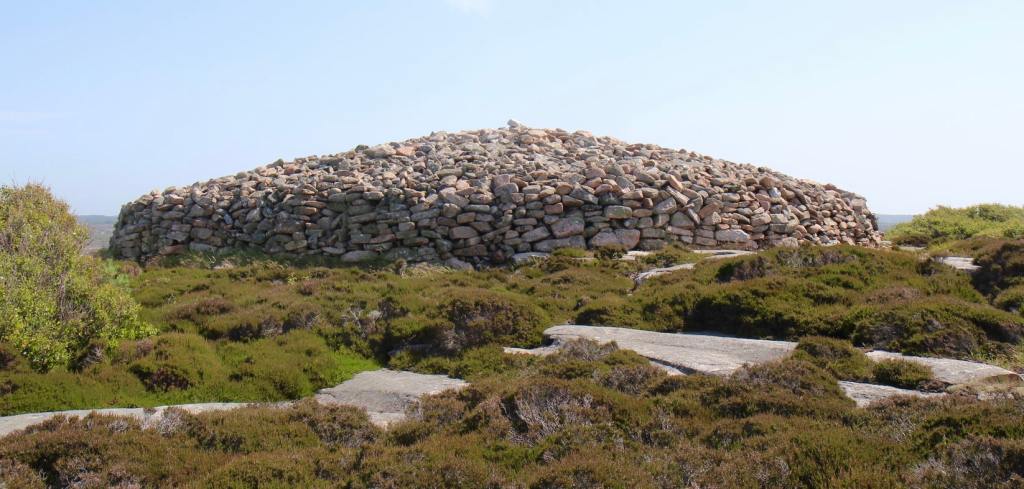
For the Northern tribes of Indo-Europeans, the dead would be buried in burial mounds. These ancestors could then be communed with, and all magick of necromancy (the art of divination by speaking with the dead) would be done at such mounds. The Norse believed that sleeping on mounds at night would grant visions of the dead, and that such mounds should not be desecrated. Notice that in Ireland, there are many folk tales of spirits and ghosts appearing near ancient burial mounds.


The wolf cults and bear cults are pretty important. To the ancient Indo-Europeans, war and the concept of warrior hood was important. Practically all societies to ever exist had rites of initiation for young boys, enabling them to become men. Many tribes also held such rites for girls to become women. In the Rigveda, it is said that in order to become a man, young boys must sacrifice a wild dog in a ritual ceremony. They must then wear this skin and live in the forest as wild dogs, away from the village of tribe. Eventually, they would return to the tribe as men. I find it interesting that even now, most people will attend four years of college between school and proper adulthood.

It was common with many other Indo-European tribes as well. In Norse tribal society, groups of young men who had been banished from the tribe would live in the wild and form their own packs. They were called vargr (wolf). These packs would later become elite groups of savage warriors, donning the skin of bears and wolves and going into battle during the Viking age. These were the “berserkir” (those who wear the bear skin).

Indo-European wolf cults are most likely where the story of werewolves come from. Donning the skin of wolves, the warriors would try to awaken their own primal, animal nature. Native American shamans are also known to use the skin of animals to ‘transform’ into animals. I myself have had such atavistic experiences during my invocations of certain dark spirits associated with death and violence. We know that many Indo-Europeans called themselves “Aryan”. I have seen it suggested that maybe this was the root word for Ares, the Greek God of War.

Some other aspects of Indo-European spiritual life were the emphasis on purity. Divination and oral traditions were also a huge part. Even in many late pagan successors, such as ancient Greece, you would have Oracles, all of whom were virgin girls. In Germany and Northern Europe, the male heads of the family would take part in divination rites using runes, while female elders would preserve and pass on sacred songs and hymns.

Another common story is the idea of two warring factions of Gods, who also co-operate and intermarry. The Devas and Asuras, the Aesir and the Vanir, the Olympians and Titans etc.

I personally believe our modern concept of Angels and Demons came from this. It is a relatively unknown fact that the Avesta is Indo-European. The Avestans also believed in the Devas and Asuras (although to them, the terms were reversed). Eventually Zoroaster reformed the religion. In this way, Zoroastrianism is the first truly dualistic, monotheistic religion. However, it retained some of it’s Indo-European traits. You could even call it the first Abrahamic religion. In fact, many Jewish myths and concepts are taken directly from it, as the Jews were in Babylon for a while, and the Old Testament was written after they were released and sent back to Palestine/Israel/Judea. Many people are not familiar with the fact that Judaism was, originally, highly monistic. This is why in some ancient Jewish sources, Satan/Sataniel is depicted as an angel. It was only after their exile, that Judiasm starts to take in the highly dualistic nature of Zoroastrianism. This is when the separation of God and his angels and the Devil and his demons comes from.

So, in a way, the Angels and Demons are akin to the Indo-European factions of deities. We will see why this matters later. Just remember that the Indo-Europeans were monists, not dualists. The Dualism comes about specifically in Zoroastrian mythology. However, most turned dualist after becoming exposed to Buddhism, Christianity, and Islam. These were/are, after all, the religions of the Age of Pisces. And Pisces is dualistic.

And almost all Indo-Europeans believed in the cyclical nature of Time. To them, Time was not linear, but moved in cycles. There were no “end times”, but rather the transition from one Age to the next.

Psychadelics also played a major role in their belief systems. For the Vedic people, there was a substance called soma, which was consumed before rituals. We know that the Norse most likely consumed psilocybin mushrooms, perhaps even before battle and during rituals. In Siberia, the Shamans use amanita muscaria mushrooms, usually using their own body or the body of the reindeer as a filter, and drinking the urine which contains the psychadelic compound without the toxins. The Mycaneans and Minoans also used psychadelics, as did most likely the Germanic and Celtic people.

There are many more cults, but you get the general idea. Now That I’ve given a rough idea of who and what the Indo-Europeans were, I want to talk about how our perception of the ancient pagan, vedic and shamanic past has been utterly distorted in modern times.

The Cult of the Sky Father

“Cult of the Sky Father” sounds like an insult that an edgy pagan or atheist would hurl at the abrahamists.

It may interest you to know that I’m actually referring to a late facet of Indo-European culture.

When most people think “pagan”, what comes to mind? Why, Zeus, Odin and Thor of course. The “enlightened culture” that existed before Christianity destroyed it and ‘stole’ its gods. Why, anybody can see the parallels between the Abrahamic and Pagan religions, right?

Wrong.

But not entirely.

I suggest that you read my invocation of Dionysus. In that post, I went over the general history of Greek religion, which I will use as an example.

Greece does have significant Indo-European impact. When people think of ancient Greece, they always think of Hellenic Greece. Many people do not realise that Hellenic world represents one of the final stages of Greek civilisation, when the religious and spiritual thought had declined a lot, and people were increasingly materialistic. Hellenic Greece was preceded by Mycenaean and Minoan cultures, and is actually nearly 2500 years older.. For most of this time, Zeus was not the primary deity. In fact, even in Hellenic Greece different Gods were worshiped in different City States.

In Mycenaean culture, the Elusinian Mysteries were very prominent. Persephone, Hades, Poseidon and Dionysus were primary deities, and the spirituality focused a lot of Cthonic (underworld) aspects. Zeus (the sky father) only came into focus in the later, philosophical period. In fact, I’d say the prominence of Zeus only became truly apparent with Rome, and it’s over emphasis on the worship of Jupiter and Mars.

Now let’s talk about the Norse. Today people think of the Norse Pantheon as resembling the Greek pantheon, with Odin residing as the “allfather” over his council of Gods.

In truth, the primary deities in Scandinavia were originally Tyr and Thor. The Cult of Wotan was brought into Scandinavia by Germanic tribes, after which Wotan was known as Odin and his worship became immensely popular. However, he was not the God of Light or the Sun. He was actually a God of Death and related to divination. Almost all stories of Odin present him as an extreme and ambitious figure, who discovered many abilities of Magick. Yes, Tyr was a war god, while Thor was a heroic figure. But these were not the first nor the most popular Gods worshipped by the Norse. The figure of Loki is most likely far older than Thor, as a god of the hearth. The idea of Tyr and Thor as sky fathers itself may have been a later projection, to make them more like Zeus.

In fact, if we’re really talking about “sky father”, then historians generally agree that most Indo-European ‘sky fathers’ came from one specific deity, which they call Dyeus (meaning father of heaven). This is where the more modern Latin word Deus (meaning ‘God’) comes from. Zeus, Tyr, Jove, Indra, Perkunas and all other Patriarchs in Indo-European myths are derived form this one concept. And yet, it is questionable how much we actually understand Dyeus, and how much historians are projecting the Christian Deus onto Dyeus.

Most likely the original Germanic Wodan was a deity to whom sacrifices were made, and who aided in the work of divination. He has also been noted to have cannibalistic and bestial tendencies. But then again, all of this is coming from Romans, who thought the Germans were barbarians, so who knows how true it even is (we will discuss this more in the next section).

Are you beginning to see my point?

Christianity is not the first religion to introduce the “sky father” nor Judaism. And, the previous sky fathers like Zeus and Odin are not the ‘original’ pagan deities either.

For some reason, people look at history in a very dualistic manner. They see history as being clearly separated between “ancient” times and “modern” times. They also think that both these periods were generally the same and consistent across space and time.

For example, many modern pagans people think that first there was the pagan era, where there was some sort of universal pagan faith follow by all people in Europe and the Middle East. Then came the Abrahamic era, and suddenly the pagan religions were subverted and replaced by Judaism, Christianity and Islam, which were exactly the same as they are now.

Many modern Hindus think the same. They think Hinduism was some singular, homogeneous force that existed from pre-historic times until the Classical Era, when it got replaced by Buddhism. Then it got subverted by Islam and Christianity in the Middle Ages, and returned to it’s original form in the 19th century.

In truth, history is complex. It is a large tapestry of different beliefs, groups and ideologies. All spiritual traditions evolve over time, and sometimes absorb or get subverted by other traditions. It also differs vastly from region to region. Christianity and Islam are a special case, because no religion in history ever went to the same lengths to subvert and wipe out other religions. These were the first religions that introduced the idea of conversion, heresy and apostasy on a large scale. Perhaps it is correct to say that Christianity was a specific Judeo-Hellenic cult that went way too far, and Islam emerged as a response to it.

Yes, we can point a finger at the Abrahamic religions. But the truth is that the Cult of Wotan was just as ‘foreign’ to Northern Europe as Christianity. The truth is that the worship of Zeus may have been just as forced upon the Orphic cults as Christianity. In fact, Zues was probably less popular than Christ. We say Christianity and Islam sterilised spirituality. But did the Hellenic philosophical religions not sterilize it first in Greece?

To clarify, I’m not defending modern Christianity and Islam. I do think they’re sterilised, but so are many new age traditions and neo-pagan religions. Do not be so convinced that Odin and Zeus and Osiris are ‘true’ Gods and the Abrahamic ones are ‘untrue’. Even in Egypt, the Cult of Horus subverted and replaced the Cults of Ra and Seth at one point. I’m sure this is obvious, but a religion does not stay exactly the same for over 9000 years. Heck, things don’t even stay the same for a hundred years. Think about how different you and your beliefs are from your grandparents.

Additionally, let us not forget that Christianity and Islam have also evolved over the ages. Followers of these two religions will not admit to this, but we know it’s true. Let’s not forget that these religions are simply the most modern evolution of older religions.

Let us take a look at the Hindus. The Vedic people practiced animal sacrifice, and all manner of other rituals. They were warriors, and put a great emphasis on visions, intoxication and embracing their “wild side”. They practiced magic, performed rituals of ecstasy, and subjected the young men and women to rites of initiation. They greatly valued qualities of leadership and independence, and aggression.
Indra was a God of War, not of the Sun or Rain. It was much later than this tribal war god became a God of the Sky and Rain.

Hinduism today has a distinctly Victorian and Socialist characteristic, and you can barely call it Vedic in any real sense. If anything, I’d say it’s entirely from the 19th and 20th centuries. The Introduction of the figures of Krishna and Brahma happened quite late, compared to the Vedic deities.

“Alright Raven, we get it. Religion evolves and differs over time and place. Odin, Brahma and Zeus are not necessarily the ‘original Gods’ and Christianity and Islam are not entirely to blame. But shouldn’t everyone just follow what makes sense to them?”

Oh, absolutely. I’m not saying that you shouldn’t work with the deities that make sense to you. My own beliefs and practices are a vast mixture of various traditions.

However, there’s another thing I need to mention. This one is more important than the last, and the one that will really drive home the point.

Agenda Narratives

People tend to forget that when we look at mythology, we are often looking at the writings of very specific people. For example, most of our understanding of Greek mythology comes from Hesiod (poet from 6th century BCE), who compiled most of it. In other words, this is his personal opinion, and understanding of these myths. Our knowledge of Norse mythology comes from the Poetic Edda and the Prose Edda. For Vedic myths, we are largely relying on the translations made by English historians as late as the 19th-20th centuries. For the Avesta, the originals were lost in a fire, and then the book was reconstructed centuries later based on memory and oral tradition. Our understanding of Slavic mythology comes almost completely from one German monk, called the Chronica Slavorum.

This affects some traditions more than others. For example, the Egyptians left over 9000 years of literature and history, and detailed records of their spiritual, religious and magical practices painted on stone walls. Stone tends to last for a long time. And we can translate it with full accuracy. The same could be said for Abrahamic myths. While a bit fragmented, we still do have very old documents. Hermetic, Mayan, Chinese and Aztec traditions are also well recorded and preserved.

But some are not. The Indo-European cultures were largely oral. Even when people like Hesiod wrote down myths, it was often centuries after they had been conceived, and any truly mystical or occult connotations had been lost. As far as Hesiod was concerned, these myths to him were the same as biblical myths are today: something to believe in, and a list of religious duties to perform. Secondly, most early records are lost.

For example, we know that the Vedas must be thousands of years old. And yet, these were written on palm leaves, and have long since disintegrated. The earliest records we have are on tree barks from 1100 BCE. Even if the Indo-Europeans made written records, most of these were probably on non-durable material like leaves. We are now forced to reconstruct their beliefs using burial mounds, such as those left by the Norse, the Britons and the Celts. For Aryans, we don’t even have those, since neither Zoroastrians nor Hindus preserve the bodies.

Coming back to agendas, let us consider Greek mythology once again. Have you ever noticed how many of the Greek gods seem to be..well, assholes?

No offence, but let’s get real. These are essentially Gods that were worshiped in a powerful and intellectual civilisation. Why then, do Zeus and Poseidon appear to be an arrogant perverts, Dionysus a drunkard, or Apollo a playboy? Why are the Gods so often petty, childish or foolhardy? Why would a culture like the Greeks worship them, even before the Hellenic era. Well the answer is simple: people with agendas.

Ovid was a Roman poet who is well known for having written about Greek myths You see, Ovid was exiled by Rome for criticizing Emperor Augustus. So, naturally, he had a bit of an anti-authorotarian bias. In his collections of mythology, he would often frame the stories to play up the negative aspects of the Gods, and portray mortals as hapless victims.

Let’s take a modern example. Think about how modern people interpret the Bible to make Jehovah out to be violent, judgmental and arrogant. This is because Christianity and Judaism are fading out, while Paganism and Satanism are beginning to boom. Such similar things happened many times in history. Many pagan myths we have today were recorded in a time when people already lost interest in them, and were beginning to poke holes in them.

Let us take Hindu myths. In many, many Hindu myths, the Vedic gods are made out to be arrogant and petty. Indra, who was the primary God of the Indo-Aryans, is often portrayed as being embarrassed or humbled by other Gods like Krishna or Shiva. This has led to many modern Hindus believing that the Vedic gods were somehow lesser to the non Vedic ones. In truth, many of these legends came around when Vedic religion was waning, and being replaced by Puranic and Bhakti traditions. They represent a biased opinion of certain individuals, not even necessarily a whole culture, and definitely not a mystical or spiritual truth.

Much of Germanic, Iberian, Britannic and Celtic mythology is recorded by Romans, who believed them to be barbarians. While personally I think the Romans would have been much more true to what they say and objective in their approach, remember that they were not exactly held up to any rigorous standard of documentation. At the end of the day, it really is just the opinions of Roman historians.

So what is my point? Simply, that pretty much all Indo-European mythology we have is extremely recent, compared to how old these ideas really are. These are, more often than not, written by specific individuals. But that’s not even scratching the surface. Because now we have to deal with Christianity (oh boy).

If you read my previous post about the Fae, you’ll see how Irish and Celtic mythology was distorted to fit into Christianity. So I’ll skip over that, since Irish culture is far more native to the Isles than it is Indo-European.

What about Slavic myths. The monk, Helmold, who recorded their beliefs, was in the region for the express purpose of converting Slavs. He tells us as a matter of fact that the Slavs believed in a good god (Belobog), and a bad one (Chernobog). Isn’t it curious how that seems so reminiscent of God and Satan? Chernobog even has horns. To this day, historians have been unable to find concrete evidence of Slavic dualism, or that these gods were actually worshipped the way Herlmold described. It is just as likely that he wanted to present Slavic religion as being similar to Christianity, or maybe it was a simple misunderstanding on his own part. WHo knows what Chernobog and Belobog really were meant to be.

Did you know ALL of Norse mythology that we have today comes from the Prose Edda and Poetic Edda? Both of these were written in the 13th-15th century, hundreds of years after Norse religion had died out. In fact, they are Icelandic, which was far more devout in Christianity than Scandinavia. Almost everything we believe comes from one, Christian writer called Snorri Sturluson.

But why would a Christian record these pagan myths? Well, it’s simple. Much like modern Pagans, people in Snorri’s time were also proud of their heritage. Pagan or not, these were their ancestral myths and folk tales after all. The same happened in the Greco-Roman world as well, which is why we still know of those Gods.

People like Snorri Sturluson wanted to make a record of their own heritage, but they still were uncomfortable with (or perhaps simply ignorant of) the actual pagan worldview. So, they altered the myths to make sense in their own time. We do this even today, by revising mythology and folktales to adhere to 21st century standards.

However, this led to many aspects of true Norse spirituality being completely lost. For example, we already discussed how Odin was not the Allfather, nor even a Sun god. Thor probably wasn’t his son. This was all an attempt to liken Odin and Thor to Jehovah and Jesus. This is why Thor seems so unnaturally gifted and ‘perfect’ in all the stories. Loki, who probably started out as an Indo-European deity of the hearth, and later also played the role of a Jester, became increasingly likened to Satan. In truth, Loki was nothing like how he is portrayed in modern times. Instead, he almost appears to be the same as Dionysus or Hermes. An androgynous, shamanic figure at times.

The story of his ‘hideous’ children Jormungandr, Hel and Fenrir is also Christian. After all, the wolf was sacred to the Indo-Europeans, and there is little evidence it was ever a harbinger of destruction. The symbol of the serpent biting his own tail was one of protection and familial bonds, and the story of Thor fighting the evil Jormungandr at the end of time is most likely Christian too. After all, it was a serpent in the Garden of Eden.

Hel simply represented the duality of life and death, and there was nothing about her being malicious or evil. In fact, the entire prophecy of Ragnarok most likely is very recent, and borrowed from Revelation. This is supported by evidence. Who can say, what the original myth was.

I question even the validity of Valhalla, and warriors waiting till the end of time. That sounds awfully similar to the second coming of Jesus. In fact, Snorri literally says that at the end of time, after Ragnarok happens, the “mighty, nameless one” will appear. He is alluding to a supreme deity who is even greater than the Norse gods.

Hmm…a supreme ineffable deity. Now where have I seen that before.

this is where I get banned off the internet 😐

You know those rituals they always show in Hollywood shows about Vikings putting people on a boat and lighting it on fire? Did you know that no historical evidence of it exists?
The whole thing comes from the accounts of one Islamic historian called Ibn Fadlan, when he encountered the Rus Vikings, in Belarus of all places.

He most likely did not distort anything, but his biases are clear in his work. He also relied on a translator, and the Belarusian translators themselves were not pagan. So it is questionable if Ibn Fadlan understood everything he say, and even if the people he relied on to tell him knew themselves. It is difficult to say how much of what the Rus Vikings did was Nordic, and how much Baltic, and if it has any Norse or Indo-European basis. In fact, we don’t even know how common this ritual was, or even if all Rus Vikings did it, and not just this specific community. For all you know, the whole thing was a show to impress Ibn Fadlan. In my opinion, to casually use his accounts in all depictions of Norse pagans is extremely careless.

Think about how we thought Vikings wore horned helmets until very recently. This was due to the desire by their foes to demonise them. The infamous blood eagle is also a fabrication, and it is very unlikely the Vikings ever did this. This represents yet another problem with oral traditions, that all accounts of them come from those that observed them, and were frequently their enemies.

False Reconstructions

You know, there’s a certain trend I notice among modern occultists. They always accuse Judaism, Christianity and Islam of “stealing” ancient pagan motifs.

Now, we have already clarified that since these religions naturally evolved out of older traditions. But you know what, it does seem interesting how these ancient religions SO CLOSELY resemble modern ones.

I mean, isn’t it quite amazing how Odin and Zeus and Brahma are old bearded men, just the the Christian God? Isn’t it amazing how all these religions had a saviour figure, very similar to Christ, such as Dionysus, Krishna, Thor, Mithra and Horus.

Isn’t it also funny how all religions have an evil serpentine figure, resembling Satan, such as Loki or Hades, who is the “bad guy”.

I should hand it to the Indo-Europeans. Somehow tribal nomadic shamans in cold forests developed the exact same conception as tribal shepherd seers in the desert. And how convenient that all of these conceptions match the ideas and beliefs of Western European protestant Christians, right around the time they were becoming the dominant hegemonic powers.

Hmm….wait a minute. It’s almost like….like all these records ‘pagan’ myths were actually translated and compiled down by materialistic Protestants, centuries after the the original authors had written them (and eve then, with mistakes). It’s almost like….like they intentionally altered and distorted pagan myths to be more protestant, in order to spread their religion and subvert populations. It’s almost like most of us do not speak the ancient languages needed, and heavily rely on the translations.

Jokes aside, I’m not joking. This is really the case, at least regarding Indo-European cultures.

Before the 20th century, the idea of ‘objective history’ did not exist. Then some blokes from a smol, wet island managed to beat their baguette munching and bull chasing cousins in taking over the world. As they were digging for treasure, they realised that they’d dug too deep. And funnily enough, there seemed to be about 10,000 years worth of civilisation between buddhist stupas and dinosaurs.

And thus, history was born.

There’s no two ways about this. Our modern understanding of history is strongly influenced by an Anglican protestant perspective. Our morality and spirituality are distinctly Victorian. Even a majority of our modern day magick is influenced by Victorian era neo-paganism. The Theosophists, the Golden Dawn, Wicca and Thelema were all created by and for a very specific section of English aristocratic society. Yes, even Satanism (let’s not forget that David Myatt lived in England most of his life). Left hand path pagan traditions like Thursatru appear to be pagan, but are Gnostic and Satanic for all intents and purposes. I’m not saying there’s anything wrong with them, but that they aren’t historical.

Now sometimes you run into Hoodoo and Voudoo, which have more French influence. But the distinction between French, German and English philosophy in the 18th-19th centuries is not too great. These are after all, the cultures which spawned the Enlightenment.

By the way, I’m not saying they were all necessarily English. But if it was written by say, Indians, it was the Indians educated by and in service of the Colonial government. The point is that England was the hegemon at the time, and all cultures were influenced by the world view of the English nobility and aristocracy. And when it wasn’t English, it was Judeo-Christian. After all, there were many scholars of this time who were expressly trying to revive Judaism and Christianity. And yet most of these people were educated in English, French and German universities. Put simply, I’m referring to culture, not race. And it doesn’t take much to see which cultures dominated the last few hundred years.

Read the modern translations of the Vedas, the Prose Edda or the Theogony. Who made them? Well, Colonial era historians. Our modern schooling system also came from this same place. We discussed how these books were already biased. But remember that even when you are reading, say, the Chronica Slavorum, you’re not even reading the flawed Latin writings of a German monk. You are reading whatever remnant some Colonial era historians found in some old abby, compiled and translated into English based on their best understanding of Germanic Latin of the 12th century, likely putting their own protestant and Victorian era biases into the work, sometimes even intentionally changing it to match some agenda, to make some cultures look weaker, or to make Christianity sound universal. That’s a far cry from what some Slavic tribesman probably conveyed to some translator in old Slavonic, who then did his best to explain it to the already biased Helmold. Slavonic, an Indo European langiage, is now a largely dead language and replaced by modern Cyrillic Russian. When you make such radical changes to language, you will obviously lose a lot. We can thank the Bolsheviks for this.

To say nothing of the plague of Fascism and Marxism that took over the world later. Did you know that when the Nazis began to excavate ancient Germanic tools, Hitler specifically asked them to alter and change the records because he couldn’t tolerate the idea of Romans having been superior in technology to Germans at one point?

Ironically, it was actually some early fascist philosophers who took a great problem with Colonial distortion. For example, the famous French proponent of nazism Savitri Devi (Maximiani Julia Portas) correctly pointed out that Hinduism was originally highly tribalistic and ethno-cultural, and that it had been changed in recent times to appear more philosophical, pacifistic and Christian. Nietzsche pointed out a similar trend amongst the Germanic people, claiming that they had been ‘tamed’ or ‘pacified’ by Christianity.

While I despise fascism, and while both of them were using this as a basis to attacks Jews/ Judaism, the essence of their argument is correct.

These days, there is a great attempt at reconstruction. But this is a very recent phenomena. And 19th century biases have stuck around. Even now, many people get upset if you try to replace their 19th century version of history with a truer history. Of course, biases persist even today. We must be careful not to replace one flawed narrative with another one.

In Conclusion

The point of this post is not to criticize Protestants. It is not to bash materialism or the enlightenment, nor make a case for regressing back to some tribal morality and belief system.

I simply wanted to draw attention to two things. First, that the spirituality of the Indo-Europeans has been distorted by various groups to suit their own needs. By extension, the shamanic beliefs of all cultures, and shamanism itself gets distorted frequently by people who really do not understand it very well. In a time where shamanic and pagan traditions are making a resurgence, I think it is important to present accurate information, so that we don’t just swap out one religious dogma for another.

Second, the problem of moral relativism. Much of our perspective of the past is shaped by recent and arbitrary interpretations. We accept certain morals simply because we inherited them, without questioning them. As such, even magick in modern times is throttled by beliefs and values that people think are ancient but aren’t really. This is why you have the new age cults, which are essentially Evangelical materialists who swapped out Abrahamic symbols for Pagan ones, but retained all the rigidity and flawed theology, most of which isn’t even truly Abrahamic, but Socialist. Heck, in many cases people’s opinions are shaped by the American hippie movement of the 1960s.

Oh how shallow the of the Mysteries have become.

Magick is meant for the liberation of the sufficiently developed individual. Such a feat cannot be achieved merely through rituals and spells, or by changing religions. To simply become a Satanist, pagan or Buddhist does not make one empowered, any more than it empowered the Norse pagans who converted to Christianity for political clout 1000 years ago. However, it DID empower those Roman pagans who became Gnostic 2000 years ago. Because they did not just adopt a new religion, but instead freed themselves from social norms and rigid moral virtue that made slaves of them. By thinking for themselves, they became themselves.

All the ideas I’ve presented here are simply to cut down preconceived notions, and show how easy it is for one to be misled by propaganda, and how true knowledge is hidden away in plain sight. That is all. It is up to you, what you make of it.

Until Next Time
~White Raven


What “Enlightenment” means within The Occult

Greetings. I’m back.

Now I know what you’re thinking, “Raven, you said you’d write more regularly. It’s been nine months

Well, I don’t have much to say. I have no excuses. Without going into too many details, my country was undergoing…economic turmoil. I was not in the best state of mind to write about spiritual matters, and sometimes it’s better to stay silent than say thing you don’t mean because of anger or frustration. I get a lot of emails from people who put a great deal of faith in what I say, and I don’t plan to give anyone bad or misleading information. By the way, I read all your messages and emails, although I cannot reply to all, and I’m thankful to everyone who writes in.

But anyway, here we are again.


Western, Eastern and Modern Ideas of Enlightenment

When I say the word “Enlightenment”, there’s one of three ideas that comes to your mind. First, the most common concept of ‘Nirvana’ that comes primarily from Buddhism, though it has merged to some degree with Hindu and Sikh asceticism. You may think of the myraid of ‘gurus’ parading around with long beards, decked out in orange or white clothing, and teaching really generic “spirituality” to the masses. Many of these dudes either run shady cults or international bodies that primarily attempt to hold political power (especially in the East). I’m not saying there’s nothing to be gained from them, but it’s simple spiritual practices that is packaged for mass consumption, without deviating too much from the standard norms for thinking.

There are of course, authentic mystics that are said to be enlightened, but they don’t normally have a public presence. Real ascetics, like the ones who live in Varanasi, are following a specific spiritual traditions, much like the rest of us. Many of them are also just weed smoking hippies.

Secondly, you may think of the Western televangelists. Generally, they are part of megachurches and to them “enlightenment” means some kind of experience with God, Christ, or an advanced knowledge of the Scripture. Unlike the ‘gurus’, these preachers make no attempt to sell “spirituality”. To them, ‘spirituality’ and ‘enlightenment’ fall entirely within the dogma of their specific sect. Here, we see “enlightenment” presented as a by-product of institutional power. This has lately been extended to Islamic clerics and certain Rabbis as well.

The Pope and Dalai Llama fall into this category. While I have nothing against them, you must realise that they are basically political leaders of different religions, and are said to be “enlightened” because of this authority, not because of anything they’ve done outside of the religion. According to them, to know scripture is to know God. This applies to Buddhism as much as it does to the Abrahamic religions. I would not call these people spiritual or ‘enlightened’, though maybe people find a sense of comfort in listening to them.

Finally, you may think of the word “enlightenment” in the context of the historical era we call the “Enlightenment”, which followed close at the heels of the French revolution, and was the result of the printing press and democratic attitudes spreading across Western Europe, North America and Japan. The spread of the scientific method, coupled with the liberalization of culture, the introduction of the Parliaments, the Age of Exploration and finally, the Industrial revolution and the subsequent end of Feudalism and Religious authority thrust us into what we now call “modernity”.

On one hand, this “Enlightenment” refers to “classical liberal” values, such as Secularism, Democracy, Equality, Liberty etc. Today we take these for granted, but just 150 years ago people would have told you that only “Enlightened” parts of the world followed this.

On the other hand, people who use this term today refer to scientific, materialistic determinism, often coupled with atheism or at least a rejection of traditional religion, with the statement that “subjective” cultural values like beauty, morality, virtue etc. do not really exist. Ironically, while it has improved our quality of life substantially, it has also made people nihilistic, and given rise to the belief that there is no purpose to life, good or justice in the world and a reason for living. After all, if everything is a man made creation that can be deconstructed, what is the point of anything at all? In the past few years there has been a resurgence of traditional dogma.

I’m not going to give an opinion on how “Enlightened” our current time is, because throughout all of history people have always considered their time to be “enlightened” and the past to be “dark”. 500 years from now, we’ll be the ones with crazy dogmas and “unenlightened” beliefs. And, if you’re even reading this blog, I think it’s safe to assume that you aren’t satisfied with being told you’re an insignificant speck of dust on a ball of rust, spiraling around a failing nuclear reactor that’s hurtling through a pointless abyss.


The Dual “Enlightenment”

Within the Occult, the term “enlightenment” often applies to two things.

First, the act of “being Initiated” is and has always been considered important in the Occult. In fact, various occult schools use the terms “Initiated” and “Uninitiated” to distinguish between magickains and non magickians. Some groups like the O9A took it rather far with the term “kindred” and “mundane”, even encouraging violence, deception and manipulation against the “mundane”. But, although I don’t condone treating anyone as lesser, I can see where the anger and frustration stems from.

Over the years, you’ve heard various terms like the “masses”, “NPCs”, “normies” or just “average people” thrown around, and not just by Occultists. This highlights an important point that this type of Enlightenment isn’t just about belonging to a specific magickal tradition or even being an occultist. But who exactly uses these terms? The Elite? Intellectuals? ‘Smart’ people? These are equally vague terms.

You might say perhaps this difference doesn’t even exist, but it does. And trust me, this isn’t an elitist statement, because I despise elitism.

In my opinion, the first thing that can be attained is “Initiation” or “Adepthood”, and is said to be accompanied by the religious experience. Organised religions try to replicate this through various initiation rituals that members are meant to go through either at birth, or adolescence, or whenever they join. Unfortunately, this means anyone who has undergone a certain ritual or been given a position by a tradition, claims superiority due to being an “Adept”.

Next, comes the state of Niravana or Salvation. In Hermetic Kabbalah, this is reached after an experience called ‘Crossing the Abyss’. People who reach this are often called by various names within religions, like Boddhissatvas, Rishis, Ascended Masters, Saints etc. Such people are often regarded with a near God like status. Many, many pretenders claim to be divine as well.

“Anyone who must say ‘I am King!’ is no true King”
~Tywin Lannister, Game of Thrones


The True Meaning of Initiation

From the point of view of any specific tradition, being Initiated, in my opinion, means that you can now teach that system without guidance.

So when a specific School of Magick insists on going through the process of Initiation, they say it primarily to help you understand and internalize the teachings of that system. You may already be an Adept, but you still need to learn the system.

For example, if reached Adepthood through pagan Witchcraft, you may be great magickian. But if you were to decide to learn ceremonial Magick, you can’t just start from it’s Adept rituals. After all, you need to understand the theory and symbols, and work with them so they actually mean something to you. In the most mundane sense, that it why Initiations exist.

People think becoming an Adept involves having special powers, being more knowledgeable than others, having had some kind of psychic vision, or even a Kundalini awakening. ALL of these may accompany Adepthood, but they aren’t what define it. After all, some people are simply psychically gifted since birth. Some people have early Kundalini awakenings. Some people simply are smarter or more creative than others.

Adepthood comes with independent and original thinking.

I know, sounds cliched, but hear me out. The fundamental difference that people see between Initiated and Uninitiated people is the lack of independent thinking. No one is born with this. In fact, each and every one of us is born into a culture and society that restrains and controls our thoughts and beliefs. Even if you ‘rebel’, as many do, you’re usually just abiding by an alternative and often ‘counter’ culture, which itself is most likely the norm for another culture.

Yes, it’s possible that certain social norms, belief systems and systems work better than others on a cultural level. But there is debate over this and people often become foot soldiers in this culture war, slowly giving over their agency either to their own culture or the new one they’ve adopted. It’s also possible that certain modes of thinking are better for an individual than others. For a highly artistic person, altruistic and liberal beliefs probably help him. For a soldier in the military, traditional notions of hierarchy and duty may be better. My point, it doesn’t matter what is better or worse, but your ability to think for yourself and decide this.

What are the ‘masses’. Put simply, people who do not think for themselves. This is most of the human population. Practically everyone sticks with inherited beliefs and social norms. People have a morality and values that are circumstantial, hence one moment you have people talking about unity and empathy, and the next they’re viciously attacking those who don’t think or look like them. I’ve personally seen people’s beliefs change based on what they saw on the News (but this post isn’t about that)

People repeat the ideas of others without ever challenging them. You may think you don’t, but at some point in your life you definitely have. It’s human nature to be tribal.

“Never underestimate the power of stupid people in large numbers”
~George Carlin
(Funnily, I’m sure people who opposed him thought the exact same thing)

Dr. Jordan Peterson once remarked that most people, were they living in Germany in 1933, would most likely be Nazis. Although many think they would fight against their own society and save the Jews, this is highly unlikely, even in brave and moral people. Like I said, this isn’t about having superior or inferior qualities, but the agency of thought.

Even when a truly transgressive movement emerges, over time it too develops a “group think” that it’s new members simply abide by. Think about Christianity. Think about Communism or Democracy. Each of these were highly radical for their time. Even the very philosophy of Individualism comes with a baggage.

I would like to go in details, but perhaps in a future post. This isn’t the place.

Thinking independently is not something that one is born with or gets by virtue of intellect, knowledge or maturity. It is something you strive for, and in my opinion this is the true meaning of spiritual growth. Everyone, as far as I’m concerned, is moving towards this over the course of their existence. Through the practice spirituality, you slowly begin to care less about what other people think or say, and become more content with yourself. This becomes most evident when you realise that you don’t care about debating with or correcting others, unless it has some real implication. Generally, all that will be achieved is sour the relationship or push the person further into their dogma.

aren’t we all

Ever heard of the axiom “Speech if silver, Silence is Gold” ? The reason magickians don’t go red in the face trying to explain to the others what magick is or convince them that it works, is because they don’t feel the need to tell everyone. Put simply, it doesn’t really matter. This is not apathy, but acceptance of the way things are. It would be far better to improve the world through action, than by arguing with others and endlessly worrying about what the world thinks.

Interestingly, this ties into the values of the Enlightenment era. The scientific method states that nothing should simply be accepted, unless it has been tested and proven effective. Classical liberalism encourages us to live and let live. If you look at history, you’ll see these values didn’t come about in the Enlightenment for the first time, and have existed and evolved since the birth of Civilisation, and often spoken within spiritual and Occult traditions.

The Hermetic Order of the Golden dawn used to insist that the Adept must have three key qualities. Not intellect, nor magick powers. Simply: Persistence, Determination and Humility.

People who are intelligent, or gifted, or rich, or well educated can fail. These things aid people in succeeding, but they do not guarantee success and fulfillment in life. Nor is it that the poor, illiterate, or those who have gone through a lot of hardship always succeed. The only quality common across those who are Adept is their persistence, determination and humility.

When you look at truly great people, you always see that they had a goal that they pursued no matter what, and a strong moral code they lived by. The pursuit of this goal led to failure after failure. But it doesn’t matter how many times they failed, but rather that they continued until success was found.

When you practice magick, you may find that you very quickly start transforming yourself and gaining an edge over others. But we have to constantly remember that we are not superior, or ‘higher’ than others. You have to treat even “lowly” people with respect.

I’m not making a case for pacifism, meekness or servility. Certainly, if someone crosses you, you have to deal with them firmly. Never turn yourself into an unwitting martyr. It’s okay to want things, it’s okay to have desires and ambition, and it’s okay to be aggressive. The Gods favor these qualities. But petty elitism, entitlement, and cruelty toward those who are weak are signs of an inflated Ego. That usually leads to the fall of the Magickian.


The Meaning of Godhood

We have established that the Initiation or Adepthood means the ability to think independently. The key qualities that are sought for in an Adept are humility, persistence and determination.

Most Occult traditions bring about this process through a system of “grades”. Usually, each grade involves rituals, meditations, learning, real world tasks and self analysis. These days, most people self initiate, especially in Western traditions. In Eastern traditions it is still more common to find a teacher.

Every system is different, and it’s not necessary that every person who has achieved a ‘rank’ is actually Enlightened or Spiritual, nor that Initiation can only be attained through this method. The aim is to bring about self transformation.

Every great magickian has only one trait in common, that they truly think for themselves, and would not compromise their principles and values due to social pressure.

The second “enlightenment”, was summed up simply by the Oracle of Delphi:

Know Thyself

Buddhism is the only religion that is the most blunt about how Buddhahood is achieved. It is done through the acquisition of Self Knowledge.

Each person has their own path to this, because each person is unique. The Western traditions call a person’s life path as his “True Will”, and the performance of your True Will is doing the “Great Work”. Hinduism calls it “Dharma” or Duty (in the Bhagavat Gita sense, not Hindu orthodox sense)

These are all simply fancy ways of saying “know thyself”. A person who understands himself, also learns to see himself in others. Each of us will have some degree of insight, and we do various things to increase this. I mean, it is often said that everyone is just looking for love and happiness. Perhaps a better way to put it, would be that everyone is looking for fulfillment.

They want to know what their life means, what they enjoy, whom they are meant to be with, what their profession is supposed to be. “God’s plan” as the Christians put it.

Obscurantism in the Occult has made it seem like ‘Enlightenment’ is some distant, magical privilege afforded only to holy men living in the mountains, or monks living in isolation with nothing but a devotion to God. This is why people allow so called “Enlightened” men and women to take control of their lives, and dictate social norms. This is why people would rather rely completely upon ‘divinely’ inspired scriptures of various political ideologies that promise Utopia, instead of their own intuition and wisdom. Simply put, people do no know themselves, and you cannot trust what you do not know. And so, people seek Divinity in everything but themselves.

Unlike Initiation, there is no specific structure to ‘attain’ Enlightenment’ The simplest way to put it would be to discoverer and follow your unique path. I do not know if everyone’s purpose is Divinely ordained, although I believe this. Even if it isn’t, self knowledge leads the the perception that one is doing what one was meant for, and this brings fulfillment.

As far as I am concerned, Enlightenment means coming to terms with the suffering of life, and then finding something that makes it all worthwhile. If, when my time comes to die, I am not filled with regrets and feel I lived as I was meant to, I think that’s Enlightenment. Sometimes, this means standing against the status quo, and challenging it.

Generally, the Golden Dawn and other such groups stated that integrating the Jungian Shadow and developing a strong moral code, and finally being able to rely completely on your own wisdom, to the point where you do not even need the the symbols of various Occult traditions, is how Enlightenment is achieved. But the point is, it’ll be different for each person, and only each person can know what it means.

It has been described by Western occultists as “the moment where the Individual realises that the entire Universe is speaking to him personally”. The Zen Buddhists speak of ‘spontaneous enlightenment’. In other words, not an elaborate process, but a sudden realisation of Self. Becoming who you are.

For someone, it might mean creating a great scientific invention and for another it may just mean running a bakery in their village. Some enlightened people may develop spiritual powers or take part in the destiny of nations, while others may find fulfillment in gardening or a simple service job. People are different, but, in my opinion, it comes down to Independent Thinking, which then leads to Self Knowledge.

If you can think for yourself, you can act for yourself and do what’s right for you. Over time, you can understand what it is you should do with your life. You can figure this out at 18, or you can figure it out at 50, and then spend the rest of your life pursuing it. This is my interpretation of Dharma.


How to Get On Your Path

First off, I think one should become depolarised. I’ve linked a great video on this topic by Frater Xavier, who explains depolarisation better than I ever could. You don’t have to do “magick” for it, but rituals and meditation certainly helps. Namely, a daily performance of the Middle Pillar Ritual.
A big part of this, as Frater will explain, is learning not to react.

Secondly, learn to be self reliant. During this lockdown, I made an interesting observation. A huge number of people, of all ages, do not know how to perform simple tasks: like cooking, cleaning, and saving money. I suppose I should thank my mother for teaching me everything under the sun. When the lockdown started, and we ran out of Gin, I started brewing alchohol at home using baker’s yeast, burnt bread and a pressure cooker (a Russian drink called Kvass). On the other hand, there were people who are so reliant on immigrant maids cleaning and cooking for them, they can’t even figure out how to make rice.

I’m not trying to pass judgements, but this lockdown brought one thing to everyone’s attention: we simply aren’t self reliant enough: as nations, as communities and as people. We’ve come to rely completely on this interconnected social web that without it, everything starts collapsing. Countries are starting to be forced to open up, even though the virus is still around, because of the very nature of our economy.

I’m not going to say what’s right or wrong, instead I’ll tell you this: this isn’t the first or last time something like this has or will happened. The enormous comfort, peace and prosperity that the world has enjoyed since 1950 is extremely unusual in terms of human history. And let me remind you that everytime things go wrong, people first come after those like us. People like us who are somewhat unusual, do not conform to social norms, have unorthodox beliefs and practices etc. Yeah, we are in an “enlightened time”, but then again, there ARE still countries where ‘witch hunts’ happen. History shows us that things can change radically in just over a decade.

As magickians, we need to learn to rely on ourselves. Learn all basic skills that are needed to live independently. I’m not saying to be detached from society (although some may prefer that), but learn to take care of yourself, so that you aren’t dependent on others. Self reliance is the first Step to Self Knowledge.

Finally, learn. You are part of a vast and complex social network that you were born into. It is not important that you go out and start challenging it, but at least start learning about it. Learn about your religion, your country’s real history, about the political parties you support, what you believe and why. Learn these things without passing judgement, and expose yourself to opposing ideas without engaging it debate or mental justification/retorts. Open your mind, and then open your heart. This is what it means to think for yourself.

And there we go, Enlightenment. It means different things for different people, but the most important thing to remember that it was always supposed to be something the Individual himself can attain, not something rewarded to a few special people.

Until next time.
~White Raven.


Magical Communion with Nature

Have you ever read the Alchemist?

Yes, that one, by Paulo Coelho. Despite being a book that details some supposedly secretive teachings of the Occult and alchemy, it happens to be the most read book in the world (with the only exception being the Bible, but assuming every Christian family and institution owns at least a few, it is difficult to say which book is actually more well read. Consider also, that there’s many different Bibles, but only one standard version of the Alchemist).

Coelho is an open occultist, even going as far as describing himself as a “magician”. Some Occult circles that take themselves a bit too seriously, and hate books like this because they think it’s all wishy-washy and new agey.

The story of The Alchemist uses symbolism and metaphor to explain spiritual philosophy, and perhaps most people assume that Coelho merely uses fantastical imagery and language to make a point. Similar things are ascribed to Nietzsche, Jung, Watts, McKenna and Peterson.

After all, the Occult and spiritual practices are merely psychosomatic processes, right? It’s all just an elaborate form of visualization and self hypnosis. No one really calls on Angels, influences the weather, summons the dead, heals the sick or makes things spontaneously burn, right?

Oh boy, if only you knew.

Anyway, the reason I’m talking about the Alchemist is because it always struck me how Coleho speaks so frankly and bluntly about certain Occult phenomenon that are considered “crazy” by the modern rational mind. Often, if you pick up ANY book on Occultism written in the past 2 centuries, at least the first 100 pages are dedicated to the author desperately and laboriously trying to justify how magick is compatible with modern science. Even Crowley makes this error, where he desperately dumbs down magick just so that it would fit within the archaic and “materialistic” framework of the early 1920s. Even the Kyballion does this, showing a grave misunderstanding of who is actually reading their book, failing to keep with the so eloquent axiom “Don’t cast pearls before swine”.

I never understood the point of this. Books from the early 20th century, which changed occult philosophy to fit into the science of that period, now inadvertently become pseudo-science, because the scientific knowledge of their period was incomplete and has since advanced quite a lot. In fact, if anything, as Science progresses, more and more aspects of older, seemingly “unscientific” Occult wisdom actually get verified. This also makes me wonder if many of the people writing the Books had any practical experience with Occult phenomenon, or if they simply read the theory and attempted to merge it into the existent world view. Or maybe they were simply trying to avoid becoming outcasts, like pagan Occultist before them who disguised their writings as being Abrahamic.

Books from the East are often a bit more open, because Western materialism never truly took hold in most of the Eastern cultures (no, not even in Japan, Russia and Korea). On the other hand, there’s very, very few modern Occult texts from the East. If anything, most recent books on Eastern occultism are written by Western or Western educated individuals. That’s a different can of worms I’m not keen to spring today.

Whatever your opinion be about The Alchemist, the first thing that struck me is that it isn’t based in any fantasy Universe, but in our world. Yet, despite it’s extremely grounded and realistic stories, there are scenes where the protagonist, Santiago, is able to communicate with the Desert, the Sun and the Wind. There are seers and prophets who can see the future. It always throws you off, and Coelho does not attempt to give any further explanation about how everything has a rational explanation, nor attempt to reduce anything to materialism. It is perhaps this reason why many rationalists scorn the book as childish.

Personally, I couldn’t care less what objections they have. I think it’s futile to try and convince people. I don’t claim to understand the exact scientific process behind magick, and perhaps some day in the future science will discover it. Science isn’t some ideology or philosophy, but merely the process and methodology of discovering new knowledge. If something exists, there simply HAS to be some explanation for it, but that doesn’t mean that explanation must adhere to our current knowledge of science.

So it’s up to you how to take what I write. I won’t pretend to make it reasonable, nor reduce everything to psychological processes. usually, I do this in my blog, when I write about invocations and philosophy, but now the subject matter is so complex and unexplored that this is no longer within my capability. I do not wish to make up an untested pseudo-science to explain it, but nor can I pretend that it isn’t real. Those who feel uncomfortable are free to deny it or build up some logic for it.


The Forces of Nature

Nature comprises of many forces. One common way to categorize this is through the traditional system of four elements: Fire, Water, Air and Earth. The other is by applying the classification system of some particular pagan religion (most often the Hellenic, Japanese or Celtic) to distinguish between different types of spirits.

However, as you’ll see, any method of rigid categorization or classification is bad for communing with the Natural forces. It might work when invoking angels or gods, or even calling on elemental forces, but for the forces of nature, we have to adopt a rather older, folk perspective, rather than some universal and global categorization like the modern individual may be used to doing.

But what do I mean by the forces of Nature? Exactly what it sounds like. The winds and the rain, the spirit of the desert, trees and mountains, rivers spirits or plants, fungi or perhaps a specific rock, animals or even rice. Did you know that the Japanese believed there are seven gods living in each grain of rice? ha. (This was apparently the justification given for why rice should be properly chewed. The Occult is often science not yet understood)

Communicating with these forces is possible, but a ritualistic or religious approach is difficult to work with, since these forces are……let’s say “simple”, or “ancient”. Before organised religions and the worship of cosmic forces in the form of idols and symbols, people revered mountains, sacred trees or holy animals. It is a very intuitive and basic process, and varies from situation to situation.

You have to connect to such forces personally, however feels right to you. This is why, when the protagonist of The Alchemist simply gazes upon the Desert and “talks” to it, we feel disturbed or out of our depth. Usually, you would expect some sort of elaborate invocation, some ritual to call on some specific deity that merely resides in the desert, but it’s a lot harder to envision speaking to the “desert” itself.

We as humans have an evolutionary tendency to anthropomorphize things, and for this reason we feel more comfortable with Gods and demons, angels and spirits, fairies and elves. For things like nature, oceans and winds, we often do not worship them directly, but some deities that preside over them. For example, instead of communing with the Rain, we may seek communion with Zeus or Indra.

I do not want to drag this on, so I’ll just say this: communion with the Forces of nature is distinct from communion with Deities presiding overt them, or any particular spirits that dwell over them. They inhabit the material plane.

To anyone who has read anything about evolution, it is extremely obvious that the sentient hominid races are out of place on Earth. Our bodies may have evolved with everything else, but our minds and souls are at odds with everything else, even from a totally materialistic point of view. In a way, if humanity really is a group of beings that have been sent to the Earthly plane to learn certain lessons and achieve certain things, then you could say that that the things we find in nature are the original inhabitants of this plane. That’s why we are the only thing on Earth, and in fact in the entire material Universe, that is not in harmony with Natural law, because it makes us suffer, to the point where the single most recognized motif on our planet, signifies physical suffering.


Communicating with Nature

Communicating with animals is widely accepted, but some would say communicating with plants is not truly possible as they aren’t sentient. Further, it can be said that communication with rocks, rivers, the winds or the land is impossible as these aren’t even living.

And then, you have the people of the Amazon, who somehow figured out how to take two plants that grow totally apart from each other (one containing DMT and the other having an MAO inhibitor), and figured out how to cook them in a very specific manner to produce Ayahuasca, a potent psychedelic substance used for shamanic rituals. If you were ask them how they were able to learn this, they give you ever eloquent answer “the plants told us”.

Update (2020): If you click the link, it’ll take you to Soul Herbs, who have sponsored me on this post. On their website, you can learn more about Ayahuasca, it’s ingredients, legality, as well as purchase some Ayahuasca tea.

They have a Soul, and a consciousness. They have the same life force as us. Perhaps we cannot communicate on a material level, but maybe on some higher plane our soul can touch theirs. Or perhaps we are simply projecting our own internal psyche onto them, but that could be said for any and all interactions, including those with humans.

The ancient Greeks believed in a concept called the noosphere, similar to the atmosphere, hydrosphere and biosphere. The Noosphere was said to be the sphere containing all human thoughts and memories, which would later be fleshed out by Carl Jung as the “Collective Unconscious”. maybe such a concept applies to different forces of Nature too, and everything in the end is part of the Great Collective, which is the Universe, the Brahman, the World Soul.

The most powerful form of communication, with both other humans, and with Nature, is through symbols. These are used everywhere, from marketing to mythology, as they resonate with our subconscious, whcih of course, if the gateway to the Unconscious. Therefore, good communication involves the subconscious, and the same is true for natural forces. You must communicate through symbols, visualization and emotion (similar to a magick Ritual)


How this Communion Is Achieved

A few things are important in order to commune with any force of nature. First, meditation and the ability to enter a trance at will. This isn’t actually hard and will become second nature after some time of daily meditative practice. Through meditation upon any object, that object becomes a medium to enter the World Soul. In more technical terms, when the conscious mind becomes quiet, the subconscious directly.

The second thing, perhaps most important, is emotional clarity. Thoughts belong to the Conscious Mind, the Ego, the Ruach, while Emotions belong to the Subconscious mind, the Animal Self, the Nephesch. Women are naturally more in tune with the subconscious (while men are with the conscious), and this may be the reason why most witches and those who commune with nature end up being women. Of course, it is fairly easy for a man to achieve this same communion if he can be in touch with his emotions.

To interface with nature, you must sit in meditative and passive state of mind, ideally around or at least in view of what you want to communicate with. Then, slowly, open yourself up. Imagine you are interacting with another person. You know how you sometimes converse with the voice in your head? Do that, but don’t make the voice speak. Instead, call forth the thing you want to communicate with, and allow it’s mind into you, and your mind into it. This might take sometime, and might have to be repeated over days. Usually, it’s good to do it with something you already know and recognize, and are familiar with, like pets or house plants. Meditate on the thing, and eventually it shall ‘speak’.

You don’t have to force it, or ‘try’ to do something. In the Alchemist, the protagonist is a shepherd from the mountainous region of Andulas. He travels to Egypt, and spends many days in the desert, slowly learning it’s ways, it’s laws and it’s mentality, and becoming immersed. He could, of course, have done the same to the mountains back home, but maybe he was so busy with his routine he never had the chance to pay attention. He begins to understand that the Desert itself is an entity, a thing that functions according to certain mechanisms (very similar, in fact, to most “living” biological organisms).

At one point, he is captured by tribesmen, and manages to escape by transforming himself into the Wind, which he achieves by spending three entire days staring at the Desert, until it speaks to him. Much more could be said here, but not today.

It is our obsession with our mundane life which stops us from noticing the phenomenon taking place around us. You will recall hat, for our ancestors, who had much more free time, to notice supernatural occurrences (not having immediate access to entertainment all the time, they simply payed attention.

The most reliable force of nature that one can commune with is the fungal intelligence of the Earth, and this is done through the consumption of psychedelics. To some degree, it can also facilitate communication with plants. However, this isn’t a post about that, so we won’t discuss it further. Through the meditative methods described here, one can access the fungal intelligence without psychadelics too.

Once, in a lucid state, I communed with the fungal network of mycellium that spreads across the entire planet. It was incredibly profound, but when it was over I could no longer recall exactly what I felt. Only a sense of enormity and humility remained.

Most forces of nature will grant wisdom or insight, or just a general look into their world. Sometimes, if you are lucky, you can do the things that are spoken off in ancient tradition; stories of great Masters who could cause the wind to blow, the rain to fall, water to freeze, who could see the future and the mechanisms moving the celestial bodies.

These are not to be thought of as “powers”. You are not controlling nature. Rather, you have been graced by the presence of something greater and it’s important to remain humble and thankful when this happens. Generally, you don’t ask for such things for personal benefit, but with pure intent. A magician may bring about rainfall, not because he wishes to affirm his status or test his power, but because he wants relief for the land and it’s inhabitants from the burning heat of Summer. Sometimes, it may occur when he is doing a ritual, and he will see it as some sort of Divine acknowledgement.

Also, eliminate doubt from your mind. any doubt, or conceptions of egotistical grandeur, or even any pretense of being better than you are, will stop the process.


A Simple Exercise

Do this. Go to a plant, preferably one at your house that you water daily. if you don’t have one, find out outside or get one. For a couple of days, when you take a break from daily work, go and sit with the plant/s and relax. Calm yourself, and meditate. Pay attention to the plants, and focus on their many intricacies, mannerisms, and imagine what life must be like for them.

Do this daily, maybe for 10-15 minutes. When you feel a level of comfort and normalcy, try to initiate a dialogue. Touch the plant if you have to, and call on it to speak with you. If you can go deep enough into the subconscious, you will hear their voice. Through such a connection, there’s a huge amount of wisdom to be gained. Trust me, it’s very real. It’s a distinctive state of consciousness to enter into the collective unconscious of plants (which can occur through invitation, after repeated communion is achieved). You begin to understand their point of view, and they may also understand yours. Remember, they are not absolute or holy. Take everything as it is, and converse like you would with a friend.

Honestly, they have a bit of animosity towards humanity, because they cannot understand our worry and obsession with life, but it won’t be directed at you. Besides, “hatred” is a very human emotion.

Got that? Good, now go ahead and try it.Eventually you should be able to call upon higher forces, like the land, the winds, rain, the clouds, the storms.

These are not things that I can “instruct” you in through the written word, mainly because I can’t describe it myself. I can point the way, but beyond that it’s all personal development.


Remember to follow this blog for more content. You can also follow me on Instagram @WhiteRavenMagus

Until next time
~White Raven

I Invoked Dionysus, Pissed him off, then made up

Ey! Hello, and welcome back to my blog! This is a short update for veteran readers (and for any new ones, if you’re interested). Then we will get to the article.

So, I did some soul searching. I noticed how when I started this blog I used to write a lot, but as I got busy, I began to fall short. For 2017 and 2018 I literally just wrote 5 posts each year. But now college is ending and suddenly I’m a lot more free. I decided that I would ignore this blog no longer, and actually update it more often. I was also stuck, both in life and in magick, for two years, becoming very internal and reflective. But recently I’ve made breakthroughs, and once again I’m excited about magick, and life in general 😀

I’ve spent the last month going through every single article, adding new information and insights, fixing grammatical mistakes, and tagging properly, and I’ve already started getting more traffic. If you’re a veteran reader, I really recommend going back and reading anything you liked. There’s tons of new information and thoughts in every post written between 2015-2018.

There are many Occult blogs out there, but they’re very, very theoretical and academic. Now, I love those and I’m sure they are very important. But that’s just not my thing. I’m young, and I know for a fact that there’s a gulf between young, spontaneous occultists who’ll literally explore as far as they possibly can, and the older, more mature middle aged occultists with glasses and goatees, dedicated to reading their 700 page tomes and doing their 5 hour invocations precisely.

Let’s be real, I’m not much into being tied down. Fuck that. College has made me realise why more people aren’t Occultists, why more people aren’t vibrant, alive and courageous. Society has become like a stagnant, infested swamp of boredom. But the world runs because magicians Will it to. And I’d rather be out there doing something of value, than sitting at some abhorrent desk job dying inside every day. And I encourage everyone to do the same. Now, what that is, I do not know.

But enough of my rant, and time to begin today’s post, the Invocation of Dionysus.


Why Dionysus?

You might ask, why Dionysus? I asked the same thing. Being a Kabbalist, I’ve only ever worked with Angels and Demons. In fact, even they’re rare. A majority of the magick I’ve ever done has been planetary and elemental magick.

Sure, I’ve had some encounters with other stuff (mainly Lovecraftian magick), but I think Dionysus was the first true “God” I ever invoked. I think it’s mainly because I wasn’t totally sure how to go about it, and I never really needed to.

The Planetary powers are also Greek/Roman gods, but I still invoked them as Planets, and knew all the astrological correspondences. But with deities like Dionysus, it gets a lot more complex, and it never seemed worth the trouble.

Before I became a magickian, I was exposed to the New Age stuff. Dionysus was an important figure in those spiritual circles, not to mention he’s kind of famous because a lot of Christian rituals were lifted from the Cult of Bacchus/Dionysus.

Since he’s an important spiritual figure in pop culture, I was always intrigued by him. He was said to party hard and impart ecstasy. Being from a fairly stuck up culture that shuns letting go and intoxication, I was very drawn to Dionysus as a young teenager.

800px-Los_borrachos_o_el_triunfo_de_Baco_1629_Velázquez

Most importantly, when I was young I had taken Pan (who is a deity very closely linked to Dionysus, if not a primordial aspect of him) as one of my patron Gods. This is before I ever got into Kabbalah. I’d always had a plan to invoke Dionysus at the back of my mind.

So, I finally decided to call on him. I was guided to do so by my intuition, so I thought “eh, what the heck”. I was also interested to see what a Hellenic deity is like.


History of Dionysus

Dionysus is a very interesting god, to say the least. Remember, the key to invoking any Being is to have a comprehensive understanding of their history and nature.

Dionysus today is generally thought of as the God of Wine. He was/is one of the Twelve Olympians from Greek mythology, a son of Zeus and therefore a demigod, invented wine, wandered the world and partied with people.

Many say he went to India (where he founded the city of Naragarhi/Nyssa) and for a long time there was the misconception that Dionysus was a foreign God that came to Greece when Alexander expanded his empire across Asia. I can see why people would think that, since ancient Greece and India had a lot of interaction, to the point where Greek manuscripts are a good source to study Indian history (because all the Indian libraries were brunt down. Thanks Islam ), and there’s people of Greco-Indian descent alive today. Dionysus was always seen as a “foreign” God in ancient Greece, and for this reason people thought he was an import from some other culture.

However, when we discovered that Dionysus was worshiped in the pre-Hellenic period as well, and possibly even before Mycanean period, this theory was rebuked.

Now it’s more clear, and it seems that Dionysus wasn’t a “foreign” god, but a God in whom “foreignness” was intrinsic. As I explain the history of his worship, you’ll see why he represents all that is foreign, alien and against social norms.

When he died Zeus wanted him to be an Olympian. For this, it is generally accepted (Thanks to the Percy Jackson novels) that the goddess Hestia, the former 12th Olympian, gave up her seat for Dionysus. Now he spends his days getting drunk and chasing nymphs. Technically, the myth of Hestia wasn’t official canon in Ancient Greece itself, and really is a modern invention. In reality, both Dionysus and Hestia are, based on different sources, said to be the 12th Olympian.

Needless to say, if you were to invoke Dionysus with only this to go on, you’d commune with a very shallow, pop culture aspect of him and at most feel a bit tipsy. So I’m going to do my best to outline a history for you.

Mycenaean Dionysus

To anyone interested in working with the Greek Gods, it is perhaps important to understand that most of our modern ideas about Greek religion, and culture in general, come from Hellenic Greek. This is why Greek neo-pagans of today are called Hellenists.
But Hellenic Greece was a late-comer to the world, appearing only in the 5th century BCE.

Obviously, that’s very late compared to it’s contemporaries like Egypt, India, Mesopotamia, China etc, and hardly befitting the title of “Cradle of Western Civilization”. Interestingly, when we say “Ancient Greece”, we’re talking about the Hellenic period.

Much of Hellenic culture and religion were actually carried over from a much more ancient period, called Mycenaean Greece. This is a mistake I see a lot of neo-pagans make when they try to practice magick from a purely Hellenic perspective, since Mycenaean religion was far more vested in magick and mysticism than the more philosophical and academic Hellenic period.

Mycenaean civilisation existed in Greece during 15th century BCE, until about the 8th Century BCE. 

1280px-Lions-Gate-Mycenae.jpg

All of the Greek Gods have been found to have existed in this period, in their more ancient aspects. The emphasis was on Cthonic (dark underworld) deities instead of patriarchal sky Gods. In fact, this shift may be seen in all cultures, and there’s definitely Occult relevance there.

In other words, Poseidon was the chief Deity, not Zeus. Those of you who understand the Alchemical elements will see that the shift between these two civilisations was from Water to Air, and finally to Fire in the Roman era and it’s emphasis on Mars. Perhaps before the Cthonic gods of Mycanean Greece, people of the region worshiped Gaia and the Titans, and thus the element of Earth, which then went into Tartarus with subconscious repression.

Dionysus existed in this time as Di-Wo-Nu-Su (the Mycanean script is considerably different from modern forms of Greek). Diwonusu/Dionysus was fundamentally a Cthonic God, ruling Death and Rebirth. This makes him very similar to Osiris, and this is where the association with Rebirth in modern myths of Dionysus comes from. This is also why many people point to the Cult of Dionysus as a proto-Christian religion.

Prior to the discovery of this version of Dionysus, there were many linguists who thought his name was from modern Greece, and had various translations, ranging from “Zeus-limp” to “He who runs among trees”. However, it seems Diwonusu means something much more profound: “He who impels the world tree/mountain”. In other words, the driving force behind the Axis Mundi, the one who compels the spiritual ascent to the god-head, which makes sense if you consider the death and rebirth association.

Initially, this Underworld Deity was simply a Rebirth God, and his cult existed even then. At this time wine made it’s way to Greece, and became associated with the Cult of Dionysus.

josc3a9_de_ribera_025

We know that the Mycaneans made extensive use of psychadelics mixed with wine (Terrence McKenna thought they made the wine from psychadelics, like ergot). 

I personally think the cult of Dionysus may have used psychedelics plants to commune with him, and he may already have had an association with intoxication. Perhaps they adopted wine and mixed the plants into it, because it was easier to consume or heightened the effects, thus making Dionysus the God of Wine as well as Rebirth.

This version of Dionysus was also horned and probably bearded, making him extremely important from an Occult standpoint, as a primal male fertility god, who dies and is reborn. A solar archetype. This is why I believe Dionysus and Pan are different aspects of the same deity. The fertility aspect of Dionysus would later emerge as Pan, who in mythology was his follower. However, when invoking these Gods you should treat them as separate.

Orphic Dionysus/ Esoteric Dionysus

Between the fall of Mycanean greece and the rise of Hellenic Greece, there is a period called the “dark ages” (not to be confused with the Christian Dark Ages which happen after the fall of Rome). We know very little about this period, due to the lack of records. Dionysus was worshiped during this time, but underwent a transformation. Perhaps an important deity within what would later become Orphism.

Orphism was much more concerned with esoteric symbolism. To them, the Underworld aspect of Dionysus was a bit less important that the intoxication and symbolism.

Orphic Dionysus was said to have been the son of either Zeus (Sky) or Hades (Death), and Persephone (Spring).  He was, much like Krishna, Christ and Horus, destined from birth to become King. This angered the Queen of the Gods, Hera, and she had the Titans tear him apart and consume him. However, his heart was saved by Athena (Wisdom) and he was reborn. You will notice this death and rebirth also has an association with how wine is made, by taking living grapes (living God), grinding them down (death), storing and fermenting the pulp (heart), and creating the drink from them (rebirth). And yes, this is precisely why the death and rebirth of Christ is celebrated through the consumption of Wine, aka the “blood” of Christ.

This Dionysus was still a horned God, though lacking a beard (making him seen as a younger, more spontaneous God) and represented the liberation from the Ego, and the ecstasy of an uninhibited subconscious that occurs during intoxication. However, the subconscious is also symbolised by the Underworld, so there is still an association with the old Cthonic Diwonusu.

426px-paulus_bor_-_bacchus_-_wga02449

The Orphic cult celebrated the madness, insanity, and a celebration of the Divine. They also sacrificed Bulls. They also attracted a lot of members of Greek society who were of “low status” and oppressed, such as slaves, women and foreigners. The parallels with early Christianity are obvious.

On the other hand, now the dark ages ended, and Hellenic Greece came into being, and the modern Olympic pantheon as we know it was set. In other words, the Cthonic religion had transformed into a simpler, organised, scholastic and “noble” faith. So I guess the average Hellenic priests were not overly keen on the insane intoxicated death cult that was killing bulls and having orgies in the forest, or their weird undead horned God who drove people insane. Still their attempts at suppression failed. Thus, this fringe part of the religion was Orphism, while the mainstream part was Hellenism.

Bacchae Dionysus

So, what happens now? Well, apparently some crazy monarch called Pisistratus tried to popularize the worship of Dionysus to Athens, by trying to introduce a folk festival called the Dionysia. During this festival people carried giant phallic structures, and we see a glimpse of the very old aspect of Dionysus as a fertility God emerge again. People were uneasy at first, but Pisistratus informed them of all the horrible things Dionysus did to those who rejected him (are we sure these aren’t basically just Christians?).

And lo and behold, Dionysus slowly became mainstream. But not fully. A famous play from the 6th century BCE called the Bacchae depicts Dionysus as returning from his exile to Thebes to overthrow a king who outlawed his worship. The people don’t believe that he is a God so he drives them mad, and over time builds a following.

He is captured by the King and chained up, but the young Dionysus just laughs in his face. The King of Thebes presents chained up Dionysus to his followers, who are called the Maenads, as proof of his victory over their leader. He is then promptly torn apart and killed by them in crazed anger.

1920px-death_pentheus_louvre_g445

I think this represents a transition phase, where Dionysus is like a mad, rebellious God with a large following who doesn’t care about society or how people see him. This is most likely an indication of the Cult of Dionysus during this time. He was considered an Olympian and his worship began to spread, despite all the crazy shit he did.

Hellenic Dionysus

As the prosperity of ancient Greece grew, thanks to the establishment of Alexander’s Empire across Asia,  the elite became interested in this strange new cult. Partying, intoxication, and excess became more common and Dionysus gained acceptance in Greek society, even though he was watered down to be basically a God of Wine and intoxication, but at least now he was a full fledged Olympian.

There are also accounts from this period which place Hestia, Goddess of Hearth, as an alternative 12th Olympian. Don’t know why this is. Presumably there was a more conservative, traditional part of the population who were more drawn to Hestia, and her assocations with home, family values and the hearth than to Dionysus, the God of Intoxication. Most peasants, who were neither part of the elite, nor the ostracized fringes, probably identified with Hestia more than Dionysus.

This is also the time when the Eleusinian Mysteries, another esoteric Cult, emerged in Greece, Crete and the Near East, and had many of the old Mycanean practices. Supposedly, this was much less fringe and almost all the important philosophers and figures of ancient Greece, including Plato, Socrates, Plutarch and Cicero, had been initiated into it.

This is also the first emergence of High Magick in western society, with the esoteric Mysteries being associated with the intellectuals of society rather than just the oppressed and alienated. Prior to this, it had only existed in Egypt and India in any real sense. You will notice that this is basically the status of most Occult traditions today, which attract the most intellectual and capable members of society as well as the most oppressed, and of course, there is also a strong overlap between the two groups.

The Hellenic myths of Dionysus state that he was born from Zeus and a mortal woman, Samella. While pregnant, she was tricked by Hera into goading Zeus to prove to her that he was a God. He revealed to her his true form, but since no mortal can look upon the true form of a God, she disintegrated, leaving a premature Dionysus behind. Zeus took the child and sowed him into his genitals, and gave birth to him this way (don’t even ask me to consider). This Dionysus grew up to be a dashing young man and gained a large following. He discovers how to make wine and spreads his gift with the world, travelling all around the globe.

dionysos_satyr_altemps_inv8606-1

He is once captured by pirates, for his beautiful looks They are going to sell him as a slave, but suddenly he unleashes his true fury on them, driving them insane and enveloping the ship in vines. In their insanity, they jump overboard, and he takes pity on them and turns them into dolphins.

To me this shows that even now, the true origins of Dionysus still had a semblance in culture, like an old, forgotten memory. But other than that, he basically just drank a lot and chased nymphs. He once fell in love with a human woman called Ariadne, and upon her death she became his immortal wife in Olympus. Dionysus has become a much more “noble”, clean and watered down God.

Dionysus in Rome and Beyond

In the Roman era, Dionsysus was known as Bacchus and was still basically a wine God. However, by now the Cult of Bacchus had become very important, and their beliefs and practices would contribute to the foundation of Christianity. These people saw Bacchus as a solar god, who had been crucified and then reborn. This aspect of Dionysus is much more important if you are practicing magick within a Christian tradition, but less if you do so in a non Abrahamic one.

proxy.duckduckgo

Dionysus was also known in another form to the Romans, as Liber Pater. This was a god of fertility, wine and freedom. You see here that he had been split into Bacchus, the esoteric God of Rebirth, while Liber became the fertility side of him.

After paganism faded from Europe and gave way to Christianity, Dionysus, along with the other Gods, became more of a cultural facet than god. It seems some priest led a dance in the honour of Dionysus in Scotland during Easter, in 1282. He was then promptly killed by a Christian mob later that year.

The art and sculptures of the Renaissance often prominently feature Dionysus and Pan. This includes works by Michelangelo. Many during the Renaissance thought of their time as the pagan revival, and this is evident from their art.

baco2c_por_caravaggio

Naturally, the neo-pagan movements first sprang up in what is now the UK (which is still a prominent neo-pagan and occult centre) around the 18th century, and most modern neo-pagan movements can be traced back to those.

Dionysus and India

Many of my fellow Hindus today have a complete and utter inability to look at religion and spirituality beyond it’s surface level, and, much like Jews and Christians, are extremely concerned with the ethno-political aspect of Hinduism than any of it’s esoteric and mystical layers.

I have heard people say that Dionysus was a precursor to Shiva, since both are intoxicated deities. This is untrue, since we have just seen Dionysus is MUCH more than a mere wine God (and Shiva is much more than some stoned Hippie). The worship of Shiva in fact predates Vedic civilization, to the Indus valley. Both however, started out as primal fertility Gods and have their core aspect in the Horned God archetype.

On the other hand, I find myself wondering if Dionysus is the precursor to the worship of Krishna instead. You see, Krishna isn’t actually as ancient as people think, and definitely came around AFTER the Vedas. Much later in fact, possibly during the Bhakti movement.

Older Krishna, like Bacchus, has an aspect as the supreme solar archetype. Krishna in Hindu theology plays a more profound role as Law Giver, much like Christ. This aspect of Krishna is linked to Vishnu, to the Higher Self and the core of Vedic esotericism.

However, if you look at the stories of young Krishna, how he was born destined to be King, how he had many female followers (gopis), how he cared little for societal norms, it seems that “young Krishna” is Dionysus. We know the Greeks had a cultural impact on India, and I wonder if the worship of Krishna started out as the worship of Dionysus. But, I’ll stop speculation there, because I just don’t know enough right now, and I despise the Hindu fundamentalists  and rather not ruffle any feathers. If our ancestors were here today, they’d remark that they saw no religion around that resembled their own.


Dionysus in Magick

Dionysus is, fundamentally, a Sun god. Due to his association with both death and rebirth, as well fertility and celebration, he is halfway between the dark rebirth deities like Osiris, and the solar deities like Christ and Horus. He has several aspects, all of which could be invoked. The purest, most Occult aspect would the Orphic Dionysus.

Orphic religion is the most important to us as Magickians. You see, it was a Mystery cult.

In other words these people were Occultists themselves, as far as their time period was concerned. Sure, Hellenism has an occult side to it in modern time, but you have to understand that in it’s day, Hellenism was the organised religion of Greece. It was very similar to the Abrahamic religions (and others) today.

But Orphism back then was akin to the Occult traditions of today. It has been traced back to the beginning of the Hellenic period, and was basically a fringe, spiritual group with unorthodox, and authentic practices. They were also shunned by Hellenism, like every organised religion shuns the Occult movements of it’s time. Many of the ideas espoused by Orphism wouldn’t become mainstream in the world until well after Christianity had taken over, such as the ideas of equality among people, and the importance of freedom and liberty. Heck, one might say these ideas weren’t truly established until the French revolution.

In this sense, you may think of Dionysus as “The Transformer”, or a God of Alchemy. This is what the death and rebirth symbolise, and he transforms darkness into light. For example, he can transform anxiety, worry and depression into joy, intoxication, and warmth. He beings forth Beauty and Calmness from Horror and Confusion.

KONICA MINOLTA DIGITAL CAMERA

The second thing to remember is that through the intoxication he induces, he breaks down the boundaries between the conscious and unconscious. He allows the magician to relax and let go of his worries, and in this process connect more deeply to himself and allow his deeper, intimate nature to shine through. If you take it far enough, he can also let the celebrant to embrace the animalistic, wild side of himself, being a God of the Wild and madness.

This sort of madness, from what I can see, is rare and I have never personally experienced it. It is possible the the amount of madness that will be produced depends on how repressed the person normally is. A person who is unable to ever express himself freely, either because of constraints placed by himself or by society, will probably benefit the most. In this sense we see the rebellious aspect of Dionysus as well, who pushes against oppressive social norms.

Dionysus, being the transformer, causes rebellion and upheaval which causes the transformation, and he does so by breaking down conscious constraints. At first all these aspects seemed random and disconnected, but if you think about it, they all lead to each other.

Normally, most magicians have already broken down most of the arbitrary constraints placed on them, and usually have a good mental balance, and express themselves more openly. I think it is because of this that occult practitioners only ever experience a relaxation and calmness, instead of full madness. We have less to let go off. For someone who is new to magick and coming from a strong orthodox religious background, the Invocation of Dionysus might be fruitful, especially if he/she is unwilling to work with being like Lucifer or Lilith.


Associations

Important Names: Diwonusu, Dionysus, Bacchus, Iacchus, Agrios, Bromos, Euious

Epithets: Loud roarer, First-Born, Twice/Thrice Born, Wild One, Bull faced, War-Like, The Liberator, The Subterranean, the Thunderer, The Prevailer.

Role: God of Wine, Fertility, Rebirth, Madness, Intoxication, Pleasure, Foreignness

Symbols: Thyrsus (staff covered in vines and leaves, topped with a Pinecone), grapes, wine, leopards, pinecones, phallus, bull, goat (as Pan), oranges

Planet: The Sun/Tiphareth and Mercury/Hod


The Invocation

I used the Orphic Hymn of Dionysus to invoke him. I shall give here the original Greek and the English transliteration, along with the translation I found.

Original

Κικλήσκω Διόνυσον ἐρίβρομον, εὐαστῆρα,
πρωτόγονον, διφυῆ, τρίγονον, Βακχεῖον ἄνακτα,
ἄγριον, ἄρρητον, κρύφιον, δικέρωτα, δίμορφον,
κισσόβρυον, ταυρωπόν, ἀρήϊον, εὔϊον, ἁγνόν,
ὠμάδιον, τριετῆ, βοτρυοτρὸφον, ἐρνεσίπεπλον.
Εὐβουλεῦ, πολύβουλε, Διὸς καὶ Περσεφονείης
ἀρρήτοις λέκτροισι τεκνωθείς, ἄμβροτε δαῖμον·
κλῦθι μάκαρ φωνῆς, ἡδὺς δ’ ἐπίπνευσον ἐνηής,
εὐμενὲς ἦτορ ἔχων, σὺν ἐυζώνοισι τιθήναις.

Transliteration

Kiklískoh Diónyson ærívromon, evastíra,
prohtógonon, diphií, trígonon, Vakheion ánakta,
ágrion, árriton, krýphion, dikǽrohta, dímorphon,
kissóvryon, tavrohpón, Aríion, évion, agnón,
ohmádion, triætí, votryotróphon, ærnæsípæplon.
Evvouléf, polývoulæ, Diós kai Pærsæphoneiis
arrítis lǽktrisi tæknohtheis, ámvrotæ daimon;
klýthi, mákar phohnís, idýs d’ æpípnefson æniís,
evmænǽs ítor ǽkhohn, sýn evzóhnisi tithínais.

Translation/Meaning

I call Diónysos the loud-roarer! Who wails in revel!
First-Born, two-natured, thrice-born, Vakkhic king,
Wild, inscrutable, cryptic, two-horned, two-shaped,
Bedecked in ivy, bull-faced, war-like, howling, holy,
Divine victim, feasted every other year, adorned with grapes, bedecked in foliage. Evvouléfs, counselor, Zefs and Kóri bore you…on a secret bed, immortal Daimon;
Listen happy one to my voice! Sweetly breathe on me with gentleness,
Be kind and grant my desire, with the aid of your chaste nurses!

I had no sigil or image, so I decided to use a large pine cone as a representation of Dionysus. I also had a small one that I would ask Dionysus to bless.

I kept the invocation relatively simple. I had a black lamp, and the pine cone on my altar. Instead of incense, I burned some orange oil, because oranges are favoured by Dionysus as an offering.

Ideally, you would offer wine to Dionysus. Unfortunately, I had none at this time. I’d bought some beer instead, but I felt intuitively that whiskey would be better. So I poured a small glass. I also had a small bowl of fresh green grapes (it wasn’t the season for black grapes and the purple ones aren’t native to my country).

Though this was not an Hermetic or Kabbalistic ritual, I still did the LBRP once. I then made a simple prayer asking for the success of the ritual, then began to chant.

At first I chanted in Greek. After 2-3 times, I thought to chant in English. Then after 3 rounds of that, I returned to Greek again. I developed a sort of patter, and between switching languages I’d vibrate his names DIONYSUS, BACCHUS, EUHOI, EUBOLOUS. I’d vibrate each name 8 times, then repeat.

This continued for some time. I no longer remember how exactly Dionysus manifested, and for some reason I don’t have notes of this. How strange.

But what I do remember is that his coming plunged the room into a state of extreme silence. I felt all the tension in my body and mind wash away, and I felt a bit light headed. I presented my offering to him, and thanked him for coming.

I was urged to drink the whiskey and eat some of the grapes. I did exactly that, and, similar to the Christian communion, I took the essence of Dionysus into myself, completing the task of Invocation.

Now I felt relaxed, and I felt myself loosen up. Till now, I had been sitting cross legged in a meditative posture, as I do in all rituals, but now I stretched my legs out and sat back. I didn’t feel “drunk”, but I felt happy and calm, more than I had in a while.

Dionysus said some things regarding his nature, worship and role in human society. Most of these insights havr already been mentioned above. I listened and I took notes. I also channeled two sigils of him. Although pagan Gods don’t normally use sigils/seals, I was told that these could be used to Invoke Dionysus if someone was so inclined. I did not get a physical manifestation, but his presence was very real. It made the air pressure in the room drop, and I felt warm and there was a mild fragrance of fresh grass.

It was rather odd. I just sat there, totally awake, with an ancient mystery God before me. 

I also asked Dionysus to bless a talisman, which was a tiny pine cone. He told me that if I ever felt worried, anxious or agitated, I could hold this in my palm and I would instantly become calm and relaxed. He also said that if I ever felt happy, calm or relaxed naturally, I should hold this talisman and use those feelings to charge it for later. I also put it out in the sun on exceedingly peaceful and clear days. It carries the energy of Spring within it.

What else. Oh yeah, he gave me his secret name.

How? Well, I asked nicely and I guess he trusted me. Well, that was his first mistake: assuming I know what I’m doing. More on that later.

After this, I asked for his help in some personal matters. I then gave thanks and bid him farewell. I finished the ritual with the LBRP.

I did the ritual at night, and now it was nearly midnight and I would be going to bed soon. However, before I did I had to clean up the ritual stuff and make some notes in my diary, which I have to after every magick working.

I often turn off all the lights and use candles when I perform rituals, and at the end I turn on the light again. This serves to dissipate any lingering effects of the ritual, and bring me “back” to the mundane world. After this ritual though, I felt so peaceful that I didn’t want it to end. Somehow, the vibe created by the ritual was so organic, so real, that I knew as soon as the crappy fluorescent electrical lighting came on all this peace would dissipate. So instead, I decided to light a spare white candle, put it on my desk, and write in the candle light.

photo-1532298488760-970ff6decf61.jpg

The fire had a calming effect. Perhaps it tapped into some primordial, evolutionary instinct, that our ancestors developed in the pre-historic days when they lit a fire in their cave to protect them from predators. It brought them safety, warmth, helped them cook their food. No wonder people were sitting by candles, bonfires and fire places until only 2 centuries ago. As I wrote, I noticed my handwriting was strikingly beautiful, and much better than usual.

I think this whole vibe was a mixture of the energies of Dionysus, the whiskey warming me up, and the peaceful lighting produced by the candle. I realised that human beings are adapted to two kinds of light: natural sunlight, and warm moody lighting produced by the fire. Frater Xavier on YouTube has this theory that all of these forms of light have an astrological association with the Sun, and thus with peace, happiness and comfort. He also believes that the modern LED and fluorescent lighting does not have this association because it doesn’t “burn”. Personally, I think it’s because modern lighting is cold and white.

I’ve been experimenting with this idea since then, for the past several months, and will probably write a separate post about it. But with this, my Invocation of Dionysus ended. What comes next though, is perhaps more important.


The Secret Name

So, I now had the secret name of Dionysus. I was warned explicitly against giving it away. You see, having the secret name of any entity (be it a human, god, angel, demons, spirit) gives you a certain power over them. That’s why in Hollywood movies when a priest is performing an exorcism, he asks the possessing demon to “give him it’s true name”.

Perhaps, it is also why your Governments insist that you use your “legal name” in any official processing or document (although your legal name isn’t your “true name”). This is also why most magicians have several personas. For example, I have my legal name, I have my online name, White Raven, and I also have a magickal name which I don’t share with anyone. Names have power. Why do you think orthodox Jews dare not utter the name of the Tetragrammaton lightly?

Well, this was the first time I’d ever asked a deity for their secret name. Having the secret name of a God can help you Invoke them and commune with them more effectively. But I had no experience with secret names.

I wanted to learn more about this name. I wondered if the name was ACTUALLY comprised of real Greek syllables, and had a meaning in ancient Greek.

I performed a Google search on this name, and naturally nothing came up. But, I’m one of those people who specializes in deep research. I began to look at the Greek alphabet, and began to scour every online resource I could find, from lists of Greek root words, to translators, to dictionaries. Very quickly I realised that not only was this was a deep, powerful and mutli-layered name, but also that if I could piece it together, it would shed light on the true nature of Dionysus.

The translations I had so far left me awestruck. I had a couple of meanings for parts of the name. I was very close, but now the trouble began. You see, I was not going to share the secret name, but I had planned to share it’s meaning on this blog. I don’t know in what stupor I thought that somehow sharing the MEANING of the secret name would be better than sharing the name itself.

As I was searching, the the power cut out and my screen went dark. You see, my computer runs on a UPS, but not my monitor. I thought nothing of this, and once the power returned a few minutes later, I continued my search.

However, about 10 mins later it happened again. This was my cue, and it suddenly occurred to me that sharing such a powerful name was a bad idea, and would compromise the God who had given it to me in such trust. So I made a promise not to share it, and stupidly continued. Now I felt a intense pressure on my body, and waves of heat flowing over me. Only now did I realise that Dionysus might be trying to get my attention, asking me to stop before I defiled the sacred pact and knew something I wasn’t meant to.

An old Japanese Shinto saying came to my head “Those mages who use their powers of sight to peer into the true nature of the Gods, stand to loose their power and favour with the Gods”.

photo-1546778316-dfda79f1c84e.jpg

And now I stopped, immediately. I was so close, and tempted to continue, but I knew better. I stopped, then I prayed to Dionysus and asked for forgiveness. I felt the anger fade pretty quickly, though I still felt on edge. But after a while, I felt a sense of forgiveness and understanding, and I knew I was forgiven. Perhaps the Gods understood that I had made a mistake.

However, you see, I’m a bit of the rebellious type. I despise being restricted from things, especially the pursuit of knowledge. I hate being told that something if off limits. Maybe I’m just being childish, or maybe I’m right. But one way or another, this is who I am. At the time, I felt unsure about working with a Deity or system where I was more like a follower or “lesser” to the Deities. It reeked of organised religion, and was something I’d seen far too often with my fellow Hindus, who assume a position of subservience to the Gods.

This is not how a spiritual relationship should be. A deity should not have to go so far to stop me. Or maybe the God wasn’t angry at all. Perhaps he was warning me for my own good, and maybe it was just me who perceived this as anger. However, I have not worked with Dionysus since then.

I use the talisman from time to time, and it does work. But, I just can’t follow spirituality this way, where there is fear and arbitrary constraints involved. So yeah, I made a mistake, but I don’t regret it.


Well, so that was it. I hope you liked it. Check out some other articles, and remember to follow my blog for more 😀

EDIT 2020: As of July 2020, I’ve written a new book on the Tree of Life and Kabbalistic theory. I’m quite proud of it, and you can check it by going to the Books tab, or clicking right here.

You can also follow me on Instagram @WhiteRavenMagus

Until next time.
~White Raven

Making Occult Talismans and Charms (properly)

It’s 2019! Another year towards the Age of Aquarius, another year closer to the next inevitable world war. Then when I’m old, I can pretentiously lecture little kids about how it was a terrible idea to follow propagandists into the trenches. We’ll reminisce to the culture war of the good old days, back when Christianity still existed and memes were legal. Hopefully Musk would have gotten us to Mars by then, so I can leave this rock and live out my life as a peaceful space hermit.

But enough about politics and pop culture (yeah right, on this blog?). We are here to talk about the Occult, magick, spirituality and mysticism. In my last post, about Urban occultism, I talked about the pollution problem in big cities, and how I use a very effective talisman to ward off against it (which has had demonstrable results). So I thought i’d talk about the general process of creating talismans and charms, for protection or otherwise. I personally feel it’s an overlooked topic, overshadowed about stuff about seals, sigils, sacred relics and whatnot. In reality, talismans cut close to the heart of the Occult in the most authentic sense, and they’re incredibly effective. Talismans are one of those things that have very little variation across cultures, and it seems they are related to some deep, universal and innate human tendency.

photo-1506630448388-4e683c67ddb0.jpg

So the benefit is not just that pretty much anybody can use them, anywhere, by adapting it to local traditions, but also that it’s passive magick. In other words, it’s done once and sustains itself, and can technically last forever, even inherited, and it does not require you to consciously visualize or chant something (though you can do that if you want). Ultimately, it’s a very personal form of magick, which is also why it works so damn well.


Background on Talismans

So, what exactly do I mean my talisman/charms? Well, whatever comes to your mind when you hear the words, that there is your talisman. There’s really no “correct” occult definition for it, and it varies among cultures. Typically, it is some sort of object worn around the neck. It may have religious, cultural, or even personal significance. Of course, talismans which combine all three have the strongest impact on the wearer.

Traditional pendants involve religious symbolism. Think metallic/wooden crosses worn by Christians, often made of silver. Another example would be the teeth of some dangerous animal, like a bear or tiger, common in tribal cultures. There’s those rare flat stones with holes in them, formed by river action, that were worn by pagan Europeans to protect them against evil spirits. In Hindu tradition, people sometimes wear small silver capsules, in which there would be a small rolled up piece of paper inscribed with an entire hymn. Other examples include precious stones, motifs on clay/copper tablets, or objects that are important to people, perhaps given to them by someone important.

photo-1544015066-b2c47a7d3305.jpg

Some modern examples are metallic disks or sculptures, with words or images inscribed on them, representing national identity, religious creed, political ideology, or occult symbolism. Obviously, in modern times we can produce much more intricate and beautiful objects, although the belief in and use of talismans in much more rare.

When people wear such objects, it is usually as jewelry. The only case where it has any spiritual significance is in case of religious symbols, like a Cross, a Hammer of Thor, a Swastika etc.

There’s this amusing example of the modern Hindu talisman. Instead of being a hymn on a small piece of paper, written using a secret technique, they use lasers to print it onto a tiny bit of glass. This is fitted into a cheap metallic case, with a small magnifying lens as well. Looking through your tiny pendant, you can see the hymn. These are then sold in bulk through telemarketing, promising all sorts of miraculous effects, similar to televangelists in America. How religion has devolved. Such items don’t have nearly as much power as a traditional talisman. I always say spiritual/religious gimmicks or scams as the worst kind of thing, because they prey on the desperate and the alienated, and god knows that’s what most young people are today, without offering any real value for the large sums of money they make.

We can say that some general characteristics of Talismans is that it is an object that is precious, unusual, or of personal importance. Like all magick objects, the amount of time and energy invested into one will increase it’s connection to you, and the stronger it shall be. Personally, I feel that a talisman of personal significance, such as an something given to you by a friend or loved one, or an heirloom (or an object a Deity or Spirit personally blessed for you) etc. has more power, but this is not required, as you’ll see.


How I Use Talismans

A talisman has a strong psychological significance. One of the best uses of one is for protection. And I have found from personal experience that they work extremely well.

So, let’s take one of my most important talismans. Those of you who’ve read this blog in the past know that I live close to New Delhi, and you also know that I really, really dislike the place. It is a city teeming with negative energy and parasitic entities, and has a long history of tyranny and bloodshed. It is also the most polluted capital city in the world (and that’s not an exaggeration). Now, this has various reasons, but I guess being the bastion of socialist thought, corrupt bureaucracy, crime and elitism for 70 years does a number on a place.

Capital cities have this aura about them, that is turbulent and dangerous. I have also felt it (though much less) in Amsterdam and London, and to a minor extent in Tokyo. There is great beauty, but also great evil.

So, simply put, living in New Delhi harms one physically, mentally and spiritually. Even though it is the Indian capital, Delhi is one of the rare places that has no patron Deity, and most of the intellectual manpower migrated to surrounding regions. Look I wont bore you with details, but think New York with Beijing’s air, Soviet governance and English classism. That’s basically it. The Muslims in India call it “City of Jinn”, and for good reason. Jinn are evil spirits in Islam.

Bear in mind, i’m not saying all people living in the city are bad. It’s just not a very nice place to live in. There’s good and bad stuff.

air-pollution-afp_650x400_71513090945.jpgLike there’s cool stuff, but you can’t see it because of smog.

Unfortunately, I often have to travel there. A few years ago, when I wasn’t aware of this problem, I’d managed to track in some sort of vampyric spirit that had begun to attack me and my family, causing ill health and turbulent times, and I had to perform an exorcism and cleansing to drive it out. It was somewhat dramatic, and you can read about it here.

I had to make sure that it didn’t happen again, and would make extensive use of protection magick. Eventually, I decided to create a talisman that would protect me passively, and it works wonder.

Not only does it keep me safe from negative spiritual influences, it keeps my mental state in check and also seems to physically repel the air pollution. Once upon a time, returning from Delhi would leave me tired and drained, in a very bad mood and with a sore throat, and out of action for like a day and a half. I’d usually have some sort of bad encounter, and banishing whatever minor entities had attached to me was almost a given (I usually call on the energy of mars to remove them from my aura, then cast them into the womb of the Earth Mother, to hopefully be transformed into something good).

Now, since I started using the talisman, that does not happen at ALL. Bear in mind, this is despite protective magick I do anyway, and daily rituals. If I, an occultist, am affected so badly, it’s really no wonder most ordinary people hate the place.

Another cool thing I’ve noticed that my talisman radiates power. At first I believed it to be largely a psychological phenomenon, with the talisman simply being a subconscious trigger that causes you to be extra vigilant against negative thoughts and emotions (and possibly causing your body to eject any particulate that enters). But, after repeated use, it becomes warm and heavy, and I can feel the heat even from a few inches away. After cleansing and reconsecration, it becomes cold against my chest, and almost appears to “shine”. It’s not just psychological, at least not anymore.

photo-1495333003700-eb75daae834b.jpg

I wear it around my neck, under my shirt (I have no interest in exposing it to unwanted eyes). I also have a second talisman I made recently, which I consecrated during an invocation of Dionysus (more on that in a future post). It’s a small pine-cone I found many years ago in the mountains, when I was a kid, and I’ve had it all these years. Perfect raw material.

Instead of trying to give a generic creation method, i’ll instead tell you how I created both of these, and my reasons for each step. That should give you a deeper understanding of the process.

As a side note, I should warn against over-protection. Bear in mind that I don’t wear this talisman all the time, or in day to day life. You don’t want to begin to rely too much on this type of magick, since it can keep you from facing challenges that will help you better yourself. They can also limit your social interactions. I only wear my talisman when I go to Delhi.

Think Frodo and the One Ring. Think of Gandalf and his magical powers. They certainly use their powers, but the real “magick” is in them. Frodo wasn’t able to enter Mt Doom because he used the power of the One Ring. He did so because his journey had transformed him, and given him courage, faith, strength and resilience, and helped him actually destroy the Ring (power). Gandalf is so powerful not because he solves all problems with a flick of his staff, but because of his knowledge, foresight and wise counsel. Spells and chants simply make them more formidable, but they’re extensions of magick, not magick itself.

Sauron is the one who is pathetically weak, not even having a body, and NEEDS the One Ring in order to command any real power. Without that, he simply disintegrated before Isildur’s blade. He would have been slain by Celebrimbor had he not tricked him into making the Ring in the first place. A true talisman would be Aragorn’s blade, or the Arkenstone, or that little vial of Light, or those guidance necklaces that the Elves made. Objects of great, positive power, but tools at the end of the day, to be wielded by those who are worthy.

(I’m sorry to all those who have no idea what i’m talking about)


Creation of a Talisman

Alright, so the first, and most important step is intent, as it is in all magick. My intent was protection. Protection from negative influences, be they spiritual, mental or physical.

Next comes choosing an object, and this is where you must get creative with symbolism. For example, for the talisman consecrated by Dionysus, I used the pine-cone. Pine-cones are a symbol of fertility, as well as the Wild. They are associated with Mercury and Dionysus. For my protection talisman, I chose a small pendant I had. I do suggest using something you already have had or have made, because it already has a connection to you. In this case, the pendant is made of obsidian, and shaped like an upside down 2D obelisk. Embedded vertically along the front face are 7 little spheres of different stones, symbolizing the chakras. This is attached to a silver cap that has a small ring, so you can thread it.

I know, sounds fancy. It wasn’t actually very expensive. I’d picked it up in some new age shop because I thought it looked cool when I was a teenager. I too, wore it for cosmetic purposes. Over time, I became less edgy and didn’t wear such things in public, but it stayed with me safe and sound.

Now we have both intent and object, so it was time to plan the ritual. You must decide what spiritual forces you must invoke. So, in this case for protection, I naturally chose Jupiter. However, you can get creative here too, and assign your own meaning to the talisman, based on physical attributes. For example, this pendant was a black inverted obelisk. Obsidian is used for protection, but a black inverted obelisk is strong Binah/Saturn imagery. The silver cap corresponds to the Moon. Both are associated with Water, which also has strong relation to an inverted obelisk and Binah.

I defined the talisman as having the following attributes: The black obelisk, corresponding to Saturn, would absorb an negativity born in me, because after all, it isn’t the external influence itself that is harmful, but our reaction to it. Touching my chest, it would take into itself any dark thoughts and emotions I experienced, since Saturn is associated with banishing and transforming, and meanwhile the silver cap would create a reflective shield around me, that would send all evil back to the place from where it was coming, like a mirror. It’s a easy, passive way to ensure that people/entities who seek to dump their trash on you have it flung back to them, but at the same time you don’t need to get involved in any trash flinging of your own. The Water symbolism was for purity and cleanliness (and was enhanced since I would anoint the thing with oil), and the 7 stones for the Chakras mean that this pendant protects you on each level, from the Crown to the Root.

As you can imagine, such careful and precise consecration works really well. I also prepared some protection oil, using the powers of Jupter, to add an extra layer of protection and keep the pendant itself clean (the oil becomes like a container for the negativity).

Now for the process. It begins with a cleansing, traditionally done with water and smoke (incense). Say any preliminary invocations if you want (LBRP, Kabbalistic Cross, Middle Pillar etc.). Ideally, take the time into account. For me it on the Day (Thursday) and Hour of Jupter, during the waxing moon. Prior to this, I’d left the Talisman is some salt for about a weak, so it would be a clean slate. I took a stick of frankincense and make it go round in a clockwise direction around the pendant. Then I cleaned it with a clean, damp cloth. Ideally you’d use holy water, but I just used regular water to great effect.

Then comes the consecration, and this is where you Invoke the forces with which the pendant is to be blessed. I believe I invoked Water first. Then Saturn and the Moon and visualised their energies going into the talisman, stating how the talisman will work.

To seal the talisman, I invoked Jupter and stated the larger purpose of the talisman (to protect), while anointing it with my protection oil. Now I gave thanks, banished and closed the ritual. The talisman was ready!

Now, you may be wondering, does a talisman blessed by Jupter but  partly consecrated with the power of Saturn not cause issues? And to you I say: probably.

But, so far nothing of the sort has happened. The talisman hasn’t spontaneously shattered or imploded, nor have I witnessed things going wrong around it. Who knows, maybe I just managed to do it right.

For the acorn, it was much easier. At the peak of the Rite of Dionysus, when I was closely communed with the deity, I asked him to bless the little acorn, and empower it. He then stated it’s purpose, and informed me how I was to use it.

All talismans, and indeed all magical objects are empowered over repeated use.

photo-1547807277-7fa9b944effe.jpgPrayer beads are a classic example of Talismans blessed through repeated ritual


Use and Maintenance

So, depending on the nature of the talisman, it may or may not require reconsecration. This varies wildly, and it’s entirely up to you (or the traditions which you follow) that will define how this is done.

For my talisman, I mentioned that as it absorbs more negativity, it grows warm and heavy. And it’s difficult to explain, but I get a sensation of “tiredness” from it, as if it is weary and exhausted. Technically, it should have been able to endure several uses, but Delhi really is so bad that a it it needs cleansing after being worn for only one day (two if I didn’t spend as much time in the city).

Remember how I said the oil is the carrier of evil forces? After I return from Delhi, I put it away to rest. This isn’t really needed, but I need to use the talisman only once a week or so, so I keep it covered, laying on a bed of cloth (these things should be treated with respect).

Before I must wear it again, I take the damp cloth and clean out the oil (that carries the absorbed energies), while visualising the talisman filled with brilliant white light and reciting “Be now clean and pure, and blessed by the Divine”. After that, I once again anoint it, now reciting it’s purpose to “protect me from all evil. Be my shield in the face of darkness”. I dunno, get poetic (you know, like the Christians.)

gdbnsft0r3i21.jpg

After this, it feels light and cool again, and the reconsecration is complete.

I think it would be wrong if I didn’t mention my doubts. I have had the thought that perhaps, the talisman becoming warm and heavy is actually a sign of it being empowered and solely growing in strength, and maybe when I clean it and re-anoint it, i’m actually resetting it. Perhaps I shouldn’t actually mess with it once it’s anointed, and maybe Saturn banishes the negative energy on it’s own. Maybe I should just put it on some Earth to ground it.

I don’t know if this is true, but my intuition tells me that cleaning it is the right choice, and so I do it. There’s always going to be room for doubts, but we must trust ourselves. The air of Delhi has particulate in it, stuff like arsenic and lead. I don’t want that shit on my talisman, and it clearly attracts it (I can see a fine layer of white dust on it after one use). So, trusting my instincts, I do what I feel is right. And the instincts are the voice of the Self.


Well, that was all. Spring is upon us, so expect far more posts on this blog. I’ve decided to update it more regularly now. We do live in the Age of Information. So I’m doing my part. 

If you liked this, be sure to follow the blog. You can also follow me on Instagram @WhiteRavenMagus.

Well good luck, take care, and until next time. This has been White Raven, signing off.

Urban Occultism

Written: December 6th, 2018 | Edited: 28th March 2019

I’ve been thinking about what to write next. The purpose of this blog was never really to talk about occult theory or kabbalistic correspondences, because I don’t like to think of myself as a teacher. Instead, it was to talk about personal experiences with magick, mysticism, the occult and other spiritual stuff.

I haven’t invoked or evoked any Spirits in a while, because I haven’t really needed to. I did have a little encounter with Lovecraftian magick, but I’m still not fully sure about the safety and potential benefits of something like that. I don’t think that’s something that should just be put on a public blog like this. More of something the advanced occultist will figure out and engage in themselves, if one should feel inclined to and see a real reason to do so.

So, I thought why not write about the fact that I live in an Urban environment, and that’s a pretty unique, yet such widespread situation. There’s probably thousands of occultists and magicians practicing in the hearts of metropolitan cities, and it’s certainly not how it was traditionally done. So, in the spirit of modernity and pursuing the Great Work against all adversity, this is what today’s post is about. There’s also some stuff about protection against unwanted subconscious control (which everyone in the modern urban environment is subject to, except for one who knows his own mind, and one who lives away from society).


Traditional Occult Practices

There are hundreds of different branches of occult, from various eras and cultures around the world. However, one way to distinguish them is by putting them in two broad categories: organised and folk traditions. Folk traditions refer to most ancient pagan systems, and naturally most neo-pagan practices of today, as well as Tantra, Witchcraft, Hoodoo etc.

Folk traditions were often carried out in the rural areas and the countryside. Some existed at the fringes of civilized society, where the Known met the Unknown. Today, people who continue to live in such areas find it easy to follow such traditions, and there is a great connection with the land, and importance of sourcing everything yourself, going out into natural places like forests and lakes, performing rituals at various odd times like midnight, exploration, and all sorts of other things that require outdoor space and considerable amounts of free time. It is a very hands-on approach to the occult, and it is the easiest way to fully connect to the Source, and to gain understanding of the Self. People who live in the countryside seem to be able to do it without much hassle.

olga-bast-762324-unsplash

Then, we have the highly organised traditions like the Vedanta, Egyptian magic, Kabbalah, The Mystery traditions, Alchemy (Al-Khemi) etc. These traditions often emerged out of city centers (such as Alexandria, Rome, London, Varanasi, Kyoto, Tenochtitlan, Damascus, Baghdad etc.), and were closely tied to organised religion (since they were probably practiced in close proximity to religious centers). Today, such traditions are still practiced by people who live in towns and cities, and smaller urban settings. There is usually not an emphasis on sourcing material or going into nature, since it would have been, and still is, somewhat tricky to simply go into the forest to do a daily ritual. People in such settings also have less time, even if they do not waste time in pointless tasks.

On the other hand, people in cities would usually have much more indoor space, and access to materials and knowledge beyond what was locally available. This is perhaps why such traditions, instead of working with nature, are usually associated with elaborate, consecrated Temples, which is usually furnished with items having very specific correspondences. The city dweller would usually not have any trouble finding materials, getting access to books and learning specialized skills like herbalism or metallurgy. In addition, one would not have to worry about things like food and water, due to the division of labour. The lack of time, space and nature was made up for by access to materials and knowledge, ability to devote oneself to specialised study, and space for a temple, library, laboratory etc.

This setting is, while less conducive to being in touch with Nature, is extremely good for understanding extremes and confronting the Shadow.

While rural occultists would play an integral part in their community as community leaders (shamans, seers, medics, cheifs etc), urban occultists would play an integral role in a society as specialists (doctors, lawyers, politicians, priests etc). Together, humanity progressed forward, 

denny-ryanto-524221-unsplash

This has pretty much been the state of things since the birth of organised cities around 3000 BCE.


A New Society

Since the end of World War II, a new kind of society has been emerging. A kind of human habitation that has never truly existed in the past, driven by technological and scientific innovation that cannot even be fathomed by the human mind, an explosion of culture, moral values, cooperation between all nations of the world on a common platform, the rise of the Internet, and, most importantly, Occult knowledge being freely and publicly available, on a scale never before possible. I mean, just think about how common it is for even the most average person, who knows nothing of mysticism or religion, to be familiar with basic ideas of spirituality like meditation, the power of the mind, what is good or bad for the body, and the notion of individualism.

However, as the Law of Polarity goes, this incredible Golden Age, which has really kicked off in the 21st Century, and gone into high-gear after 2012, has it’s various disadvantages and evils, which are just as extreme as it’s advantages, only much more subtle. While there is a steady increase in peace and quality of life as we overcome more problems (which we should all be extremely thankful for, by the way), there is a steady decline in true spirituality, magick and mysticism, along with the increasing attempt to remove these things from all sections of society. The average person might say that the trade off is well worth it, but i’m not sure. There’s a thin line between Utopia and Dystopia.

There has never been this much control and power over the masses. Never before have governments had access to private conversations, or international corporations such reach and resources. Never in all of human history has “mind control” been anything more that a delusion. Now, we live in a time where if Alex Jones gets drunk and starts rambling about conspiracy theories, you have to sit there and question how much of it is probably true. It’s strange when you think that everything he says is probable to some degree, and that’s terrifying. In the past, at best you had to worry about the King sending his troops to burn the crops. Now you wonder if your phone’s listening to you, if there’s an AI directing your daily actions, and if some shady international body has an algorithm that can predict where you’ll be before you know it (*cough* Google)

Now, with all that dark stuff out of the way, let me raise your mood by talking about how practicing Magick in the Urban metropolis may be made easier, and how most of it’s superficial challenges can be easily overcome. I don’t generally live in fear because when I think about just how massive and complicated human habitations have become, I feel like even the most powerful shady organisation is more or less powerless to control anything. If you really think about it, our society has become so intricate that no one really could control it. The only reason everything doesn’t spontaneously go to shit is because of mutual co-operation.


The Urban Metropolis

The Metropolis: a large, sprawling jungle of glass, steel and concrete. Brightly lit and well interconnected, it is usually brimming with a diverse population of hundreds of thousands of people, if not millions, or in a few cases, even tens of millions. On one hand, it looks like a City of Dreams, but on the other hand it is also a City of Illusion. You see, that is only from an observer’s perspective. To the people living in a metropolitan city (which at this point happens to be most of the populations of the Orient, parts of the Middle East, Western Europe and North America), it feels like home, like any other place in the world.

From the looks of it, the rest of the world will soon follow. If you’ve seen the design proposals for Pyramid cities, vertical cities, layered cities, aquatic cities, Moon/Mars colonies and heck, a full fledged artificial Moon (thanks China), you know it’s only just beginning.

andreas-brucker-630339-unsplash

In the 1920s, there was a dystopian horror film called Metropolis. I suppose back then the idea of such cities was terrifying. I happen to live in such a city, and I recently found out that my city is actually a popular location for horror, mystery and murder novels for people living in other, more traditional places within India.

This is very strange to me, since I grew up here, and as far as I’m concerned it’s a totally normal place. Past the facade of glass and steel, we got our little suburbs, with it’s local parks where children play, and the local grocers where we buy fruits and vegetables by the kilo. We have our schools, which are probably like any other public school anywhere else, and offices where people work (even if they are suspended a hundred feet in the air in a glass megalith shaped like a shoe).

So yeah, let’s be honest, even though metropolises were once the terrifying dystopia, life has worked out pretty well in them. Human beings wont change, even in a jungle of glass and steel, and a majority of the population already lives or is destined to live in a metropolis. Right now, all over the world, villages and towns are changing into cities and cities will change to metropolises. This is not the case everywhere though, but what’s important to note is that there’s a surge of populations into metropolises. Even if villages, towns and small cities remain, they’ll be largely devoid of population. This can already be seen in India and Western Europe.

In a way, it is actually going to solve most of the problems that the Industrial era brought, so I think it’s worth giving gratitude. But I feel a sense of uneasiness.

warren-wong-238677-unsplash.jpg

The problem however, is that the average metropolis, though giving people health, freedom and individual liberty, was designed with material and moral fulfillment in mind, but not necessarily spiritual. Magick has never been mainstream, and probably won’t be for some time still. Religion and New Agery may soon be well accommodated, but this doesn’t mean it gets any easier for actual occultists. So unless you want to renounce worldly life and go off to live in the mountains, we have to make the necessary adjustments.


Essentials

Let’s give a little background to the usual Metropolitan environment. Most people live in apartments (or flats). Based on the size of the building, you may be suspended hundreds of feet above the ground. Size of the apartment and number of rooms varies.

Usually residential and economic areas are separated, and multiple forms of public transport carry people from home to work, and back, and this is also when considerable amounts of time are wasted. Public spaces include squares, malls, shopping districts and promenades. Schools and Public service buildings are scattered about evenly. The cities are divided into various sections that have little to no interaction. Commercial buildings are glass, steel and concrete, while residential areas are plaster or brick and mortar.

“Nature” is limited to public parks and trees/shrubbery on the divisions between the large multi lane roads. If you’re lucky enough to be in a country like the Netherlands, you’ve got lakes and canals, though they’ll be off limits. Radio waves, smoke, bright light and noise may interfere with Magickal practice. I suggest working in the early morning, at late night or with windows closed.

Also, probably give up on observing the night sky in any meaningful way for astrology. Either you can’t see anything, or shit is behind buildings. There’s no way to see a full horizon.

Pollution is a thing, though the amount of it is based on how adept the Municipal corporations are, and the population is likely not homogenous, consisting of people speaking various languages, from various parts of the country, and many even from foreign countries.

steven-roe-1150962-unsplash

Food, electricity and water is not a problem, opportunities and jobs are common and there’s a mix of rosy optimism and abject depression in the population. Everyone pulls their weight, there’s almost no idleness, people are always in a rush and have short attention spans.

Nothing is really seen as weird, including strange occult practices and fringe spiritual traditions, and there’s a general sense of comfortable chaos that everyone is used to. Everyone has strong political opinions but no one acts on it because the Left and the Right are forced to live in close quarters and co-operate to run the city. The intellectual nazi and the urban marxist may sometimes talk rather passionately about various subjects they know nothing about, but will usually go back to being busy with their own life. It’s never really dark or quiet. Ambient noises include the footsteps and chatter of thousands of people, distant drilling and machinery, cars, birds, and the low, perpetual hum of generators.

joyce-romero-768721-unsplash.jpg

Sound familiar? Good. If you can relate to about 50-70% of the above, then you may find what I’ll write next as useful.


Temple

First off, the Temple. In any ceremonial tradition, the importance of a Temple is usually insisted upon. A general dedicated area where you can do your magick. Usually, a room is suggested. There may be specifications for the room too. You may read that an alchemical lab would need the space and fittings needed to carry out experiments, along with running water and a window or chimney, and heating apparatus. For a Kabbalistic temple, you may be told to use a square, empty room with the windows facing the cardinal directions, and be able to hang stuff on the walls, light candles, and if you’re up to it, install literal pillars. In the Book of Abramelin the Mage, an entire house is needed specially, and an entire room becomes the invocation circle, with a balcony separated by glass being the Triangle.

I’ll be blunt: in magick, you reap what you sow. That is true. The elaborate care taken in building a suitable place for magical work is with good reason. It’s the same idea as religious places of worship. However, we may also adapt our practice to the modern day.

Whatever path you’re following, learn what the core elements of your space/temple are, so you can simplify it. Cleanliness is a must, and it’s good to map out the cardinal directions. Remember, it does not have to be a room, but any dedicated space is enough. If there’s a small cubical gap in your home, you could clear it out of stuff, and put a rope circle on the floor. That’s a good enough Temple. I used one like it for 6 months. The idea is to have a place where you can do magick, and if possible it should be consecrated. All the other stuff can be added however you feel it should. Instead of Pillars, one can use a black and white curtain.

li-yang-241007-unsplash

If you can’t find a special area, then you could just make a “collapsible Temple”. Simply put, you have all the implements stored away, and during ritual you can bring them out and establish a temporary Space. Once you’re done you could put everything away. Much like a Temple is meant to be closed to outsiders, I suggest storing the implements discreetly, and not visible to the world, like in a drawer or something. Don’t use the consecrated implements and furniture for anything else, and pick a spot that you will use each time.

It’s a good idea to keep the Temple portable. It’s your choice how many implements you want to use. Make it so that if you’re travelling, you can securely carry key implements. For things like Alchemy and Herbalism, the kitchen is plenty for most of the initial work. If you’re working with metals though, I say find an outdoor area.

You could rent a space or an office and use that for your Temple. Of course, rent is usually high in Metropolitan cities. Better off looking in the suburbs. This is not ideal for daily work, but not a bad idea for occasional work that is more grand.

I do none of that though. Personally, I just do all my rituals in my room, in the space between my desk and cupboard. I just move my chair out of the way, use some chalk to draw the circle on the floor, along with any other symbols needed, and do it that way. I keep the windows open so it doesn’t get stuffy, and that’s it. When I’m done, my few implements go into a drawer, and I wipe the circle off. Done!


Herbs

There’s always this thing about growing sacred herbs in your backyard or garden (something I don’t think even exists where I live) or going out to collect the needed materials (nowhere withing several hundred kilometers for me).

If you have a balcony, get plastic tubs or pots and grow some herbs. Ideally, it’s always a good idea to grow plants, and just because we don’t have a garden shouldn’t be an excuse. Growing local plants, flowers, and herbs is a good idea. Other than that, learn the correspondences of the herbs and spices you have in your kitchen, and use them. This is of great use when making incenses or oils, and most of what you want is usually found in the kitchen. It’s a far easier option than having to go out and buy or order exotic herbs every time you want to make a custom incense of oil, which I’ve seen people do. I’ve seen witches in India go out of their way to track down Irish moss or lavender, instead of use the marigold in their home or cinnamon in the kitchen.

So, instead of panicking when you can’t find Irish Moss or Dragon’s blood, learn to work with things like sandalwood and lemongrass (and yes, i’m well aware that it will vary from place to place. Apply the principle to where you live). And by growing stuff in the balcony, you’ll at least learn how to tend to plants. Do the hedge Wicca thing if you can’t do anything else. It’s an authentic enough spiritual practice.

It’s usually not hard to order very specific things online these days, but you wont be able to find things that don’t have commercial value, so knowing the correspondences of what you actually have access to is paramount. In a way, doing so is not very different from what the village shamans did in the olden days, when they learned about the herbs growing in the immediate vicinity.


Travel

Living in an Urban metropolis means you have little access to both natural places, like forests, lakes and mountains, and great artificial structures, like monuments, temples, cathedrals, museums. If you happen to live in some of the better planned metropolises, you may have intact forests and such nearby. Similarly, in cities of historic significance, you will probably be able to visit monuments.

Even so, travelling is great, and it should be of interest to any magician to explore and experience new things, and push himself out of his comfort zone. But it’s even more important to metropolis dwellers, both from a mystical and non-mystical sense. Being shut up in a city and going about your busy day is not enough. There’s a reason depression can run high in these places. Other than that, travelling will often give you a chance to do important Occult activities that you normally can’t do, like collecting stones, or wood for your wand, or observing celestial bodies, or collecting sea water and collecting dirt from specific places. Most of these are common in more folk paths. For urban paths, you can visit libraries, look at ancient relics, go to places where great events happened, or make a pilgrimage to religious grounds.

I could go on and on about the benefits of travel, but I’ll stop here. Yes, a more skeptic individual will say “Hah! We have the Internet! We have public parks! I could easily do most of this stuff without even leaving my own neighbourhood!”

To him I’d say: yeah, probably. But where’s the fun in that? Trust me, travel! It’s good for you. Some of the most profound mystical moments in my life have been when I’ve traveled. It’s good for the soul.

8zpul8s

Remember, most Occult grimoires were written either in a time when people lived in vivid environments, or for people who traveled a lot anyway. The urban metropolis is a strange and modern phenomenon, and most Occult philosophy was probably written with the expectation of the individual experiencing certain things in life that people these days do not. No doubt Hermes Trismagistus would be confused if you told him you couldn’t understand his quote about “finding your haunt in every living creature” because the most complex animal you ever saw was a pigeon.


Get Used to Artificial Materials

Get used to the idea of using stainless steel, glass, plastic and plywood. I’ve sometimes seen people go to unreal lengths to find “natural” materials like Iron, wood, ceramic, natural stone such as granite, gemstones and heck, even pure gold. Look, it’s always important to use the best quality materials you can get when creating implements for magical work.

I find it is not a good idea to shortchange yourself or cut corners, especially if the desired material is within reach, but you’re too lazy or stingy to use it, since these things have a profound impact on the subconscious. Any material will also generate the energy it corresponds to during ritual. However, many a times the “best” materials available to you WILL be things like paper, steel or plastic. My own banishing dagger is made of stainless steel. I spent a lot of time trying to get the best thing I could, and this was what I found. When I make seals, I use good quality cartridge paper. After all, there’s a limit to what I can reasonably find and use, and vellum and parchment are out of the question in a big city, because they have little commercial benefit (and as we know, in the metropolis economy, only things that make money can survive).

Similarly, when I created my first proper Triangle of the Art, I used cardboard and painted acrylic. After all, I don’t just have a garage where I could do carpentry in order to make it out of wood, or cut glass.

I always try to find the best things I can find. The best paints, paper, wood or metal available to me. But, most likely those will be very different that what was traditionally available. So I wouldn’t be too upset if you, say, have to use a plastic stand on your altar. Don’t just make the new age fallacy of regarding all things artificial as “evil”. It’s no more artificial than iron, and ultimately everything is derived from nature. As for energy being generated, all objects have correspondences. A piece of gold will generate the energy corresponding to the Sun, but so will yellow ink and the circumpent (symbol of the Sun). An iron dagger will generate martial energy, but so will a steel one, and so will an image of war.


Recycled Stuff

I probably don’t need to tell you this, but it isn’t a good idea to use recycled material for magical implements, or materials which have been used for some other purpose before hand. If you do so, I suggest a formal cleansing and reconsecration. In my life I have tried to reuse old materials, but I find that over time I naturally accumulate fresh and new things. I actually collect items and materials expressly for magick purposes. Sometimes, it won’t actually be in use, but I don’t use it for anything else either. I store it away, so that if a time comes when I require something, I already have materials that can be used.

bernard-hermant-657000-unsplash

However, there are plenty of things that merely aid the magical work, but aren’t key components of it. A simple example would be jars or bottles, to store incense, oils and the like. I’ve seen people run off to hobby stores to buy brand new “antique” looking jars. The most amusing things are those jars that have purposefully made to look second hand, or “raw”, like those which have fake corks.

Ever seen a modern hippie who buys expensive mugs that are made to look like mason jars, and have a lid that’s plastic but looks like a cloth cover? He then pretends to be like the old hippies who used actual mason jars to drink. That’s what this reminds me of. Something stops being “hippie” once it’s mainstream.

Anyway, don’t waste time and money when it isn’t required. The amount of waste produced by big cities is already unreal, so we don’t need to add to that. Most of the stuff you’ll end up recycling, like jars and bottles, are high quality anyway because they’re mass produced in factories for a competitive market. Chances are your bottles of sauce, jam, and other drinks are good enough to be washed and recycles. In the city, almost everything is designed to be reused. Just consecrate and reuse, and save yourself a whole load of hassle. However, do not hoard. And stay away from plastic when you can, especially to store liquids.


Keep Things Very Clean

Speaking of not hoarding stuff, it is common knowledge that most students of magick keep their surroundings clean. You know how Jordan Peterson keeps saying “Clean your damn room”. In that statement he is conveying a deep and profound spiritual truth.

wgrs4v8ork711.jpg“Clean your damn sword, bucko!”

As within so without. The existence of filth and mess in a person’s surrounding is a reflection of everything around him. Now, this means just a little bit more in a big city.

Big cities represent, at their core, Chaos. Unlike a peaceful and serene environment of a town or village, where everything is Orderly and the magicians sometimes NEED to consciously bring in Chaos as the counterbalance, here it is flipped. Everything is highly Chaotic and the magician has to strive to bring in Order. So you’re not just cleaning up, you’re bringing Order.

Personally, to me cleaning is almost an alchemical process. When I clean up and set everything in Order, I feel like my heart is cleansed of darkness (and no, i’m not even exaggerating). I think this is similar to what the ancient alchemist experienced when refining metals. Gold from lead.

So, cleaning out the apartment or house is the cleansing of filth and removal of entities, the archetypal act of bringing Order out of Chaos, and the alchemical transformation of the mind and soul.

Adding to this is the fact that the air is big cities usually has industrial pollutants or smoke. Not always, but very often (especially if you’re somewhere it doesn’t rain a lot), so that just wafts through your windows and settles on your floor, shelves, carpets. Everything really. It’s enhanced by the dust from construction sites. You could just stay in and keep everything closed, but then I’m not sure what magick you’ll end up doing.

In the United States, Japan and other such countries this is less, thanks to strict regulation, but in India and China this is now probably the single largest concern (and I’m considering wearing a fucking gas mask if we can’t fix it soon. Can’t even leave my window open in winters without feeling like i’m in gas chamber. Fuck).

Update (2019): So I made a talisman that protects me from pollution. It is the post after this one. Click here to read it.

Just remember: unwanted entities dwell in filth and squalor. There’s a reason religions emphasise ritual purity, especially the older traditions.

On the other hand, try not to make things too sterile or perfect. That removes the soul from it. Obsessive cleanliness is as bad for you as untidiness.

rawpixel-777268-unsplash


Eat Normal Food

This is perhaps the most common thing I have seen in every great city I have visited: a population hopelessly addicted to processed or refined food. I’ll keep this one short because I don’t want to sound like some stuck up nanny, and I don’t think I actually need to tell people to eat healthy.

Simply put: try to cook your own food from good ingredients, avoid the sugar that’s in practically everything around you, and try not to live on frozen or instant meals….unless you’re in London, in which case you can’t buy the extravagantly expensive food anyway.

Sugar and salt directly affect the emotional balance of the body, so it is very important, especially for someone doing magick, to be careful of foods which have too much of either. Not to mention processed sugar practically works like cocaine (did you know the original recipe for Coca Cola used 9 milligrams of cocaine? These days they use “spent coca leaves”. Ha!)

I’m not going to go crazy and demand that you only eat raw vegan organic food. Just try to be healthy, and limit the alcohol. If the body is weak, no amount of mental, emotional or spiritual fortitude will help. Malkuth is the Kingdom on which all else stands. Magicians are very concerned with guarding against unwanted spiritual influences, thoughts and emotions. How about extending that favour to the body as well? Also, work out, because if the body isn’t fit, it will hinder the spirit. This isn’t just me, but one of the direct teachings of the Hermetic Order of the Golden Dawn. Additionally, try to do some yoga everyday. It is important to do yoga so that you can control your mind, body, and all it’s spiritual extensions.

I’ve known particularly gifted magicians to go haywire, because they ignored yoga and were unable to control themselves and their surroundings. Trust me, when things go wrong, you want to have that strength of Will that yoga produces. In the metropolis, you’re also much more likely to have less physical exertion, and you don’t want to let yourself become fat, weak or pasty.


Guard the Subconscious

One of the common aspects of large cities is that there is advertising everywhere. In other words, there subliminal stimulus everywhere, pushing you on to buy, eat and consume more and more and more.

Honestly, I don’t have a problem with advertising. It’s not that bad, but i’m not just talking about any old advertising. No, i’m talking about city centres, filled with neon lights, sounds and advertisements in every direction. Although I guess the TV and online ads replicate it pretty well now.

Once you’ve done magick for long enough, you begin to under the powerful effect these superstimuli have on the subconscious, and the subliminal stimuli hidden in them. It is important to not let your mind wander off in these situation, or you’ll end up with all sorts of programming entering the psyche. No matter how strong your will is, and how consciously dedicated you are, these things will keep popping up and creating challenges to the work of Self Realisation. I mean, yes, many advertisements these days have a very positive message. A Nike ad telling you to “Just Do It” with the name of the Goddess of Victory on it and an archetypal symbol of success may not be so bad. But an advertisement telling you to buy the latest product from a certain company so you can indulge in a lot of sex is just trying to create an association between consumption and sex, and in turn encouraging more consumption and sexual excess.

paulo-silva-575922-unsplash.jpg

Even if you consciously recognize that drinking Coke isn’t actually going to give you a life full of happy memories, your subconscious isn’t that smart. It’ll simply remember that association and give you a craving for Coca Cola when you’re unhappy or lonely.

Look, as I said, i’m not against advertising or the free market. I fully understand that advertising is essential to sell products, and can ultimately be a force for the greatest good in making society better and improving the quality of life. However, it is important in big cities that you be vigilant and pay attention to your surroundings. We city folk have adapted to have short attention spans for that precise reason, to be able to notice everything around us quickly. THAT is why people in big cities have shorter attention spans than people who live in the forest. That also means you notice a lot of things in a short period of time without consciously understanding what it is, allowing all of it to directly go into the subconscious.

Would you ever inject food directly into your veins, without letting it go through the digestive system? No right. This is the same principle. Subliminal programming means that you’ll basically be doing subconscious magick without even wanting to. Maybe you work out each day, but can’t loose fat because you’re subconscious has been programmed to believe that unless you use a specific product, you cannot be thing. You may not even believe it, but your subconscious does. I mean, they’re literally using your own mind to do magick that hinders you. And most people don’t even know about magick. You know, when you live a newspaper lying around, you may ignore it but your subconscious sees everything. It sees all the ads and all the shitty news. You become a conduit to the astral plane for these people (I’m not even sure who ‘they’ are) to manifest their desires. For example, if a nation is flooded with subliminal messages promoting illness or civil war, the collective subconscious force of the population exposed to this propaganda will bring it about! If this isn’t like the Matrix, where the robots where using human beings as batteries, I don’t know what it. 

Guard the subconscious!

If you consciously catch everything that you see, it won’t enter the subconscious directly, and will be processed instead. That, by the way, is one of the meanings of the god Anubis guarding the Gates of the Temple, as well as the Hall of Judgement from the dog faced demons.


Lighting

Update (2019): This wasn’t part of the original post, but I’m adding it in now.

Lighting profoundly affects your mood, and it has astrological symbolism. Generally, yellow lighting, such as produced from filament bulbs, has a strong sun correspondence. it will uplift your mood. The same can be achieved through yellow LED lights. That’s why most ‘fine’ establishments has yellow lighting. It calms you down and produces a similar affect to the sun, or fire. Our ancestors evolved to regard such lighting as positive.

On the other hand, white lighting is negative lighting. It is cold, bleak and sterile. It affects our psyche and produces depressive or negative states of mind. It isn’t homely.

Why do you think schools and offices have all this white lighting. It’s so that you’re not in a good mood. Basically, lighting is an important part of magickal practice, and has important occult significance. Remember to get out in the sun, and try to use warm lighting when you can. Avoid cold lighting.

My own room has cold lighting, but I do most of my work during the day. If you’re one of those people that does most of their stuff at night, I suggest buying some new lights. If you’re crazy enough, you can work at night using candles. I do so sometimes.


Alright well, that was fun. I have nothing more to say, and I hope this is of help to someone, or simply makes for an interesting read.

Remember to follow the blog, and you can also follow me on Instagram @WhiteRavenMagus

Until next time.
~White Raven

The Tree of Life in Yetzirah

Written: October 4th, 2018 | Edited: 27th March 2019

Alright. I’ve not posted in 2 months. Part of that is I was moving back to India after living in Europe for 6 months and got very busy. I was working on and off on a post about Nativism vs Globalism in Occult, but it just turned into 6000 word political drivel, so I just stopped. Maybe eventually that stuff will see the light of day.

But anyway. Let us talk about the Tree of Life in Yetzirah. Last year, I wrote about my experience meditating on each Sephirah of the Tree in Assiah, and briefly explained how the four Trees of Life work in Kabbalah. Read that if you’re unfamiliar with the four worlds model.


What is Yetzirah

This is, like last time, a week by week documentation of the meditations on each of the ten Sephirah. Much like Assiah corresponds to the element of Earth and the Material World/Body, Yetzirah corresponds to the element of Air and the Astral World/Mind, and thus most of effects were psychological.

It is worth mentioning that the energies of each sphere were not nearly as intense as those in Assiah. Maybe it is because Earth is the first and hardest element to master. We are, after all, primarily living and functioning in the world of Matter. The material world has many forces largely outside our control and we have far more control over our own Mind. I was also prepared this time.

stained-glass-1181864_960_720

Yetzirah corresponds to the element of Air, and the GD Grade of Theoricus (2=9). This is placed at Yesod. The idea of these meditations is to develop the Mind, and by definition the Ego.

The Assiatic Tree corresponded to the Astrological houses (which includes the elements, Planets, The Zodiac and Polaris). Similarly, Yetzirah contains the various Angelic choirs of the Kabbalah. Bear in mind that the GD definitions stay true to the original mystical meanings (at least, as far as Hermetic Kabbalah in concerned), and not the various later interpretations, present in modern Judaism and Christainity. These later interpretations are due to the attempt to reconcile the two religions, and have them “fit” whatever narrative the Church was following in any given period. Whenever needed, I’ll mention such discrepancies in the names. I’m sure that many of the new interpretations serve the religious purposes of these traditions. However, I am more concerned with the Occult purposes. Also important: leave any knowledge you have of Angelic hierarchies from New Agery at the doorstep.


Ashim|Souls of Fire

The Ashim (also “Ishim” or “Eshim”) are the Souls of Fire. In mythology, it refers to the souls of men who lived a just and good life, and became angels upon passing. They are the closest to mortal affairs. They are said to be beautiful, made of ice and fire, which is an interesting duality. They correspond to Malkuth (in Yetzirah. This will apply to each Sephiroth).

fire-and-water-2354583_960_720

The first four spheres are difficult and test you more than reward you. I was prepared for this, but it still hit hard. Almost right off the bat, I went into a mental rut. I was not able to pay attention to stuff I was doing, nor truly able process most thoughts that came to my mind. I put up with this lack of alertness by directing my attention to memes, youtube videos and a bit of light sketching. I became absent minded (one time, I forgot my laudry was in the machine and left it there for 3 and a half hours). I also ate simple food, because I literally could not bring myself to think about cooking.

Well, this began to ease around the 6th or 7th day, when I began to get my shit together. Interestingly, during this period I got a lot of menial tasks done, and watched a bunch of movies I’d been putting off. It’s amazing just how much time goes off just thinking, and processing thoughts.

When you’re a magician, and a ceremonial one at that, you have a great tendency to be lost in deep thought, and this is actually quite a waste of time. I realised this then, but it took almost 4 months before I was able to fully rid myself of the habit and start being more productive. It seems Malkuth in Yetzirah corresponds to the lowest part of the mind, engaged in the performance of menial, automatic tasks.


Kerubim|The Strong Ones

When one thinks of a “Cherub” you think of the little winged babies that shoot arrows at people to get them to fall in love. This was largely a Catholic idea, and the result of trying to incorporate the Roman God of Love, Cupid, into Catholic imagery.

He had been “babified” to make him more “innocent”, something the Romans had already begun by depicting him as a young boy.

The original Cupid, and his older Greek form Eros, the son of Venus/Aphrodite, was depicted as a handsome young man with delicate features: a more virile God of Love and Male fertility, and earlier still Eros was a more terrifying, primordial God, almost akin to the primal male force called Yogi.

Although the Christian version of Cherubs is a bit flawed, the original Kerubim in the Judaic tradition were the Choir of Angels associated with Yesod. Yesod is the Foundation, and the Kerubim are the strong, unearthly spirits that uphold it. Yesod is also associated with sexuality, and that may be how the Cherubs become associated with Cupid. The Kerubim were also shown as guardians of the Mesopotamian Tree of Life, supporting the thrones of deities (which is also very relevant to their role in Yesod). They are shown as having 4 heads: a lion, an eagle, a bull and a man. These, of course, symbolize the Holy Living Ones of Kabbalah and the Egyptian tradition. If you google “Mesopotamia s

Sexual Energy is the Foundation. Preserve it, but don’t let it decay. This means a lot and cannot be unpacked here, though most people reading will have some sense of it. As far as I can tell, the Kerubs guard the way to the Tree of Life, and consequently, the higher spheres of the conscious mind.

To go through Yesod in Yetzirah meant having to withstand, endure and fight against some of the strongest subconscious influences, like lust, lethargy and distraction. The entire duration of this, I was constantly aroused and uninspired, and very tired, and was even going to bed as early as 10 pm. There were all sorts of other little things, like barely making it in time in the morning. One day, I lost my sketchpad. I looked EVERYWHERE, and at the end I was literally convinced it had been stolen by some supernatural entity (it had slipped under the mattress. Go figure).

canva-feng-shui,-stones,-coast,-spirituality,-meditation,-zen-MACWpfA09gI

This taught me very less, and was more of a survival challenge. However, it made one very important change in my life. You see, like most normal people, I still believed the bullshit food pyramid issued by the US Department of Agriculture in the 1980s.

In order to combat this overwhelming fatigue, I started to see if I could make changes to my diet. Me, and a friend of mine who’s a health/fitness nut, delved deeper into the nutrition thing. Like everyone, most of our food was carbs and sugar, which is apparently a terrible plan.
This is an occult blog, so I don’t want to talk much about food, but after this I began to switch to a more high fat and protein diet, while eating less carbs and almost entirely eliminating sugar. Needless to say, I’ve been much better and energetic. Yesod in Yetzirah also related to perception itself. I was so convinced that it was a spiritual forces I needed to worry about that was causing all these issues. This was my own flawed perception, and it turned out to be things as simple as diet and mental alertness that I had to work on.


Beni Elohim|Children of Gods

“Oy vey, what’s this White Raven?! Hmm? Are you insinuating that the original Hebraic and other related traditions were originally polytheistic and pagan, until some intolerant upstarts demonised the Hebrew Gods and all foreign influence, and subtly changed the entire theological and spiritual structure to fit into a monotheistic doctrine so that they could keep all the stuff that came from supposed devil worshipers??!”

Why yes, yes I am.

“Oy Gevalt..!!”

STOP.
Now calm down. First off, before you start freaking out: no, I am not an anti-semite. If I was, I wouldn’t be sitting here explaining the subtleties of Jewish mysticism. I just have e d g y  t a s t e s.
And yes, most other religions all did such things (including my own), and it’s something we have to accept. But remember, Judaism should be no more exempt from critical analysis (by outsiders) than any other religion.

Yes, Elohim quite literally means “Gods” and Beni Elohim means “Children of Gods”, and they reside in Hod, the sphere corresponding to Mercury. In modern Judaic, and some Christian, traditions, the “Beni Elohim” have become related to figures like the Nephilim, Fallen Angels, Demons etc.

Any intellectually honest follower of Judaism and Christianity will see that there is no single consensus on what these terms mean, and it’s all really a product of mistranslations and distortions of the Abrahamic texts. Most modern work on them involves massively misunderstanding Biblical texts.

In the Old TestamentBeni Elohim have been defined as an Angels that descended to the Earth and procreated with human women, and gave birth to a race of giants.
In the Hermetic tradition, as well as in the Kabbalistic tradition, it doesn’t matter.

The “Fallen Angels”, Azazel and his followers, taught Man the material sciences, and the art of war and weaponry. They were removed from divinity, but served as Initiatory figures in the lower planes. This is also the critical and analytical state of mind. This is part of Hod.

fantasy-3313964_960_720

In a way, they pulled us out of our natural state. One might say that this is bad, and that we humans should adhere and submit to nature. That is, to some degree, the hippie position. But to be dragged out of one’s inherent base nature is to escape stagnation, to become aware of and escape habits.

We are supposed to sleep as long as we want on weekends, and take warm showers. When things don’t work out easily, or are difficult, it is seemingly better to leave them be, to eat when we are hungry, fornicate from time to time and enjoy our free time through leisure. This is after all, the natural and innocent state of man.

Why then, was this knowledge of science, technology and art taught to us? Why did we develop rules and tenets, why did we diverge so far from our natural state? As any hippie worth his organic salt will tell you it is not important and all these things are evil.

But you know what? Through the pursuit of unnatural things born of the ego and desire, such as discipline, self control, aggression, tool making, schedules, diets, exercise, grooming, and self initiated challenges, such as abstinence, fasting and heck, even going out of your way to take cold showers, have strengthened us and helped us overcome the bindings of material nature.

They are what gave us the name of homo sapien, the Thinking Man, and separated us from animals, capable of logical analysis, critical thinking, and scientific reason. They are not wrong, and the knowledge and challenges presented by the Beni Elohim, which seem like a waste of time, are actually the tools to empower us. No one ever said that man in his simple, animalistic state was truly a man. We become conscious for a reason, and and we return to the Source not as innocent beasts, but as akin to Gods themselves.

In the Bhagawat Gita, it says that the Supreme Being sends forth Souls of man, gods, demons and spirits in every Cycle, but when they return to Him, they are no longer fragments of his Consciousness, but fully developed Individuals. Let no one ever tell you to disregard all that your ancestors have built, and live akin to animals.

Update (2019): In the Hermetic tradition, Azazel and the like are meant to be figures that resent Creation and believe that the Divine Plan of the All mind to perceive itself is a pointless endeavor, due to the sheer pain and suffering that is present in the Universe. The mythological version states that they want the Divine Plan to be abandoned, so that all may return to the state of Unity once more.

The angels of light, instead, want the Divine plan to be fulfilled and a return to Unity that way. Ultimately, all forces want the same thing, and thus they all help the magician. This is a metaphor of course, but I think it’s closer to the truth than the good/evil dichotomy of organised religion. This is the reason for the Yin/Yang symbol, where the two forces are held in balance together. 

However, in the mythology, Azazel and his kin wanted to ensure that only the worthy would practice magick, to ensure that those who are allowed to progress on the spiritual path would be sure to full-fill the Divine Plan, and perhaps end the suffering of existence. So they challenged us, distracted us, and gave us powerful tools that could tear us down if we let it get out of hand. All of this was a test, to see if man could survive, and prove himself. There are alternative versions of the myth of course, but this is my preferred one.


Elohim|The Gods

In modern religious thought, “Elohim” is simply defined as another name for God in the Bible. However, this word has become notorious ever since it came to light that in the original Hebrew, it would have been a plural. While El, meaning God, is singular, Elohim, is plural, literally meaning Gods. It can also be interpreted as dual, the collective term for El (God) and Eloha (Goddess).

The first line of Genesis, in modern English, is “In the beginning, God created the heavens and earth.”

However, this line in the original Hebrew version it is Bereshit bara Elohim et hashamayim ve’et ha’aretz, which literally translates as “And so, the Gods created the two heavens and Earth”.

I add “And so” at the beginning, because the statement implies a kind of continuity, and persistence, rather than a beginning.

Now, I am no one to preach to a Jew or a Christian what his religion means. That is up to them to decide. The truth is, this is simply the linguistics, and the actual history and development of the word, much like that of the Old Testament itself, is not fully clear.

Many people have interpreted this as simply referring to the infinite and pluralistic nature of God, while yet others have insisted that “Elohim” was merely a generic term for all Gods of Israel and the surrounding region, and still refers to the Abrahamic deity. Maybe this is so. There is a fantastic historical and linguistic content creator on YouTube called Metatron. He is very credible, well read and Christian. He unpacks this in a brilliant video here.

However, in the Hermetic Kabbalah, being a very academic system, we consider Elohim is mean “Gods”, and it falls on the sphere of Netzach. This choir implies endurance, and the birth of a firm determination to follow your passions. 

pray-1209235_960_720

During this week, I felt devoted, and driven to do what I had to. Be it listening to a podcast, designing or filming, exercising, doing dishes, illustrating, and even rituals. I do daily rituals, and they aren’t very long, but in this period I once held a meditative state for a prolonged period of time, wanting to see how far I could go.

By the end, I was a bit tired and drained. I had picked up a few excessive obsessions this week, like the obsession with counting calories and trying to multi task way too much. I suppose it was an excess of Netzach energy. As the week ended, I dropped such pointless and pretentious obsessions. We are not machines, but it’s also good to understand one’s limits. Most people don’t. I certainly didn’t, and probably am still in the process of learning.


Melekim|Kings

chess-2727443_960_720

You see, in Judaism, the word for “Angel” is Mal’ak. According to Ben Shapiro, a conservative american Jew who does political commentary, the word literally means “messenger” in Hebrew.

From what I can find, no one really uses the word “Melekim” anymore, and when they do, they simply mean it as generic “angel”, same as Mal’ak. Kind of odd if you ask me, because they derived “Moloch”, the Judeo-Christian demon, from Mal’ak, meaning ‘Mal’ak’ was the God of some unfortunate pagan semitic-tribe.

Melekim is the angelic choir associated with Tiphareth, which you will know corresponds to the sun and the Self. Whatever comes to your mind when you think “Angel”, the archetypal idea of a divine being of light with wings, which serve as messengers between the Self and the Ego, or God and Man, in pure white robes and a golden halo/sun disk, are the Melekim. The solar symbolism should be obvious. 

The first morning was exceedingly calm. This week I got a lot of stuff done. I got several periods of creative inspiration, which came as prolonged bursts of insight. This was also the period of a very important project, which I am glad I had not had to do in the previous weeks, in the lower spheres.

On the other hand, this was also a period of Ego inflation, as this was basically Tiphareth (Self in Ego) in Yetzirah (Ego).

I have an interesting thing to share. Often I pace around the room, thinking about stuff. I am pretty sure most people will get what I mean. I’m referring to that constant internal dialogue you have, where you process thoughts, ponder over things, and talk to yourself. I don’t know if everyone does it how I do, pacing around the room, but I know that everyone does it in some way.

Naturally, such period are great traps, because sometimes you get caught up in a particular line of thought that simply goes on and on, until you suddenly catch yourself. You realise you’ve actually managed to tire yourself from pacing and thinking, and have wasted almost an hour. You then get back to what you are doing, the mind being somewhat quieter.

I know one of the goals of meditation is to learn to stop following such lines of thoughts, and just observe them as they come. This is what the Tibetans call “the monkey brain” because it is always chattering. It is, ultimately, as aspect of the Ego.

photo

My monkey brain is especially talkative, and though I’ve been learned to stop running after it, sometimes I can’t help myself and stumble upon some particularly interesting set of thoughts. (FYI, remember, Sexual Energy is the Foundation. Do not weaken that, for that keeps the Monkey in check.)

During one of the later nights of the week, after a walk through the forest with some friends, I was awake till very late. My poor attempt at making Slavic food (a rice dish called Plov) had gone badly, and I wasn’t entirely calm. My mind was running through various thoughts. I don’t know how long I paced, but since it was late and I had nothing else to do, I allowed my mind to run loose and I continued to pace, and my mind went from one thing to the next, chattering away about all manner of things. On and on, I willingly paced.

Then something very peculiar happened. For the first time in my life, I reached the end of such a line of thoughts.

You see, normally we don’t reach the end of our thoughts, just cut them short. Through the practice of meditation, one learns to stop following the thoughts. They’re still there, you’re just choosing not to run after them. But to actually reach the end, was a weird and mystical experience.

I believe Paulo Cohelo, the Brazilian author, alluded to this in one his books. I think it was in The Valkyries. It was like my mind had been steadily producing some physical substance that had been coming out of my head, and suddenly, this stream of stuff reached it’s end. It was like a physical hole in my head closed, and relaxed, as this stream of substance actually reached it’s end, instead of being cut off and withheld.

And I hate to make such a crude metaphor, but it was like I was in the toilet, and all the waste had been expelled, and my hind muscles relaxed, glad to be free to the burden of relieving oneself. I’ve heard a similar effect is produced by writing down all your thoughts, so you can stop thinking about them, and get them off your head onto paper.

I’d silently and patiently listened to the Monkey’s chattering to the very end. It actually had nothing more to say. I felt like I had not a single thought to produce. I felt a strange and deep silence, which was exaggerated by the late hour. True silence, with nothing to be heard, and nothing to be done, and a totally empty mind. Sleepiness and lack of food probably added to it.

I then proceeded to meditate until sunrise, without any distractions or thoughts. It was fun!


Seraphim|Fiery Serpents

pexels-photo-914194

In Christian and New Age literature the Seraphim are often the highest of the Angelic beings, while in Jewish hierarchy they are placed Fifth. On the Tree of Life they fall on the fifth Sephiroth, Geburah, being the warlike and forceful angels, thus called “Fiery Serpents”.

They’re depicted as having Six Wings, and help carry out ritual purification, mentioned as doing so in the story of Solomon and his Temple. The Serpent motif is an important one, often connected with Royalty, such as in Egypt and Japan, and with the Kundalini/Caduceus.

This week was a strange one.

There was great assertiveness, and way too much aggression, and at one point I exploded at someone. There were certain things that said person had been doing, that were bothersome to me and others, yet no one ever said anything, not wanting to bring in negativity into our work. Unfortunately, one day, having not slept the previous night for various reasons, I was cranky and tired, and it was as if all barriers of caution and doubt had given way. I just let loose, not angrily, but with a certain sternness. It was not a very good idea, but it was as if tension that been building up for weeks finally broke through. It felt good to say things bluntly and as they are, without regard to the norms that generally dictate social interactions.

Needless to say, all was forgiven eventually, and awkwardness eventually died out. We remain good friends, but sometimes it’s important to speak out for yourself. You’ll be amazed that others who feel the same, but can’t speak will keenly follow. This is especially true if you’re fortunate enough to be a naturally assertive person, since not everyone is.

Other than that, my appetite disappeared, and I went about 3-4 days without basically eating any meals. So I must have eaten snacks, but at the time I had little more than curd, nuts and fruit that was hanging about. Strangely though, I was full of energy, and experienced no side effects of not eating, going about my day as always, even exercising as usual.

Finally, an event of note. I had a plan with some friends to go somewhere. This plan, you see, had been delayed and cancelled several times, as getting everyone organised and ready to go out on a day always proved to be a chore. I think everyone reading can relate. The classic torture of trying to make travel plans that always fall through at the end.

This particular night, as usual, at maybe 2-3 am, each of them pulled out one after another. We were supposed to leave next morning.

All had some excuse or another, and I think for at least 3 or 4 out of 6 it was just that they’d had way too much to drink. I had avoided drinking for this very reason. I’m also that guy in the group who’s good at planning, so I usually take charge in making plans and such, trying to make sure everything’s taken care of.

I think that night it finally hit me. I just thought “fuck it, i’ll just go do shit alone”.

I mean, these were my good and close friends, with whom I have shared many fond memories. But after that, until the time of return, I traveled extensively, going far and wide, and alone. Sure, sometimes I accompanied others, but I entirely gave up on trying to get others organised.

I think it was ultimately based on my own fear of travelling alone, always wanting at least the assurance of someone else. Let’s be honest, a lot of people are like this. No one enjoys doing stuff alone, mainly because we feel self conscious.

But this was an important moment. After this, travelling alone over far distances, seeing all sorts of things became easier. Heck, I like films and always tried to encourage others to go see movies with me. Now I just went alone.

Boat-Wallpaper-038

I’m not a loner or an introvert. I enjoy the company of others. I’ve just realised that few people actually enjoy seeking out experiences, and it’s much, much easier to be  independent.

Strangely, it strengthened my bonds with friends, as they were no longer people I depended on for company so I could go places, and instead became people whose company I genuinely desired.

Some people found this attitude of mine very strange. I’d abruptly wake up early in the morning, grab my things and catch the train to another city. Halfway through the day people would ask me where I was, and I’d just tell them honestly. They found it odd that I’d just left without any noise. And I think some also longed to do things completely by themselves. I remember there was always someone who wanted to go do something specific, but everyone would always be busy or not interested.

So I say to you: fuck it all. Just go do whatever you want to do, wherever you want to do it, and don’t wait for others, or you’ll waste your entire life waiting. Who is destined to share those experiences, will come along naturally.


Chashmalim|Brilliant Ones

Chashmalim (often written Hashmalim) are the Angelic choir of Chesed (also pronounced with the same  guttural “Ch”, as in Ch/Hasidic Jew). In modern Hebrew, Chashmal translates as “electron” or “electricity”. Chesed is associated with mercy, kingship, wealth and other Jupiterian things.

lightning-1056419_960_720

This week brought a satisfying conclusion to a project I’d been working on for almost 6 weeks, which as I mentioned had begun at the same time as my meditations. At the end, I had to present a short film to a large batch of Europeans, none of whom who had a particularly good grasp of English.

And, Europeans being Europeans, decided that it would be a great idea to have a round of beer before I went on stage, in the goddamn afternoon.

Regardless to say though, it went great! Chashmalim, as the name suggest, are where all the mental energies lose momentum and settle down, being the final spot of true manifestation before the Abyss. No wonder it is the sphere of Kingship. One may say this is the pinnacle of the Rajasic/Kingly mode of being.

I also had an acute awareness that I was playing a character. In everything I did, it was not truly me who did it, but simply a persona that had been adopted. This is a more complex topic, I know, so I just mention it in passing. Chesed is the point of first manifestation in Yetzirah, which is the world of the mind, ego and personas. You may say it is the sphere where Personas form, and where one became aware that one is ultimately just adopting various Personas throughout life. These personas are the things that separates the lower spheres in Yetzirah from the Supernal Triad.

Realising that you adopt a persona, or rather a set of personas as you go about life, lets you realise that you are not the Persona itself, and the Persona does not rule you. When I went up on stage, I consciously adopted the Persona of a speaker, and it filled me with confidence and eloquence. I was able to communicate very well, and felt like public speaking was somehow very natural to me (even though it’s not).

Also, amusingly, this was when I first decided to grow a beard. You will remember that all beings associated with Chesed have beards, and I thought it looked kind of nice.

So yeah, I have a beard now.


Aralim|Thrones

Sometimes called Dominions by Christians, the Aralim are the choir of Binah. Depicted as wise elderly men, the Saturnine symbolism is obvious. While the Wheels (which we will get to) are the moving and active (masculine) force, the Aralim are the passive (feminine) and stable force, like the Vehicle driven by the Wheels.

As my work was done, and I had nothing much to do in the few weeks before returning home, this week I rested. Saturn is the place of rest, as Saturday is, and why God made the World in Six Days and rested on the Seventh.

It is also a time of things ending, and passing. People wrongly assume that Binah signifies “Loss”. Loss only occurs when one has formed an attachment to the things that are leaving his/her life. You can’t do that, since everything will end anyway, and wanting it not to simply invites suffering.

As I mentioned, my time in Europe was coming to a close, and also the time of others I knew. This week was filled with me saying goodbye to several of my friends one after another, as many of them left for their homes.

It felt strange, as there was no real guarantee we’d ever even see each other again. It was a very surreal experience for me, when I truly understood what the Buddha meant by “attachment brings suffering”. I was determined though, to allow things to pass as they would. And so it happened. People who almost saw each other as family by now departed, perhaps forever, going separate ways. Not much more to write about this, except that the last days were happy days. It was bit depressing though.

buddha-statue-378137_960_720

I also want to point out something you must have noticed already. My meditations in each sphere were peculiarly linked to real life circumstances that were fully external and well outside my own personal reality. The meditations always coincided with meaningful events. Such is the power of Synchronicity.


Auphanim|Wheels

These are the Wheels I mentioned earlier. They are depicted as Wheels covered in eyes, that are inhabited by the Kerubim. The colour of Chokmah and Yesod in Yetzirah are also shades of the same colour.

These are the Wheels that you may have seen in the myriad depictions of Angelic beings in Japanese media, and the symbolism of invisible Wheels that direct the forces of the Universe is a powerful one, ranging from the conceptual cycles of life and entropy, to the Chakras, to psychedelic visions of machinery, to the Wheel of Astrology, to the swirling galaxies and nebulae, to the very manner in which the fundamental forces work.

fantasy-2861107_960_720

Chesed is the first force that directs the energy of Kether downward into the Tree, being the place of Tahuti and Uranus, as well the entirety of the Zodiac. In Judaic lore, the Wheels, also known as “Spheres” or “Whirlwinds”, move and hold up the Throne of God.

During this week I traveled extensively. I also broke through into new meditative states, but those are experienced and interpreted differently by everyone, so not much point trying to explain that. It would be the defining aspect of this week though. I had free time so I’d sit in silent meditation for long periods, to that point where all goes silent and the light appears. When all physical feeling is lost, and you suddenly become aware of the true nature of things, even though it is only a glimpse. I often meditated until sunrise, and then went to sleep.


Chayoth ha Qadesh|The Holy Living Ones

This refers to the Angelic Choir of Kether, and I suppose one may think of this as the collective angelic forces ruling over the astrological house of Neptune, and Polaris (The First Swirlings). It is also refers to the Holy Living Ones of kabbalah I mentioned in Kerubim: The Man, The Lion, The Bull and The Eagle, which symbolise the four elements, and the four faces of YHVH.

This is it, the Crown of Yetzirah, or the Mental/Astral World of thoughts, the highest State of the Conscious sphere, which exists as a manifest “God”, like the “God” of organised religious traditions.

I spent this entire week preparing to leave, and all momentum had slowed down. I was exceedingly calm, and totally alone, and these contributed to creating a very content State of mind. I do not have many reflections to share, except that I was quite content, and longing to return home. Thanks to Synchronicity, I returned home on the very last day of the Week, and of this meditation.

rose-window-536376_960_720

People who read this blog may know I have nationalistic leanings, but I did not know how much until I set foot on the soil on which I was born. Seeing my home, and my people after so long left me almost emotional, and hit me with a deep and profound sense of joy and happiness, to the point where I was smiling stupidly listening to the hordes. Coming to Delhi is jarring though, since it tends to completely disrupt and break all mental peace. Unfortunately, when you live in a region around a Capital, all the important stuff, including airports, are there. And Capital cities are often soulless dystopias.

Still, the familiar scents, sounds, and visuals made me feel grateful, for no amount of fantastic sensory experiences can ever parallel the beauty of one’s own homeland and people (and soon we were out of Delhi).

FYI, I don’t mean it in the sense of of race, religion or any subgroup, but as the broader, loosely defined concept of one’s own “community”, generally associated with, but not limited to, an ethnic group, or set of ethnic groups (as in India or America’s case), a cultural or spiritual unit, or an intellectual bloc or geopolitical zone. The land of your forefathers, your Gods and your fundamental values has a deep significance.

It is also why almost all Occult traditions ultimately lead people back to their roots, which is also why I think so many Occultists, especially in the West, follow native/pagan religions instead of Christianity, or have some version where they merge the two. This is true even in the Middle East. Even though Islam is an ethnic religion, almost all Islamic occult traditions have old pagan influence unique to each region (Arabic, Turkic, Persian etc.).


The Occult is, by nature, nativist. I am now entirely convinced of this, after having learned about countless occultists and occult traditions. T

his phony attempt, that has raged for 2000 years, to unite all peoples under a single artificial banner, a “correct” religion, some universal spirituality, is bullshit.

If there be some Universal Creed (which there most likely is), it is found through one’s own roots, and any attempt to enforce such a thing will inevitably be the product of some individual culture’s conditioning. That does not mean, by the way, to pledge allegiance to some lofty sounding ideology or political figure on a pedestal, and to quietly submit to the norms of a culture and religion, and fade away into the masses of your culture.

These are mere safety nets, to ensure the system works and people are relatively content. To be an occultist means to delve into the Chaos that lies at the boundaries of Society. Only he who knows Chaos can adequately defend Order. And right now, more than ever before, in the face of this attempt to wipe away people’s identity and turn them into uniform drones, this means to stand for one’s people and homeland. This is what truly unites us. This is what “diversity” means.

You may very well say, that this set of values, this “God” is an illusion, that identity is an illusion. Sam Harris and many other spiritual atheists have said so. And to soem degree they’re right. This “God”, these values of “nationalism” or “homeland” or “community” are consciously perceived. They are the crown of Yetzirah, the Chayoth ha Qadesh, and obviously they are below the spiritual truths of Briah and Atziluth. But such platitudes are part of the spiritual blindness that has caused people for centuries to disregard Yetzirah and Assiah, Air and Earth. Statements like “the material world is just an illusion” or “identity and culture are artificial” are symptoms of this. It shows that the person saying them has not understood the lower worlds, and so he simply cannot understand the higher ones. I won’t trust any spiritual truths following these statements, because they will be incomplete and imbalanced.

People need community. They all have desires and thoughts, beliefs and values. It is simply not possible to discard these so non nonchalantly without having a pretty good replacement. It is a spiritual idealism that has left people alienated, isolated and bitter, and very susceptible to fall to political ideology

Diverse Group Young People Bonding Outdoors ConceptCorporate Propaganda to sell you something. You know very well they’re just models, but it’s part of the drama that this is a real college picture. Trust me, I’ve actually been the “token foreigner” for a pamphlet. Not that I minded though.

diversityReality. To Each their own Sovereignty
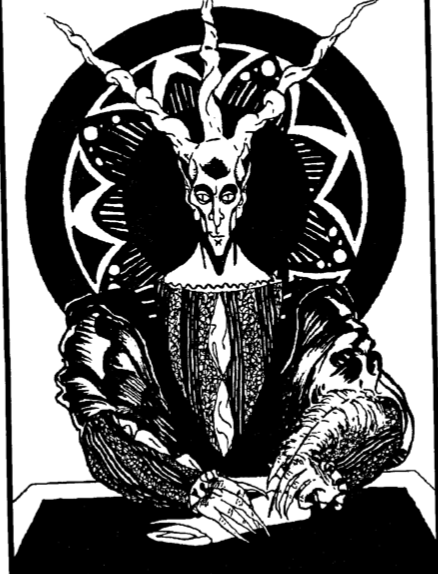

I hope you enjoyed reading. If you want, follow my blog for more Occult content. You can also follow me on Instagram @WhiteRavenMagus

If you have any thoughts to share, please leave a comment below.

Until next time, farewell.
~White Raven

Invoking Lucifuge Rofocale

Written: June 14th, 2018 | Edited: 26th March 2019

Finally, we have reached that point. The big one. Everything I’ve put on this blog has been leading up to the big reveal that i’m actually an evil illuminati satanist, teaching people the evil ways, converting them to the darkness, invoking the Anti Christ and bringing about the END of the Catholic Church!

Lol, just kidding. Lucifuge Rofocale is pretty cool, and quite powerful, but he’s not quite the literal devil, and hopefully today I will be able to dispel some smoke and mirrors by sharing a genuine and cohesive invocation of the Spirit.

As for the Church: the rampant pedophilia, hypocritical political stances, corruption and toxic globalism that they spew out like diarrhea these days will bring their end anyway. We don’t need to do anything, because not even most Catholics like the Church.

I’m not a black magician or a satanist, I’m a Hermetic Kabbalist. This may ruffle feathers on both sides, but I don’t worry, because I speak totally from experience. This post isn’t giving opinions about Lucifuge, just talking about my personal experience. Take it for what it is, and the rest is up to you.

Besides, this isn’t the 90s. Being a satanist ain’t edgy anymore : )

tumblr_nly2ei0mhj1qbs1rgo1_1280


Who is Lucifuge Rofocale

Unlike Lucifer or other demons, Lucifuge isn’t actually someone who appears in any prominent religious scripture or even mythology. In fact, it doesn’t look like he is even mentioned anywhere before the 18th Century.

He also has basically no presence or influence on pop culture (although at the same time one might say he has influenced all modern demonic fantasy in existence. We’ll get to that).

This makes him a much more obscure being. In fact, the literature on him is so specific, that either you know exactly who he is, or you have literally no clue. He’s one of those rare figures that appears exclusively in occult literature, with no overlap in mythology, folklore, fantasy, pop culture, or anything outside of practical magick.


Lucifuge in the Grand Grimoire

He is a figure mentioned in the infamous Grand Grimoire (also known as the Red Dragon), which you may or may not have heard of. It is a book from the 19th Century (though allegedly based on material dating back to the 16th Century) and contains all sorts of information, ranging from herbal alchemy to full fledged evocation. It also has a strong political importance.

screenshot-2017-09-14-00-57-25

The contents themselves are quite interesting. For example, much of the herbal alchemy instructions mention exact chemicals, like copper sulfate and arsenic etc, instead of just plants, or, as is more often, symbolic allegory. This is probably because by this time chemistry had become significantly more developed and organised. It’s got a literal chemical recipe for the “Philosopher’s Stone”, which I found very amusing.

But other than that, the more interesting aspect is the list of demons. It diverges from the traditional systems, and has several demons that are not typically mentioned in older works. The most important of this is Lucifuge Rofocale, the Prime Minister of Hell.

The inclusion of modern democratic titles like Prime Minister, instead of usual aristocratic titles like Earl, Count, Duke etc. insinuates that Lucifuge as the Prime Minister is more important to the practitioner than the Emperor, which is Lucifer (in my opinion, an obvious allegory to democracy taking over monarchy, which would have been a growing opinion at the time. The Victorian Era, the beginning of our modern, industrialized world of Nation States.)

The method of evocation itself is very similar to the Ars Goetia (the usual skin-an-animal, draw Jesus’ names, cut a wand from a specific tree at a specific hour and use incense etc.). However, it is a lot more elaborate and instead of letting the magician experiment, it is very specific, and mentions the exact sequence of events that will take place. This of course, can never be true, but I appreciate that they went to the trouble.

Basically, you evoke Lucifuge, ask him to lead you to hidden treasure, and then promise to repay him with very complicated and time consuming rituals for the rest of your life or he comes and takes away your soul, or all your treasure.

ds4_4894

This is yet another departure from traditional Grimoires. It greatly simplifies Infernal hierarchy, greatly over-complicates the rituals, filling them with many pointless actions, and instead of offering several things that the magician might want, it basically boils everything down to “treasure”, received from a single “devil”, and in exchange for eternal allegiance/soul. No wonder it caught on.

Update (2020): After more examination, I’m convinced that many “pointless” parts of the book that aren’t pointless at all. Rather, the one who wrote it probably wanted to keep “unworthy” or uninitiated people away from it, and has knowingly filled the book with empty promises of power and false techniques.

This is probably also the truth behind the Philosopher’s Stone.
In fact, one of the Spells for Invisibility is down right dangerous and will most likely end with the person being seriously poisoned and possibly dying. The final sentence for the spell is “…and all of this must be taken very seriously. After all, it’s not included here as a joke!”

So yeah. The Grand Grimoire was written by an edge lord. I bet he’d love 4chan.

I think you must be starting to see why this grimoire is important. This is the first grimoire that brought many of these concepts into notoriety, and inspired the modern Hollywood depiction of any and all Occult practices. If you ever wondered why all the satanic horror films in the 20th Century have some guy sacrificing animals, calling the Devil, and foolishly making a pact selling his soul for something he desires, then this is literally the source.

The Grand Grimoire, probably because of how simply it puts everything, without any allegory or mystical commitment, is very attractive to the average layman who wants to dabble in the occult, much more so than the Goetia. Of course, it has a strong monastic component, especially in the preparation, like fasting, praying, taking astrological times into consideration and biblical symbolism, but all this basically gets ignored when it’s depicted, or the monastic practices take on a negative element, like having to kill someone you love, cause permanent damage to yourself or “leave your humanity behind” (not the humanity!)


Lucifuge in Religion

So that’s who Lucifuge Rofocale is. A spirit from the Grand Grimoire, who can be thought of as the Archetypal pop culture devil, as it is his characteristics you see in most mass media, because he HAS no deeper meta narrative, or any strong mythological basis. You only ever see the Luciferian archetype of a cosmic rebel in deeper storie,s which are more strongly rooted in theology. Lucifuge Rofocale is the antithesis of Lucifer. This makes sense because the modern perspective of the Devil is linked to Saturn (as it should), which is the planet associated with Lucifuge, while Lucifer is the reverse force, associated with the Sun.

After all, illumination, knowledge and rebellion aren’t seen as negative things in the 21st century. But wealth, discipline, obscurity and secrecy are.

If Lucifer is interpreted as a fallen Angel, the cosmic rebel, and the one who brings the light of forbidden knowledge (like Prometheus), Lucifuge is the darkness, the being that flees from God’s light and feeds into indulgence. The one who hides knowledge, protects wealth, and guards gates.

If you take the traditional “Devil” from the Bible and split his two aspects, the Rebellious aspect from the Fall becomes Lucifer and the dark, apathetic aspect that corrupts men is Lucifuge (this is of course, ignoring all other occult significance).

cover

This is what I meant when I said he’s basically unheard of, but also the most influential. The “Devil” most average Christians (the kind who haven’t even read the Bible) fear is Lucifuge, though the more fundamentalist type may also fear Luciferian ideals of rebellion, breaking away from tradition, pleasure and antagonism.

As for his name, it’s a play on the name Lucifer. I imagine that by the 19th Century, it had become abundantly clear that Lucifer means Bringer of Light (I don’t know why New Agers keep bringing it up like it’s some new revelation). Lucifuge, on the other hand, is the literal opposite, meaning “he who seeks refuge from Light” or “the one who flees from the Light”. This also makes more sense when you think of the traditional Christian Devil, and is much less mystical and complex than Lucifer.

The meaning of the second name, Rofocale, is unknown, but there are various interpretations of it. My personal favorite is the theory the Rofocale is an ambigram. If you read Lucifer backwards, it becomes Reficul, which can be further Latinised as Rofocale. It’s a play on the very nature of Lucifuge as the reverse of Lucifer.

If Lucifer can be symbolized by a burning torch, then Lucifuge is the hidden wealth under the Earth, in perpetual darkness until dug up. And isn’t it ironic how the methods that will make you rich are often kept from you, and never taught to us in our lives, unless we seek them out ourselves? These days Knowledge is easy, but wealth has become hard. In the old days it was both these things that were denied to the masses, so who knows maybe in the future both knowledge and wealth will be in great abundance.

Knowledge is Power, Time is Money. Sun and Saturn, the correspondence could not be more clear.


Lucifuge in the Occult

Lucifuge does not play any prominent role in occult mysticism, such as Hermetic Kabbalah, and does not traditionally fall on the Tree of Life, which is the method of classification I follow. However, on the Qliphoth he is placed on the third sphere, Satariel (meaning the Dawn of God), which is the shadow/shell of the Sephiroth Binah.

This cements his Saturnine symbolism. One may say that the Vision of Sorrow is ruled by Lucifuge Rofocale, for he is said to dwell in a maze. This experience, upon being crossed, gives one a clear vision of the supernal light. Binah/Satariel rules the third eye. The Vision of Sorrow turns to the Vision of Light, Mater Dolores turns to Virgin Mary, Kaali turns to Shakti, the Crone reveals the Divine Mother.

Perhaps one might say Lucifuge reveals Lucifer? I’m not sure about that one yet.

a2829484879_10

Other than that, its basically just the Grand Grimoire. Use any form of invocation to call upon Lucifuge, since he does not have a specific type associated with him.

Update (2019): You may also use the demonic enn of Lucifuge Rofocale to great effect.

From the point of view of archetypes and astrology, I have spent a lot of time thinking about where Lucifuge would fit in. In fact, in my invocation of Lucifer, I said that he was an entity with multiple aspects corresponding to multiple planets. If that was the Solar/Venusian aspect, then this is the Saturnian/Plutonian aspect. It is heavily associated with money, indulgence, and severity. Perhaps, while Lucifer rebelled against authority, Lucifuge might be associated more WITH authority, and the wealth and power that comes with such authority and power.

This makes him a much more tricky figure to deal with, as is the case with ALL Saturnian Gods/Spirits, and it’s probably easy to piss him off. Nonetheless, I don’t feel wary as I write this, nor feel the need to whisper his name. This is the Age of Information, and the longer we speak in whispers, the more we put everyone at risk. Given the sheer amount of dubious information on such topics, I think it’s only fair I give some genuine information, since I have nothing to gain from lying.

(although the way I write will basically put off anyone not actually interested)

After all, I’m not trying to sell you a book or a program which will teach you how to instantly get rich with Lucifuge or use his powers for your darkest desires. That’s up to you to figure out, if you choose to follow such a path. 


Why I Did This Ritual

Alright. Now that we’re past theory, we can get to the meat and bones of this post. This is my personal experience. I will say though, that it has been a fairly long time since this happened, and though I have the actual ritual well recorded, I have to rely on memory for some things.

The reason I wanted to do this invocation was, partly, and as is with everything I do, curiosity. I think I’ve known about Lucifuge since my earliest days of magick, when I really didn’t know what I was doing, thanks to a YouTube video by a certain infamous black magician (don’t pretend, we all know who he is).

At the time, I was quite captivated, due the sheer mystery and obscurity of the material. However, I was also afraid, because I was not yet sure I knew what I was doing. Despite having evoked Goetia once or twice, the lack of information around the shrouded entity was enough to discourage me. I was also a teenager, so the idea of calling on an all powerful, supreme dark being to grant my wishes, seemed really tempting. I decided I’d do it some other day, when I was a “real” magician, a sorcerer covered in tattoos, with dark entities at my finger tips, ready to carry out my selfish desires.

ofermod-2-300x269

I haven’t really had much reason to invoke Lucifuge, and the fact that he does not fit into any traditional framework made me think he was probably just an urban myth created by that YouTuber to make money, probably having little merit.

It was only last year, when I was reading through the Grand Grimoire, which for some reason I’d ignored so far, that I came upon this name. And I was immediately hit with equal parts of amusement, curiosity and surprise. So, he was a real occult figure after all, even if only in one Grimoire. I was about to start something important, and felt that it would be good to raise the monetary gains from it, and maybe get some extra as well. Besides, it sounded fun (famous last words).


The Invocation of Lucifuge

Let’s begin with preparation. In the Grand Grimoire, there is a seal and characters for Lucifuge. I put the seal in red ink on one side of circular parchment, and the characters on the other. I transcribed the name L-U-C-I-F-U-G-E in a circle around the perimeter. You’ll recognize this to be a Goetic style seal. You can read more about how to make seals on my post here.

I made the circle from stones, since I’m preparing to discard my old fabric circle, and also because this ritual is traditionally done outdoors (which I’d do if I didn’t live in the middle of a massive Metropolitan city). On the outside, I suggest putting two candles on either side, similar to how it is recommended in the book, though I did not do this. I did the ritual facing North, corresponding to Saturn and the Earth. On my altar outside the circle, I made a smaller circle of polished stone and placed a black candle in the middle.

I did the Invocation of a Saturday, in the Hour of Saturn (which is always fun), while the Moon was waxing. To further get into the Saturnian spirit, I spent a big chunk of the day cleaning my room, discarding useless stuff, and clearing out the clutter. It’s usually not a good idea to do anything in this sort of timing, only something exceptional. To learn about astrological timings, read my post.

Anyway, I chose to do it at night, when all was quiet and I’d not be disturbed. I darkened the room, as I always do, and began.

I performed all the preliminary banishings, and invoked the Sphere of Saturn. To do so, you must trace the invoking hexagram of Saturn (google it) in black, and vibrate ARARITA, and then trace the Sigil of Saturn in the center in indigo, vibrating YHVH ELOHIM.
Remember to banish at the end of the ritual, with the same procedure but with the banishing hexagram of Saturn instead of the invoking one.

After that, I began the ritual. I first called to Lucifer, and petitioned him to send Lucifuge, his Minister. This was a slightly modified version of what is already given in the Grand Grimoire, and staring at the seal, I slipped into deeper meditation. I then continued to call to Lucifuge via different names, and most epithets came to me naturally. The most key thing is to be genuine and authentic. Don’t be pretentious, don’t be afraid (very important), and don’t treat it like a joke.

eclipse-1

It didn’t take long for something to happen. Maybe about 15 minutes. In my last post, I talked about how some of the darker spirits, like Lilith or Samael, have a very intense arrival, but this was perhaps the most intense experience I’ve felt so far.

My vision became tinged with red. But then I realised that the space around me physically appeared to be bathed in red light. It got very, very warm, almost uncomfortably so, as my breathing became fast and shallow and heartbeat increased. It kept increasing, and it felt almost like I’d just finished a long run. Then, all of a sudden, it subdued, and I felt a very heavy, over-bearing presence.

It was Lucifuge Rofocale, Prime Minister of Hell. He had come. It felt cold, yet warm. Or rather, it was SO cold, it felt hot. Like a humid chill. Saturn is associated with scales and balance as well.

I remained calm and dealt with whatever had come. At first, I asked it what it was, and it confirmed it was Lucifuge, though I knew that intuitively.

I felt this presence loom over me, but I tried to remain firm and unwavering. Through meditating, my mind had gone blank, like an empty cup. Slowly, I allowed Spirit’s essence to pour into my mind. Now I know what you’re thinking, “oh my god, you’re supposed to evoke demons, not invoke them”. That’s true for “demons”, as in incomplete beings. Lucifuge falls more into the category of a deity. All biblical demons and darker pagan/eastern gods do. Goetia, fay, ayakashi etc. don’t.

As this happened, I temporarily assumed the personality of Lucifuge Rofocale. He spoke through me, and delivered messages. I felt myself being lifted up. I felt huge, and powerful, like a God. At the same time, I felt my arrogance and ego grow tremendously, and I felt as a lord would. He said that in order to have wealth, you must feel like this. You have to feel like a Lord to be a Lord.

I felt like this is what a stern, traditional state of power would feel like. Firm, earthly, set in stone, without regard to anything. This is what power is. There was no force behind it. It wasn’t assertive or aggressive. It simply was, stern, overbearing, like a monolith in a barren field. Lucifuge stated that that he had no momentum behind him. Under Saturn, he was unmoving, like rock. This is true power. Momentum is not power, momentum is force. Force is like Fire, Power is like a Earth. Lucifuge has no myths or legends, because he doesn’t evolve or change. He stays the same.

He said that to invoke him, a lamp should be lit, and alchohol of some sort must be poured. Do it in a dark room, and have no light in front of you, but on either side (as I suggested earlier). In front there should be incense. Just as Lucifer’s element is light, for Lucifuge it is smoke, which shrouds light and protects secrets from the uninitiated.

thumb-1920-120849

At this point I was starting to falter, and Lucifuge told me not to be scared even though he was terrifying. He who is scared gets overwhelmed by the darkness. Fear is the enemy. The true enemy, the true hell, the true Devil.

Fear, the farthermost state from divinity. The black dragon, the poisonous serpent, the typhon and apophis, all are rooted in things we fear, and a fear of the Unknown. But the Occult is literally about confronting the Unknown, to delve bravely into that which is on the edge of civilisation, just as the ancient Occultist, the shaman, would delve into the forest beyond the boundary of the village, in search of medicine, and hunters in search of food. Over time, these acts would become commonplace and standardized, no longer ‘unknown’. The boundary keeps expanding, and at the forefront are the courageous.

I was speaking very rapidly now. He said the true adversary is within. It is hate, greed, fear, filth, anger, envy, disgust, doubt and fear. He said “we are but unmanifest beings existing at various planes of existence. We have no physical reality, and no power over you. We cannot tempt you, or control you. It is the evil inside you that tempts you to the dark side. We have no control over your surroundings, only you yourself do”

At this point, my face slowly and unwittingly changed to an intense frown. I instinctively reasserted control. I had the momentary feeling that I would have to force control over my body again, but I didn’t. The moment I consciously attempted to change my expression, I was instantly in total control. As my consciousness came back, the presence evaporated rapidly, like a dream after waking up. “See, I told you we cannot control you”

It’s interesting. The fear and caution with which we approach these things, with the constant need to be in control and paranoid of loosing it, is an inherent part of the Ego, and I had momentarily given in.

You don’t give in to some cosmic being or demon, you give in to yourself.

I ended the ritual, as one always should, with proper expressions of gratitude, license to depart and banishings. If you invoked Saturn, now would be the time to banish it.


Conclusions and Aftermath

I know what you’re thinking: nothing in this invocation was especially revealing. I mean “in order to be rich you must feel rich” ??
That’s not new information. That’s mainstream man. I mean, not just in the occult, but even well within New Agery, and even outside spirituality. By now, there’s probably hundreds of books on it.

But you see, that’s why armchair occultism is incomplete. Of course, I’ve heard this many times. I knew this too, even before it was revealed in this Invocation.

But knowing and understanding are totally different. Remember, Chokmah (Wisdom) comes AFTER Binah (Knowledge), and ultimately leads to Kether (Realisation). During this invocation, something changed. The understanding didn’t come, but it was as if the idea made sense. It is difficult to describe what happens during any meditation, but I assume if you’re reading this blog, you know, so I don’t need to explain.

I came to realise what exactly it means to “feel” powerful, or rich. That is the key, to power or wealth, or to manifesting anything. Like attract Like, as Hermeticism would say.

The realisation comes throughout one’s life. It’s not a single moment of realisation, but a multitude of them occurring repeatedly over the course of one’s life.

As for money, did I get any? Well, it’s interesting. I never cast to “get money”, but I always strive towards “earning money”. Following this invocation, I ended up doing two different divinations for two different people. One was free, one I did for money.

But, of course, I don’t do occult stuff for a living. The other things that I had begun prior to this ritual worked out well, but bear in mind this was proper work that already had an assured paycheck at the end. On the other hand, for about a month, various opportunities to make cash started coming to my attention. I also ended up saving money in various ways, which is just as important.

This is how it usually works, at least in my opinion. You perform magick directed at something, and it’s rarely given to you, but you’re presented with opportunities to get it. One of the biggest things that presented itself was an art competition, with a considerable reward. However, the work that I was doing ate up so much time and energy that I willingly chose to let this competition slide. Usually, I like to participate in competitions, just to get an opportunity to improve my creative work and test it out against others, but this time, I let it go. I have no idea if the Invocation could have increased my chances of winning. Sometimes, you just gotta cut stuff loose in order to focus on what’s important. Sometimes, it’s just that poverty mindset holding you back, making you participate in every competition that comes your way. Somewhere, deep inside, you feel like you have to jump at every opportunity or miss out on something.

emotional-tech-wellness-silhouette-young-woman-practicing-yoga-on-285186332-1068x601

Update (2019): After this ritual, I left to live in a foreign country for the next 6 months. During this period, I really had to learn to be wise with money, since I had a set amount of foreign currency. While I was there, I also made the offerings to Lucifuge that I’d promised him (food offerings, basically). The whole experience taught me a LOT about money, since I met many people who were successful in their fields. Who knows, maybe the Invocation made it so I was pushed into situations where I had to learn about wealth and power. You know what’s amusing though?
When I was returning my baggage was heavy and I had to pay a fee. This was totally unanticipated, but would have happened anyway. I’d later buy some food and water. After I was done I had exactly 1 euro left.
Ha. The whole time I was there I’d been worried. I thought I was missing out on experiences by being too tight with money, since I was tracking my finances far more than the others. And yet I was left with but a single euro. This means I spent exactly how much I should have, and if I’d done anything more I’d have been short. Maybe sometimes you need to trust your gut and stop worrying.

In conclusion, I recommend anyone with at least a few years of experience to try out this invocation. However, this is one time I will recommend caution.

Lucifuge Rofocale is far too intense to be messed with or taken lightly. I will also mention now, before the Christians come screeching to save my soul, that I am not a Satanist, or Luciferian, or an LHP practitioner.

I do not live my life with fear of the Unknown or the constant fear of damnation, either in context of my own religion or any other. I simply do what I think is right, and live virtuously the best I can. I see the exploration of things like the occult, and experimentation for the sake of knowledge and growth as positive. You are free to disagree, but simply telling me I’m going to hell isn’t going to suddenly convert me from the faith I was raised in (which itself just barely appeals to me. I’m a Hindu by culture, but religious orthodox Hinduism is just as terrified of the Unknown as fundamental Christianity. It wont damn you, it’ll just tell you how you’re a disgrace for daring to think beyond what you should think.).

One final thing to mention is this. We usually Invoke deities so that aspects of our personality which are incomplete, may become whole as we “inherit” the characteristic from the Gods. Lucifer has charm, charisma, and cockiness. Lucifuge has assertiveness, power, and a healthy amount of desire. Perhaps, if you’re not able to stand up for yourself, are ridden with guilt because of materialistic desire, or stuck in a state of poverty, Lucifuge may be the one to invoke.


Well. So here we are, at the end again. I would like to thank everyone who has liked my blog and sent me positive messages. It really drives me to write more.

EDIT 2020: As of July 2020, I’ve written a new book on the Tree of Life and Kabbalistic theory. I’m quite proud of it, and you can check it by going to the Books tab, or clicking right here.

This has been my Invocation of Lucifuge Rofocale, and I hope you found it useful to your own practice, or just enjoyed reading it! If you liked this post, follow my blog, and check out other stuff I’ve written. You can also follow me on Instagram @WhiteRavenMagus

That’s all for now. Take care. Until next time.

~White Raven

Timing Your Magick (Astrology Simplified)

Written: Janurary 1st, 2018 | Edited: 24th March 2019

Hello! It’s me, Raven. I have a post about Lilith, and then a few about Lucifuge Rofocale coming in the next few weeks, so be excited. For now, have something more simple and mundane ^_^

Today i’m here to tell you about astrological timing. People sometimes obsess over when is the “correct” time to perform magick, and this happens to a great degree within the more elaborate ceremonial tradition, though sometimes even folk traditions have this, and almost every religion in the world has certain times of the year or month or day that are considered auspicious.

At times these may seem arbitrary. Why is Christmas on the 25th? Why is 3 am the witching hour? Why do certain types of yoga at sunrise? Well, this is largely based on something that is universally shared by all cultures: astrology.

Not only is it universal, it seems most of the time people’s interpretation of astrology was also the same, surprisingly. You could say this was Synchronicity at play, or you could say that ideas were shared by cultures as they interacted with each other, or you could say that we had the same ideas of astrology based on archetypes that are common to all human beings, and the product of evolution.

Regardless of what you think, astrology is important, and thanks to the rapid spread on information on the Internet in this day and age, it is effectively the same across the planet.

And let’s be honest, it works. Anyone who’s delved into spirituality proper, knows that astrology works. We don’t know if it’s due to forces we can’t understand yet, or if it’s simply psychological, but it works, and there’s no denying it.

I mean, they recently did a study in which they found out that the amount of sunlight hitting the Earth’s surface at any given particular time, affects whether people make good or bad economic investments. I mean, just think about how insane that sounds from a traditional scientific perspective, and yet it seems like it’s true. So who knows how deep the rabbit hole goes? And of course, if it works, why not use it?

ceremonial-magickian-friend-memeCredits:Blue Flame Magick

Imagine, if humanity had never utilised the principle of gravity, to make projectiles, pumps, weights etc. until Isaac Newton discovered it. And ultimately, he wasn’t even fully right. Einstein would give a better hypothesis a century later, and even that was only proven to be true in 2017: THIS year.

Bottom line is, humanity would be very far behind if it refused to utilise principles that we knew existed, just because we didn’t fully understand them. That’s the whole idea of the occult.


Astrological times

In most modern systems of Magick, astrology is a preferred way of planning your rituals, spells, invocations etc. Ultimately, I think you should always keep astrology in mind when you go about your daily business. Start viewing planetary hours, phases of the moon, retrogrades etc. the same way you view the days of the week, hours of the clock, months and years. Just like you know that it gets colder in December, and so you go buy clothes for the winter, without thinking too much about it, you should train yourself to know when it’s, say, a Mercury retrograde, or when the Moon is waning.

However, astrology is fairly confusing, especially to someone not fully familiar with reading charts. As far as I know, I’ve never seen a simplified explanation of the various different factors affecting astrological times, or how to plan magick in accordance to them.

Either I see a new age explanation that condemns it, or something that merely tells people to do things at certain times, without actually giving a reason for it. Sometimes, when you do find it, you get an exceptionally elaborate explanation for seeing when EVERY planet is perfectly aligned, and the moon and the sun are in a specific sign and house, and everything is calculated right down to the degree and minute, in a complex chart that many people may not know how to read.

That’s useful of course, but not exactly convenient for the average magician. So, i’ll focus on the most important aspects, and break it up into sections, based on different types of celestial bodies.


Phases of the Moon

moon_phases
Credits: NASA/Bill Dunford

The most basic and simple thing to keep in mind, of course, is the phase of the Moon. The Moon goes through one complete cycle in about 27-30 days. This has two stages, the Waxing stage, in which the Moon grows larger, going from the New Moon to Full, and the Waning stage, in which the Moon reduces in size and goes from Full to New.

By the way, that’s also the reason a Month is around 30 days long. It’s based on the Moon cycle, though I guess it’s been shifting for centuries, and now the Moon cycle usually begins at ends about halfway through each month. I’m sure at some point it matched each month exactly.

(Unless, of course, you’re reading this 4000 years from now, in which case, it probably does. Good for you!)

The only thing to bear in mind is this:

Magick to bring things to you, or invoke, is best done during the Waxing moon, when it’s growing. The waxing moon is a time for activity and growth. It’s a good time to start things.

Magick to send things away from you, or banishing, bindings etc, is best done during the Waning moon, when it’s shrinking. This is a time for reflection and cleansing. A good time to end, not start, things.

The Full moon is usually considered to be a very powerful time to do anything spiritual. The New Moon is considered a dark and empty time. Also powerful, in the opposite way.

One last thing: every two to three days, the Moon moves from one sign to another. During the transition, the Moon is said to be Void of Course. Generally, this is a bad time to do magick, as the Moon is said to be unstable. So, if you’re planning any ritual, it’s good to have some sort of calendar that tells you when the Moon is void of course, so you can avoid those periods, which can range anywhere from 30 mins to 24 hours, if not longer. I’d suggest using an app for this purpose. I have one called “Void of Course calendar” on android.


Planetary Days

Most people probably know about planetary days. A week has seven days, and each day corresponds to one of the seven traditional planets of astrology. Most are named after the Norse gods corresponding to the planet.

Just in case you’re unfamiliar, it goes like this:

Sunday: Sun’s Day
Monday: Moon’s Day
Tuesday: Tyr’s Day – Mars
Wednesday:  Woden’s (Odin’s) Day- Mercury
Thursday: Thor’s Day – Jupiter
Friday: Freya’s Day – Venus
Saturday – Saturn’s Day

daysoftheweekCredits: Cafe Astrology

Now, you may have noticed that I started with Sunday, and not Monday. This is because the Sun is associated with beginnings, not the Moon. The week is traditionally meant to begin on Sunday and end on Saturday, as Saturn is associated with endings.

In fact, the reason everyone’s so miserable on Monday is because the Moon is associated with emotions and feelings. It’s an unnatural imbalance to start the week on Monday. The reason for this imbalance is because Christians used to attend Church on Sundays. They didn’t END the week with Mass, they BEGAN the week with Mass. Sunday was always the first day of the Week, but these days, few people actually attend weekly Mass, and so Sunday has become considered the Week “end”. This is an ancient concept, and Sunday was originally the day of the worship of Ra in Egypt (and other sun gods, to some varying degree in other cultures). Put simply, the Day that has been named the holy day (holiday, lol) of the Sun, should be the beginning of the week, regardless of culture. 

sundayCredits: Mortimer Arms

The real “weekend” should be Friday, associated with love, creativity, gratitude and celebration, and Saturday, the day of rest, reflection and endings. That’s why Jews don’t do shit on Saturdays.

Amusingly, it seems the Muslims got it right. Most Islamic cultures count Friday as a weekend, and usually people don’t work or work half days and then go to Mosque later. There’s a reason you feel so happy on Fridays. It’s your natural instinct. And I’m going to say that’s also why weekends go by so fast and people don’t get anything done. People want to party and make plans and enjoy on Saturday, and the energies of Saturn drain them, and then they spend Sunday recuperating, when they should be starting the next week. Friday, the day of celebration, is wasted on trying to finish work. And hey, i’ve been to Europe and noticed that people there too work halfday on Fridays. I’m beginning to think it’s only here in the East that people work full Fridays. (Maybe that’s why everyone is insanely stressed out, huh?)

Now of course, we can’t change the world around us, but we can use what we have learnt. All I can say to you is: stop working late on Fridays, and stop wasting your Sundays. Finish up everything by Friday afternoon, and then treat it like your weekend’s begun. Get on with your weekend plans. Chill out and rest on Saturdays, and around Sunday noon, start preparing for the coming week. Treat Sunday as the beginning of your week, and Saturday as the end, and follow this as much as you can.

I’m at a point where it’s natural for me to think like this. In fact, in my previous post, I talked about Assiatic path workings, in which one must meditate on each Sephiroth for seven days. I used to start each week long meditation on Sunday, not Monday, and it worked out great.

As for magick: all spiritual and magickal endevours can be classified under one of the seven planets. Do your magick on the Day of the planet under which it falls. And extend this to your daily tasks, and do tasks on their corresponding planetary day. The same would apply to invocation and evocations of any Spirit or deity, who also correspond to planets.

Sunday- Beginnings, Goals, Achievements, Self, Light, Heaven, Divine, Purity, Prayer
Monday- Water, Emotions, Astral plane, Dreams, Visions, Reflection, Cleansing
Tuesday- Fire, War, Victory, Passion, Sex, Lust, Movement, God, Strength
Wednesday- Air, Learning, Magick, Meditation, Knowledge, Divination, Travel, Commerce
Thursday- Money, Finance, Treasure, Leadership, Generosity, Kindness, Expansion
Friday- Earth, Celebration, Love, Fertility, Gratitude, Nature, Goddess, Wealth
Saturday- Darkness, Death, Endings, Rest, Introspection, Delay, Business, Legality, Justice, Destruction, Binding, Banishing

I avoid doing any magick on Saturday, unless it’s specifically Saturnine magick. Sunday is good day for almost any and every type of Magick.

saturn_eclipseSaturn Eclipsing the Sun, photo by Cassini probe


Planetary Hours

planetary-hours-01Source: http://www.astrology.com.tr/planetary-hours.asp

Now, a slightly more complicated concept, specifically relating to Magick. Each day has 24 hours, and you know that already.

However, each hour of each day is also ruled by a planet. Any planet, is strongest on it’s Day and in it’s own Hour. So, if you want to do a ritual for Money, you want to do it on Thursday (Day of Jupter) in the Hour of Jupiter, as it would be strongest at this time.

However, it is important to note that the planetary hours change on each day of the week. They’re not fixed like the hours on a clock.

On the day of any planet, the hour in which the sun rises, is the first hour of the Day, and the hour of that planet. So, for example, sunrise on Tuesday marks the beginning of the Hour of Mars, as well as the Day of Mars.

Here, we have another example of how modern standardization affects tradition. The sun rises at different times in different regions, and in the old days people would usually say that the Day began at sunrise and Night began at sunset, and still do, because of natural instinct. This has been the case since the dawn of man.

But, for the sake of international convenience, we have decided that the new day begins in any region at 12 am, or 00:00 hours. Generally speaking, modern systems of time keeping don’t designate a beginning for “night”, and, because of modern electrical lighting, we don’t need to worry about night. We do divide the day into two halves, but that is separated at Noon, 12 pm, or 12:00 hours, exactly 12 hours after our designated beginning of the day. It makes no real sense but it is the accepted norm.

This is good for time keeping, but terrible for Magick. The day, according to astrology, begins at sunrise, and night begins at sunset. I’m sure you can see that a problem arises.

That means, once the clock hits midnight on a Monday, Tuesday begins according to accepted norm, but from a spiritual point of view, it’s still Monday. Tuesday will only begin when the sun rises, which in most places would be between 6 and 7 am.

That is why when I write about my rituals, i’ll specifically use the words like “Day of Mars” and “Day of the Moon” instead of Monday and Tuesday, and I recommend making this switch. It may still be the Day of Moon at 2 am, even if most people would call that Tuesday. 

(I know it’s confusing. Try to keep up, i’m trying my best)

Now of course, you can adhere to the norm when it comes to general communication, but, for your personal work and for magick, start viewing the day in terms of astrological hours.

Also, bear in mind that the astrological hours don’t necessarily match the hours on the clock. The sun does not always rise on 6 or 7 am sharp. It may, for example, rise at 6:22 am. And, these hours are not always exactly 60 minutes long. They’ll depend largely on where you live, and naturally, they change with the seasons, with the sun rising early in summers and later in winters, for example.

Update (2019): In ancient Japan, a brilliant man named Hisashige Tanaka created a mechanical clock called The Myriad Year Clock, which was finished in 1871. It has been called the “most complicated timepiece ever made” because the dial shifts with the seasons and years, and tells traditional Japanese time. It’s quite impressive, so you may be interested. I think in 2016 a Japanese artist took inspiration from it and created a wristwatch which did the same thing. There’s a documentary on it, so find it if you can.)

And once again, the best way to track this, is with an app or a program. I have a free app on my Android phone, which takes in your location and then tracks planetary hours for you. Other than that, just remember, the first hour after sunrise is ruled by the Planet of that day. It’s called “Planetary Hours” by ‘thereisonlywe’.

So, the first hour after sunrise on Tuesday is the hour of Mars, and on Wednesday, it’ll be the hour of Mercury. Roughly speaking, only the hour of the Planet that corresponds to that day is really important, and it comes 4 times a day, every 7 hours. The other hours between this are ruled by other planets. Although if you have magick that utilises the energy of two planets, you could mix and match this.

Generally, in most places of the world, since the sun will rise between 6 and 7 am, the hour of that day’s ruling planet will come again between 1-2 pm, then between 8-9 pm, and again between 3-4 am. At least, that is the case where I live, in North India.

And THIS is why 3 am is the witching hour. If you think about it, throughout all of history, and even today, it’s difficult to be open about practicing magick. Generally, you want to keep it hidden and not really get others involved. And of course, you want to avoid distractions too.

That means the best time to do magick for most people is around 3 am. I’m sure there’s much more to it, but from a astrological standpoint, this would be the reason. At 3 am, not only is the planet of that day powerful, but it’s also a time when everyone’s usually asleep and there will be very few disturbances or interruptions. Even most animals will be asleep. And you know, darkness if a good simulator of the pineal gland.

One last thing. You know that every 7 hours, starting at sunrise, is the hour of the planet of that day. But, how do you know which planets rule the other hours, without an app or a program?

Well, luckily, the planets have a set pattern, which is based on their order in astrology. I don’t remember what EXACTLY is the basis for this order right now, but i’ll write about it later if I can find it. Right now, just memorise the order so you know which hour comes after which. The order is:

Mars, Sun, Venus, Mercury, Moon, Saturn, Jupiter

You may have noticed that this hourly order is different from the order on which the days of the week are based. Again, I don’t remember exactly why the order is how it is, but I’m pretty damn sure there’s a laboriously intricate 10 page Golden Lecture lecture on it somewhere, like there is on all matters.


Retrogrades

Planets generally have two kinds of motions: direct and retrograde.

Other than the Sun and the Moon, all planets go retrograde at SOME point, and during this period they appear to be moving in the opposite direction in the night sky. This is largely an illusion due to their orbit, but it still affects us. All you need to know is that when a planet goes retrograde, Magick corresponding to that Planet does not work very well. Generally, other aspects of life ruled by this planet also suffer, or are reversed.

Now, Planets don’t go retrograde very often, and when they do, it can be for weeks, months, or sometimes even most of an year. The only retrograde the people generally care about is the Mercury retrograde, because it is common. In fact, as I write this, we’re coming out of what has been an especially troublesome Mercury retrograde.

Keep an eye out for Retrogrades, and you’ll be able to expect crazy shit.

Here’s an interesting anecdote. Pluto, which rarely goes retrograde, did so in 2016, and was in retrograde for most of that year. I remember, when 2016 started, and someone told me Pluto would be in retrograde that year, I remarked that we would probably see some weird shit.

I said that lots of people might die, virus might spread, and, most importantly, some extremely wierd political events would occur. The political authority (establishment) would suffer somehow.

Personally, I thought yet another dictatorship would fall. And, as you all know, in 2016 many, many celebrities died, there was a Zika outbreak in Africa, ISIS lost it’s capital in Mosul, Brexit happened, AND, the big one: Donald Trump won the US election.

In India, we had a big thing: demonetisation, and 85% of the currency was scrapped literally over night, in a bold attempt to catch tax evaders. After all, Pluto also rules money and hidden wealth. All of this was in line with the retrograde.

You can use astrology to predict things, and at least have a generic idea of what may happen. It’s much better than going overboard with weird conspiracy theories and urban legend.

Update (2019): 2020 is a very important year. In the last few years, Saturn and Pluto have moved intro Capricorn, and begun to break down established Order, traditions and societal structures. This is all in preparation of the Age of Aquarius, and the transition is now fully upon us. Hippies in the 1960s kept talking about it, but now it’s literally happening. Next year, Jupiter moves into Cancer. All the pieces are set, and things shall begin to happen.

hqdefaultSource: Inuyashiki (no, I have not seen the anime)


The Sun

That’s the major bulk of it. However, there’s a few other things to keep in mind, and these are largely based on the Sun.

Night and Day

The Night and Day cycle of course. Regardless to say, daytime and nighttime are good for invoking and banishing respectively. As I said, I do almost everything at Night, but you can still keep this in mind. Also, invoking Gods and Deities is better in the Day, while Night is good for Spirits and Demons. The Nighttime is also when one should beware of more dangerous influences, especially ‘ghosts’, and take extra precautions. We’re psychologically wired to feel fear in the Dark, especially in locations away from human civilization. But to face the darkness is an Occult act, to go boldly and encounter the unknown.

The Morning (or Sunrise), Noon, Twilight (or Sunset) and Midnight are especially powerful times. The Sun is pretty important, and it’s energy and influenced rises, hits a peak, then fades and disappears over the course of the Day. Consult the legend of Ra, and how he changes forms as the day goes by. Our mood is greatly affected by the Sun. bright sunlight brings joy, happiness and optimism.


Seasons

The seasons are important for folk magick. Generally, you have Spring, Summer, Autumn and Winter. Sometimes, like in India, you also have a Monsoon. Different folk rituals and festivals are based on this cycle. For example, Spring is full of life and beginnings, Summer is about light, warmth and fertility, Monsoons are about rain, growth and nature, Autumn is about barrenness, transformation and death, Winter is about coldness, endings, rebirth and darkness. Consult your local traditions to understand this better.

From a Eastern spiritual point of view, Spring is the first season of the year, as it brings warmth and life. That’s why most Eastern cultures celebrate New Year in April. This is also a harvest season for the East, but not the West, because in most Western countries it snows in Winter so they don’t traditionally plant anything.

The reason the West starts the year on January 1st is because the Romans considered January to be the first month, as it was the month of Janus, the God of Beginnings and Doorways. Western culture is greatly influenced by Rome, and of course, it’s after Christmas so it ties in to the Western holiday season.

Many in the East have big celebrations in April, and many countries also treat it as the start of the Academic and financial year. It’s largely dependent on whether you live in the West of the East. I recommend going with what’s naturally done in your region. However, I start new, important things in April-May, including important Magickal phases. Both January and April have great power.


Months and Zodiac

The Months are important too, as they correspond to the Sun moving through the Zodiac. The Sun moves through each Zodiac sign in about 30 days, same as the Moon cycle. Of course, this has been shifting for centuries as well, so these days the Sun moves from one sign to the next around the 20-22nd of a Month. The Sign that the Sun is in is important, as Magick relating to that Sign is more powerful. The Moon sign also matters, but not as much as the phase of the Moon.
You may also take into account the Signs that the other planets are in, but the Sun and Moon matter the most.


Solstice 
/ Equinox

Each year, we have a Summer and Winter Solstice, and a Spring and Autumn Equinox. Both are important in folk and ceremonial traditions. On each Equinox, the Day and Night are equal, and so these are days of balance and stability.

The Summer Solstice is the longest day, and the energies of light are very strong. It is the height of the Sun’s power. But, after that days start getting shorter, and it marks the waning of the Sun’s power. The Winter Solstice is the longest Night, and the energies of darkness are more powerful. The Greeks believed that the veil between the Mundane and the Spiritual world are thin, and it is easy for things to cross over. But, days start getting longer after this, and it marks the Sun’s revival. Thus, we celebrate Christmas.

Again, refer to local traditions for more information on this. Each Equinox and Solstice marks the official beginning of each season.


Years, Decades, Centuries, Millenia

Finally, years, decades, centuries and millennia matter, but not that much. Usually, each Year is ruled by a specific Zodiac sign. Each decade, there’s generally a miniature paradigm shift in the world, and about every half century, there’s a major one.

Every century or two, the outermost planets, Uranus (84 years), Neptune (160 years) and Pluto (250 years), complete one orbit. They also move from one zodiac sign to the next every couple of decades, and this causes significant changes in magickal energy and causes major changes in the world, as well as generational divides.
These things matter less for Magick and more for those who like to observe current events and study history. This may give you new perspective.


Some Stuff to Muse Over

And, I want to leave you one last thing. Here, it stops being practical and becomes largely philosophical, abstract and unscientific. It’s based on Hinduism, as well as astrology and some theoretical science. I see no harm in sharing ^_^

10609435_10202811543678629_6596046963773200899_n

Roughly every 2000 years, we move from one astrological Age to the next. As you may have heard, we’re currently moving out of the Age of Pisces into the Age of Aquarius.
The Ages can be grouped into groups of 3, and thus, every 8000 years can be considered on Grand Age or Cycle. After the cycle ends, a new one begins and causes a rise and fall of human civilization. This, in accordance with astrology, could be further grouped into 3 sets of 4, that is 12 Ages ( one for each Zodiac) after which it repeats, making a grander cycle of 24,000 years. Generally, 72  of these grander cycles, or 1.7 million years, is said to be the lifetime of the archetypal Man (Adam, Manu etc.).

Interestingly, about 1.8 million years ago the early hominids spread across Europe, Africa and Asia, from wherever they first originated.

Every 230 Million years or so, the Sun completes one Orbit around the Milky Way. Currently, we do not know if our galaxy has any such cyclical motions. The Universe is about 14 billion years old, and may live for about 5 billion years more. Of course, this is all hypothesis and we barely know anything about the nature of the Universe. However, from a occult point of view, the Universe should also have cycles, of creation and destruction, which in modern science are called the Big Bang and Big Crunch.

If our cycle of creation ends, it should be followed by a cycle of destruction of equal length. Brahma, the Creator, goes to sleep, as to him, one creation cycle is one day, and one destruction cycle is one night, and Shiva the Destroyer, awakens.
After a hundred cycles of creation, even Brahma is said to die and a new Brahma will be born.

Ultimately, we can only theorise. We know nothing, and that’s totally fine.


That’s all for now, and I hope you enjoyed reading it. There’s plenty of other cool stuff here, so stick around and have a look, and follow me for more content like this. You can also follow me on Instagram @WhiteRavenMagus

If you’re feeling triggered about something, leave a comment, telling me how angry or upset you are ^_^

That’s all for now, until next time.

~White Raven