Happy holidays to everyone. I hope you have a nice 2026.
It’s the year of the Fire Horse after all. I do like fire, and horses, though i’m not so sure about a horse on fire.
I think i’m finally old enough that I can get away with awful jokes like that.
I want to cover something important today, which I think will aid a lot of people moving into this new year. To aid with health, finances, studies and life in general.
The Pentagram Ritual
In ceremonial magick, the Pentagram Ritual occupies an very important and essential place.
When you trace a Pentagram, with intent and focus, you are actually tapping into higher dimensional energy.
The Pentagram is the 2D representation or shadow of “Pentatope” or ‘5-cell’, which is the fourth dimensional analogue of a Tetrahderon, the simplest platonic solid.
In magic, we often use 2D or 3D shapes and forms to represent higher dimensional constructs.
A truncated pyramid, for example, represents a tesseract, or 4D cube. By tapping into it, you are tapping into a deep and infinite pool of energy.
A 2D square is made up of infinite 1 dimensional lines.
A 3D cube is made of infinite square slices.
And similarly, a 4D tesseract is made of infinite 3D cubical faces.
And so forth.
The magic circle and altar represent 4th dimensional forms as well.
I won’t get too deep into sacred, higher dimensional geometry. It’s a whole topic on it’s own and my knowledge of the numbers is incomplete as well.
But when you trace a Pentagram, you are essentially opening a gate to higher, 5th dimensional forces, and anchoring them within 4th dimensional constructs.
In other words, you are opening a gate through the Veil, or through Time. The 1st, 2nd, 3rd and 4th dimensions lie beneath the Veil. They represent material, etheric and astral reality.
The 5th dimension represents reality beyond the Veil, which we as ordinary people do not have access to. Our daily, mundane reality is often rooted in the material world, and we get etheric or astral impressions as thoughts, feelings and visions.
With the Pentagram, we penetrate into the worlds that we normally don’t have access to, and into that wellspring of energy and knowledge.
This is why the Pentagram or five pointed star, is such an important and essential symbol in mystical traditions.
It is and should be reserved for those with the intelligence and ability to exist in higher vibrations.
Many readers will be already aware of the LBRP, or the Lesser Banishing Ritual of the Pentagram.
It is an essential ritual that came out of Hermeticism, because it lays the foundations for all other rituals in that tradition.
The ritual utilises the Pentagrams to draw down a blast of cleansing light onto any space or thing, including a person.
It both protects and purifies you. Very effective ritual, highly encouraged for beginners. It helps you keep a harmonious and balanced mind.
Not just Hermeticism, but many esoteric traditions emphasize such daily purification practices.
There are downsides however. Daily purification can close you off from external energies. They turn you into a “hermit” in a sense. The LBRP is designed to close off your aura and ‘banish’ the four elements. Nothing bad can get to you, but also nothing good.
The LBRP is like a reset switch, and it can diminish energies that you are trying to build up inside yourself.
For this reason, ritual implements are covered in black cloth during many Hermetic rituals. Wands, daggers or sigils are only uncovered after preliminary banishings are done. I always tell people not to do the LBRP near an open altar or around charged ritual objects.
As you advance spiritually, your mind and body become naturally protected, and the aura becomes more whole and complete. At this stage, the LBRP should be employed less often.
It is also based on your goals. If you are trying to isolate yourself, the LBRP is good. But if you need things to come in, like ideas, money, relations etc, you have to lower your guard.
Opening ourselves up to new things involves taking a risk. We are exposing our energy to external influences, good or bad. It is not to draw in only good things without any risk of bad things.
We must use our own discernment to separate the good from the bad. We must do this consciously. To simple close one off cuts everything out, but also happens automatically.
The LBRP is, in essence, a spiritual nuke. It is a blast of purifying spiritual fire that returns everything to a baseline energetic state, and brings complete balance between all four elements. It evens everything out, so to speak.
The Lesser Banishing Ritual of the Pentagram
I will describe the version of the LBRP I do these days. My reformed LBRP.
Remember that while I describe vivid gestures, these are only for a ritual setting. If you’re out and about in the world, you are expected to do the ritual mentally. With enough practice, the ritual takes less than 30 seconds in the head. I can do it subconsciously while doing any other activity. I can even do it in my dreams, where it is often very useful.
Before we begin, take note of the different ways the Pentagram is traced, because I’ll be referring to them in various rituals.
How to trace a pentagram? It’s simple. Simply use the index and middle finger of your right hand, or a ceremonial dagger (for LBRP) or elemental wand (for Invoking rituals) and trace the Pentagram in the air before you, while visualising it in the appropriate colour, while vibrating the correct word of power. After you do so, ‘stab’ the center of the Pentagram and see it burst into brilliant flames. “Vibrating” means speaking the word in a deep, resonant tone and feeling it vibrate throughout your body. If you’re doing it silently and mentally, do it with the similar focus, so it may ‘vibrate’ through your consciousness.
All occult symbols are traced this way. In the elemental rituals, you need to trace a symbol inside the pentagram as well. Once again, do the same. Trace the symbol at the center of the pentagram, while visualising the correct colour and vibrating the word of power. Then, stab it again and see it burst into brilliant light. There are 6 forms of the Pentagram, and each can be for invoking or banishing, depending on whether it is traced clockwise or counter clockwise.
Visualise a white ball of light over your head.
Touch your forehead with your index and middle finger, or with a ceremonial dagger, and draw a ray of brilliant whit light through your body.
Vibrate “ATAH”
Now, touch your chest, and draw the ray of light down your legs to the soles of your feet.
Vibrate “MALKUTH”
And visualise the light settling into another brilliant ball of light.
Now touch your right shoulder, forming another ball of light, and vibrate
“VA GEBURAH”
Now touch your left shoulder, draw a ray of light light through your chest, letting it settle in another ball of light, and vibrate
“VA GEDULAH”
Clasp your hands in prayer and say “LA OLHAM”. Then, vibrate “AUM” or “AMEN”
Ateh malkuth, va geburah, ve gedulah, la olham. It is Hebrew for “Unto thee, the kingdom, the power and the glory of the world is given”.
This opening sequence is called the Kabbalistic Cross.
Traditionally, in a ritual space, you’d be facing North-East, and we would now trace a Pentagram in the four directions, starting from the East and moving clockwise, to the South, West and North, and then back to the East, creating a magick circle.
But if you’re doing it mentally, simply do the ritual locally. Whatever direction you’re facing becomes your North East, and the four directions are replaced with local directions. To your front right, back right, back left, front left, and finally closing at the front right again.
Continuing.
Trace the Banishing Pentagram of Earth in the East.
Why this one? Earth is the lowest element, and a container for the three higher elements. Through this white Banishing Pentagram of Earth, we are basically balancing all four elements.
As you trace, vibrate the Hebrew godname “YHVH” or “YEHOVAH”.
Now, tracing a line as you turn to the South, make another Pentagram.
Vibrate “ADNY” or “ADONAI“.
Now, continuing the circle, trace a Pentagram in the West, and vibrate “ASRH” or “ASHERAH“
Now, continue to the North and do the same, this time vibrating “SKNH” or “SHEKINAH“.
Continue to move clockwise from there, closing the circle as you return to the East. Facing North East now, once again.
What do these words mean? They are the holy and divine Quaternity.
The Father is the universal Consciousness. The Son is your own Mind. The Mother is universal Matter. The daughter is your own Body. All four are bound under Spirit, which manifests in you as your Heart and Soul, and acts through the Will.
Now, vibrate the name of the four Archangels, as you visualise them standing in their appropriate quadrants.
In the East: RAPHAEL. In the West: MIKHAEL. In the South: GABRIEL. In the North: URIEL.
These are the four powerful and divine beings of the Western tradition. They are also known by their true Egyptian names Imseti, Duamutef, Qebesehnuef and Hapi.
Mikhael and Raphael are to be male, while Gabriel and Uriel are to be female. Mikhael and Uriel strongly show gendered features, while Gabriel and Raphael are androgynous.
This is to better understand the fluid or rigid energies of the quadrants, not the beings themselves, who are not biological humans.
After you have vibrated the names of the Archangels and visualised them vividly, state “For about me flames the Pentagram, and within me shines the six rayed star”. When you do this, visualise a Pentagram of white flames superimposed on your body, and a crystalline 6 rayed star, or Hexagram, within it, at your heart center. Or, you can even visualise it as a Merkaba, which is a 3D 6 pointed star.
Once again do the Kabbalistic Cross, and end the ritual.
Some may ask, why these angels stand in these quadrants? Because, a magick circle is made so that it aligns with the zodiac. The magus, basically, is facing North East, which is “starting point” of the wheel, the point between Aries and Pisces. And thus, Aquarius, the Fixed sign of Air, lines up at the East, Leo in the West (fire), Scorpio in the South (water) and Taurus in the North (earth). So, whether done locally or by taking directions into account, your circle should be oriented like this:
The Elemental Pentagram Rituals
I am now going to present 5 new rituals. Since the LBRP is a Hermetic ritual, all these rituals follow a Hermetic formula, which means they utilise Kabbalah, Hebrew and archangels. But like the LBRP, these rituals can be used as a basis for your own rituals.
The important thing is consistency. These rituals will work best if they fit within a framework that you are familiar with.
The LBRP is something I’ve done regularly for 12 years now, so these rituals work best for me.
I will describe the use and purpose of each. They should help you greatly in the coming year.
Each of these four elemental rituals will draw in the energy of the chosen element: fire, water, air or earth. I encourage you to perform them yourself for a few days and feel the effects.
The rituals bring in the raw energy of the element, but you need to focus your intention on what you want that energy to do.
Essentially, you are giving commands to the elementals, who are the beings that embody the elements themselves.
All these rituals follow the same pattern as the LBRP, with slight changes. Only the words of power and the colour/direction of the Pentagram differs.
I’m sorry to say I won’t include images. I can’t find any images for the elemental pentagrams online, which furthers my belief that a majority of people have no idea what they’re even doing, and I’m too lazy today to make them myself. I found some old Golden Dawn diagrams for them, which are about as good as anything from that era.
Air Pentagram
Fire Pentagram
Water Pentagram
Earth Pentagram
Spirit Pentagram (active)
Spirit Pentagram (passive)
But I will describe what each pentagram looks like, in terms of colour. The Elemental Pentagrams and rituals use complementary colours, which are called “Flashing Colours” in Hermeticism.
Fire: Red and Green. Water: Blue and Orange. Air: Yellow and Purple. Earth: Teal and Pink. Spirit: White and Black. The Pentagram shall be the first colour, while the symbol inside is the second colour.
The Pentagram Ritual of Fire
Visualise a bright, fiery red ball of light hovering over your forehead.
Reach up with two fingers on your right hand and touch your forehead, or use an Elemental Wand. As you do so, vibrate
“ATAH”
And visualise a ray of red fiery light being drawn down from the orb, entering through your crown and through your body.
Reach down and touch your chest. Vibrate.
“GIBOR”
As you do so, the ray of light comes to settle at the base of your spine, near the groin, or extends down to the souls of your feet. There, it forms into another ball of fiery red light.
Now, touch your right shoulder, forming a ball of red light there, and vibrate
“LA”
Now, move your fingers to your left shoulder, drawing a current of red light through your chest, settling in another red ball of fire. Vibrate
“OLHAM”.
Now bring your hands together, and vibrate “AUM”. As you do so, visualise dark green light emanating from your chest. You should feel a sense of warmth and vitality inside your body.
‘Atah Gibor La Olham‘, means “Thou art the power of the world”. It is the full form of AGLA.
This opening sequence is the Elemental Cross.
And as you may have noted, Hermeticism is a very visual tradition, and the elements are signified by complimentary colours and symbols.
Now, like before, we will trace our four Pentagrams.
But this time, we will trace the Invoking Pentagram of fire.
And we shall use two god names: one masculine, one feminine. The Masculine contains the Feminine within it.
When we invoke the elements, all four pentagrams shall have the same godnames, in the East, South, West and North.
So, trace the invoking Pentagram of fire in bright, fiery red, as you vibrate “ELOHIM”.
Then, trace the dark green symbol of Leo within it, vibrating “ELOHA”.
I’m aware that a lot of scholars these days point out “Eloha” is simply the dual form of EL, not necessarily feminine.
I know a lot of very smart, well read academic occultists these days make it a point to deny or debunk some of the stuff I say on this blog, because it doesn’t fit within their scholastic understanding of magick.
I’ll just ask you to consider the following:
I am literally enlightened, having entered deep Samadhi and produced elixir in my body.
I have actual mystical experiences and the Gods choose to show themselves to me.
My practices work, and have worked to improve my life and that of others.
I am able to get what I want, and often far more easily and in far greater abundance than others. I still have to struggle and go through spiritual rigour, but so does everyone. But my efforts produce fruit.
Not saying I’m special, but I know what I’m talking about. My practices work, that’s all.
If you want to deny them on academic grounds, that’s your choice.
Because almost all occult material, after all, is some form of superstition. Difference is, my superstitions work really well.
The rest can bury their noses in books and continue searching for another Mahakalpa or two.
Once you have traced the Fire pentagram in all four quadrants, turn to the North East and visualise the angels in the four quarters.
Now, instead of calling the four Archangels, we will call on the Archangel, Angel, Kerub and Elemental ruler of the element we are invoking. In this case, it is fire.
So, in the East, MIKHAEL. In the South, ARAL. In the West, SERAPH. And in the North, DJINN.
Mikhael is the Archangel of fire, Aral is the angel of fire. Seraph is the name of the angel that rules over Leo, and Djinn is the elemental king of fire.
Having vibrated these four names, and visualised them vividly, vibrate “AESCH“. This is the Kabbalistic name for “Fire”, and visualise the elementals of Fire, tiny points of red and green light, being drawn into you.
As you do so, focus on your intention and command. Fire can be used to vitalise you, give you energy, destroy obstacles, to purify you, fill you with passion or increase your sexual drive and discipline.
Now state, “For about me flames the Fiery Pentagram, and within me shines the Divine Light”.
As you do so, visualise a red, flaming pentagram within your body, with a Green flaming triangle at the center. This triangle is actually a Tetrahedron, which is the platonic solid of Fire.
From the left: Tetrahedron (fire), Cube (Earth), Octahedron (Air), Dodecahedron (spirit) and Icosahedron (water)
Now, repeat the Elemental Cross for Fire.
The Pentagram Ritual of Water
The ritual follows the same template as the one for Fire.
Do the Elemental cross, but this time the Cross is made of brilliant blue light, rather than red fire. Instead of green light emanating from within, it shall be orange. The same words: “Ateh gibor le olham, aum/amen” should be used.
It should fill you with cool, fluid energy, energising you and making you feel happy and joyful.
In the four quadrants, you shall trace the invoking Pentagram of Water.
The Pentagram in blue, and the symbol of Scorpio inside should be in orange.
As you trace the Pentagram, vibrate the godname “EL SHADDAI” or “SHADDAI EL CHAI“, as you prefer. As you trace the symbol of Scorpio, vibrate “QETESH”, which is the Egyptian variant, or the Hebrew variant “HA QADESH”.
After the four Pentagrams, once again vibrate the names of the four angels and visualise them. This time they are:
GABRIEL in the East, TALIAHAD in the South, THARSIS in the West and NICKSA in the North.
After that, vibrate the Kabbalistic name for water, which is MAIM, as you visualise the elemental spirits of water being drawn into you.
Focus on your intent. Water can bring you joy, love, happiness, comfort, pleasure and abundance.
Then you state “For about me flames the Watery Pentagram, and within me shines the Diamond Heart”.
This time, visualise a blue flaming pentagram about you, with a flat Icosahedron inside. It would resemble a Hexagon with a tringle at the center, touching the edges. Refer to the image above.
And repeat the elemental Cross for Water again.
The Pentagram Ritual of Air
Once again, we follow the same template.
The Elemental Cross should be Yellow and Purple. The energy of air will clear your mind, and make you feel light, energized and buzzing with energy, especially in your head.
The four pentagrams now shall be the Invoking Pentagrams of Air, in bright golden yellow. The symbol of Aquarius inside should be a deep, majestic purple.
When you trace the pentagram, vibrate “YEHOVAH“. As you trace the symbol of Aquarius, vibrate “ASHERAH”.
The four angels this time are: RAPHAEL, CHASSAN, CHERUB and PARALDA.
The name of the element now is “RUACH”. As the spirits of Air rush to you, focus on your intent. Air can bring you clarity, knowledge, alertness, answers to questions, illuminate your path forward, show how to solve problems, and bring the mind into clear, rational harmony if it has become scattered by emotions.
When you visualise the Pentagrm within you, state “For about me flames the Airy Pentagram, and within me shines the Whirling Light”.
Visualise a golden yellow Pentagram with an flat Octahedron inside, which is a tilted square with lines connecting the edges.
Then, elemental Cross again.
The Pentagram Ritual of Earth
This time, the light of the Elemental Cross should be Teal, or ‘sea green’, while the energy that emanates out should be pink.
The energy should make you feel grounded, cool, strong and comfortable.
The four Pentagrams now shall be Invoking Pentagrams of Earth, traced in Teal, with the symbol of Taurus inside being Pink.
The Godname for when you trace the pentagram, in brilliant teal colour light, shall be “ADONAI” and the goddess name when you trace the symbol of Taurus in pink, shall be “SHEKINAH”.
The four angels now are: URIEL, PHORLAKH, ARIEL and GHOB.
The Kabbalistic name for Earth is “OLHAM”.
When the spirits of Earth come to you, focus your intention. Earth can bring you: money, peace, healing, material comfort, opportunities and partnerships. it can also bring physical strength and well being.
Remember, the spirits of the four elements dwell within your body, as much as anywhere outside.
When you visualise the Teal Pentagram around you, state “For about me flames the Earth Pentagram, and within me shines the Cube of Space”. Inside should be a pink square, which represents the Cube, the platonic solid of Earth.
And then, elemental Cross again.
The Pentagram Ritual of Spirit
This is the fifth and final ritual, which may be done to invoke, rather than banish all the elements inside yourself, and may be utilised prior to important rituals. It brings an overall blessing into your life, or prepares you for high magick.
This ritual is a bit more complicated.
First, the light that you draw down is brilliant white. What emanates from within is a deep cosmic darkness.
Spirit has two invoking pentagrams: one passive, and one active.
In the East and West, you trace the Active pentagram. In the South and North, the passive Pentagram.
You trace the Pentagram in brilliant white light, and trace the symbol of the Eight Pointed wheel in black, at the center.
The name when you trace the pentagrams is ABA, and the name inside is AIMA.
The four quadrants now have the same archangels as the LBRP, standing there. Mikhael, Raphael, Gabriel and Uriel.
As the energy of spirit is drawn into you, vibrate ACHAD or IACHAD.
This means “the first”. Achad is found in Hebrew and Egyptian, while IACHAD is more powerful, and is the Enochian version of the name, to be used with caution.
When you visualise the Pentagram within you, say “For about me flames the Spiritual Pentagram, and within me shines the Cosmic Radiance”
It will be a white pentagram, with a pentagonal diamond inside. This is the Dodecahedron, the platonic solid of Spirit. Imagine it as containing the entirety of the Cosmos inside.
And then, the Elemental Cross again.
This concludes the five essential Pentagram rituals.
These rituals can be used however you choose, in any way that suits you. I take my leave now. You shall hear from me next year.
Take care and happy 2026.
I may soon have to start making my own cover art, as AI has made photography redundant and I can no longer find good, free stock photos. I don’t dislike AI but AI art and designs have a certain feel and vibe to them that doesn’t match this blog.
Greetings! And welcome back to Between the Pillars.
Today I have a special announcement.
This has been a long time coming. Somehow, it has taken nearly 5 years to manifest, but only because of the depth of the knowledge I needed in order to complete it.
I present to you, my second book!
The Cosmic Egg: A Manual to the Higher Worlds.
It has been a long, hard and exciting task to finish this work, and it is my best stuff yet. It contains something people have been asking for since I began the blog: a practical guide to initiation! Specifically, on how to develop oneself to be able to practice magick and access these higher worlds.
The Cosmic Egg is a three part work. It contains a basic introduction to the nature of the spiritual Cosmos, which then leads us to a map of the four worlds, broken up into eight levels containing sixty six planes of existence. It contains in depth information about the planes, how they’re divided, what is their nature, and what sorts of beings of entities reside in its vibration.
The third, and perhaps most important, part gives real, simple and practical exercises and tips on how to develop the Four Bodies, or Vehicles of Light. These are: the Physical, Etheric, Astral and Causal Bodies. You will also learn how they map onto the Chakras, and to the Tree of Life.
The books is specifically written in a way that allows it to ‘fit’ with any religious, spiritual or magical tradition. The work is Universal and does not favour any one system over another. Different frameworks are given, and the Cosmology is grounded in practical science and philosophy. It also contains diagrams to help you understand these concepts in an easy and visual manner.
It represents a culmination of my years of magical study and practice, and goes very in depth into the physical bodies, the various ethers, the nature and development of the aura, and the framework of the psychic structures within the aura.
It describes all sixty six planes in detail, along with their functions, and how they act in our daily life. The book also contains a magical cosmology that is harmonious with modern astrophysics.
I was specifically instructed to write this book by the Gods of Egypt, so if that resonates, then you may find this book especially useful. However, it is universal and will be highly useful to followers of all traditions. Meaning, it is not specifically about Egyptian magick, only that deities and masters from that tradition asked me to write it.
When I started, my own knowledge was too limited to actually complete it, and large amounts of learning, inner work and practical magick had to be done before I could actually do so. This is why it took so long. At one point I myself wasn’t sure I’d ever finish it.
But the wait is over!
You can purchase the book right now on my Gumroad page by clicking this link, or by navigating to the ‘Books’ tab on the top right corner.
As a release bonus, I am offering a discounted bundle, which will contain The Cosmic Egg, along with my first book, the Tree of Life: A Beginners Guide. This bundle is 25% off what you’d normally pay for both books if you bought them together, but it is only available until Sunday, 31st August.
So, to reiterate, the Tree of Life is a beginners guide to magick, kabbalah and hermeticism. It contains a practical guide to the theories of magick, and a map of the Tree of Life itself, where each Sphere is described in detail.
Meanwhile, this new book, the Cosmic Egg, is a manual of initiation, containing an in depth guide to the Spiritual Cosmos, the Planes of Reality, and the development of the four bodies. It is universal and can be adapted to fit with the theories and rituals of any spiritual of magical tradition.
Both books contain diagrams as well, and from today until Sunday, both can be purchased together in a discounted bundle. If you already have my first book, then you’ll probably understand the new one better, as they build upon each other.
It has been a long, and interesting few months. Last time I wrote, I spoke about the portal that opened, and was going to cause the world itself to ascend. I also felt it was going to bring great change to the lives of many magicians and witches around the world, myself included.
A…lot has happened since then.
For one, I’ve left the country where I was born and raised, at least for the time being.
The city where I grew up, studied, went to college and worked my early jobs is now a distant memory, or so it feels. So much has happened. I’ve had a rather large shift in mindset, energy, lifestyle and even career.
I’ve quit a lot of my addictions lately, as my body was unable to sustain them any longer.
I barely drink beer and coffee anymore, and I hardly eat sugar. These things were causing a lot of anxiety and tension, so I feel greatly at ease now. I gave up these things as a sacrifice towards greater goals, at least for now. This is not to say indulgence is bad, but at one point it was a choice between growth and comfort. I chose growth.
I’ve also discovered quite a few deeper secrets about magick.
Real magick. High magick. The type that allows one to unravel and move across timelines, in order to manifest the one you want. Perhaps many of you are also developing such a deeper awareness about magick and spirituality.
I’m still working it out and performing some experiments. Slowly and steadily, I will start to put it into my writing. This marks a shift in the nature and content of this blog, and I feel like I have to let you all know. I will no longer write about any outdated or non-functional forms of magick, especially if I know that they don’t really work.
The fact that it is coming through so clearly, indicates that humanity has gone through some sort of major ascension. Perhaps some of our ascended masters have had a revelation after centuries of meditation. And with that, the knowledge percolates across all spheres of Earthly society. First to the masters, then to us magi, then to the great thinkers, innovators and artists, and then even further into the political, economic and socio-cultural spheres. Hopefully, it shall eventually become a part of daily, mundane life.
To get more esoteric, it seems some great war has been won. It seems that the order of angels called the Ophanim specifically have, finally, managed to defeat and overcome some very dark and negatively aligned planetary collective, that lured souls into prisons of misery and fear, and then drew energy from that.
I’m saying this because I had visions. A dream of Ophanim preparing for war against some ancient adversary, or the adversaries being defeated and shamed, and finally giving up their evil ways. I saw planets where they design psychic prisons and lure human souls into them, to keep them trapped in misery and fear, and then to draw energy from those emotions.
As above so below.
The victory of the Ophanim over this dark planet, whatever and wherever it is, is reflected on our planet as well, and across the Universe. This dark and toxic energy was saturating various nations, factions and groups on this planet, especially those who live in fear and are weak willed. With the destruction of the source, these energies should start clearing up.
Like how, when you destroy the root of an infestation, its tendrils start to wither and fade.
But that’s all I will say about that. Be joyous, something good has happened. A great karmic knot has been cleared. A New age has indeed begun.
My Essential Thoughts
This is a special post.
I realised recently that this blog has now been around for a decade.
Over time, many of my beliefs, opinions and general understanding of magick has changed. The world has changed, and so has the tone and audience of Between the Pillars. I myself have changed a lot.
So, this post is like a short summary of my present understanding of magick. I will outline what I think of various esoteric phenomena, and if it contradicts anything I’ve written before, just know that this represents my most current and accurate knowledge. I probably won’t get to everything, but I hope to touch on most of the important topics.
This is based on my experiences, rather than opinion and hypothesis.
I’ve been guided to take a rather scientific approach to magick. So while I don’t have ‘proof’, and likely won’t within my lifetime, I want you to know that nothing written here is based on intellectualization. I’m not just reading this out of books or making sense of it in my own head. That path would only lead to self deception.
Ascent and Descent
So first and foremost, let me start with what people ask about most often: deities and spiritual ‘beings’. This is actually the most simple answer.
First, I do not believe that any religion in history has correctly understood what ‘spiritual’ beings really are. In other words, no cosmology is correct.
There are no specific divisions like “angel”, “demon”, or “god”. Rather, there are beings. Just like there are a variety of animals, plants, minerals and all sorts of humans, celestial bodies and elements, there are a vast variety and diversity of living beings in the Universe. All religious cosmology are simply the attempts by our ancestors to make sense of these things.
Our ancestors utilised a system of ‘natural philosophy’ and mathematics to describe the world. They had not yet developed the scientific method, which uses hypothesis and evidence instead. Sometimes they were dead on, such as in describing the motion of stars, or discovering the healing properties of plants. Other times, they were simply flat out wrong. But they were not fools, and often changed their mind and refined their knowledge. For example, germ theory became widely accepted after it showed results.
The same goes for religion. As pre-modern people understood more about the nature of these ‘spiritual’ beings, they refined their theology. This is what led to the creation of better and better cosmologies.
Religion, spirituality and magick advances alongside all other human sciences and endeavors.
However, the nature of the Gods and Spirits is elusive. Evidence is hard to procure. For the last 4200 years, humanity has been within Kali Yuga, the dark age, during which time their spiritual senses have been dulled. So, the cosmology became speculative and drifted very far from truth.
The decline of knowledge like this is not far fetched. In the Bronze age, the people of Egypt could read and write, and build the pyramids. But by the iron age, literacy, art and engineering had collectively declined. Pyramids from 500 BCE are far lower in quality than the ones in 2700 BCE.
Humanity evolves, but it also goes through periods of decline. The same is true for spirituality.
The ‘decline’ is actually a descent into matter. As we declined mentally, we developed materially. This is why technology developed so rapidly in the Iron age and beyond.
So, the Ages of Light and Darkness are really just an ascent into Mind and descent into Matter. You can also see these are the inner and outer self.
Did you know, the most intellectually superior humans were the hunter gatherers who preceded agricultural society?
When we look at the fossils of the ‘primitive’ hunter gatherers of this time, the results are interesting.
Our hunter gatherer ancestors were stronger, taller and had larger skulls, and thus larger brains. Their daily lives required a much greater level of strength, stamina, will power and problem solving. They would likely out-perform many modern human beings in an IQ test. In other words, the Inner Self was very developed, and they were deeply in tune with their intuition, and thus with spiritual energies. But the energy was contained within them, and so their art is not particularly deep, nor was their technology or society very sophisticated, and they probably relied greatly on generational wisdom and will power.
As we descended into matter, the energy left our bodies and expanded into the aura. The ‘descent’ means descending down the wheel of the Zodiac, from Leo, steadily down to Pisces. Now, with Aquarius, the energy is moving back around, and so an ‘ascent’ is starting. Or at least, that’s one way of looking at it.
During the descent, humanity declined mentally and physically. They became increasingly short, with less intelligence and poor diets. They became ignorant and impulsive. But collectively, that lead to the great endeavor of human civilisation.
The 20th century in particular was the culmination of this, bringing an enormous, almost unparalleled growth in technology, political philosophy, art, literature, science and yes, even magick.
Magick in particular developed the most in the ‘dark’ age, because as people lost their spiritual power, they were forced to create methods that were reliable and be used by anyone. Hence, the organized religions were created.
It’s a lot like how our agriculture evolved as less and less people became able to hunt and gather food.
And now, as we reawaken some of our mental and spiritual gifts, we enter the new age with far greater foundation than ever, which is our science, technology, commerce, humanities and arts. We lost inner power, but developed a tremendous outer power. And now we regain some of that inner power, without loosing the outer power.
This is how the cycle of ascent and descent ensures steady growth of our civilisation. It is not so different from the cycle of life, death and reincarnation.
Gods, Angels and Demons
Regarding ‘deities’. What we call Gods, Angels and Demons etc. are simply beings that populate this planet, solar system and cosmos.
Our ancestors created various systems to categorise them, but none is fully correct. Even our new age systems of dividing them according to stars or planets (eg. Paleidans, Arcturians, Atalanteans etc.) is likely also wrong. We simply cannot be sure about this. It is just a framework.
Secondly, these beings are not psychological constructs. Jung was wrong. The whole concept of ‘thought forms’ is a way of keeping alive the monotheist delusion. Turning them into ‘aliens’ is little more than polytheistic idolatry. Ancient Aliens is wrong too.
I am not 100% sure what is the nature of the Gods. But, I have a pretty good idea.
In this Universe there is not just a diversity of beings, but also a hierarchy. I visualise 8 categories, or levels of beings. I do this so it can fit within our system of 8 chakras, but the actual truth is likely far more complex. I’ve already spoken of this in previous posts, but I will reiterate briefly.
First, there is mineral life. Mineral life is what we call ‘Spirits’ or ‘elementals’. In other words, the minerals we see are simply the bodies or physical forms of Spirits.
Then there is animal life. I call this Kerubic life. Above the spirits are the Kerubs, or animalistic beings. I’m not 100% sure I put plant life in this category. In fact, I think there’s no such thing as ‘plant’ life. What we call plants are an entire hierarchy on their own. Some ancient trees, for example, are demigods or even gods. While smaller plants are elementals, and some may be Kerubs.
Over the Kerubs are what I’d call ‘Angels’ or sentient beings. Most of Humanity would fall in this category.
Then, what I may call ‘Archangelic’ life, or beings who have penetrated the Veil and have extended their consciousness beyond the astral plane. Beings capable of actual thinking, not just emotional reactions.
And to be clear, I do not put the actual ‘archangels’ of Kabbalah in this category.
No, when I say ‘archangelic’ life, I mean something akin to demigods or devas. Beings with power over themselves. Most of us magicians and mystics are at this level.
Over them are what I’ll call as ‘Ministers’. Who are ministers? Beings who can do magick. True magick on the highest level, being able to command and alter natural and cosmic laws. To create manifestation with some surety, and being mostly free of karmic cycles.
It will sound like i’m bragging, but I count myself within this category. This is the “5D” collective. Many of our ascended masters are counted here. After this level is crossed, reincarnation no longer occurs, or occurs with much more control and with much greater lifespans.
Then are those I call ‘Monarchs”, or Kings and Queens. These are particularly powerful beings who can perceive multiple levels of reality. They have prescience, and can see the consequences of their actions, and their past lives. These are the ones we call Bodhisattvas.
Over the Monarchs, I’d place the Gods, or more correctly the Holy Living Ones. Your so called ‘Archangels’ of Kabbalah, and many of the Gods and Buddhas are from various religions are on this level.
This level is special, because it exists outside the material Universe. Beings who have reached this level become one with everything. They become an embodiment of the Rays of Creation.
Meaning? Meaning, they can manifest wherever and however they desire. They can become as small as an atom, or as big as a galaxy. They can exist in your thought, they can exist within gravity or electromegnetism.
This is what people are getting at with the whole ‘thought form’ stuff. When they say, the Gods are within you, it means that the Gods are perfected beings who can manifest within your chakras.
They are, basically, perfect fractals, and they can fit within your fractal shaped chakras. So, these Gods are ‘internal’, in a sense. They can dwell within you, and inhabit you. They are one with everything.
To worship a being is to begin the process of internalizing it, or allowing it to embody a Ray of Creation within you.
Thus, Jehovah as the Father, or Jesus as the Savior. Thus, Shiva as the Father, Durga or Kaali as the mother. Thus, Hermes as the Messenger, or Loki as the Trickster. These Gods are able to embody not just one archetype, but any archetype. Hence, the various ‘avatars’ or manifestations of these Gods.
The final or 8th level belongs to the Rays of creation themselves, which are 8, and embody the 8 chakras. The 8 divine principles which are behind everything we know. Direct perception of the rays is not possible, and thus they can only be known through another soul, such as parents, friends, enemies, gurus, teachers, lovers etc, and especially through the Gods.
The Gods are special because they embody the perfected form of these rays. They do not falter, and thus the 8 Rays can be perceived in their purest form through the Gods.
What of Demons?
The great hierarchy of Creation is twofold. There are beings of light who produce energy, and beings of darkness, who consume energy. Look at predators and prey animal.
But this is also a false division, because all beings technically do both. Even prey animals and plants consume energy, and even predators release energy into the environment.
What we call as creatures of light and darkness, are really just beings who lean towards Destruction or Creation.
On the highest level, however, this duality nearly disappears. Thus, Vishnu and Shiva are almost indistinguishable. Shiva is the an ecstatic light, but he manifests as darkness. Vishnu is an immersive darkness, but he manifests as light.
When we go down lower, the duality is more pronounced. St Paul was a healer, and a martyr, and we’d call him a ‘good’ person. Judas, however, is seen as a traitor. Regardless of whether he was asked by Jesus to do what he did, even Gnostic accounts describe him as a troubled individual, exhibiting many traits we’d call sinful or negative.
So, when a being is focused on creation, it is a being of light. When it is focused on destruction, it is a being of darkness.
Gods are beings who govern the cosmos, where there is creation and destruction. And so, there are Gods of Light, and Gods of Darkness. There are also people and other beings aligned to this. While they may not always act with wisdom, whatever they do is part of their own growth and thus part of the divine plan.
However, there is something further to say.
I’d love to tell you that all demons are actually good and benevolent, but no.
There are such things that we would call ‘evil’ spirits. These are beings who are misaligned and act out of ignorance, often hindering spiritual growth. Some of these are even powerful.
There are also evil beings who hinder others souls from pursuing their true path, or from evolving, and do so willingly.
See, there will always be dark forces. Just as Buddha was tested by Mara and Jesus was tested by Satan some beings exist specifically to test and challenge souls on their path. Thus Mara is a Buddha and Satan is an angel. There are also cases where two different beings are simply in conflict. Recall the stories of many wars between Gods.
But then there are other beings, who simply hinder progress or cause stagnation, and only because they have lost their purpose entirely. These are called by magicians as ‘phantoms’.
These are the actual ‘demons’ described in holy books, who cause illness, possess or torment people, or simply cause disharmony.
What are they? It does not matter.
Generally, these are wandering spirits who have refused to pass on. Sometimes human souls, sometimes the souls of other things. Most often they are elementals.
It is the job of exorcists, healers and often magicians to help these beings pass on. That is all.
Sometimes, they are not living beings, but artificial constructs created by strong negative emotions. In other words: thought forms.
When you begin the work of magick, phantoms may become curious or interested in your and your work. They may disrupt meditations, or masquerade as gods, angels, or alien life. They are often seen on psychedelic trips by those who cannot break through the lower astral plane.
This is why banishing rituals are so important, and why focus and willpower is so important.
Furthermore, there are also powerful, evil forces in the Universe. Not mere phantoms, but incarnate beings who have lost their purpose, or drifted into stagnancy. These are usually beings of the 4D. They are powerful enough to have spiritual power, but have not awakened to 5D yet.
While they cannot hinder most magicians, they can and do keep humanity within spiritual slavery.
However, I gather from my visions that sometimes these beings can be very powerful and of much higher level, comparable even to 6th or 7th vibration beings.
Why? I have no idea.
My hypothesis is: these beings ascended at some point, but then fell back into ignorance and darkness. After all, look at how many well meaning politicians and freedom fighters turn into dictators once they rise to power, forgetting all their ideals. It must be the same with these dark beings or planets who, despite great spiritual development, have developed a blockage in their system of Chakras. For beings so powerful, the effects of such a karmic blockage must be great too.
I have another hypothesis: that all these dark beings, from phantoms to devils, are some sort of astral construct. These are not real beings at all, but rather projections, and they are like the enemies in video games, being used to test humanity and help us to develop our power.
At least, these are some possibilities I’ve considered. I don’t dwell on these forces for too long, since I don’t want to empower them.
What I Think about Earth
I have often got the sense that the Earth is an experiment.
Here’s what I’m 70% certain of: there’s no such thing as a ‘human’. Or rather, human souls do not belong to a single soul tribe, or spiritual category.
I think what usually happens is, most planets have a group of souls that have similar heritage, and are present on a similar level of vibration. Like this Ophanim planet I dreamt of.
But Earth is different. I remember there was some new age book that stated that most planets have a very narrow range of beings who live there, spanning across about 2-3 levels only. So, the most evolved beings on these planets would have maybe 2-3 chakras.
For example, if a planets is very intellectual, the most evolved beings there shall have throat, mind and crown chakra. Other planets are more animalistic or material, and beings may have the root, sacral, and solar plexus chakra.
But Earth is unique, because it extends across all 7 bands of vibration. So, we have insects and microbes living in the same place as ascended masters. And the human body contains all 7 chakras. This means that even a low ranking soul can incarnate here and have vivid, 7th chakra experiences. It means very high ranking souls can incarnate here and be forced to satisfy lower chakra energies like hunger and sexual desire.
Many of us magicians have so much trouble because we are high vibrational beings, forced to interact with root and sacral chakra energies. Certainly, any person who meditates regularly will understand the challenge. Going into deep meditation and then suddenly coming down and having to do daily chores can be a whiplash.
The mystic Ram Dass once described how he would be in deep meditating, experiencing oneness with the cosmos and seeing Gods, and the next moment he would come crashing down to Earth, checking his gas and trying to start his car.
On this planet, alongside humans, are also plants, animals, minerals and also demigods and fae. Within humanity itself are souls of very diverse spiritual heritage, and this causes conflicts. Each group thinking that they are the ‘correct’ ones, wage spiritual, cultural and material wars against each other. Additionally, Earth has beings that are aligned to both light and darkness. This further complicates the picture. Earth is almost like a free for all.
It’s like the unranked mutiplayer mode in an otherwise single player game, where players from all stages can jump in and test their skills with minimal rules.
Why? I feel that it is all because of the 8th Chakra.
I hypothesise that the 8th Chakra, the fruit of life, can only manifest and flourish when all 7 chakras are present. It requires a complete circulation of energy across all 7 frequencies. This would mean that only a planet like Earth can facilitate true spiritual awakening.
Further, I theorise that the more suffering that one endures, the greater or faster is one’s spiritual development. Conflict is needed to generate spiritual energy. Spiritual energy is released when two opposing forces clash against each other. This is not just a spiritual law, but also a law of physics.
After all, how is electricity generated? When electrons move from a place of high potency to low potent.
Think about breeze, and how it is only possible when a high pressure atmosphere is next to a low pressure atmosphere, causing wind to move. Why do you burn your hand when you grasp a hot cup of coffee? Because energy is moving from something hot, which is the cup, into something cool, which is your hand. If both were the same temperature, there would be no flow of energy.
And why the diversity of beings? I imagine it is a privilege to be incarnate here in Earth, and so beings contest for the right to be here. Even those who are enlightened descend here to witness the great experiment. Perhaps only a few planets in the Universe exhibit 8 frequencies. Imagine, a planet where a demigod can descend into the lowest vibration of matter, and indulge in simple desires like eating, drinking or having sex. I’ve also heard that Earth is a resting or healing place for many such evolved souls.
But I think this privilege comes with great responsibility. Hence, highly evolved beings must agree to perform some important actions on this planet, in order to have a cycle of incarnations here. You agree to play a role in the experiment.
These are just some of my thoughts about planet Earth. And I also think that the planet Earth, itself, is going through her own evolution, on a much higher level than we can imagine.
While it is a free for all, it is clear that the planet goes through periods when one or another energy dominates. For a rather long time, Earth has been very conducive to 3rd and 4th vibration frequencies. Hence, it has been very comfortable and conducive to planets, animals and people who exist within a feudal structure. Meanwhile, 5th and 6th vibration beings were generally in the background, observing, and at times being persecuted.
But now the Earth is evolving. And as such, it is getting warmer. ‘Global warming’ is nothing but the alchemical furnace heating up. And so you see, the extinction of various animal and plant species. Note, how many animals going extinct are the carnivorous type, or the type that consume more energy than they produce.
It is not a matter of good or evil. The souls of those beings have completed their work. The ‘species’ or category of forms, now unneeded, are being dispensed with. Animals and plants have their own karmic laws.
As for humanity, as the vibration of the Earth increases, the climate gets warmer. Humans develop higher metabolism, and eat lighter foods, especially what we would call ‘sattvic’ foods.
People ditch ‘dense’ foods which are more suited to cold climate, and this change in diet will cause a change in spiritual energy. Notice the break down of communal forms of government for more individual and democratic ones. After all, in a cold climate people live closer together, while in a warmer climate people are more likely to disperse, and spend more time outdoors.
Notice the changing architecture and urban environments, as industrial life and warmer climate favors lighter colors, natural building materials, and the reliance on renewable resources over unrenewable ones. If global warming keeps up, soon very few cities will have dark stone, asphalt or concrete, because these trap heat.
As the magnetic field of Earth weakens and we are exposed to more solar radiation, along with radiation from electronics, and also the increase of microplastics and other toxins, it will also cause Souls with a higher level of mental, physical and spiritual fitness to remain on the planet, and for the body and mind to either adapt to these energies and get stronger, or simply die off. Notice how souls who cannot withstand the high energy of solar radiation, and also an increasingly open and free culture, are slowly departing this Earth.
Does this sound harsh? Do I sound like a fascist?
That is not my intention. It’s only something i’m observing. I, for one, notice that the increase of solar radiation in the atmosphere causes an increase in magical power, or of higher thought. It’s because I know how it feels to tap into the higher chakras. Only a very strong, and healthy body can withstand the energy.
It’s been 4200 years. Those beings who still haven’t learned their lessons yet may as well leave. Let them incarnate on other planets, more suited to medieval and dogmatic ways of thinking. I refuse to live in a feudalistic, communal and closely packed environment just so less evolved souls feel safe and comfortable. Not anymore.
Perhaps Mother Earth has also had enough, and thus she pushes for her own evolution, getting warmer and warmer, and lighter. A lot of new agers, failing to read omens, say that Mother Earth is dying. I say she is being reborn.
It’s the middle path but not how we understand it. Rather than pulling away from both directions, they seem instead to push. The Middle path does not seem to one of avoiding the extremes, but rather of upholding them simultaneously.
The Gods will tell you that shadow forces are trying to control the world, and that you must stand against them and uphold the rights of the weak and the vulnerable. But then they’ll tell not to hate the rich and powerful, because they have manifested that wealth and power for themselves.
They’ll tell you that society is hierarchical, and humanity is to be led by a spiritual aristocracy, or an ‘upper caste’. But then they tell you that every single person on Earth is worthy of this privilege.
They’ll tell you to quit your addictions and live a clean, and healthy life. And then one day they’ll aggressively push you to buy a certain bottle of strong alcohol and offer it to the Divine. They’ll tell you that inner peace is a lie, and that the conflict of energies against each other causes growth and evolution. Then they’ll tell you to forgive all your enemies. They’ll give you an enormous and complicated transmission of spiritual knowledge, then tell you not to overthink it and just leave it alone for a while.
I suppose what makes them Gods, or 7th vibration beings, is that they don’t really see duality. To them, there is no ‘problem’ or thing that is not meant to happen. They see everything as happening in line with everything else, and everything develops and unfolds naturally as it needs to, as cause and effect. There is no ‘right’ or ‘wrong’ action, but just action and consequence of action. It’s all up to you, what action you want to take and what result you desire. That’s the ‘magickal’ mode of thinking. You decide what you want, and then you figure out how to attain it, and what consequences, if any, will follow. No whining about the state of the world, or what is and isn’t possible. In theory, everything is possible….
So yeah, i’ll let you guys know when I figure out levitation 🙂
What is Magick exactly
In my opinion, magick is a science.
In a simple sense, it is the art of manifesting your will, and all that usual stuff.
But what is it exactly. How does it precisely work?
Magick is the art and science of directing energy. What is ‘energy’?
Attention.
Attention applied over a certain span of Time is energy. It’s almost mathematical.
Attention x Time = Energy.
Light means giving attention. Darkness means to not give attention. When you pay attention to something over a period of time, it causes that thing to grow. When you ignore something, it causes that thing to shrink. That is the meaning of light and darkness, or creation and destruction.
Different esoteric traditions, or ‘systems’ of magick are simply different technologies for directing this energy. Some are man made while others originate from other sources. Most of them involve aligning elemental energies with planets and zodiacal signs, and using the sun, moon or earth as a battery.
Why does magick exist? I really don’t know. Why would something like this exist, and humanity not have access to it?
My theory is that humanity has not yet developed its own system of magick, because many here on this planet have not yet learned to control their energy.
So, it gets controlled for them. And those of us who can do magick are also souls who have, thus far, relied on the constructs of other, higher races. And so, we require the aid of deities or demigods in order to do most magick. But, through sustained discipline and practice, many of us can reach the level required where we can do independent magick. This means, using one’s own system of magick that does not rely upon deities. A truly human, or earthly technology. I feel that we are currently living in a century where such forms of magick will first emerge, and soon it is even possible that people will be able to do magick or accomplish what we call ‘miracles’ outside of a religious context, without the aid of deities or other spiritual beings. One may see it as the dawn of spiritual puberty for humanity.
I don’t think that, till this point, any such tradition has existed on a mass scale. At best, certain very, very highly evolved individuals have managed to accomplish these tasks.
And for such individuals, I feel that they maintain a very high state of spiritual, physical and mental purity in order to do ‘real’ magick, such as transmuting objects or levitation. This could be because the vibration of our planet is so dense. As the density lessens and we move out of the Dark Age, perhaps ritual purity and abstinence will not be required for operations of high magick.
For some reason, I feel like speaking about Babaji.
Who is Babaji? He is the living incarnation of Yoga. He is one of the immortal ascended masters who remain incarnate upon the Earth in material form, and is said to preside in the Himalayas. While I have never had the chance to see him for myself (yet), I have had visions of him. I have, however, seen the Count of St Germain with my own eyes, which makes me believe that these other ascended masters are indeed around.
These guys are unique. While many ascended masters remain on Earth in light bodies (or so I’m told), some have retained their physical form.
As in, you could meet them as normal people. Not as beings of light, but as actual beings of matter.
Babaji is described in some detail in the book Autobiography of a Yogi, since Parmahamsa Yogananda apparently met him face to face, as did his master Yukteshwar Giri, and his master in turn, Lahiri Mahasya was directly initiated by Babaji.
Babaji, I think, is a magician in the most literal sense. And stories of him are proof, at least for me, that magick is not only real, but is meant to be effortless. It is not complicated, but simple. And humanity is not as lost as we imagine.
Within this century, I am told, we will see our species begin to colonise the solar system. I am told that technological progress shall free most people from physical labour, and give them the time to turn inwards, and focus on self development and growth. I am told about the rise of highly developed city states, extremely disruptive and democratic technologies, and the widespread use of practical magick.
Once upon a time, I was so sick of mundane, material life, that I was ready to give it all up and become an actual hermit. The plan was to go become a monk and live in an ashram. After all, I live in a country that made it possible.
It was then that I awoke in the middle of the night. Thin threads of golden light were pouring out of my forehead. I then realised I was neither lucid dreaming nor hallucinating. This was not like other spiritual expereimces where I see with my mind’s eye. No, this was one of those where it was happening in waking consciousness.
I’ve taken to calling these threads as ‘golden ether’, as opposed to silver ether, which manifests as specks of white light. More about in my book that’s releasing this month.
The threads formed into a man. It was St Germain. It was one of the three times I would see him. He urged me to remain in my country, to remain in my city, and continue to work. if I left, he said I would fail to regenerate “my nation and my race”.
This was years ago. However, when I left India a few months back, I had a dream about Babaji. He congratulated me on finding my path, and told me his real name.
His name, to anyone wondering, is an archaic Indo European term, and sounds like a mix between Sanskrit and Romanian. This further proves that he was born sometime around the 15th century, as sources claim. I won’t tell you the name, but I can tell you that it means ‘plough’ in one of the Indo European languages. Likely, he was named in some dialect of Prakrit which no longer exists, before the influence of Persian and Arabic upon North India.
Others that I have witnessed in waking consciousness are Archangel Gabriel, Cain (yes, that Cain), and Horus. But Horus did not manifest in physical form, rather as a dust storm so unimaginably strong it almost ripped out trees by their roots. This happened right after an invocation of him.
Once, the goddess Kaali began to manifest before me. But I was not ready, and got so scared that the manifestation stopped. After that, I have yearned to see it. I have promised that I’m ready, and asked for it several times. But the goddess comes only when she pleases, and I may have missed my chance.
All this further make me feel magick is much more powerful than people realise, and it is meant to be used.
Spiritual Ascension and the Body
I have some theories about the body and how it works in a spiritual sense. I also have some theories about how this relates to modern physics. This will be explained in depth in my upcoming book.
But plainly, the body is fourfold. There is the physical body, etheric body, astral body and causal body. Each ‘body’ is a vehicle for a certain kind of mind. So, there is the animal mind, the conscious mind, the subconscious mind and the creative mind. Four bodies, and four minds. 8 Chakras.
Each chakra is divided into 8. Thus, 64 chakras. This creates the Mandala of 64 divisions.
Each division or group 8 can be collectively signified by 1. In a mandala you’d see 72 divisions. But really, it is 8 divisions further divided into 64. So, it’s not really 72 angels, but rather 64 angels, with each ‘choir’ of 8 being rules by a ninth. 64+8=72.
This mandala is a blueprint of your inner self. Each of these 64 divisions represent an aspect of the Divine mind. They can also be categorized by tarot cards. Spiritual evolution is the process of filling each of these with light. To be an enlightened being is to have unfolded your energy into all 64 divisions of the Mandala.
But this cannot be done in isolation. So, the Soul must incarnate into this material, dualistic world. The ‘unfolding’ of these 64 divisions requires the other. Things outside oneself, such as other people, circumstances, events, emotions, and all manner of spirits, beings and sense objects. Descent into duality is required for spiritual evolution.
And the work cannot be done over a single lifetime. So, multiple incarnations are required.
As the soul comes to embody more and more of the mandala, with each embodiment being like an ‘avatar’ of that Soul, its chakras open up and it becomes more and more evolved.
At the end, the Soul would fully embody this mandala, and thus become a fractal replica of the Divine mandala itself, which is the blueprint. A God in its own right.
But if each being is a perfect replica, does that mean there is no individual difference? Do we lose our sense of self?
No. Because each mandala has a central piece. And this central pieces, this ’65th division’, is completely unique. This defines that particular soul.
There are mandalas within mandalas. Each soul itself belongs to a greater collective, who together form a great God, and every great God could form part of an even greater God.
Thus, we have deities. But often we also encounter groups and groups of groups. For example, the various angelic choirs which, in many traditions, are treated like a God itself.
But the individuality is never lost.
Another thing I choose to believe in, is paradise. I was told that there is indeed such a thing as heaven. The gathering of Souls. A place at the beginning and end of time, where all beings of this universe come together and dwell in perfect union.
The Archangel Michael said “imagine a great field, where all souls are equal. Imagine living there in eternal happiness. There is no boredom, nor fatigue. Imagine being with all the souls you have ever loved, and spending every day doing what you have always enjoyed. Imagine being happy forever, and always living in the light of the Creator. And whenever a soul desires, they may descend back into the Universe, or create their own. There is no death”
Sounds idealistic right? He said “have the courage to believe in this”.
Believing in a nihilistic vision of the Universe is easy. It takes true courage to believe in Paradise.
That’s what I think the goal is.
Speaking of Chakras, we have 24, or 3 sets of 8
The first ‘set’ extends from the top of the head to the base of the spine. Energy enters from the Root and exits through the Crown.
The second set extends horizontally, from the left to the right palm. Energy enters through the left hand, and exits through the right.
The third set is along the feet. Energy enters through the feet, travels up the legs and exits through the groin. In a weird way, the excretory organs represent the ‘crown’ of this third set.
Speaking of feet chakras, I was told that the ‘feet chakra’ rules money. It is called the ‘earth chakra’, and it exists on the feet itself.
They told me that this chakra tends to get clogged with energy, especially when people sit for extended periods of time. The method to unclog this chakra is to tap your feet on the floor.
I was told that this is why dance, especially dance where the feet are tapped or ‘thumped’ on the floor, are so important in many cultures. These days, they exist but most people do not practice them. Hence, most people do not have money.
Thus, Arabs and Jews tend to have a lot of money. I was told that another reason Jews have money is because they audibly pray in Hebrew. During this prayer, Hebrew godnames (which are words of power) are spoken.
The audible recitation of Words of Power charges the food with energy. Christians do so to, but silently. Nonetheless, it has some power. It would be more powerful if the prayers were in a sacred language, utilizing magical words.
Do you know why Leprechauns have pots of gold and do tap dancing? Because an ancient Irish mystic asked to know the secret of wealth. And a nature spirit appeared before him, dancing with its feet and showing a pot of gold. It was trying to convey that dancing or thumping the feet would clear the energetic channel that manifests material wealth.
This has become misconstrued as Leprechauns, tap dancing and pots of gold.
The Projection of Comfort
Let me now recount what the spirits have told me about the ‘trap’, about ‘sin’ and how exactly we get stuck in the material world. The knowledge is quite simple.
I was told about something the spirits call ‘anima’. This is not in the Jungian sense of the word.
Remember what we said about ‘energy’? How it is attention over a period of time?
There are many kinds of energy within the human body, but this one in particular was called Logos. It is the manifestation of the energy of Mercury, a union of time and attention. This is what they call the ‘Bird of Hermes’.
When the logos is projected at something, and then sustained, it comes into manifestation. This is the nature of Mercury’s energy, and thus why Mercury is the lord of magick. Magicians, after all, make the greatest use of this type of energy.
However, this energy is merely a channel. Mercury is the smallest of the planets, representing the outermost, or most surface level ‘shell’ of the energetic body. As I understand, it is the planet of the Root chakra. The logos creates a passage or ‘tunnel’, which then allows deeper spiritual energy to travel through into an object.
Thus, when we pay sustained attention to something, we are literally investing a portion of our own, creative energy into it. This creative energy belongs to Venus, and resides in the Sacral chakra. This energy governs our pleasure, our comfort and our sense of home, family and community. The spirits called this energy, simply as Anima.
They said this: the anima is our inner sense of comfort. We have a lot of it as children, because we have a a regimented life.
Most of us have families, homes and schools. Many of us are even lucky enough to have a stable home, a loving family and a school life that’s uneventful, more or less. Thus, our sense of security and safety is assured. Even those with turbulent childhoods will find something to latch their anima onto, such as a celebrity, books or cartoons, a trusted teacher or friend, or a special place like a park or an attic. Whatever it is, it gives us our sense of ‘home’.
But then something changes. As we grow older, much of that feeling of home is stripped away. After spending 14 years at school, we leave it behind. We move out from our family homes, we leave behind childhood hobbies and interests, or simply outgrow them. And then, that anchor for the anima is broken.
This is the coming of spiritual maturity. The individual is now given power over their own anima. When you become an adult, you are free from many societal rules. You can now choose what to eat, what to wear, how to live and what to do. Along with this, your power over the logos and anima is restored too.
Let me give a better example. Do you ever have a long, tiring or chaotic day at work or at college and can’t wait to “get back” home. What do you actually feel in that moment? You basically want to “reset” or “be at ease”. Usually, you’re looking forward to some activity, something that makes you feel ‘alright’ again. It is like returning to your ‘normal’, or ‘feeling okay’.
Maybe you want to eat something you often eat, or look forward to a shower and to watching your favorite show or series in your bed, or speak to loved ones, or go to your local park, or immerse yourself in the game you often play.
When I was riding the train, they directed my attention to a man glued to his phone. They said “he pours his anima into the device”.
In other words, the individual seeks comfort. For them, the content in the smartphone has become the new anchor. It is now the thing that makes them feel ‘alright’.
This is the trap. The three lower chakras are the greatest traps that bind humanity, and hinder spiritual evolution. The first, of course, is projecting the logos onto things we don’t want. This is nothing new. If you focus on negative thoughts, people and events all the time, your life will be generally negative. Your life is made of what you focus on.
But the same can be said for the anima. It can become a trap too.
Should we release these anchors? Well, let me explain through an example.
Over the past 6 months, I had an experience where I was in a very expensive place with not much access to my money. Basically, in a foreign country with no bank account, and I couldn’t make one because my residence papers and ID hadn’t come in yet. And then, due to some absurd technicality, my ID got delayed by a month. So I couldn’t even get a permanent SIM card, and so I had no internet when I was traveling by train.
It placed me in a very weird situation. I only had physical cash, and not much of it. I had to be very careful what I spent it on and I couldn’t buy anything online. If I wanted something, I had to go find a store that sold it, and make a physical trip to that store. Lack of access to my money also meant I couldn’t travel through any means but the local train, and during the rides I couldn’t watch youtube videos or scroll social media. I couldn’t use vending machines, and couldn’t buy snacks.
I had a lot of work, and so I didn’t have much time to play videos games. I had to be up early often so I never had time to drink alcohol either, as early morning hangovers on a busy day are unpleasant. No space nor time to do magick rituals either. Plus, since I was out all day, I didn’t have much of a chance to have coffee. I am very temperamental about the quality of my coffee, and as it happened I could only have one cup in the mornings. By the time I got back, it was too late for a second cup.
The cherry on top was lack of access to usual Indian snacks and sweets.
All my ‘anchors’ were suddenly stripped away from me.
In that moment, around the end of the first month, I experienced a deep depression and anxiety. I realised that I had, for decades, relied on sugar, coffee, alcohol, social media, games and until recently, erotic imagery, to get me through my day. There always had to be a burst of dopamine, a sense of comfort, a ‘nice thing’ to look forward to. It was my coping mechanism for life itself.
And I’m a very healthy person. I eat clean and work out a lot. But still, at the end of each day, I would have maybe an ice cream. I’d have McDonald’s once or twice a month, or a grilled cheese sandwich when I felt like it. Although I don’t eat processed food, I’d eat sweets once a week. I’d play games every few days, and start every morning by relaxing with some youtube videos. I was used to my cups of coffee.
I realised that even during times of fasting and spiritual purity, or in times of great hardship, there was at least one ‘anchor’ for my anima. At the end of it all, I was always with my family. I always had my own room, my bathroom and my own privacy. But currently I’m in a shared apartment with other people. So, even my final refuge, which was sitting in my room by myself and getting lost in fantastical thoughts, or taking a long hot shower, was closed to me.
And at first it was brutal. It was like being a baby who has just been born, and starts wailing because it has been stripped away from the peace and comfort of the womb. It was like being a toddler being forced to leave the safety of home and go to school for the first time. It was like being a prisoner being released after serving a long sentence, and having no idea what to do with the freedom.
It was particularly startling when I realised how much I had become used to my phone, and how odd it felt to have no virtual escape.
And then, a weird transformation happened in my consciousness. Anxiety was the anima energy not having anywhere to go, depression was the anima withdrawing inside due to lack of expression.
And then, with nowhere else to anchor itself, my anima underwent a great change. It rooted itself in my stomach, and my sacral chakra was no longer empty. I began to crave less, and I began to enjoy almost all daily activities. I generally felt happy most of the time, and worry disappeared. Work and art began to feel more rewarding. Finally, I began to stop desiring my “reset”. At the end of the day, there was really nothing to look forward to, except the next day. There was no ‘escape’, nothing that separated my busy, outer life filled with work and people, and my inner, private life. The days and weeks began to blur. I started to see time how our ancestors did: as continuous. Ultimately, what really breaks up our day is our division of work, rest and leisure. And an interesting point is that I was so busy, my sleep schedule got a little messed up. My routine showers, exercise and meal times became a bit random, and no longer as routine as i’d like.
The division began to break down.
Slowly and steadily, my anima and my vitality returned to me. My magick and spiritual expereinces became much more powerful.
See, it’s not about addictions or screens or about some particular ‘thing’ that is good or evil. It’s just a matter of energy.
Now, I have more time and money again. I play games, but not so often. I drink, but rarely. I still eat junk food, but on special days. I still consume media, but only the things I care about. I no longer watch videos on the train, I no longer have my stash of snacks or beer. I really don’t care anymore. I feel less aroused. Beer makes me feel tired, and doesn’t intoxicate me as powerfully anymore, and coffee makes me jittery. Magick seems easy, and knowledge and insight comes more freely. I’m now able to bring forth, more clearly, the energies of the third chakra, the Solar Plexus, ruled by Mars the lord of victory.
This is what they wanted to show me, when they showed me the man glued to the phone. It’s not about the phone. They told me that everyone, including magicians, is constantly seeking comfort. And when they seek comfort, they pour their anima into the object of comfort, be it foods, drugs, media, alcohol, or even so called healthy activities like exercise, fitness, or travel.
Anything that becomes our refuge from reality is, itself, a trap. That is the meaning of Sin. That is what it means, when they say Adam and Eve ‘fell’ from the garden of Eden, and gained the knowledge of good and evil
They fell into duality. They separated the world into good and bad, into pain and pleasure, into comfort and hardship. They broke the union of Mars and Venus. The anima got projected outwards. The creative energy of Mars, robbed of Venus, becomes obsessive and warlike. It competes, it desires things. Mars desires his lost Venus, as the Arthurian knights desired the Holy Grail, and all our energy is directed towards that lost sense of home, peace and comfort. We seek it outside ourselves.
The god Ares is of Thracian origin, which was one of the many pre-Hellenic cultures in southern Europe and the Near East. In the temples of Ares, they used to keep his statue bound in chains.
The Oracle told the Thracians that if they could bind Ares and keep him chained, he would transform from the war god, into the ‘giver of fruits’. In other words, a God of manifestation and attainment.
In other words, when the Anima, or Venusian energy is situated in the Sacral chakra, one finds peace and comfort within themselves. No longer seeking it in sense objects, the competitive energy of Mars, in the Solar Plexus, also becomes rooted within and transforms into creative energy. The passion for life ignites again.
And that is what Hindu doctrine means, when it says give up sense objects. Not that you have to withdraw from the world and become an ascetic, but to stop seeking your comfort and joy in things outside yourself. Rather, recognise that the joy and love originates inside, and the things we desire are simply gateways to that feeling. It is we who invest them with power.
When these three Chakras become aligned, one can manifest. The creative energy rises in the Solar Plexus, is raised into the highest vibration within the Sacral chakra, and then directed or focused via the Root Chakra.
As it were, Mars pours his blood into the Holy Grail, held aloft by Venus, who then gives it to Mercury, who uses it to create magick.
And this, then, is how we escape the trap of the dark, material world without shunning it.
Atlantis, Lemuria and Aliens
I realise I’ve never openly spoken about these topics before. So let me set the record straight about which “conspiracies” I believe in and why, so people can stop messaging me about the Nephilim or MK Ultra or any of the other nonsense.
First, know that I’m not American. As such, I grew up in a country where government oppression is more….blunt. As in, thugs show up at your house and beat the shit out of you. No Mk Ultra needed when you have a big, painful stick.
This, I feel, is the main difference between the East and the West. In the West, people are fooled and led mainly through psy-ops, propaganda, disinformation campaigns etc. In the East, oppression is more physical and traditional. It happens through straight up violence, riots, acts of terrorism or plain old repressive laws.
It would be beneficial if Eastern people could learn to understand what propaganda is and how it works. It would be good is Western people can understand how oppression can sometimes be simple and blunt, and not require elaborate schemes.
Anyway, onto conspiracies.
First, I dismiss completely 99% of all conspiracies, which seem to me to be distractions.
Here is my rule of thumb: if the truth is “out there”, it’s not the truth.
If an evil, shadowy government of reptiles was running the world, and trying to keep hidden, and have the amount of power people claim they have, they would absolutely NEVER allow it to be such widespread public discourse.
If the Illuminati was real and as powerful as people claim they are, you and I would not even know of that term. My computer would simply shut down as I type this.
So my suggestion for dealing with conspiracy theories, or just any information is a simple 3-fold approach.
First, ask: what is the source of this information?
Second, ask: how does the person sharing this information, benefit from it?
Third, ask: what are the implications of this information being true? Would this information, if it were true, really be so easy to acquire?
Would a planet ruled by aliens really have so many UFO conspiracy theorists publicly talking about it? And why are so many of them former intelligence operatives?
Why would this random American from a small town be contacted by ascended masters and made into the sole prophet for humanity? And why is it that he or she sells so many books about their teachings?
Where did this info come from? Oh, it appears to have originated on reddit. Or it came from a ultra-religious 16th century religious sect who had a very clear agenda.
These 3 simple checks let you dismiss almost all conspiracy theories.
Take UFOs for example. At this stage, it seems more likely that 90% of all UFO whistle blowers are US government operatives, who have been paid to lie about aliens and keep people distracted, and provide a cover story for secret weapons testing, or other programs.
I remember, on Indian social media, there is this very popular picture that circulates. In the picture, you see a wall with many vaguely Indian looking carvings, and one of the images clearly shows a man riding a bicycle.
So people use this to claim that bicycles existed in ‘ancient’ India.
The word ‘ancient’ I’ve found, does a lot of heavy lifting these days. Anything from 10,000 BCE to the 15th century is apparently ‘ancient’.
I decided, once, to actually look into a story. The wall with the carvings is, in fact, an art piece from the 1920s. It is a clay door made by a Nigerian artist, titled ‘village scene’, and not an ancient carving in a Hindu temple.
The worst part of all this is, it distracts from the 10% of conspiracies that are likely to be true. As I said, it is very likely that 90% of this stuff is spread intentionally to confuse people and muddy the waters, but a small percentage is likely true.
People so busy looking for ancient giants and UFOs, that they forget about logging operations in the Amazon, or about less exotic stories about real ‘supernatural’ phenomena.
If you really, badly wanted to believe in a conspiracy theory, you would start with Dr John Dee and Edward Kelly.
Here are two real alchemists, invited personally by none other than Rudolf II, the Holy Roman Emperor himself, connected to Queen Elizabeth. They almost definitely had real interactions with William Shakespeare. Enochian is a real language, and unlike anything ever seen. It has tremendous magical power, and almost no explanations exist that can simply ‘debunk’ the whole thing.
The more you look into it, the more it seems that John Dee really was visited by Angels and given a magical alphabet.
But how many people know about Dr John Dee? Few. And half the times when he is mentioned in conspiracy circles, it is in the context of the Book of Enoch, which doesn’t actually have anything to do with the Enochian alphabet itself!
I am also skeptical of a lot of new age lore, though not all of it. I don’t like the material where some individual claims to be the main source of the knowledge, or declares themselves a prophet, or material which seems to be tied down by some specific political or social ideology.
So with all that complaining, let me get down to what parts I do believe.
First, I do believe in Atlantis. But not as a city.
Rather, I was told that when we say ‘Atlantis’, we are referring to a former ‘state of civilisation’. Basically our civilisation is not the first on Earth. Prior to our present civilisation, there was Atlantean civilisation.
It simply refers to a former set of zodiacal cycles, before the present ones. What we call ‘Lemuria’ or ‘Mu’, represents civilisation prior to that.
I feel that the people who inhabited these civilisations belonged to a different soul collective. As a new soul collective begins to incarnate on this Earth, the previous one departs or ascends. One day, we may be the Atlanteans, departing the Earth, having finished our work within this vibration, and leaving the planet to a new collective of souls.
I’ve had visions and dreams where I saw myself as a scholar, who along with others, visited a large city with great pyramids. We scholars had gone there to receive information and wisdom from the old masters.
The city had an imperial grandeur, and was made of white stones. But in my dream, there were whispers that the lower levels were starting to flood, but by this time the society had become too decadent for anyone to care or notice.
I may not have seen things exactly as they were. Perhaps my brain was simply reading the energies in a way that I could understand. But this previous state of civilisation and culture is what I’d call Atlantis.
What about Mu, or Lemuria? I’m not sure I’ve ever seen it. It is said to predate Atlantis, ad I have never felt any energies or had any dreams or visions about it.
I have seen something that came AFTER Atlantis though, because it felt more recent. Maybe it was Mu. It was a very advanced, highly sophisticated society which made extensive use of robots and artificial intelligence.
I won’t go into details for now, because it’s too much for this article, but this one ended with large scale persecution of magicians and sank under the Earth. Not water, but Earth. I say people escaping into caverns that led into underground cities, and then I saw the entrances being destroyed and buried.
So yes, I do believe in ancient civilisations. I also believe that some ‘technology’ from these time periods is still lying about.
I believe that many of our ‘ritual implements’ are made to mimic these real technologies.
Next, Aliens.
I do believe in Aliens. But as I said, I distinguish between Aliens and Gods.
See, I’m not in favour of having a ‘one size fits all’ explanation. For example, I don’t think every single unexplained phenomena is due to aliens. But I do think there are many aliens.
The Watchers have appeared to me with translucent white bodies, as have my ancestors. My theory is that their bodies are made of white ether, while ascended masters have bodies of gold ether. The Watchers call themselves ‘beings of light’, and distinguish themselves from us, whom they call ‘beings of matter’.
I will say, encountering perfected beings like Gods and Archangelsm, is very different from encountering other spiritual beings who are not Gods.
Encountering the Watchers or even ancestors can be a rather unsettling, or even unpleasant experience. It is very different from Gods and Archangels, who radiate a lot of love and wisdom, and seem to have a very deep level of insight.
While I do believe in aliens, I also believe in spirits, elementals and other beings. I also don’t treat ‘aliens’ as a single set of beings. I think there are many variables at work here. Yes, there are beings from other planets, but also those from higher or lower dimensions, and so on.
There is also a possibility that there are other humanoid beings on Earth who aren’t alien at all, but originated here itself. The “fae” are what I put in this category.
I don’t use psychedelics. However, my understanding is this: a psychedelic plant is basically a manifestation of some particular astral plane. So, different plants correspond to different astral planes, and taking them can help you perceive the plane where it originated.
I don’t think any of these can take you to the truly high planes, but I do think beings from those high planes can come down and visit you on the astral. I don’t see psychedelics alone as an authentic spiritual path, but maybe used in the context of shamanic spiritual traditions.
I don’t think the Earth is hollow. But, I do think there are cities under the Earth, where ascended masters, or other races dwell. I also think such cities exist on high mountain tops.
Again, I ask you to stop thinking of everything in purely material terms. This is the problem with conspiracy theories, they push everything into the purely 3D, visible realm. Perhaps you cannot see them physically, but they could be etheric, or simply hidden from view.
When it comes to miracles performed by great yogis and prophets, I believe them almost completely. Here’s a fun little video by Ram Dass, describing some of the miracles performed by his guru, Neem Karoli baba. I find this video to be very enjoyable, and I highly encourage watching it. It creates very pleasant and high vibrations.
Now on to secret societies.
I think many of them are BS, but some of them have truths and secrets we cannot even imagine.
I do believe that the Golden Dawn, some Masonic lodges, some Tantric sects and other Near and Middle Eastern brotherhoods have or had authentic artifacts.
Perhaps man made like the Philosopher’s stone, perhaps from some ancient civilisation, perhaps even alien. I also think that some many not have artefacts, but have real, powerful esoteric knowledge and rituals of initiation. I think they are important and should continue to exist. Even the ones which are more secular and mundane play an important role, and empower many individuals.
I don’t consider them cults, because they often have a great diversity of thought, and give their members a lot of freedom in how they want to express themselves, and remain free of dogma.
I do not believe in the shadow governments or the illuminati or the reptillians. But I do think that there are, indeed, powerful and misguided organisations who want to control the world. Some do it purely out of greed, some out of a sense of entitlement and superiority, some because they think they are ‘saving the planet’, and some which are run by genuinely bitter and resentful individuals.
However, the people who run them are, at the end of the day, people. They should not be idealised or demonised.
Cain was human, Judas was human, Hitler was human and many of the present day ‘villains’ are humans. They are souls who have incarnated to pursue their spiritual evolution as well. Even if they were aliens or genuine demons, this would not change. Each was born from the divine essence, each is bound to the laws of karma, and each is fallible. When we understand this, we free ourselves from fear.
I would add a final, fourth question when dealing with conspiracies. Ask yourself: does this benefit or concern me in anyway?
If it does not, leave it be and move along.
I will write more about these topics at a later date.
Purpose and Desires
Here’s a little axiom for you: you serve what you desire.
Imagine everything that you want. Money, power, love. Sugar, alchohol, drugs, fame and peace.
Let us say each one of these is a ‘god’. A deity, or idol. Whatever it is that you desire, that is the thing that has power over you.
Some of you may have wondered: if there are in fact hostile alien races on Earth, and they are very advanced, how come they are able to rule over or control humanity?
I’m sure many of you are aware that in this Universe, free will is absolute. Scriptures speak of how even an evil spirit requires your permission to enter your body or possess you.
Gandhi once said, controversially, that when there is oppression, it is with the consent of the oppressed. According to him, if the oppressed simply revoke their consent, the oppression will stop. He recommended non cooperation as the most effective method.
In laws and ethics, consent is extremely important. For example, a case is sometimes made that if a person is being abused or bullied, then they need to make it clear that they aren’t okay with it. That’s why such a big deal is made about “saying no”. When you don’t deny consent, that can sometimes be seen as giving consent. Of course, non consent isn’t always vocal, and laws are always being amended to account for this.
But the point is clear: consent is sacred. It is extremely important. To violate the law of free will is a spiritual crime. It brings about very harsh karmic punishment.
So how can some advanced alien race, apparently possessing spiritual powers, control humanity? How could an evolved being, even if it is evil, violate such a sacred and cosmic law?
That’s just it, they can’t.
Even evil beings, having reached such a high level of ascension, would not violate the law of free will. So you need not worry so much about mind control. It is simply not possible within this Universe. The more evolved a species, the less able they are to practice mind control. We, humanity, cannot even mind control an ant or a bug, even with all our technology. How would an alien control you with simple psychic waves?
So the answer is clear, and it was explained to me like this.
My spirit guides told me: imagine a person desires power, or knowledge, or maybe alien technology. They come across some powerful alien race that can give this to them, but only on the condition that they serve the alien. In this way, the person desiring the alien technology, would willingly become subservient to the alien. No mind control is needed, nor is free will violated. Those who serve evil powers do so willingly. Even fear can be used, because in this case the person desires safety. Of course, a fearful servant is much worse than a willing one.
The moment the individual stops desiring whatever is being offered, the other would have no power over them. What we desire controls us, and rules over us.
They gave me a simple thought experiment. They said “if an alien or evil being appeared before you tomorrow, and offered you power or knowledge, but this required you to serve them, would you do it?”
I said, hell no. I hate obedience or being told what to do, and I would never allow another to command me.
They said “and in that simple way, you are beyond their control”.
This is why, in my visions, evil spirits don’t bother trying to ‘tempt’ me. My desire for liberation and my individuality is so strong, I would not serve even a benevolent power.
And as I said, fear does not make faithful servants. Imagine, you want to control a disobedient animal. Would you beat this animal everyday and wrestle with it just to make it obey?
No. It’s too much of a hassle. You would want to train and ‘win over’ the animal.
This is also why, when you’re young, they tell you to stand up to bullies.
Would a bully want to pick on a kid who always fights back? Think about it: you’re a highschool bully. You want to pick on someone. Whom do you go for, the kid who screams and kicks and scratches you every time you get close? Of course not. Even if you overpower them, you would get hurt daily. Even a weak scrawny kid can bite or scratch you badly. No, you go for the kid who won’t say anything. Who will not complain, and just go along.
Oppression happens with the consent of the oppressed.
This is also for those who are so terrified that if they practice magick, demons will take over their mind.
Free will, in this Universe, is absolute. You always choose how to use your energy, and what actions to take.
This is why love spells don’t work when they target a person.
Even a charmed individual continuously has the ability to decide what they are engaging in.
Now we come back to what I said: what you desire, has power over you.
Take that as an axiomatic truth. See, now the matter is simple. Whom do you wish to have power over you? Whom would you willingly serve? Which ‘god’ or ‘idol’ are you a servant to, who gets to control you?
Is it sugar or alcohol? Is it fame or pride? Is it safety or wealth? Would you serve multiple idols?
You might say, I don’t wish to serve any of these gods. I reject them all.
Now you are a godless person. A fallen angel, and you have no purpose, for you have no desire. But this is not possible, for fallen angels who think they are free actually serve the darkness. In other words, the nihilistic Ego. This is the ‘devil’, so to speak. Negation. Chaos. Nothingness.
When a student asked the Buddha how to be free of desires, Buddha told him to stop desiring.
Later the student returned to Buddha, and said that he had tried very hard to stop desiring. And now it had become his greatest desire!
And thus, in rejecting all desire, we begin to desire the lack of desire. We fall into duality. Most religious people live like this. In rejecting pride, we desire humility. In rejecting intoxication, we desire sobriety. In rejecting sin, we begin to desire virtue. A new set of false gods begin to rule over us.
Just as Moses taught the people of Israel to reject the false, bull headed brass idol that demanded sacrifices. And when he returned from the mountain, it had been replaced by a golden bull instead!
By the way, speaking of brass, I have a theory that the ’emerald’ tablet was transcribed on a plate of Brass, since brass is very strong, durable and resistance to corrosion. Over centuries, as the brass slowly rusted, it turned greenish, and so it came to be called the ’emerald tablet’.
They say that Atlantis was rich in a mythical metal called orichalcum, and the tablet of Hermes was transcribed on orichalcum. It is now believed that ‘orichalcum’ was an archaic term for brass.
Anyway, back to desires.
So whom would you serve? The idol you choose to serve determines what you aim towards, and how you govern your life.
When I was asked which idol I would serve, my answer was none of them. I would serve only the Most High.
I was told “excellent answer. Then the only ‘desire’ you should serve is to the desire to follow and manifest your true purpose”.
And in this way we reinvent monotheistic doctrine, but with a new perspective.
We reject the ‘false gods’, which are varied desires, and serve only the desire to serve our own, True Will. The oneness which is the true essence of our nature, and serve only the Most High, which is the Oneness of the Universe. Found here is our purpose and path.
And then something strange happens. All other desires come into service of this one purpose, which is our true purpose. After all, are we giving up food and sleep? Of course not. We still have desires. In fact, all the desires remain.
But now we no longer ask: what should I eat, how should I live, what should I believe?
The answer would be: whatever is aligned with your purpose.
And your purpose can have many smaller purposes. For example, if you are an artist, and your purpose is to make great works of art, then you may desire to learn art, and to find patronage. Both, then, would become ‘sub desires’.
And in this way, we reinvent the doctrine of Polytheism as well, where all the Gods reside in alignment with the Universe, and each one, even the ‘dark’ ones, serve their purpose, as part of the greater Divine purpose.
Having found the inner compass, our own North Star, we need not wonder anymore what is to be done. All is according to Divine Will, which your true Will. When one is aligned in this way, everything happens naturally, and there is no resistance. One feels as if one is meant to do whatever one does, and everything unfolds naturally. Even obstacles make sense, and one sees everything as one continuous flow of cause and effect.
And how do we get here? Not through the mind. We cannot think and reason our way into alignment. We have to go through life. We have to take action, and allow the positive and negative experiences to wash over.
This does not mean we exist in some perfect, non human state. No, we remain human. We remain imperfect. We struggle and we overcome, and we remain ordinary. The more ordinary one becomes, the more free one truly is.
Over the past few days, I was wondering if I should give up all my ‘addictions’. The spirits told me it’s not about the substances, but addiction itself. The excess, which we drift into as a coping mechanism. I stopped coffee for a few days, and got enormous headaches. I stopped sugar completely, and had some digestive problems. I tried to completely disconnect from social media, and found a complete lack of ideas of creative focus. Now sure, we can just ‘power through’ it, but I was told that what’s on the other side may not be desirable.
I remember there was a period in my life when I used to be very clean and orderly. Always kept my room neat and tidy. I also remember this as a phase of life where I had a tremendous lack of creative ideas. Turns out, a bit of clutter, and a bit of untidiness is important too. It allows artistic energies to shine, which disappear in a sterile environment.
But, it is still important to learn this through experience. My attempts of leaving all my addictions abruptly was a test of willpower, an initiation that caused karmic debts to burn off. When I returned, I found I did not ‘crave’ coffee so badly. I drank half a cup, and found I had no desire to drink more. I was told I had discovered how much coffee my body actually needed.
I was told that even things like tea and coffee, sugar, alcohol etc. are essential for the body. They are like vitamins and minerals, and our ancestors have been consuming these things for hundreds of thousands of years. But these, like everything else, can become a method of coping. Learning where genuine requirement turns into escape is important.
This can happen also with ‘healthy’ activities. I recently discovered how often I was using my workouts as an escape from various difficulties. Whenever I hit a block or a challenge in my other work, I would simply use workout as an excuse to avoid it. For example, I would sometimes face a challenge in my art. And then I’d look at my clock and say “well, it’s time to workout”, because I had such a disciplined lifestyle. I had specific times to eat and sleep too. It took true courage and humility to say “it’s okay, I can skip” and instead focus on the thing that was a much higher priority, and much more uncomfortable.
In this way I also discovered how much I actually needed to work out. Turns out the body really does not need much to stay fit and healthy, and a lot of it has actually got to do with diet and lifestyle anyway. How many people use self improvement as an escape from facing life? Is it any better than escaping into addictions?
I encourage people not to take my word for it, nor adopt someone else’s routine and lifestyle. Don’t just follow diets or fitness programs, nor immerse yourself in layers and layers of idiotic and meaningless beliefs. What is an addiction, what is fitness, what does discipline mean? It is important to learn all this by living life. You cannot avoid the challenge by taking a safe route. In the social media age, this is especially common. People like to find solutions before they even run into the problem, hoping they’ll not have to suffer. But you have to suffer, or you’ll never truly grow.
Actually learn what your mind and body needs, and who you are and how you are called to live. Flow with the energy. Then, you’ll find your alignment, and your true ‘normal’.
The New Age and Conclusions
So, it’s clear to me that this post will not have pictures. I also don’t think it needs them. At this point, we have a choice. Either I do highly polished posts once or twice a year, or more regular posts which are less polished. Ultimately, I think it’s more worthwhile to write often, though I may get more typos and may not have descriptive images each time.
It’s interesting, you know. I started this blog in late 2015, or maybe 2016. Either way, back then it was still common for people to read blogs.
Then around 2019 or so, the internet changed completely. Almost everyone spent all their time on YouTube, Twitter, Reddit and Facebook, arguing about politics. Short form audio-visual content had a little golden age, and I remember thinking the age of written blogs is dead. I don’t think magick was even a concern of people back then. I even considered shutting it down.
And now, post covid, with social media dying out due to lack of original content, and the slow return of articles and blogs, suddenly Between the Pillars is doing kind of well. I don’t know if it’s all those solar flares that have been hitting us or what, but there’s a renewed burst of interest in occult and magick and spirituality. One might even say it’s somewhat mainstream. Let me tell you, back in 2015 words like ‘magick’ and ‘hermeticism’ was not part of the social lexicon.
Now, it does seem like people have forgotten how to read, and my style of writing may be considered…dense. Or at the very least old fashioned at this point.
But I’m getting older too, and it’s unlikely that I’ll be able to change to a short, quippy, humorous style. People who can’t follow will just have to go elsewhere I’m afraid.
It is due to this reason that I write rather than make videos. This material can be dense, and I think it is better to let people take their time and slowly read through the material, opening any tabs on the side to look up events or terms. In a video, all this would just sound like a boring lecture. But, i’ll consider it. Right now I do not have the time or space to make videos, but that may change soon.
Now, let me end this post with some thoughts about the ‘new age’.
Now, to be honest, I don’t think we should call it ‘new’ age anymore. Technically, we are in the 200 year long transitionary stage between the ages of Pisces and Aquarius. It began in 1950 and will culminate in 2150. So, we are already in the New Age.
And I want to add something further: don’t project your own ideals and biases onto the Age of Aquarius. The Age of Aquarius, it seems, it going to be some form of techno-feudal society, with a strong emphasis on city states, individualism and professional skills.
Now, that may not sound very romantic, because it’s not. In my opinion, feudalism is the natural state of humanity. It is our ‘normal’.
So why is so much chaos taking place right now? Well, there’s a bit of esoteric lore.
They say that during the transitory periods between astrological ages, there is a possibility of mass ascension. The metaphorical “angel with the flaming sword” who guards the gates the heavens is dispelled, and the portal is open. And many souls who are ready to ascend, do so.
It is only natural then, that in the chaotic flux in these transition periods, a lot of highly evolved souls start getting very active. A mass awakening occurs.
This is not to say that no one ascends during the middle of an astrological age, but those are individual, isolated cases. The largest awakenings happen at the beginning and end of each Age.
Look at the last age. When the Age of Ares was shifting into the Age of Pisces, new religions began to spread. The invention of modern steel, and many other technologies, created a great upheaval. Old Empires fell and ways of life disappeared. There were all sorts of prophets and magicians running around, and it was very easy to gain access to their teaching. Look at the sheer number of esoteric and occult societies in the first few centuries of the Roman Empire. It was probably more common to be a follower of some of these groups than not.
The first Christians saw all this and thought that the return of Christ would be happening in a short few years or so. Maybe a decade at most. After all, it really felt like the world was ending, and as if Kingdom on Heaven would manifest any day.
And then what happened? Well, all these great souls ascended, and many who had followed them also ascended. And suddenly, humanity lost a huge bulk of evolved souls and…feudalism returned. Slavery returned. Gender roles returned. Kings and Monarchs returned. In other words, normalcy and stability for humanity. Sure, things were better than in the previous age, but there does seem to be a baseline. Now, as dogma and superstition spread, literacy declined, and occult orders went underground again. Easy access to this knowledge was lost.
Make no mistake, we are going through this again at this moment. The Age of Information is not the same as the Age of Aquarius. The Age of Information is only the first stage of the Aquarian age.
In fact, it is chilling to see that already, the internet and mass media is much more censored and regulated than it was just 10 years ago. When I was 16, it was extremely easy to stumble across occult forums and websites, or come across occult youtube channels and long lectures. For a 16 year old today, it would be a lot harder.
What happens when the souls of the present esoteric teachers depart this plane, along with many of their followers? What happens when hippies, mystics, occultists and revolutionary thinkers attain liberation and do not incarnate on this plane again?
Think of it like this: if you do not find your true path in this life and align with it, will you be able to do it in the next one?
If you reincarnate next in, say, 2130 CE, would you have access to something like Between the Pillars? Would literacy and free flow of information be so common. Would there be millions of like minded people ready to support you?
Or will you incarnate as a serf, or maybe in a noble, in a techno-feudal, multi-planetary society, where most people’s job is to farm? Something like Interstellar, Cyberpunk or even Dune. And even if you were not persecuted, would you not be affected by the dogmas of your society, and get stuck in karmic loops yet again? And then you’d either have to get lucky and have a random awakening, like the prophets of old, or simply wait until the next astrological age rolls around.
And let’s say the Age of Aquarius IS some kind of very enlightened paradise built on liberty and individual freedom. Now tell me, if you reincarnated during this Age, as a free, happy individual living in a safe, post scarcity society. What would stop you from simply sliding into ease, comfort and decadence? How would you evolve in such a perfect society, with no challenges and obstacles?
I know this all sounds rather materialistic, but it’s just a thought experiment. We are not at the dawn of some golden age. This IS the golden age for spiritual evolution. Evolution requires the perfect balance of hardship and freedom. Things need to be just hard enough for you to grow and seek truth. But they need to be just easy enough that you will not be seriously hindered.
This is that time. Count yourself lucky. Why is the population so large right now? Why are so many spirits and gods and aliens and beings buzzing around the planet?
Because we are going through what must be a rare event, and it is likely that many want to participate, and even more wish to observe, with some wishing to exploit or harness some of the energy.
At this monumental period in history, the last thing you want to do is become obsessed with some utopian ideology, or become nihilistic and shut yourself in and bitch about how awful everything is.
Once, the specter of Napoleon appeared to me. Yes really.
I was rather upset after watching the recent Ridley Scott movie about Napoleon’s life, which I considered to be the butchery of a very important tale.
The specter said “my son, why are you so upset right now”
I said “look how badly they ruined your story. They could have done it so much better, but then slandered your name”
The specter sat beside me and said one of the most important things I’ve heard.
“Do you know why I was such a great general? Because when those above me made a mistake, I did not complain. I saw it as opportunity. If my commander made a mistake, it was my chance to do it better and outshine him. Every mistake made by one with power, is an opportunity for you! Now you have a chance to tell the story better. Had it been a perfect movie, no one would be able to make a Napoleon film for 50 years”
That really hit me. Suddenly, I realised how pointless it is to whine about the ‘problems’ of society. Because those problems exist, we have opportunities for growth. Ultimately, it does not matter if we fail or succeed. A doctor, for example, aims to heal. He does not beat himself up over every failed surgery or dead patient. A sportsman does not bemoan every lost match.
This is what happens when you are aligned to your purpose.
Even as I write this, St Germain’s warning becomes clear. This is not the time to seek refuge in ashrams. This is the time to enter the battle field. The portal is open, a mass ascension takes place, and now is the time to contribute to the human endeavor. What is done now will echo through the next age.
And with that I leave you. This entire article was written in a bit of a hurry, with a lot of energies blasting me from all direction. But still, I did my best, and I hope it resonates with all of you.
If you haven’t already, consider following Between the Pillars right here on wordpress, or on Instagram. if you want to learn about magick, check out my book Tree of Life: a Beginner’s Guide. I also offer tarot readings, astrological charts and personal channelings.
And to the rest, take care. I will see you again. Praise the Gods.
I hope you had a good portal period. The portal of ascension started on 21st January and ended on 28th February, with the 7 planetary alignment.
February 28th was a pretty special day. In addition to the alignment, it was also the New Moon. It was the day after the Hindu festival of Shivaratri (night of Shiva) and one day before the month of Ramadam.
A very auspicious day all around. My life changed a lot in the last month.
I have, at long last, left behind the city where I was born and raised, where I went to school and also college. It is a big shift. I hope such shifts are happening for everyone else too.
If you’re struggling, meditate and listen to what the intuition tells you. You’ll figure it out.
Now, for today’s blog post, I want to talk about the world, how it came to be, and how magicians have shaped it.
I am sorry about the rather disjointed paragraphs. This article is more like an info dump, and contains a variety of anecdotes and narratives loosely tied together. A lot of stuff mentioned here is things I’ve wanted to say for years, but have never been able to fit them elsewhere.
There’s a bit of politics, towards the end, and how all modern political movements have occult origins. How four streams of energy diverged 200 years ago, and will unite again. It may be uncomfortable to some, but it is necessary, especially in these times, when everyone believes that the world has turned against them. I do apologise for how long it is. Might take a few days to read through it.
The Eternal Magi
There have always been magicians in the world. Magicians, witches, alchemists, wizards, monks, mystics, shamans, yogis, all are names for the same thing, but the path differs.
Most priesthoods started as groups of magicians, and always had magicians within them.
Yes, even the priesthoods of many organized religions had strong associations with magick, and contained large numbers of magi.
Historically, magicians have existed as esoteric societies. They often had three primary duties: protect the royal family, preserve knowledge, and help gifted individuals develop their powers.
Today, magick is for all. But historically, it was for very few, and guarded with tremendous secrecy.
The knowledge that was preserved was partly that which belongs to humans, such as alchemy, astrology and theurgy, and that which was given to humanity by other races, terrestrial or alien. One example is the relics and artifacts from the civilisations called ‘Atlantis’.
Atlantis wasn’t really a place. It refers to a state of being, a type of society, or a cycle of civilisation. As does ‘Lemuria’. Both of these preceded our cycle of civilisation.
Hence, many magical orders were associated with Monarchy, and the protection of princes. In fact, at one point, royal families were magicians, and came from occult lineages. When the prince was born, it was important to protect them, to ensure the continuation of the lineage. Many would try to kill them.
Many prophets in history, like Jesus, Horus, Solomon or Krishna, being of ‘royal blood’ were protected by magi, and guided by them.
This is why, when Jesus was born, three wise magi immediately sought him out, and watched over him, eventually guiding him.
You must have heard the story of Krishna. It is steeped in occultism.
Krishna, being a prince with magical heritage, would be hunted.
In India, we see the motif of Krishna’s father, Vasudeva, carrying him on his head, being protected by a Serpent. This is an occult symbol.
The Serpent with 7 heads was the symbol of an ancient brotherhood of magi, who protected the young boy. This was symbolised in the motif of Vasudeva being ‘protected’ by the serpent as he travels to Gokul. Basically, it means that members of the brotherhood assisted him along the journey.
The story says that Vasudeva took Krishna and left him in the care of his ‘friend’ Nanda.
A more appropriate word would be ‘brother’, as both likely belonged to the same brotherhood, that was tasked with the protection of princes. When Krishna came of age, he could return to his Kingdom and defeat the usurper.
Stone Carving that depicts Vasudeva, carrying infant Krishna, protected by a 7 headed serpent
We can imagine that members of such orders were spread across the world, residing in both cities and villages. In times of persecution, infant princes, or important manuscripts, could be carried off from cities and given to members in the countryside, or even vice versa. Members of such orders could always find protection, shelters and assistance from other members, even if they belonged to different branches and cultures.
Additionally, members would keep an eye out for people who showed special gifts, to recruit and train them.
It is not so different from Star Wars, where Obi Wan watches over Luke Skywalker till the time is right, and how Luke later recruits force sensitive individuals and trains them.
So, many of our myths and legends tell about these three topics: a ‘divine’ prince who is sent into exile as an infant, to avoid being killed, then later grows up and comes to reclaim his throne, or a story of a young gifted person who is recruited and trained by a wizard or wise man, or the story of some sacred relic or object being stolen by evil forces, and needing to be protected or reclaimed.
Even the classic story of the knight who saves the princess from the dragon is of occult origin. Many women who showed occult powers were shunned as witches, and often they had to escape, often with the aid of occult orders. Those who assisted them in their escape are remembered as knights in shining armor, as that is what they were, and the ‘dragon’ is a symbol for those who held them captive.
Not mere damsels in distress, but imprisoned witches. Not mere handsome knights seeking glory, but magi who were tasked with protection.
These are the origins of magick, and of magicians, and magical orders.
In ancient Egypt, there was a brotherhood who’s sole job was protecting the Pharaoh and his family, and they were called Medjay. ‘Medjay’ became ‘magi’.
Egyptian statue of a Medjay from Nubia
Early Origins
Magick is the power bestowed upon every person to dictate, create and dissolve their own reality. If the world is like a video game, then we are the players. Magick is our ability to play the game, and seperates us from the rhythmic natural phenomena.
But the power and knowledge of magick has never been evenly distributed. While everyone has the power to manifest, not many make use of this power with intelligence. Some neglect it, others abuse it.
Most catastrophes in history are the result of magical wisdom being lost, or knowledge being misused. Civilisations have fallen because of it.
And even among those who can do magick, they have not always wanted to explore, teach and share this knowledge. Great kings, philosophers, merchants, artists or warriors have often been satisfied to simply walk their own path and find their destiny.
Thus, while many practice magick, consciously or unconsciously, few actually make a study of it, and fewer still teach it to others, or make a profession of it. Therefore, ‘occultists’ have always been few in number. It has always been a exclusive path, walked by those who have the inclination to do so.
They were called ‘occultists’ because they knew things that other people did not, and thus their knowledge was considered ‘occult’ which means ‘hidden’. Often, they remained hidden themselves. By liberating themselves from illusion, their existence became dangerous. They were a threat to power structures, and a catalyst for change, and subject either to persecution or reverence. Often both.
So, they veiled themselves, and became committed to secrecy.
In a tribe of hunter gatherers, there would be many hunters and gatherers. There would be a few herbalists, craftsmen and butchers. Even fewer still would be artisans and priests, and one or a few tribal chiefs.
But often, there was just one, singular Shaman.
Everyone knew the Shaman was a weird fellow. But everyone knew the importance of the Shaman’s role.
The Shaman could see the past and tell the future. They could quell angry spirits, and understand the Will of the Gods. Their mind was sharp, and their intuition was often right. They knew what others did not. It was also known that they could control natural phenomena and change their shape, and in their wrath, they could cause destruction and plague.
So, the Shaman was left alone, to do as they will. It was understood that their path was one of courage and solitude. Shamans could often become seers, or medicine men and women, dictating mystical visions, or creating rituals, or healing the sick, or advising the chieftain.
Magi of Bad Durrenberg (reconstrcution), 9000 BCE, Germany
But due to this, they also held a very high degree of power and influence.
This power, both magical or political, could be misused and abused. No one could really do anything about this. The Shaman could dictate how the magic was to be done. If someone else also ended up with Shamanic powers, they could become a threat to the main Shaman. It was convenient that there be one Shaman, and one version of truth. So, magick also became about control, and humanity developed a certain fear of magick and magicians.
Shamans took apprentices. Often, people who showed signs of having spiritual powers, like being able to see spirits, talk to ancestors, or subdue wild animals.
They were taken in by shamans and trained to be the next shaman. As societies grew in size, so did the numbers of people in every profession. Shamans must have also grown into brotherhoods and sisterhoods.
At some point, the Shamans split into two. Or perhaps there were always two groups.
One group were the Shamans were those who were ‘sanctioned’. Living within the village, they were Shamans to the people and to the chiefs, and offered their services to others. They were part of the culture or tribe. They wanted to guide and lead humanity.
But then there were the Shamans who walked their own, radical path, often going outside cultural and tribal norms. They were the ones who went of into the forest, and lived for themselves and by themselves, among their own, and believed that individuals are best left to walk their own path, not controlled or guided.
And thus, the left hand path (dark) and right hand path (light) were born.
Tribes settled near rivers. Often, they lived on one side of the river, and buried or burned their dead on the other side. The other side was also where the dark Shamans went to seek solitude, and your light Shamans lived on the side where everyone else lived.
This was the origin of the ‘black lodge’ and the ‘white lodge’. To live for oneself, or to live for a higher cause. Darkness and Light.
Thus, the path walked by the light Shamans became part of sanctioned religion. The path walked by dark Shamans came to be associated with the ‘sorcery’ and ‘black magic’ and became more fringe.
Like Yoga and Tantra.
Then came another divide. This time, about how to organize.
Among the light shamans, some felt that they should live and work together, in monasteries and communes. They become the monks or hermits. Others felt that the path of spirituality was personal, and they became priests or mystics, living alone and guiding their community. This is why usually a village may have just one priest, but a monastery with 10 or so mystics, monks or nuns.
In the forests too, in the black lodge, came those who wanted to work together in lodges and orders. They became the magicians. We may also call them alchemists or wizards.
The others, who desired solitude and practiced only for themselves, who did not follow any moral diatoms, came to be ‘witch’ or ‘sorcerer’.
This is why magicians organized into Orders, while witches came together in covens, but often lived solitary lives. Hence, the ‘witch in the woods’ and the ‘occult brotherhood/sisterhood’
Thus we have black magic and white magic.
The dark path of the occult split into witches and magicians, and the light path split into priests and mystics. All holding different threads of the same universal and cosmic tradition.
Magical practice can be defined along an axis. Black (for self) or white (for all), and solitary (working alone) or communal (working in a group).
These became the four types of magician: the witch, the magi, the monk and the mystic.
Fall from Grace
I would like to now speak specifically on some cultures, which are well known, to show how magick declined.
Egypt
We all know how Egypt is generally called the birthplace of magick.
This is not exactly true.
Rather, Egypt is one of the places where many artefacts and relics from the Golden Age have survived. Therefore, Egypt and Persia are a tremendously valuable source to not just study the mindset of Golden Age magi, but also document the decline.
In tropical regions like India and China, the dead were burned thus few tombs remain, and many relics disintegrated. In Europe and the Middle East where a lot of destruction and persecution took place.
In Egypt and Persia, tombs remain, and artifacts were preserved and mummified in the desert sands. The Egyptian tombs were not discovered until recently, so they became time capsules.
Egypt is not the ‘first’ civilisation, and neither is Sumer. They are merely the most well preserved civilisations.
The Egyptian magi, had a simple philosophy.
They decided to take one individual, here being the Pharaoh, and made him or her the living incarnation of the whole Kingdom.
Egyptian Magi standing before the God Osiris, a symbol of the Pharaoh and the first to be ‘mummified’
Pharaohs, being from magical lineages, were initiated into magick at birth, and then made to live their whole life according to spiritual rhythms. The magi invoked and poured spiritual energy into the Pharaoh, and connected his or her soul to the soul of the whole Kingdom.
Thus, the Pharaoh became a living god, a symbol of Egypt itself. In a sense, the Pharaoh was a talisman, and the hope was that by keeping the Pharaoh in a high vibration in life and death, the whole Kingdom would prosper.
When we look at the tombs of the early kingdom period, we see that they are almost bare. Simple stone rooms, with the coffin in the middle and the four jars on each corner.
These jars contained the liver, heart, stomach and intestines of the Pharaoh, who had been mummified. Each jar was ruled by one of the four sons of Horus. These four sons of Horus are very important to ceremonial magick, and would one day be known as the four Archangels of Christianity, Islam and Judaism. The early Rabbi knew that the correct pronunciation of the sacred names was important, but by now the correct pronunciation of names of the four gods had been forgotten. So, they gave them Hebrew ‘titles’, which became the ‘names’ of the Archangels
Imseti is Uriel, Duamutef is Michael, Hapi is Raphael, and Qebehsenuef is Gabriel.
The canopic jars which contained the organs, each with the head of one of the Four sons of Horus: Imseti (human head), Hapi (baboon head), Duamutef (jackal head) and Quebehsenuef (hawk head)
The Four Archangels, St Michael, Raphael, Gabriel and Uriel.
The early tombs of the Pharaohs were simple and plain, as fitting a magi who can manifest any material desire. On the walls of the tombs were the magical texts from the Book of Thoth, which we call the ‘Book of the dead’.
It is ironic. You see, the Book of Thoth was likely a collection of Egyptian scriptures and magic, similar to the Vedas, the Sutras, the Gospels or various other collections.
Perhaps a certain part of these scriptures contained funerary rites, and these were the parts that were carved into the walls of tombs.
Thousands of years later, these tombs are all that survive of Ancient Egypt, thus giving the false impression that Egypt was a society very concerned with death. The Book of Thoth, which was likely a complete scripture, is falsely called ‘Book of the Dead’, because only the funerary rites survive.
In the Middle Kingdom, as we get closer and closer to the dark age, you see the gradual decline in knowledge. The tombs became ornate and grandiose, being filled with riches and gold and jewels. The wealth of living people became the wealth of the dead. This likely happened in other parts of the world too. The Pharaoh was no longer a magician, but a mere man or woman.
As Gandalf says in the Lord of the Rings: Return of the King
“Kings made tombs more splendid than the houses of the living, and counted the old names of their descent dearer than the names of their sons. Childless lords sat in aged halls musing on heraldry, or in high, cold towers asking questions of the stars. And so the people of Gondor fell into ruin. The line of kings failed. The White Tree withered. The rule of Gondor was given over to lesser men.“
Lord of the Rings is really just occult symbolism too.
The Tomb of Unas (old Kingdom). One of the oldest tombs. Notice the lack of imagery, and the simple and bare nature of the coffin
Compare this to the tomb of Tutankhamun (Middle Kingdom). The ornate and imposing nature of tombs at this time, the elaborate art, and the hoard of gold, food, fine clothing, jewels and others wealth. After being entombed, the room would be shut forever, and all the wealth would go to waste
We see with this gradual decline, the corruption of the magi as well. Magi became priests, and priests became law makers, and law makers became petty men concerned with keeping their power.
Do you know the purpose of the Pyramids?
Originally, they were built as places of initiation and learning. Later, they were built up to be imperial monuments, and finally, they were made into mere tombs.
Eventually, it was discovered that they were very great places to conduct secret activities. So, magicians could use the pyramids for rituals, and for alchemy.
But they were also used as places to buy and sell slaves, and for human trafficking, and for those in power to have secret dealings, and move around out of sight. This is the true nature of the various tunnels and catacombs found under cities in ancient and medieval times.
A enormous amount of the collective energy and effort of humanity has been, and continues to be directed at, human trafficking. The ‘occult’ became a good cover, because both practices are done in secrecy. In other words, occultists came to be parallel to criminal and underground activities, because both groups of people were committed to secrecy. This was unfortunate, and did not help the reputation of magi.
Even today, many shadowy organizations which are engaged in corruption, abuse and manipulation disguise themselves as ‘occult societies’, despite.
It is merely a disguise, to scare away people, to create the impression of occult power. True occult societies do not engage in such activities, because there is a heavy price to pay for the misuse of true occult powers. And if they ever get caught, it is the magi whose name is sullied, which further helps these shadowy groups, because it turns the masses against magick, and further pushes them into spiritual slavery.
By the way, this is why you see images of Anubis outside various Egyptian temples. You see, to the ancient Egyptian people, seeing a statue of Anubis was the same as seeing a Skull and Crossbones today.
Imagine you see the skull and crossbones symbol outside a building. What do you feel?
Well, fear. Because you know what the symbol means: death.
In this way, statues of Anubis, and others fearsome images like the image of Khepri as a man with the head of an insect, were made to inspire fear, to keep common people out of sacred halls, and to rule through fear. And now the Temples of magick, which no one dared enter, could be used for all sorts of other secretive activities.
The god Khepri with a human form
And so, the name of magick was dragged through mud. To people, it started to become something to fear and revile.
India
Like Egypt, India is a great source to study the history of magick and religion, because it remains a living tradition.
In Egypt, the preservation of esoteric history is thanks to the tombs. In India, it is due to the nature of Hinduism, and the existence of oral traditions that became diluted, but did not die out. So, one finds occult symbolism clearly hidden in Hindu traditions.
The Libraries of Alexandria and Baghdad burned. The Library of Nalanda burned too, at one point. But the Brahmins were wise enough to make many, many copies of written material, and hide it away in non descript temples, out in the countryside.
So what happened in India?
I’m sure many readers are somewhat familiar with the caste system. It is a feudal system, like the class systems that existed all over the world. But this system was somewhat unique, due to its pre feudal origins.
The caste system was simple. It was based the the spiritual evolution of a Soul.
The most evolved souls were those of magicians (Brahmins). ‘Brahmin’ means ‘of God’ or ‘divine’. It was also translated as ‘twice born’. Brahmin was a term for those who were awakened and enlightened, who had crossed the Abyss and raised the Kundalini.
Like Egypt, there was no separation between magician and priest. There were two kinds of Brahmins: yogis, and tantric. The Light and the Dark.
In time, this would manifest as the two main Hindu sects, namely Vaishnavism (worship of Vishnu) and Shaivism (worship of Shiva).
A Vaishnavite Yogi
A Shaivite tantric
Originally, your caste determined your profession, and not the other way around.
Meaning the level of spiritual evolution determined what job you could do. Teaching and philosophy was apparently considered so important, that only enlightened magicians were trusted with it.
Under the Brahmins came Kshatriyas. These were also highly evolved souls, but not yet fully awakened. Due to their strong aura and astral magnetism, they were the Kings and nobility.
At this time, being a king or a noble was the same as being an elite warrior, because political power was held through warfare. In time, this led to the misconception that Kshatriya means ‘warrior’. It actually means ‘spiritual aristocrat’ not ‘warrior’.
However, in time, the Kings and nobles of magical lineage were replaced by mere warlords and conquerors.
Beneath them were Vaishyas. These were those souls who had evolved enough to understand the workings of nature, and the laws of commerce, agriculture and politics. While not able to command and rule, they understood how to create energy, and thus bring prosperity and abundance.
So these souls were put into the work of trade, and became merchants and land owners. These people were also considered capable enough to have a profession and master a skill, and thus some of the lower ranking Vaishyas were artisans, carpenters, tailors etc.
Finally, there were Shudras, which essentially just means ‘peasant’. It simply refers to those who have not begun the work of spiritual evolution, or those who are still driven by momentum. In other words, normal people. And the idea was that these people can only work for others by doing manual labour.
And then there was a category for those who had polluted themselves. An individual who had committed crimes against humanity, violated their own conscience, and felt no remorse for their actions.
Such a soul is basically vampiric, which feeds on others and drains them. Such people were called ‘untouchables’. Rapists, murderers, con men. A person who cannot feel empathy cannot be part of society, so these people were driven out of society.
It was considered essential that Brahmins and untouchables be kept separate. Because someone with a pure soul should never be in contact with a evil, toxic and vampiric person. There was a danger of exploitation and abuse, of the spiritual energy of the whole society being lost or depleted.
Unfortunately, in time ‘untouchable’ simply came to mean outcaste, which means anyone who has been shunned or driven out of society, for whatever reason. In time, the definition expanded further to include anyone considered to be ‘other’, such as tribals, disabled people, slaves, and children born from wedlock, or those who had gone against social norms. It even came to include many magicians, especially tantrics.
Brahmins were also kept away from anything ‘negative’ or overtly materialistic. It was thought that if the magicians came into contact with ‘impure’ things, it would affect them psychologically, and cause negative things to manifest.
This is the origin of many systems of spiritual purity, and the obsession with ‘purity’ that many religions have. In time, the purity became so extreme, that most things in the world came to be seen as impure. Special gods had to be invoked to deal with the enormous amount of ‘impure’ things. For example, for the discarding of waste, burning of bodies, for cloth that had been used in childbirth or mensuration, for excrement and kitchen waste.
A whole class of deities came to preside over the discarding of ‘impure materials’, because all this stuff had to go somewhere. This is the origin of many ‘demons’ that are found in religion today.
In time, the caste system became muddled.
Caste, instead of being about spiritual evolution, became a matter of profession. So, instead of an enlightened Soul becoming a priest, a priest was simply considered an enlightened soul from the get go.
Then it became a matter of birthright, with people being born into castes, and things stagnated and got worse from there.
However, the idea of bloodlines is not completely wrong.
The idea of blood purity was to preserve the magical lineages, but it did not work. Today, there are many who are born as ‘Brahmin’ or ‘Kshatriya’, who do not have an occult heritage. This means they were not the descendants of the ancient magi, nor of ancient kings. This is the case outside India as well.
Magical lineages are still present, however, and many people who are drawn to magick, belong to such lineages.
Eventually, as the Dark age began, and humanity’s magical power began to be lost.
During the golden age, magical knowledge was preserved as oral traditions, and passed on from master to student via initiation. One had to be initiated into being a Brahmin, Magi, Rabbi etc, and the initiation was not written down and read, but performed, as a transmission of energy.
But now, the caliber of the magicians was greatly falling, and many priests could not perform the transfer of power, nor invoke spiritual energy.
A groups of wise Brahmins, who are called as ‘Hrishi’ meaning sage or seer, performed a series of channelings.
A piece of parchment with writings from the Rig veda
They tapped into the higher planes, and spoke prophecies and powerful mantras. These were recorded and written down, partly in desperation to preserve this knowledge, partly out of anger at how humanity was falling. This is how the Rig Veda was written.
Many of the old, esoteric documents in Egypt, Europe, Arabia, China and elsewhere were written this way.
This is how religion started, in an act of anger and desperation. The Torah, the Book of Thoth, the Book of the Dead, the Tibetan sutras, all were written this way.
In time, the priests developed new knowledge, and added to these books. More Vedas were written, more books added to the Torah and Sutras.
In time, the sages passed on. The Brahmins went from being magicians to being mere priests. No longer possessing prophetic power, they were forced to rely on ritual. In time, a new kind of priest emerged: the scribe.
As literacy declined world over, it was important that some priests ensure that the knowledge was preserved and passed on. So, the main duty of priests and monks was to record scripture. And naturally, sects of priests debated about the meaning of the material, and how it was to be preserved, and how the rituals were to be performed.
Priests eventually became theologians and law makers, in charge of interpreting scripture. And often, entire sections of scripture were simply removed or destroyed, because they were inconvenient, and did not fit within theology.
Brotherhoods of magicians were created sometimes, to preserve the true and unaltered scriptures left by the Sages. Naturally, they had to be very, very secretive, and ensure that the knowledge was passed on, but also not revealed to persecuting powers. So, rituals of initiation and oaths of secrecy developed, to ensure that only ‘worthy’ candidates were chosen to preserve knowledge. And naturally, there was politics and rivalry even within esoteric orders.
In times of persecution, war and natural disaster, it was even more important to make this knowledge easy to carry around. So, they wrote essential manuals. A single book that contained almost all the most important teachings, through which a magician could reconstruct the whole tradition.
Thus, the ‘holy book’ or ‘word of god’ was born.
The concept of special, religious languages (like Hebrew or Sanskrit) was born. See, the language of these texts was ancient, and copied exactly as it was. But as spoken language diverged, the exact meaning of the texts was lost, and came to be debated by priests. So, different schools or sects of religious philosophy were created, based on interpretations of priests, and funded by political patronage, and priests also changed or altered scripture to suit the needs of their patrons.
There are already people debating the meaning of Shakespeare, as English quickly changes and transforms.
This does not mean that magick was totally lost. But it went into the background, and the theologians took over. Some were wise, some were not. Some had magical power, some did not. Some used this power wisely, and some abused it.
Mesopotamia
Mesopotamia is a very special civilisation. It is pretty well preserved, and we can easily study its evolution quite accurately, even more than Egypt. While the Egyptians used papyrus, the Mesopotamians used clay tablets, and so even personal diaries of ordinary people have survived.
From the early and simplistic society of Sumer, to the increasingly imperialistic and warlike Assyrians and Akkadians, to the decadent and opulent Babylon, and then Persia, which emerged after the fall.
It also shows us the story of magick. When we look to Sumer, we find accounts of priests who were magicians, possessed wisdom and knowledge, and used it (mostly) well.
By the time of Akkad and Assyria, there is a gradual shift away from the rule of magicians, to the rule of priests. From philosopher Kings to warlords and conquerors. From stalwart men like Sargon to men like Nebuchadnezzar II, who was a notorious slaver, and finally to men like Ashurbapinnal, who wrote a whole poem bragging about the sheer brutality of his genocidal campaigns.
What happened by the end? There was Babylon. Even after the magicians retreated from open public life, their knowledge and power could still be used.
Imagine the scenario: it took a group of moral, selfless and wise men to discover the atom.
Then, it took simply educated and intelligent men to learn how to split the atom.
Then, men, not even intelligent or very educated, with enough funding could make the atom bomb.
And once the bomb exists, anyone can use it, even some tribal dictator.
A sage discovers a great magical principles.
A mere sorcerer can use it to make a ritual, and write it down.
A priest can read about it in a book, and use the ritual to make a talisman.
And then he gives to a king or merchant, who can use or abuse it as they see fit, even if it violates the laws of karma.
This happened across the world. The abuse of magical power created a strong karmic resonance, drawing towards itself similar energies of violence, corruption and death. Invaders, disease, natural calamity.
The fall of Egypt, Babylon and other such societies is well recorded.
Interestingly, it was the Hebrews who recorded much of it, since they were traders and were present in may of these societies at the time. They wrote that these disasters were ‘divine punishment’, and they were right.
The abuse of magical power, and enslavement of people against their will, led to this decline.
Speaking of the Hebrews, they were traders and merchants, as they were the descendants of the Phoenicians, a large maritime civilisation that was built on trade.
This is how ‘Jurusalem’ came to be the ‘holy land’, because it is the only major port that connects the middle east to the Mediterranean sea, and thus connects trade routes from India, China and Persia, to those in Europe and North Africa.
Therefore, whoever controlled Jerusalem would be extremely powerful, and so wars were fought over it, especially between those of the Levant and the Near East, and those in Arabia. Because while the former were sea traders, the latter were land traders.
That is the actual origin of the conflict, the ‘holy war’ between maritime and desert traders over the control of a highly important port town, where King Solomon had once built a temple.
In these wars that were fought over strategic cities, magick was used to curse, or as a method of manipulation and mind control, karma took its course and civilisation imploded.
Interestingly, this is also something we see in Star Wars, where the Jedi go from being peace keepers to being armed enforcers of an imperialistic society, losing their wisdom and retaining only power.
Then began a dark age, when literacy and knowledge were lost. Holy books and priests now warned about the use, and misuse of magick.
Ironically, the magicians who survived the collapse were the dark magicians living in the forest. They now became highly suspect, and accused of doing witchcraft to sabotage the power of rulers. And then people began to see magick itself as inherently dark and taboo.
The dark magicians were usually persecuted quite heavily, and became very, very secretive, using fear as a powerful tool to keep away people, retreating into the forests, mountain tops and deserts.
The light magicians also faced persecution because they lived in the cities, towns and villages. If you can’t go to burn the witch living in the swamp, just burn the one who sells herbs down the road.
So, the light magicians retreated underground, also becoming highly secretive. Fear protected the dark magicians, and secrecy protected the light magicians. The Witches left for the fringes, the Magi went underground, the Monks retreated into remote communes, and the true magical Priests simply assimilated into religious priesthoods, becoming invisible.
Magick, then, became heavily focused on secrecy, fear, invisibility and solitude.
After the Fall, this was the only way to survive. As humanity declined, the keys to magick were broken.
How? Well, in magick there is the God and the Goddess.
We draw power in with the left hand, while is female, and push it out with the right hand, which is male. The female hand connects to God, and the male hand connects to the Goddess.
The tarot card of the Magus. The hands are reversed, intentionally, to hide the true knowledge. It is actually a mirror image, with the left hand upwards and the right downwards
Rock carving on an ancient Hindu temple, depicting the ‘magician pose’ on a Yogini, or Tantrika. It has been defaced, but you can still see the pose.
Without the Goddess, there is no God. Energy is drawn in, but not pushed out. Knowledge is attained, but does not result in manifestation.
So, first, the Goddess was removed from religion, or diluted beyond recognition.
Without the Goddess, there cannot be magick. Because the masculine energy rules knowledge, while feminine energy rules manifestation.
The traits of the Goddess were given to God, and the traits of God were given to the Devil.
Hence, symbols of the Goddess like the Ankh, the Rose and the Chalice, were made into symbols of the male God.
Symbols of God, like the phallus, the trident, the sword and horns, were made into symbols of the ‘Devil’. Hence, the masculine and royal war gods of the ancient world, like Baal El, Baal Tze Moth, Aesha Daeva and Ashur became ‘demons’.
“The Kings of old were wise, brave men, who stood with the wind in their hair and sun on their face. They were not the pale and weak men who claim to be leaders today” ~Chanelling from Beelzebub, or ‘Baal Tze Moth’, one of the ruling deities of the coming Age.
“My children are lost. Their power was taken. My symbol was stolen and given to a male god” ~Chanelling from Goddess Isis
The Ankh, a Goddess Symbol, now turned into the male Cross.
The Masculine symbols of horn, phallus and trident (or vajra/lightning), turned into demonic symbols.
A solomonic Sun talisman that depicts Jehovah with horns.Magicians remembered the true symbols
Thoroughly broken from their heritage, people lost the ability to do magick. Priests lost their power, and went into theology and speculation. They lost their masculine vitality, and became feminine. And they suppressed the feminine, distorting it into male.
Superstition replaced magick, and people had only faith and compassion to live by. Christianity in the West and Buddhism in the East were the forces of compassion that kept humanity grounded. But in the pursuit of compassion for all, there was no room for true magick.
Europe
Finally, we will look at Europe. European magi accomplished the monumental feat of preserving their knowledge during the dark age, while being heavily persecuted and hunted. So, the study of magick in the last 2000 years can be done by look at Europe.
What did they do? Three steps: Secrecy, Symbolism, and Stone.
After the fall, magicians around the world went deeply into hiding.
The concept of monasticism was invented for this. Monks, ascetics, hermits, fakirs, yogis: all these are really disguises worn by magicians, both light and dark, to excuse their departure from society.
By making a display of ‘giving up the world’, they could easily leave their social status and class, and go into hermitages, monasteries, or just into the fringes of society.
They could practice magick in peace, without being bothered. Additionally, no one really wanted to take up such severe penance, so no one would come looking for these magicians to learn from them, unless they were truly determined.
“When people saw me waring the loin cloth, they thought they had to wear one to. So they turned away from spirituality, believing my lack of need to be poverty” ~Channeling from the Indian sage, Ramana Maharshi
The dark magicians did something similar. They created a fantasy of fear around them. They spread rumors of cannibalism, meditations in graveyards, ritual violence, and all sorts of others things. The stereotype of the green skinned, wart covered witch was not made by the Church, but by the witches themselves, to segregate themselves from society and protect themselves.
The magicians created secret societies. In Europe, it is easy to see how it was done.
First, secrecy. Retreat completely into extreme secrecy. Repeated persecutions pushed these people deeper and deeper into secrecy, until it became almost absurd.
Also, they realised that ritual implements and temples were a dead giveaway. So, their practice became more and more internal, and mental.
This is why, when you look at ‘black magick’ traditions, they have circles, implements, incantations, robes and other ritualistic objects. But when you look at white magick traditions, they are often simplistic and bare. This makes light magick look ‘boring’. In truth, this was a way to avoid persecution.
If you were to go into a masonic lodge, it would appear like some gentleman’s club. A very plain, secular place. All the magick would be done internally, and you wouldn’t even know magick was being done. Thus, the masonic lodge and the yogi’s ashram seem like boring places. A witch’s coven and an alchemical lab seem exciting. But in truth, the same work is being done.
A ‘plain’ Masonic lodge. Yet everyone can see the structure is of a Hermetic Temple.
A traditional Hermetic temple with implements.
In times, witches too, did this, using household implements as magical tools. Hence, a witch’s broom, cauldron and sickle are simply ordinary household implements.
The second step was symbolism. Having become secretive, the magical knowledge was veiled in symbols. Only someone who was initiated could understand these symbols in plain sight.
But this did not help the reputation of magicians, because people began to accuse them of having secret knowledge, and using occult symbols to influence people and control humanity. Some magicians may have done this, but the intention was really just to hide the knowledge.
The third step was stone. The European magi took inspiration from the magi of Egypt, and began to encode their symbolic knowledge into stone, rather than into books and manuscripts. Paper, fabric, leather and wood is destroyed over time. But stone and metal lasts.
And thus the European magi were ‘stone masons’, and thought themselves to be descendants of the Egyptian magi who carved inscriptions and spells onto the stones of temples and pyramids.
Being a stone mason was a good excuse to develop highly advanced and intricate methods of creating and preserving stone artefacts. Once again, hidden in plain sight.
What of the magical priests, the last of the four groups? The ones who wanted to guide humanity?
Well, they adopted a similar, but considerably more risky strategy. They decided to infiltrate.
Now you might be thinking: “wow, that sounds like a monumentally bad idea that will ruin the reputation of magick and magicians forever.“
And you’d be right. But this is what they did.
They infiltrated religious and political institutions, banks. They also adopted secrecy and symbolism, but their goal was to guide humanity towards a brighter future. They used their magick to influence Kings, priests, religion and politics.
Sure, at times some of them used it for personal gain. But many revolutions in history were inspired by these people. The occult symbolism found in holy books was thanks to these people, who became scribes and made sure their knowledge was placed in holy scriptures.
In Europe, in particular, we find witches (herbalists), we find monks (alchemists/astrologers), we find magicians (masons), and we find the priests (illuminati).
And so you can clearly see the four divisions of magick:
Witches: inwards and solitary Monks: inwards and communal Magi: outwards and communal Mystics: outwards and solitary
John William Waterhouse, The Magic Circle, 1886. A witch tracing a magick circle
Tibetan Monk working at the bellows. A monastery where alchemy is practiced.
Dionysus the Areopagite, a Christain mystic and scholar who wrote extensively on spiritual and celestial heirarchies.
The Masonic Banquet
Notice, how witches have lived alone and focused on self development. Monks have lived in communes and focused on self development.
Magi have worked together and been prominent and influential in society, while mystics have done the same, but through personal writings and teachings.
The Truth of the Prophets
See, magicians of all types throughout history have had this general goal: of creating a world order and society that is based on magical principles.
They tried in Egypt, India, Caanan and Babylon. They tried it in the societies of the Inca, the Maya and the Tibetans. They attempted it in ancient Albion, Mycenae and Ethiopia.
This was before the dark age.
During the dark age, such attempts were generally rare, but still tried.
Perhaps Muhammad got closest.
A lot of the stories about various prophets are false. Stories of Hermes, Krishna and Solomon have been misunderstood and misrepresented.
Figures like Birgid and Persephone have been deified, and it has been forgotten that they were human. The teachings of individuals like Hypatia have been essentially lost to time.
Of course, the same has happened to three dark age prophets: Jesus, Buddha and Muhammad.
Let’s talk about them.
We begin with Isa.
Jesus was a magus, and a follower of a certain Eastern branch of magick, likely one of Persian origin.
It is said he wandered the world in search of instruction, with accounts of his wanderings stretching at least into Persia and India, as well as far north into Briton and Ireland.
Accounts from China, Japan, the Americas etc. are harder to prove and likely not true. But it does seem he made it as far as India to the East, and Ireland to the North. Weirdly enough, it is one of the few times in history when Rome controlled a large enough territory, and there were trade routes that would enable him to travel from the Levant to these regions. Especially if he was part of an esoteric group, who often their own networks allowing them to travel this way.
So Christ was a Kabbalist. The Gnostic gospels state clearly that he was from a rabbinical family, though this is omitted from the modern Christian bible, likely because the idea of just an ordinary peasant was more convenient, given that Christianity emerged as a religion of the oppressed and the underclasses.
What does the symbol of the Cross mean?
I’ll tell you the secret.
Christ, being a yogi, a kabbalist and a magus, knew the Word, which was the correct pronunciation of YHVH, which sounds like IAO.
This is why the Greek magi transcribed it as I^O, because they gave importance to math and to them, the Word was a line, a triangle and a circle.
A Roman gnostic amulet where the godname ‘YHVH’ (Yah-woh) is transcribed as ‘IAW’, from the Greek ‘IAO’, pronounced as ‘ee-ah-ooh’
In the height of the Dark Age, Jesus went among the people and showed them the truth of magick. Buddha had spoken of it too, but he had not performed any physical miracles. This helped Buddha (mostly) avoid persecution. But Jesus showed them magick openly.
How? He, being initiated into Kabbalah, opened his mouth and spoke the word, publicly.
Being initiated into the Eastern mysteries, he made the ‘goddess pose’, which is the symbol of Ishtar. That is why the holy day of Jesus is Easter.
The Christians did not ‘steal’ from the pagans. Christian mysticism is merely a modern continuation of Persian magick.
And, being a yogi, Jesus raised the kundalini, which to him was the goddess Ishtar.
This is what is show in the motif of the ‘Crucifixion’.
Jesus in the Goddess pose, speaking the word and raising the Kundalini
The GoddessIshtar depicted the same way
Why oh why would the early Christians depict their messiah on a Cross?
This secret is so deeply kept, that as I was writing this paragraph, it randomly disappeared and my cursor moved back to the previous sentence.
As I was adding these images, an enormous rain and thunder storm has begun outside. Because such things are rarely written so publicly. But I persist.
In the motif of the Crucifixion, it is actually showing Jesus speaking the sacred word, and making the pose of Ishtar. The ‘Cross’ is drawn to show the kundalini rising, and resting at the back of his head.
You will notice the two lines of the cross intersect at the back of the head, where the secret star center resides. It was a simple method of showing the followers where to focus.
See, it was a two dimensional motif. They had to show that Jesus was kneeling, so they showed his bent legs off to one side.
To hide the secret from outsiders, the early Christians, being magicians, lied about the meaning behind the ‘Crucifixion’. The ‘goddess pose’ and bent legs were stated to be his limbs nailed to a Cross, and the Cross of the elements itself was described as a crucifix. His open mouth, uttering the word, was stated to be his pleas and cries of pain.
The symbol of awakening became a symbol of suffering. The sacred became profane, and only initiates knew that the symbol was not a Crufixion, but an awakening.
And the Romans must have wondered why the apparent Crucifix did not actually look like a crucifix, which was usually T shaped or X shaped.
The ‘crucified’ snake, a common alchemical motif. The serpent rising up the spin and stooping down, resting upon the forehead. Hence the depiction of Egyptian pharaohs with a snake on their forehead. The serpent completes the figure, turning the Cross into the Ankh.
For Buddha, the story is already well told. He was a magus.
But his story is half told. We know of the simple doctrines he taught, and his knowledge that was given to lay people. Like with Jesus, part of his teaching was for the common people, and part was for his initiates. There are caves in India where many of his followers were initiated. The magical teaching that was given by his is preserved as Vajrayana. He did not invent the doctrine, only passed on the initiation.
In Japan, the Zen monks understood very well that there were different kinds of Buddhism: one for the lay people, one for the warriors, and one for the mystics. With each degree, the teaching got more complex, and the rituals got simpler.
Interestingly, the same can be said for Lao Tzu. The Dao De Jing is a popular collection of teachings, that appear to show a simple life philosophy. And then there is Daoist cosmology, which is elaborate, complex and was kept secret, containing rituals of initiation, spells, circles, and a expansive cosmology.
Just like in the West, the Eastern magi also hid their knowledge, to protect it from invaders, or from misuse. There are stories of entire subterranean caverns in China and Mongolia, filled with thousands of texts. Only the most outward and essential knowledge ended up being publicly taught. The knowledge found in the teaching of the prophets is the key, while the knowledge that was hidden away is the treasure chest that it opens.
The true Buddha. A motif from the magical tradition of Vajrayana.
36 Heavens of Daoist Cosmology. Far from simply minimalism and mindfulness.
Daoist Gods and the directions they rule over. True magick, far from being a monotheistic or ‘nihilistic’ philosophy.
The greatest lie ever told is that Buddism and Daoism are philosophies of ’emptiness’. When Nagarjuna said “everything is empty”, he meant everything is one, and everything comes from Void. This is a magical teaching as Nagarjuna was an alchemist. It does not mean that everything is meaningless, but rather that everything is subjective, a manifestation of higher planes, a reflection of higher forms.
However, the knowledge became so secretive, that the magi themselves forgot it at times.
Buddha insisted that his relics not be venerated, and that the rituals and practice be kept simple.
It is ironic, that after his death, his relics were venerated, and the rituals of Buddhist magic were complicated to such a degree, that they lost all their strength and became empty and pointless.
“…as the Chinese army advanced on Tibet, the monks wasted away performing their tedious, elaborate rituals. Even as their temples were broken, they couldn’t call on the Gods for help. We watched our land burn, unable to be called’. ~Chanelling from Mahakaala.
Now, what of Muhammad, the third of the major dark age prophets?
See Muhammad was an authentic prophet and magus. He did, in fact, witness the Archangel Gabriel.
There’s a lot of stuff in the Islamic scripture. I generally don’t delve into religious scriptures, because I don’t really care to tell people that their beliefs are wrong. Instead, I’ll tell you the story as I have channeled it, and as esoteric tradition understands it.
Muhammad was from a merchant family. He was not just some illiterate peasant. He was familiar with the mystical teachings of the Hebrews, and also of the Arabs.
He progressed enough on his spiritual path to witness an Archangel.
See, in a few short centuries, Rome, Persia, India and Egypt would come crashing down. At this time the knowledge from these four cultures had to be preserved. The Arabs, who were essentially scattered tribes, had to be united. Their time had come to hold the torch of civilisation.
Muhammad, the magus and alchemist, was chosen for this task, being a very enlightened and courageous soul who could see beyond tribal infighting.
So he incarnated for this, received his Revelation, and went to Mecca. Though persecuted and maligned (as magicians often are), he managed to overthrow the superstitious priesthoods and unite the tribes of Arabia.
Muhammad had practiced magick to such a high degree, that he had recognised that all of it came from two energies: the solar, and the lunar. The right and left hands, the female and the male.
The Lunar principle, he called Allah. The Solar, he called Arafat.
The Cube of Matter, the lunar and male principle, the deity Allah. The crescent Moon
The obelisk on Mt Arafat. The solar, and female principle, the deity Arafat.The Star
These were two supreme deities of the Arabs, and all the lesser deities fell under them. Much like the Shiva-Shakti of the Hindus, and the Christ-Sophia of the Christians.
To Muhammad, the lunar principle was male, Allah, and represented by the black cube at Mecca, which to him was the Cube of Saturn or the Cube of Matter. The central axis of the world, the lingam of Shiva, the base of the middle pillar.
The feminine, to him, was the solar principle, Arafat, represented by the white obelisk on Mt. Arafat, named after the Goddess.
Allah was the god of extreme compassion, and possessing no warlike qualities. Arafat was the martial principle, protecting her people with the sword. Water and Fire. Moon and Star. Alchemy.
The prophet was trained as an alchemist, and as a maker of talismans. Having united the Arabs, he recruited certain gifted individuals who became his followers. They were a group of magi, and he urged them to move beyond tribal Gods, and abandon the worship of idols, and instead focus on true spiritual development.
His teaching was simple: upon this world there is a constant struggle between light and darkness, and this struggle is represented within the individual. It is projected outward, in his life. This struggle is called jihad. The struggle is none other than the inner struggle between light and shadow, of illusion and purpose. If in the pursuit of this true path (or dharma), a person loses their life, they will surely go to heaven.
This was to break the primitive and warlike belief that the tribes had, which was that falling in battle meant being ‘defeated’ and thus a sign of dishonor. Muhammad stated that such a sacrifice was actually an honour, as one had died for a higher cause, and in pursuit of their true path.
You will notice this is identical to the teachings of the Bhagawat Gita, the Hindu scripture on yoga and tantra, where Krishna tells Arjuna to fight, without thought, as this was his Dharma, and leave the rest up to God, and not be concerned about victory or defeat, life or death.
Muhammad taught them courage, and selfless sacrifice. It is not so different from the spirituality of the Samurai and the Norsemen.
He taught them to never run from duty. In the Middle East and North Africa, the profession of men was mainly to fight, and thus many martial characteristics entered into the teaching.
As was the tradition of the Middle Eastern and Persian magi, the men were to wear black, and the women were to wear white. The ancient Medjay worse black robes, while the high priestesses wore robes of white.
The High Priestess in her white veil
Eventually, this knowledge was lost, and men wore white while women wore black. The Goddess was lost, and the Arabs lost their power.
But why the veil and skullcap?
There was a tremendous danger to women, especially to those who practiced magick. So Muhammad recommended that women should be covered, especially those who were magically sensitive, and the men should cover their crown chakras, as the Hebrews did, to protect them from negative influences. This is similarly done by yogis, who bind their hair and tie it in a knot at the crown.
See, in the beginning, and to the end of his life, his band of followers were very small, and all magi, similar to the case of Buddha and Jesus. So, his teachings were mainly for these magicians, and did not concern normal people.
Essentially what he did was took the magi of all the different Arabic tribes, and joined them together, hoping they would eventually unite all the Arabic tribes. His teaching was very minimal, and many things we ascribe to Muhammad himself, are actually just the cultural customs of the Arabs which predated his life.
Parts of his initiatory knowledge is recorded in the book, the Shams al-Marif (Book of the Sun of Gnosis), written by the scholar and magus Ahmed al-Buni, likely by a disciple of the tradition.
He met Aisha. She was extremely gifted, and a witch. According to the customs of the Arabs, where life expectancy was short, she would be married.
Muhammad decided to take her as his bride, which was basically a way to make her his apprentice, much like the magi of old. This is why they had no children, as she was his apprentice, in the guise of his third wife.
People who talk a lot of Muhammad marrying a child, forget that his first wife, Khadija, was the same age as him when he married, and he did not take a second wife until he died. Hardly the actions of a lustful man. He was a magus, and a dignified man. Aisha stands as an exception for a reason, as the rest of Muhammad’s wives were often widowed women and often much older. Why take only one, singular young bride, and then have no children with her?
He helped Aisha to develop her abilities, and passed on his magical teachings to her, hoping that she could counteract and balance the patriarchal society of the time.
Muhammad also passed on his magical knowledge to his daughter Fatima. It would later go to her descendants, who were the Fatimid dynasty: a dynasty of magi, even in the dark age, a call back to when Kings and Queens were of magical lineage, and possessed esoteric knowledge. It was also rather bold to name themselves after a matriarch.
Some of the most important aspects of his alchemical teachings concern the red alchemical stone inside the Kabbah, which was made by alchemists a long, long time ago.
At one point in history, the Fatimids had broken this stone out of the Kabbah and taken it for themselves. When they returned it, it had apparently lost 60% of its size. This is why it doesn’t “fit” within its silver casing.
Anyway, Muhammad died without leaving behind an heir, or starting a religion. He had no interest in this, being mainly focused leaving behind simple teachings for the magi and witches who followed him.
But after his death, the tribal leaders and theologians got together. They were not too thrilled about the Prophet’s teachings, especially the emphasis placed on magic and the rule by magicians, the power and importance given to women, and the almost ascetic and selfless nature of the teaching, and his insistence that young women be protected.
The priests took charge, and they wrote down the teachings of Muhammad, as THEY saw fit.
In this, they also added little things, such as giving a lot of importance to themselves, the priests, and stating that their interpretation of the scripture, which is called Sharia, be the legal code. They also had a habit of purchasing brides at a young age, and decided to make this part of the religion too, along with a whole host of tribal practices.
Essentially, they turned the reign of power back into their hands. The magicians, sufis (mystics) and alchemists remained important, but their power was greatly diminished, and many lived on the outskirts of society. The witches lost their importance completely, and once again retreated underground. Many witches joined the harems of kings and nobles, and advised them. This is how the witches of the Islamic world found refuge.
But the true political power went to the priests.
But, the mystical knowledge remained, and passed to the Fatimids, as well as other magi and alchemists, who would go on to become enormously rich and powerful due to their lineage.
The Islamic civilisation did end up becoming a safe haven for magical knowledge, despite persecution. Knowledge from India, Rome, Persia and Egypt ended up being preserved, translated and kept safely here, for a while.
Unfortunately, this magical power was misused again, and now on an unimaginable scale, and used for the enslavement of people and for war.
There was a man trained in Shamanic practices in Mongolia, and his name was Temudjin. He too, was from an occult lineage, especially from his mother’s side.
One day, when praying at the shrine of Tengri, he was struck with divine revelation. Having been repeatedly enslaved his whole life, having seen his fathers and comrades assassinated in petty tribal feuds, and having seen terrible excesses of humanity, he manifested the energy of the Avenger.
The Gods told him to unite the tribes of Mongolia, and begin a campaign of destruction. Not for personal gain, but for justice.
Shamanic drum used in Tengriist rituals
He was told that anyone who surrendered to him was to be left alone. Anyone who did not, was to be completely decimated. His focus was on the destruction of priests, nobles and Kings, on societies that thrived on slavery and oppression.
Those who surrendered were left alone, to govern themselves, keep their culture, and surrendering armies were absorbed into the Mongol force.
So, with this revelation, he united the Mongol tribes. He was given the title of Genghis Khan. He was drawn towards the places where magic had been misused, as like attracts like. Under his sword, millions perished, and entire societies were razed. But others escaped completely unscathed.
When Gengis Khan was a slave in China, he had been kept in a cage so the public could laugh at him and throw things at him. At this time, a Buddhist monk had offered him some food. When Temudjin thanked him, the monk said
“When you eventually return to destroy this Kingdom, I ask that you spare the monastery on the hill”
Temujin did not know what this meant. When he returned, he eradicated the Kingdom from the face of the Earth. It is said that the only thing that was left untouched, was a Buddhist monastery on a hill.
Genghis Khan travelled with a shamanic advisor. The Shaman told him whether or not to invade a certain city or region, and he followed this instruction. This is why Genghis Khan did not attempt an invasion of India, because his Shamanic advisor looked into the future and saw death.
The Mongol campaign would eventually cause the decline of Islamic society.
The Muslim invaders had been drawn to places like Egypt, Persia and India, where magical power was being misused, and they brought devastation. Now, it was they who had misused power, and devastation came to them.
Many books were burned or destroyed by the Mongols. While much knowledge was lost, it also caused many dogmatic and rigid scriptures on religion and philosophy to be destroyed.
As I was once told byBaal Tze-Moth (Beelzebuth), who was later called Elohim Tzabbaoth by the Hebrews: true knowledge is that which can withstand destruction. True knowledge cannot be lost to dust and moths. Knowledge which gets ‘lost’ because it was burned, is likely not worth preserving.
After the death of Gengis Khan, the spiritual energy behind the Mongol conflict sputtered out, because the work was done. His descendants ruled over the makeshift empire for a shirt while, which very quickly fragmented and fell apart, leaving behind no legacy. Eventually, they too started to misuse power for political gain. Kublai Khan was repeatedly defeated in Japan, and his brothers faced defeat in Egypt. Finally, they were defeated by the Ming dynasty of China.
Interestingly, their decline began when they lost to the Fatimids, who were then in control of Egypt. It was the first major Mongol defeat.
The Great Revolution
Sometime in the 17th and 18th centuries, the energies of a new age started to seep down from the higher planes. And magicians around the world realised.
A couple of interesting things happened in France.
Remember our four kinds of magicians: magi, witches, priests and monks.
These four currents were, in various ways, drawn into France.
First, the Cathars.
The Cathars were a group of magicians who were spread across Europe. They were centered in a country called Occitany, which had its own language, called Occitanian.
Occitanian was the only romantic language of Hebraic origin. The Cathars followed a mix of the gnostic, hermetic and kabbalistic traditions. They were basically Christian mystics and Hermetic magi. The modern Tarot deck is attributed to them. They had a grade system, with the innermost grade called the ‘Perfecti’, or Perfected ones. This is where we get the word ‘Prefect’
Like Brahmins, the Perfecti stayed closed off from the world. The head Perfectii wore Red, and a set of golden laurels, while members of the inner order wore white, and outer order wore black. Very alchemical. These were also the sacred colours of Islam, for the same alchemical reason. In India, the red is replaced by Gold, but its the same concept.
They came under heavy persecution by the Catholic Church, since they were attracting an increasingly large following of people, who came for healing, knowledge and guidance. The Church was losing ground. So, they did what they do best: they killed them all as ‘heretics’, and their teachings were distorted to seem nihilistic and unpleasant, so that no one would want to follow it. In truth, the Cathars were hermits.
Such extreme persecution and war led to the complete decline and collapse of Occitany as a culture, with even the language being lost. Occitany simply became ‘southern france’, and the French nobles destroyed the alchemical fortresses and built their own forts on top of them.
A Cathar Chateau in Southern France. An alchemical fortress. It is likely a more modern structure built on the site of the original.
Great Cross of Hendaye. A monument in South western France of Gnostic origin, containing zodiacal and apocalyptic symbolism.
The remaining Cathars decided to adopt a rather crazy and radical strategy: keep your friends close, and your enemies closer.
The Cathars, like the Irish Druids and Roman magi before them, decided to infiltrate the Catholic Church, and become one with it. The Church already had magicians within it, and so the Cathars found a welcome home.
After all, the Church was meant to be an institution of magi. Even after petty men took control, many Magi remained within the Church, as monks and nuns, and sometimes as priests, bishops and even popes, and stayed mostly invisible.
Tirelessly, they worked to spread the true message of religion: liberty, equality, democracy, compassion, courage, honour, nobility and truth, as well as preserve grimoires and esoteric scriptures.
As a separate organization, the Cathars were a political threat and drew the attention of rulers. But within the Church, they were safe, and there they remained.
The French Church then, became a haven for magicians.
Second is Prague.
In Prague, there had been an attempt to establish an ‘Alchemical Kingdom’, under King Rudolf II. This was where Dr John Dee and Edward Kelley had written all their Enochian material. This was when many texts on Kabbalah were written, and the Golem was created.
Naturally, and perhaps predictably, this drew the ire of petty rulers. A combined army of Catholics and Protestants descended upon Prague, and destroyed the ‘alchemical kingdom’
Churches and synagogues were burned, books were destroyed, wealth was looted.
Many magicians and witches died. Many fled. They fled Westwards, establishing themselves in places like Bohemia and Bavaria, but eventually many ended up in France. Or alternatively, many of their books and manuscripts ended up in France, and a huge tradition of grimoires and magick began here. And after the printing press was invented, more and more people began to read such books, and get influenced by these ideas. The word ‘grimoire’ after all, in French, and for good reason.
After the decline of Islamic society, the psersecution of magicians was in full force, and lots of texts ended up in France, where they began to be translated, which also added further context to the knowledge coming from the West.
Third, Africa.
People already know that a considerable number of enslaved Africans ended up in Europe.
While West Africans mainly ended up in English colonies (America), many North Africans ended up as slaves or servants (and in some cases, even normal citizens) in France, due to its large colonial Empire.
See, the slaves were basically from smaller African tribes that had been defeated and enslaved by larger, more warlike tribes, enslaved and then sold to the Europeans.
Every society needs magicians, even slave society. These were the shamans of these tribes, who continued their shamanic duties for their people even after defeat. So, African witchcraft ended up in France, and it’s larger Empire, along with witches.
A great example of this is the Voudon tradition in Haiti.
Here, French occultism merged with African witchcraft, and there was a huge interest and exposure of French people to this stuff. Naturally, being in a society with slavery also tends to make people despise the practice. This also had some effect on the people, and played a role in the uptick of libertarian and humanistic ideals.
The last is from the Middle East.
See the Fatimids did the thing you’re not meant to do: they misused their magical knowledge and power. Their dynasty declined, and the last Fatimid Caliph went mad. Before he wandered off to the desert to die, he buried his alchemical materials and texts under the Temple of Solomon. Or at least, this is how the story goes. Another version says that the material under the Temple was from Solomon himself, or from other magi. It is possible that as the Fatimids declined, certain magi smuggled out the sacred texts and buried them under Solomon’s Temple.
Now come the Templars. See, there was a group of French knights who, during the crusades, ended up in the Byzantine Empire. Here, their leader came into contact with an esoteric group, which had a mixture of Kabbalistic, Gnostic and Sufi traditions.
They were called the Brotherhood of the East, who claimed to be the keepers of the occult knowledge of the Islamic and Byzantine world.
Perhaps the Knights were initiated into this brotherhood. Perhaps the Knights themselves were some remnant of an esoteric cult. Maybe they were Cathars who had survived and gone underground. Regardless, the Knights learned of the alchemical and gnostic material hidden under the Temple of Solomon.
This group of Knights would grow to become the esoteric order called the Knights Templar. They lived in the Crusader states of Jerusalem, and their job was to protect Christian pilgrims. Sometimes, they also protected the Jews, because no one else would. They were also an occult order, complete with grades and systems of initiation.
Their headquarters was the Temple of Solomon, and they dug under the temple for the apparent treasures hidden there.
They found it. Supposedly, it was a collection of relics, alchemical substances and manuscripts. It is also said there was Atlantean technology, but I cannot confirm or deny this. It apparently helped them to strengthen their spiritual power and also became the foundation of their rituals and initiations.
When Saladin took Jerusalem and expelled the Christians out of the Middle East, the Templars packed up the materials they had found and returned to France.
As an aside, Saladin would later meet another occult group called the Hashashin, a minor remnant of the ancient Persian Magi.
Originally, he intended to destroy them as heretics. But his soldiers ran off in terror when they went to the Mountain fortress of the Hashashin, and met their Grandmaster, who displayed supernatural abilities. Later, Saladin would wake up to find some freshly baked cakes next to his bedside. A message from the Hashashin. Basically “if we want, we can kill you easily”. So Saladin decided to turn around and get the hell out of there.
The Hashashin would later misuse their power to influence politics, and be destroyed by the Mongols. An eastern branch of the Hashashin would survive in India, and be called the Roshiniya (meaning ‘Illuminated Ones’)
So anyway, Templars return to Europe, and used their esoteric knowledge to build great Churches, and establish basically their own country. An alchemical Kingdom. Even now, you can visit Templar churches and see all the occult symbolism there. And who do you think helped them build these Churches?
Yep, the stone masons.
The Temple Church in England, a round Church built in London by the Knights Templar in the 12th Century. Much of the carvings are from a later date, as the structure was damaged during WW2.
It has been said that the Templars were the world’s first multinational company. They created many of our modern systems of banking. They were exactly what magicians have always wanted: a self sustaining society, completely self regulated, and beyond the power of rulers, transcending national, religious and cultural lines.
You will see how this is simply a natural evolution of what monks used to be.
Monks have always lived in self sustaining, self governing communes, managing their own finances, and earning their wealth by selling beer, medicine and books. The monks and hermits of the world were the original entrepreneurs. For some reason, people imagine that monks were poor. But monasteries were often a storehouses of wealth.
The Templars basically developed the modern system of banking. They created the concept of ‘cheques’ and ‘accounts’. Basically, if you were a pilgrim going to the holy land, you would visit a Templar monastery and deposit your wealth. In exchange, you’d be given a slip. You could use this to ‘withdraw’ an equivalent amount of wealth at another monastery. All you had to do was pay an interest. This allowed pilgrims to travel much more safely, without having to carry money or valuables. It must have been a monumental innovation for its time. The Templars grew wealthy, partly due to their banking, partly due to the patronage of those whom they protected, and partly due to the knowledge of alchemy. They even loaned out money to Kings and nobles. They were a ‘franchise’
Libertarianism, in its true sense, began with monastic orders.
The Templars, being monastic, simply took this philosophy to its natural conclusion. Their ‘monastery’ was simply a large, transnational one, with many smaller units within it.
Naturally, this drew the ire of petty rulers. Namely, Philip IV, King of France, and the Catholic Church. See, King Phillip had become indebted to the Templar order, and did not want to pay it back.
They did what they do best. They killed them all.
When the Grandmaster of the Templars, Jacques De Molay was going to be burned at stake, he put a curse on the Pope and King who were watching. He put a curse not just on them, but said that God would punish their descendants, unto the 11th generation.
One year later, the King of France was dead, and shortly after, the Pope would follow. Karma.
Generations later, the French Revolution happened, and the descendants of Phillip would all perish in the fires of revolution. The Templar curse was fulfilled.
But see, there’s a story. It is said that not all Templars died. They were warned, and while the leadership stayed back to face the persecution, a vast majority of members packed up their stuff, including their esoteric knowledge, and boarded ships that sailed away at night, disappearing over the Atlantic, never to be seen again.
By this time, the Norse had become Christian, and both Templars and Masons had a foothold in Norse society, having integrated many Norse shamans and magicians into their ranks.
One example of this is the brotherhood called the Jomsvikings. They were, in truth, an order of pagan knights. They were elite warriors. Though they were mercenaries, they had a strict code of conduct and high standards for initiates. It is possible that they were connected, or became connected, to the Knights Templar at some point. The Jomsvikings were known to be particularly religious and pious, by Norse standards, which is a sign of mystical activities.
The Templars had heard rumours of a land far to the West, which had been discovered and spoken off by various Norsemen that had sailed across the Atlantic. After all, by this time the Norse had already discovered and begun to settle the land that would be called America, with many Norse fleeing to this ‘new world’ to escape war, persecution and slavery.
The Templars decided to follow suit.
So off they went. Sailed across the Atlantic. Met the Native Americans, and consulted with their Shamans. Knowledge was exchanged.
This is how John Dee came to possess an Aztec obsidian mirror, which was used in the Enochian workings. He was almost certainly aware of and associated with these esoteric groups.
This is also why you find Native American sacred sites which seem to have gnostic or hermetic symbolism.
Native American ‘medicine wheel’. Traditionally, it was made as a wheel with eight spokes. But there is a version which resembles the Solar Cross, likely developed after Templar contact.
The ‘shew stone’ of Dr. John Dee, employed in the Enochian workings. Now believed to be of Aztec origin.
So, a network of contact and communication developed. Over time, more European influence and more settlers would enter the Americas.
In France, the remaining Templars retreated out of sight. By now Masons and Templars were one and the same, and the Templars found safer refuge in other places.
So they weren’t in France, but likely in close proximity. In fact, there are various monastic orders that claim direct descent from the Templar Order, most notable the Knights of Malta. The story goes that the King of France gave the Templar wealth to the Knights Hospitaller, but it also likely that the Knights Templar just became the Knights Hospitallier and other groups, and simply diversified their wealth, and themselves.
They were true bankers.
And thus, their influence spread among a new kind of social class: the professionals. People like bankers, doctors, lawyers, book keepers. A new kind of class that emerged to meet the needs of the colonial Empire, and many of them had esoteric roots, or had become influenced by occult ideas. They had disposable income, free time and education.
The mystics within the Church, the witches among the slaves, the initiates within the intellectual class, and the magicians who had fled from Prague. All gathered in Paris.
See, energy is powerful. Merely being close to magical energy, brings about a change in people. And in France, all four magical energies: witchcraft, mysticism, magick and monasticism were present.
The printing press heightened the tensions. People could now read.
When Turkish coffee came into France, coffeehouses emerged. The rulers were skeptical, and felt that these places of congregation would create dissent, and cause ‘dangerous’ ideas to spread. They thought this ‘heretical’ substance would corrupt the minds of people.
But Pope Clement VIII, perhaps a magician, loved coffee so much, he ‘baptized’ the drink as Christian.
So if you like democracy and freedom, thank our lord and savior: coffee.
So coffeehouses became a staple, people began to congregate and discuss ideas and read books, and discuss political matters in their society. French society, at this time, was getting worse. Slavery, corruption, poverty, war and violence.
By this time, Templars and Masons had found their way to America, and wanted to try their hand, once again, at an alchemical Kingdom, far away from persecution. All the founding fathers of the US were Freemasons.
Violence and Death
In France, magicians from Europe, Asia, and the Middle East were congregating.
George Washington, a Mason and magician himself, asked France for money to help beat the English. At this time, the King of France was good ol’ Loius XVI. He agreed to help Washington with money and weapons.
But after the English were defeated, the United States emerged as a new young country, with no money and no way to pay off the debt.
France was now broke.
And the nobility of France had become decadent. They could hardly be called ‘noble’.
And as people’s lives got worse and worse, the nobility were seen reveling in pleasures and enjoying themselves. At least, that was the perspective.
So a little thing called the French revolution happened. Feudalism ended. And a whole bunch of stuff started to happen. The Age of Aquarius began. Liberty, Equality, Democracy and Truth.
Remember our four groups of magicians? They’d been pretty active in this time.
The Priestly magicians had managed to build a Church dedicated to the Age of Aquarius. Maybe you’ve heard of it. It’s this little thing called Notre Dame.
On the Notre Dame is the rose of 49 petals, each representing one of the 49 Enochian Keys. The Notre Dame is unique, because it is a Cathar style Church, rather than a catholic one. The two structures on either side are the two pillars from Kabbalah: Jachin and Boas, Mercy and Severity. The spire in the middle (which recently burned down when the Kundalini of the structure itself began to rise up, signaling the beginning of a new age) represents the Middle pillar.
Rose of 49 Petals on the Notre Dame
A common symbol worn by Revolutionaries in France
Dr John Dee’s ‘Heptarchia Mystica’, containing 7 orders of 7 spirits, thus the number 49
Perhaps the alchemists who live in the shining city under the Notre Dame lit the fire, to signal to humanity that the change was starting. And it happened on Easter too, if I remember correctly.
Also, during the restoration of the Notre Dame, two sarcophagi were found under the floor boards. At least one of these belongs to a Knights Templar, based on our channelings.
Some of you will know that, in the Notre Dame, the altar or dais is in the center, and not at the back. This is a gnostic concept, likely known to the Masons who built it. This is because Gnostic Churches were not used for sermons, but for magical and alchemical operations. A magic temple is always focused on the centre, and not the edge.
The flower of 49 petals would later become a symbol of the French revolution. Even the three alchemical colours: red, white and black would appear. Though instead of black, we get indigo, because they likely used indigo dye rather than black dye, which was more expensive.
So the French Revolution happens. And now the four groups of magicians make themselves known.
First come the priests and the nobles. They are the priestly magicians who want to guide humanity. They want to do this through a new established power structure and hierarchy, centered on Reason and Tradition.
We can call them: Traditionalists.
Next come the witches. Having lived under the yoke of oppression, they want to create a radically free and individualistic society. These were gnostic groups like the Paris Commune.
Let’s call them: Communists, or Anarchists.
Next came the Templar monks, who at this time had saturated the professional and upper middle classes. Having tasted freedom and being thoroughly done with old power structures, they want a new republic where they can have self contained, self governing communities. True liberty.
Let’s call them: Libertarians, or capitalists.
Finally, the last group. The Masonic and Rosicrucian groups who want to build a new humanistic world order based on humanism, justice and fairness. They even published a bunch of manifestos, often called the Rosicrucian manifesto, which later inspired the Utopian socialists.
Let’s call them: Humanists, or Socialists
France was now a Republic, and had National Assembly of sorts. These were esteemed members of society, who met to discuss the future of the country. Among these group, all four types of magicians were present.
See the building had two ‘wings’ or sides. In the Estates General, supporters of the Revolution sat on the ‘right hand wing’ while the Revolutionaries sat on the Left.
After the Revolution, when the Legislative Assembly was formed, the ‘innovators’ say on the left, the moderates in the middle, and the ‘traditionalists’ on the right.
The professionals and intellectuals behind the French revolution, many especially being doctors, lawyers, bankers and economists, aligned more towards the traditionalists, while the academics, philosophers and public thinkers who advocated for equality and civil rights, sat next to the commune members.
This isn’t even my opinion. This is just political history, though the presence of magi is often ignored.
Hence, the “lift wing” and the “right wing”, along with the centre left and centre right, and even the far left and far right.
All political factions started from esoteric and occult groups.
Traditionalism, or Nationalism is really just philosophy of priests, or mystics.
Anarchism, or Progressivism, is really just the philosophy of witches, or shamans.
Capitalism, or Libertarianism, is really just the philosophy of monks, or hermits.
Socialism, or Liberalism, is really just the philosophy of the magi, or alchemists.
See, the priests venerate the Father archetype, while the Magicians venerate the Mother archetype. The Hermits venerate the Son archetype, while the Witches venerate the Daughter archetype.
The Father and Mother are oriented towards the world, while the Son and Daughter are oriented towards the self. Communal and solitary magick.
The Father and Son are oriented towards light and culture, while the Mother and Daughter are oriented towards darkness and nature. So, light and dark magick.
Fire, Water, Air and Earth.
The Four Ideologies
It is true. The four modern political ideologies emerged from magick. I mentioned this in the last post, so I will not go into too many details.
First the magicians laid out these philosophies, then various philosophers were inspired by them, and wrote about them. After all, many noteworthy thinkers were secretly (or openly) members of occult societies, or had had spiritual experiences. Then, these ideas passed to political thinkers and writers, and finally to political leaders themselves.
The Rosicrucian manifestos, in Europe, are the origin of ‘socialism’, which spread mainly in the East. After all, French was a language spoken by the Russian aristocracy, and allowed some of these ideas to enter Russian thought. The origins of this Rosicrucian, or ‘utopian’ socialism goes back to Plato, and his description of a utopia ruled by philosopher kings.
Many Rosicrucians and Masons, even today, will speak about Plato’s utopia. In some ways, it can even be traced back to Egypt, and it’s God king.
The hammer and sickle is none other than the Crook and Flail symbol of the Egyptian pharaoh.
The serpent of the Libertarian flag is simply the Kundalini, or coiled serpent.
The ‘anarchist’ symbol is simply IAO, the ancient alchemical symbol found in the modern world.
Traditionalism has no symbol, but most countries usually use their foremost religious symbol, which always has an occult origin, as their symbol of culture and tradition.
But the Socialist philosophy of equality, turned into mere vengeance. First they kill the Tsar, then they kill the nobles, then they kill the professionals and academics, then the scientists and artists, then the rich peasants, then the dissenters, the the revolutionaries, the journalists, and then everyone else.
Because an energy is like a seed, and cannot produce any other fruit. It can only increase and grow, not change from one thing to another.
It’s a cannibalistic ideology that continually erodes the ethics, morals, values and traditions of society. In the end, people collectively starve.
From magi like Eliphas Levi to spiritual thinkers like Voltaire and Rousseau (who personally knew the Count of St Germain), to philosophers like Hegels and political writers like Marx, and finally to the revolution of Lenin and Trotsky.
The French magus Eliphas Levi, who crated the motif of ‘Baphomet’, was jailed twice for harboring and spreading socialist and utopian ideals
You will see how, with each level, the wisdom of the philosophy becomes diluted. The Rosicrucian manifestos spoke of a Platonic ideal, but Trotsky waged a war that killed 30 million people.
The Yogic ashrams, in India, are the origin of modern ‘anarchism’. The yogis, and tantrics, had always lived outside the bounds of Hindu society, rid of the shackles of caste and clan. They lived in self governing communes, and their society consisted of several such communes, living and working together and being free of religious and feudal obligation. As the new age began to dawn, the yogis broke their self imposed lifestyle of silence and secrecy, and began to teach openly, in temples and villages.
From these yogis came various reformist movements within Hindu society, and also the birth of Indian nationalism. From yogis like Ramakrishna and Lahiri Mahasya, to spiritual thinkers like Vivekananda and Tolstoy, to philosophers Tagore and and Beasant, and finally to political leaders like Gandhi.
As books on yoga went to the West via Britain and America, they were printed and spread around the world, and so were the ideas of non violence, non cooperation, and self liberation.
In fact, Gandhi once said that his philosophy, called ‘Satyagraha’, was essentially ‘ordered anarchism’. He learned of this from Tolstoy, who had read it from Hindu literature.
In fact, both Gandhi and Annie Beasant, both important within Indian nationalism, were members of the occult order called the Theosophists. Vivekananda, the foremost reformer within Hinduism, was a direct student of Ramakrishna, the great ascended yogi. In fact, most Indian nationalists were members of various spiritual orders. Bengal, which had several such orders, became a hotbed for both spirituality, and revolutionary ideology. The ideas of peaceful revolution and resistance came from the ashrams.
One of the foremost Yogis on India, Parmahamsa Yogananda, even dedicated an entire chapter in Autobiography of a Yogi, towards the ideals of non violent resistance, nationalism and Gandhi’s teachings.
Robindranath Tagore, a mystic, with other nationalists in Bengal
Parmahamsa Yogananda, spreading the teachings of Yoga in the United States, from where it spread world overvia American cultural influence.
Yogananda with Gandhi.Yogananda’s Guru, Sri Yukteshwar Giri, wrote extensively on the coming Age of Aquarius in his book ‘The Holy Science’. It was written in 1894, the same year the Golden Dawn was founded.
But see, again the dilution happened. Gandhi was a proud and idealistic man. Politics is not religion, and must be practical rather than idealistic.
Anarchism really means anarchy. Lawlessness. in these anarchist nations, which had become free from colonial rule,empty idealism and lawlessness came to rule. Everything is okay, everything is tolerated. There are no standards, no codes of behavior.
The yogis had their spiritual practice. Ordinary people are not yogis. Without guidance and direction, society simply degenerates into survival mode, and people become singularly cruel and close minded, clinging to what they have, because they don’t know if they’ll ever have more.
Saintly speeches and high minded ideals do not put food on the table.
Within the Islamic world, various martial Occult orders emerged. The Islamic mystics had survived the Mongol devastation and later Islamic persecution by retreating into the fringes of society, or going underground, and their members were called Fidayee, living the ideal of fearless self sacrifice that was taught by Muhammad and by others before and after him.
Here too, their occult teachings began to seep out. How exactly, it is difficult to say.
But they began to take students, especially from Europe. A philosophy called Salafism emerged in the Islamic world, and was meant to give people an ideal to aspire to: the ideal of a noble, dignified warrior, like the Knights of old, and to live like the Fidayee, who were the descendants of the ancient magi.
To be ‘fida’ means to surrender oneself whole heartedly unto a higher ideal, and to live and die for it. The word has romantic and spiritual connotations. The Sufis can be said to live such lives, being entranced and ecstatic.
But in the hands of politicians and religious law makers, this gave rise to the philosophy of Wahabism, which we all know as ‘radical Islam’, which ironically turned against the sufis and other occult groups.
These ideas entered Europe, in the hands of mystics like Rene Guenon, who spoke of a philosophy called ‘Perennialism’, or the idea of living according to nature, preserving your cultural traditions and holding up the ideal of the ‘higher man’, which philosophers like Nietzsche had spoken of before. Another was Ananda Kumaraswami, a Sri Lankan mystic who spread both occult and traditionalist ideas in the West.
The French mystic, philosopher and right wing intellectual, Rene Guenon, in his later years as a sufi.
From there is passed to philosophers like Evola, who was an alchemist and very impressed by these ideas. He believed that people should strive to be greater and greater, and every person should aspire to the ideals of their race, which is determined by the region where the ‘people’ had emerged.
See, you can already see how the confusion is setting in. The spiritual ideal is being confused with the cultural idea, and culture being confused with ‘race’.
He, and others, thought modernity was a ‘corrupting’ force and democracy was mere ‘mob rule’. They felt people needed to be guided and needed a martial code to aspire to, similar to the Chivalry of knights or bushido or Samurai. They were called ‘Traditionalists’.
The Italian term for this traditionalism was called ‘fascism’, and harkened back to the ancient Roman ideal of chivalry and brotherhood, and martial discipline, and even the Indo European, or ‘aryan’ martial brotherhoods.
These concepts were then used in Germany, Middle East and Japan to create this fabled ‘spiritual aristocracy’ or ‘fidayeen’, who were meant to represent the ‘higher men’. The idea was that society should select the strongest, wisest and most intelligent individuals, who should then govern. It was a pointless attempt to restore the rule of magicians and the old royal lineages.
By the time it became manifest, it had degenerated to ‘might makes right’. And eventually, and ironically, actual mob rule.
Because: there is strength in numbers. Instead of a modern Knights Templar, we got unstable and sadistic men, such as those who joined the SS or became Jihadists, referring to themselves as knights and fidayee. Because an ideology like this tends to draw mentally unstable people, and weak men who want to oppress others.
Fascism became the ideology of the weak and the hateful, which explains why almost all fascist philosophers eventually became bitterly jaded. All fascist societies have only accomplished violence and regression, and will continue to do so. The ideal does not match those who follow it. The ones who it is meant for, are not attracted to it.
Artwork depicting a member of the Hashashin, likely the Grandmaster Hasan i-Sabah. They were the model for the Fidayee
Because the truly wise, intelligent and strong tend to be humble, and will not obediently follow orders. True magi do not kill the innocent.
Finally, something ought to be said of the Masons, and the Templars, and the shamans of America.
See, the Templars, who became the Freemasons, were rather proud of their ideas of freedom, free commerce and liberty. They found kinship among the various tribes of the Americas.
While we all know of the monarchist societies of the Aztec, we forget that many of the native American tribes were republics.
The Iroquois Confederacy, a Native American nation which had a Republic form of government
And they thrived on commerce and trade, and their initial contact with both Vikings and Templars, and even later Europeans, was built on trade. There were no governing bodies, no central church, no organised religion, no taxes. In South America, even more freedom was found. Psychadelic drugs were frequently used, and people enjoyed a great deal of personal freedom.
Tribes were organized as republics. These societies were ‘primitive’ because they lacked feudalism, and so did not have as much material development to show as Eurasian societies. As mentioned before, many Europeans, from the Norse contact onwards, came to settle in America specifically for this reason.
Not to go all ‘noble’ savage here. I’m not saying the Native Americans were some idealized societies. They frequently went to war, and had rigid social and gender roles. The Aztecs engaged frequently in blood sacrifice, and colonialism was pretty common.
But we take the good with the bad.
This legacy of liberty, free commerce and the republic stuck well into later centuries, and the Masons were quite fond of it.
The Freemasons and Templars eventually founded the United States, and attempted to establish what was once destroyed in Europe: an alchemical society built on free commerce, liberty and the concept of republic. No tax, no church, no king.
These ideas also spread tremendously in the Caribbean, where occult ideas had mixed with the superstitions, beliefs and practices of pirates and privateers, who obviously understood the value of gold and of pure freedom.
Many South American revolutions were also based on these ideals, and thus the Americas became the bastion of ‘liberty’ or ‘libertarianism’. South America, even prior to European contact, had been a particularly free society. This is seen the shamanic religion, dressing sense, and use of psychedelic substances.
Slavery still existed though. Like the Aztecs and others before them, this libertarian societies tended to repeatedly run into the problem of colonial slavery.
It showed a problem with the American ideals of liberty, and this was a problem that existed even in the earlier tribal nations.
Liberty means everyone is free to pursue their goals. But when you cut away regulations and rules of all kinds, you require trust and cooperation.
If one nation, or group of people, starting disrespecting the social contract, they can quickly become very powerful, controlling more and more people and resources, until they along control everything. Furthermore, not everyone is a magician, and is not wise enough to know how to live. This is, after all, why Kings and Priests existed.
Hence, libertarianism is reduced to the pursuit just money and hedonism, forgetting the values and responsibilities of living in a republic. Look at South America, with it’s drug cartels and gangs. Look at North America, and it’s corporations which are akin to medieval aristocratic houses.
The Pros and Cons
Fascism, Communism, Capitalism and Anarchism.
Aleister Crowley described all ‘isms’ and ideologies as ‘abortive births of the Child’, the ‘child’ here referring to the Age of Aquarius.
The fiery, watery, airy and earthly energies of Aquarius, being drawn down by magicians, but failing to capture the whole essence.
The fiery energy became traditionalism, the watery energy became socialism, the air energy became libertarianism, and the earthly energy became anarchism.
From 1930 to 1950, traditionalism, nationalism and fascism dominated. It ended with world war 2.
Traditionalism created violence and death, and led to enormous oppression of those who were seen as ‘weak’ or the ‘other.
However, it liberated countless nations from colonial and feudal rule. It empowered people, reminded them of their strength, and showed the power of united action. It showed that every single human being has enormous strength within them, and the power to fight.
It created robust and stable political structures, and strong armies. It was the power of the oppressor, but it was also the strength of the oppressed. Nationalism is the power that lionises even the weakest and apathetic men, and helps them rise over others. It is the energy of fire and victory.
From 1950 to 1980, Socialism and communism dominated. It ended with the Chernobyl disaster.
On one hand, Socialism caused starvation and death on a scale never seen in human history. In entire nations, it permanently destroyed traditional ways of life. Entire populations were permanently destroyed, entire cultures were erased. It decimated ancestral knowledge of agriculture, medicine, religion, art and science. It took power from the able, and handed it to a mob, pushed along by pseudo-intellectuals.
However, after the death was done, the Soviet Union was a singular powerhouse of science and academics. It was the final death blow to the old feudal systems, to nobility and monarchy. It showed people the power of a egalitarian, just society which was singularly focused on a goal.
I went through the last socialist education system, which existed in New Delhi (and there alone) till about 2010. Shortly after I finished school, India became capitalist, and the education system changed, becoming more western.
It was focused on rigor, and true learning.
Not for profit, not to get a job, but to truly do the job with dignity and perfection. We were educated properly, and made to understand math, science, history and politics.
Even today, I own a few objects that were produced in the Soviet Union. They are excellent and long lasting, because they were made to last. Even now, Soviet film is seen as true art. It was art for the sake of art, not for mass consumption by ‘consumers’. People forget that a huge amount of our computer science and space research is built on Soviet foundations.
Some things cannot be done for profit. If you think my blog is valuable, be aware that it is the result of Socialist education. These days, such education isn’t even available anymore.
My parents and grandparents had even more socialistic education, and they educated me. My school could only do 50%.
However, after the disaster of Chernobyl, and the wars in the Middle East, Capitalism, corporatism and liberal democracy (libertarianism) emerged as the dominant political ideology, from the 1980s to 20010. It ended with the Great Recession.
After the collapse of the Soviet Union, people celebrated neo-liberal capitalism as the ideology that won over fascism and communism, and the ideology that would lead humanity into the new millennium.
Then the oil wars began. Then the wars over minerals, and then over fresh water, fought by private militias.
And then came the stock market, turning the economy into a zero sum game based on debt, in which 99% of people could not participate. And then came private equity, slowly destroying quality, creativity, innovation, human willpower, art, science, culture, faith, family and the planet in general.
Wars, fought by private militaries, funded by corporate backed dictators, have destroyed several countries and made most of the world almost uninhabitable. Life itself seems like a misery to a huge number of people, who find some sort of refuge in party politics.
Capitalism has debased us. It will make feudal peasants of us again. The most mediocre, worthless and incompetent people have been single handedly given the keys to human society.
The Church, King and Nobility have simply been replaced by Academia, Government and Corporation, all bought and owned. Remember, most academic research is based on private and government grants. What is researched and what is published, is based on where money comes from. Political parties are funded too, and who wins is dependent on who pays. Corporations, even with good intentions, exist to increase shareholder value. They goal is profit, and everything else comes later. The owners of the company are beholden to those who own shares.
Money isn’t even real anymore, and most of it is numbers on a screen. Debt, which will need to be paid with resources that don’t actually exist.
However, libertarian philosophy, mass production, the internet and the emergence of a decentralised free market has also liberated people all over the world.
Industrial mass production of food and clothes have lifted billions of people out of poverty, given them free access to knowledge, given them a voice, clothed them, fed them and empowered them.
It is easy for people in rich developed countries to complain that they’re depressed and that modern food isn’t healthy. They haven’t seen what it was like before. I have.
Ironically, libertarian capitalism is both the disease and the cure. The same things that empower the government, corporation and academia, also enables people to fight against them. It destroys all boundaries, and brings down gatekeepers. In a world of numbers, social class, culture and creed are only constructs, and easier to topple.
No matter how you look at it, the quality of life across the world has increased tremendously in the last 20 years. Corporate power was actually the result of a limited free market, which only existed in some developed cities while most of the world was still borderline feudal. Corporate power was built on exploiting these ‘backward’ societies and their recources.
A true, international, decentralised free market will be the end of corporations. You’re already seeing it. People forget that corporate power is only being challenged and brought down in capitalist and libertarian countries, not in communist ones.
And so what comes next?
With the decline of corporate power following the Recession, the last decade has been dominated by Progressivism, anarchism and individualism. You know, the punk rock and internet age. The age of social media, subcultures, entrepreneurs and activism.
The last of the four elements of Aquarius. This will continue to grow for another 15 years. Then, after that, the four streams of energy shall start combining and a new Aquarian world will be born.
What are my thoughts and predictions for the anarchist period? Well, there’s some bad and the good.
First the bad.
I think people are going to get much dumber. I can already see it happening. The quality of education and professionalism will decline, and I think you’re going to see a lot more unskilled people. Capitalism will be blamed, which is partly true, but the true culprit will be declining standards in schools, colleges and the workplace, and the loss of uniformity and structure. Corporations, especially before 2008, were focused on quality and true innovation. Now they’re just cults of mediocrity.
By becoming informal and ‘innovative’, they actually lost what made them strong in the first place.
Additionally, I think the sense community and social structures are going to start unravelling. People will become more focused on themselves, and have access to a large amount of cheap pleasure, entertainment and food. And society will steadily degenerate, with people becoming more and more lonely and depressed. I think dating will start to die out as people forget how to engage in romance.
Additionally, the lack of skill and discipline is going to cause many essential sectors of society to suffer, such as aviation, healthcare, security and agriculture. Because as more and more people eat garbage and bury their heads in their phones, they’ll be less and less able to do their work properly. Even with automation and AI, it’s not good if large numbers of people can no longer focus, think or do anything properly. Hell, people these days can’t even read this blog, because it’s not fed to them in 30 second shorts with a joke every few seconds. People can’t even read and write anymore.
You’ll see mistakes and oversights leading to the declining quality of life. Things like food poisoning, security oversight, road and air accidents, mechanical failure etc. And some industries will disappear completely. For example, luxury brands and hospitality, because the skill and quality required for this simply won’t be there.
I can already see five star restaurants shutting down because the chefs there aren’t formally trained, and don’t actually know how to make good food.
However, there is a positive side.
I think society will improve in ways that can’t even be imagined, which will be more subtle and holistic.
I think corporations will fall and be replaced by a truly decentralized, international free market. I think more and more people will push back, even violently, against the loss of rights and bad working conditions.
People will become more and more entitled and aware of their rights, and demand a better deal from society. The internet will enable the emergence of such an individualistic consciousness, freeing people from social, national and cultural propaganda.
Additionally, automation will make the cost of living will become very, very cheap, and many of people’s material needs will be met.
With most of their material needs met, people will turn inwards, and become more focused on self fulfillment. Some will focus on self growth and evolution, while others will just stagnate.
I think a international, multicultural society, centered of essentially city states, will become the new political unit, and the age of the nation state will end.
We will see the the end of the ‘national government’, the ‘large corporation’ and the ‘prestigious institution’.
People will live for themselves, and align with people with similar values. The internet and technical schools will give people a far better education and skillsets that traditional colleges. However, with most people becoming unskilled, an increasing gap will grow between skilled and unskilled people.
Skilled people will emerge like a new technocracy. Skills, no longer taught in schools, shall be passed on from parents to children, and a new kind of ‘nobility’ will emerge, in the form of the professional class, who will keep to themselves.
A new caste system, with professionals, local politicians and businessmen will emerge. It will appear unfair, but no one will be able to see any other way around it, and people will willingly accept it, for a while.
Value systems, interests and professions will become the new divisions of human society, replacing race, nation and religion. And people will eventually lose interest in things that don’t work.
A culture of immediate gratification will have negative effects, but it will also have positive effects. It will make people reject anything that is tedious, pretentious or senseless. No body will willingly give up their life for others. Many sexual and cultural taboos will disappear entirely, but individual strength and willpower will decline.
People will want their desires to manifest immediately. No one will want to wait for decades for something that may or may not happen. And as traditional religions, governments and corporations fail them, more and more people will seek out magick.
With more and more software become free, and technology become cheap and easily accessible, a new kind of economy will emerge, and a new kind of culture. It really will be ‘power to the people’, for good or for bad. The internet will become a collective consciousness of society, and it will spit in the face of pretentious exclusivity. People will say “it is for all, or it is for none”.
This is my prediction for the next 30 years: decentralization, democratizations and disintegration.
I want to believe
Art, being liberated, will truly thrive. Art and culture have always thrived when completely unshackled, and artists and mystics will have a truly great time. When the system collapses, those who are outside the system become more important.
This will continue till 2030, when society will have disintegrated to the point of no longer existing, and regional and local conflicts will start growing. At this time, people to start rejecting this hyper individualistic and fragmented world, because it will be seen as a corrosive and hedonistic force. People will begin to yearn for community and order once more.
And then, the four ideological currents will start merging. Traditionalism, socialism, capitalism and anarchism will become the basis for a new world.
Traditionalism for the government, religion and the military.
Socialism for science, education and academia
Libertarianism for the economy and community.
Anarchism for art, culture and spirituality.
A traditional society and government, with a free market and strong, local communities and city states, with totally decentralised artistic and cultural life, combined with ethical, centralized and cooperative science, education and academics.
The Aeon of Horus, the Age of Aquarius, the new Yuga.
Magicians have always shaped the world, and continue to do so, with our ideas, our work and our presence. Now it is a time to be more open, and reveal the lost or secret knowledge.
Once again, I think you for sticking with this enormous and rather elaborate post, containing so many narrative threads. It was fueled by manic energy and a sense of urgency. Hopefully it will find those who need it.
I hope you’re having a wonderful 2025 so far. I know life can be hard, but have faith. The churning is slowly coming to an end. Things will stabilise soon.
A few days ago on 21st January 2025, a very special astrological event started taking place.
Venus, Mars, Jupiter, Uranus, Neptune and Saturn aligned in a straight line, with all but Uranus and Neptune being visible to the naked eye. This is a rare alignment of 6 planets, apparently happening for the first time in 400 years.
I remember seeing Jupiter shining brightly when I went out for a walk in the evening, on the 21st.
Looking around, I spotted Mars and Saturn a little further away. Venus, unfortunately, was likely behind the horizon, or hidden by light pollution. But it was there, along with Uranus and Neptune, who are too far away to be seen.
I would not be surprised if Pluto is somewhere in the vicinity.
I saw the figure of the goddess Kaali behind me, and the figure of Kalki in front of me, walking on a white celestial horse. There was fire in his wake. I got the sense that they were showing the way, urging me to action.
“And I looked, and behold, a pale horse! And its rider’s name was Death, and Hades followed him. And they were given authority over a fourth of the earth, to kill with sword and with famine and with pestilence and by the wild beasts of the earth” ~Revelation 6:8
On 28th February, an even more rare alignment will happen with 7 planets, this time including Mercury.
Think of it as a very special period. A portal has been opened. It opened on Jan 21st and will close again on Feb 28th.
Portals into higher consciousness, and into a better life. It is a time if change and churning. It’s up to you,to pass through any of these portals. During this time, many souls will ascend, and many will face judgement. The world will change in many ways, and many new cosmic energies will enter into the Earth plane.
To mark this occasion, I have been guided to make a post on the Stars, and stellar astrology. I think this will benefit a lot of people.
For the past few months I’ve been planning an article about the Age of Aquarius. But I’ve decided to postpone that until after the alignment. Right now, people need something for the present.
And stars are powerful tools of manifestation. After all, it is for this reason, that our sacred tradition of Magick is symbolised by a Star.
This post is about how you can call on the stars.
But I want to do something different this time.
Normally, I’d give a brief explanation on the theory and then some historical background, before explaining the practice. But, I understand not everyone has the patience for this, nor is everyone interested in the academic side of magick.
So, for a first in this blog’s history, I will present the practical side first. A brief explanation on how to invoke Stars, and a list of Stars I have called so far, and what they can be called for. And then, I will present the theory, for the academically inclined.
Everyone gets what they want. Let’s begin.
Stars and Star Signs
Stars signs are constellations. Not Zodiac.
Zodiac are astrological ‘houses’. They represent sections of the sky.
The Constellations are, well, the actual constellations. They have energies, as Stars seem to work together with other Stars to manifest certain energies on various planets across the Cosmos. Even though the stars are actually hundreds or thousands of light years away, they appear to form shapes from Earth.
Take heed, the ‘apparent shapes’ do matter. Magick is all about perspective. Constellations have power.
I should warn, the time scales we are working with are VAST. You are calling upon ancient deities, which have existed longer than this planet in some cases, and they are very, very far away.
These are ancient, powerful, individualistic deities. This is not your ars goetia level invocation.
Approach the deities with great respect, faith and veneration.
The Stars have various kinds of energies, and this can be seen by their colour.
There are yellow stars, like our Sun, and orange stars. Then there are red stars. These represent practical, materialistic energies. Then there are blue stars, blue-white stars and white stars. These represent more abstract, intellectual energies. Finally, there are pink and violet stars, represent very supreme, spiritual energies. Eight star types, for eight chakras.
The Stars have no gender, but they have some preferred forms. Most will manifest as male or female, depending on the individual. Some are androgynous, some are more fixed in one or the other gender.
The Stars have preferred names. Usually, these are the Arabic names, as the Arabic scholars were the first to record them. They also answer to latin and sanskrit names. But often, their Arabic name is all you’ll find.
I’ve found their preferred name is usually the most common name, which is usually derived from latin or arabic.
They especially prefer to have their names called correctly.
For example, the star Betelgeuse is often called ‘beetle juice’, but this is inaccurate.
It should be pronounced Bat-al-gauss. This is the original, German pronunciation.
I say this because this particular Star is very powerful, and has reminded us repeatedly of her correct name. For me, one of the most important Stars, being the brightest in Orion.
Stars also have designations based on their brightness. Those who have an interest in astronomy will already know this. This is marked by Greek alphabets in descending order.
For example, Betelgeuse is designated Alpha Orionis, as she is the brightest star in Orion. Rigel (Rijil), being second brightest, is called Beta Orionis.
The Constellations also have energies, which is luckily in line with their common names.
For example, Orion is the Hunter, who helps find your desires. Leo is the King, who grants great power. Draco is the great white dragon, who protects and binds, and the Southern Cross is one who shows the way.
As I understand, Sirius is the Queen of Heaven, for us on Earth. She is the Pentagram, and the Goddess of the Milky Way. Being most supremely powerful, she brings forth true ecstasy.
Polaris, her counterpart, is the fixed point in the sky. He is the bindu, or fixed point between the eyebrows. The whole sky revolves around him, and he brings the steady focus needed for magick.
Together, they show a list of the 48 brightest stars in the night sky. Sirius being no.1 on this list, and Polaris being 47-48.
It is a good place to begin working with stars, but of course, you may go further.
But that’s so many! Where to begin?
First, I recommend choosing your Constellation. It can be one of the Zodiac. Or it can be another constellation that’s not in the Zodiac.
It should be one that speaks to you, or one that has been prominent in your life.
Here’s an advice: I’ve been told people often reject the energy of the Sign meant for them, because human beings have a tendency to reject or suppress their true desire. So maybe your preferred Zodiac might be one you feel uncomfortable with.
Or, alternatively, I’ll give a list of Stars we have already recorded. I will eventually create a whole compendium, but for now I have around 11 or so stars that I selected at random.
Each one has very prominent energies which shall be very beneficial in the 21st century.
To call upon the star, simply meditate and call upon them by name. With the absence of religious customs and rituals, I really could not say what kind of offerings one would make or how they’d be invoked.
You’ll just have to ask.
Nature gods require physical sacrifices, like food and animal products. Elemental gods require elemental offerings like incense and candles. Planetary deities prefer more creative veneration like songs, music, art and prayer. However, Zodiacal gods require faith, action and righteous action.
It is possible that this trend is followed further, and the offerings get more abstract and intellectual as we go on.
I’m writing this post because the Star gods asked me to share this knowledge.
Could be that this article itself be the offering?
After all, these are Stars. Enormous, powerful cosmic entities hurtling through space with whole planetary families, possibly whole civilisations and entire sets ecosystems in their cradles.
I’m guessing a candle and some fruit really doesn’t make a difference to them, and they require offerings like with more energy. But this is just a theory.
Imagine how prominent and powerful the Sun is, how every human pantheon is based on Sun worship. And now imagine multiple of them. Every Star is a sun in it’s own right.
So, move accordingly.
Anyway, I’ll now share the names and energies of some of the Stars I’ve called upon, and what you can call them for.
A Small Collection of Stars
First, humanity worshipped Nature, with the Moon at the center. Then, they worshipped the four elements, with Fire at the center. Then, they worshipped the planets, with Earth at the center. Then, they worshipped the Zodiac, with the Sun at the Center.
Hence, we went from Goddess worship, to God worship, to Goddess worship, to God worship. The Daughter, the Son, the Mother and the Father. So maybe we now go to the Grandmother?
The center of the starry world is Sirius.
Sirius
Sirius is the Pentagram.
Yes really.
The Pentagram, or five pointed star, represents Her. In Egypt, she was called Sopdet. The New Year began with the Heliacal rising of Sirius on the Eastern Horizon.
In India, she is Ganga, the Goddess of the Milky way. The sacred River of the Hindus was named Ganga, but originally it was the name of the Milky Way galaxy itself.
Sirius is Shakti, the Goddess of the Milky way. In Hawaii, they called her Ka’ulua, which actually means Queen of Heaven.
The Greek religion, as you know, has been distorted beyond the point of recognition by ‘scholars’. The Greeks believed that the influence of Sirius caused a ‘burning’ or brought out an ‘inner fire’. This is the Kundalini, or Spinal fire. The point at the top of the spine, where it joins the brain, is ruled by Sirius.
Later authors assumed that Sirius was some sort of disease causing or malignant force, and the ‘burning’ referred to fever. Thus, the name of Sirius has been much maligned. Could be intentional.
In Kabbalah, as you know, Sirius is the ruler of Da’at, or knowledge. As explained, the top of the spine, the center of ecstasy. The Hebrews called her ‘Sirah’.
The Arabs, both Islamic and pre-Islamic, called her Asherah, or Ash-Shira.
In the Serer religion of Africa, Sirius is called Yoonir, and her symbol is the literal pentagram, as we would understand it.
I’m giving this descriptions because Sirius is one of the only stars properly venerated by old magical systems. For the rest, you’ll have to go by my descriptions. But I’m showing that Star worship is quite well established around the world.
Sirius is the Goddess of ecstasy. You call her for unity and sammadhi. She dwells beyond silence.
Sirius is called for ecstasy, manifestation and magick. And apparently, for levitation. She is pure harmonious energy.
“I am Shakti. I am the beat of the drum, and Shiva, in ecstasy, dances to my rhythm. I am Ganga, I am Isis I am the Kundalini. The beginning of pleasure”
Polaris
Polaris is the lord ruling over the Ages of Pisces and Aquarius, and likely for a long time still after that. It is the current Pole Star, and does not move, always pointing North.
In esoteric Kabbalah, Polaris was placed on Binah. It is the male counterpart of Sirius.
The Hindus called it Dhruva, the fixed point. It is the fixed point between the eyes, the point of focus and magick. It is the energy of Shiva.
It is the only other Star besides Sirius to have some semblance of veneration in old religions.
The energy of Sirius, or ecstasy, rises at the back of the head, travels through the skull, and rests at the point between the eyes. This is the ‘magic wand’, so to speak. This energy, focused and directed, creates manifestation.
Polaris may be called when one desires meditation, and to enter into a deep state of inner peace, quietude and stillness. Free from distractions and negative thoughts, it brings inner calm, joy, peace and healing. Polaris rules focus, willpower and steady, unshaken attention, and brings manifestation.
Regulus
Regulus is the King! He is the brightest star in Leo, and in Hermeticism he is called the Heart of the Lion. The Hermetic Zodiac begins with Regulus, and thus he marks the ‘zero degree’ point.
Regulus has the energy of lord, ruler and king. He comes to those who are ready to lead, and born to rule. But as Monarch, he requires a certain commitment. Power comes to those who are ready to accept the responsibility.
Or, “with great power comes great responsibility”.
His colour is purple. He grants wishes, he gives power and strategies, and he teaches dominion over others and the world. He respects logical and intelligent people.
Regulus should be called by those who are ready to rule, or require personal power. When you are ready to take charge of life and of people, call on Regulus. He has a certain pride, and dignity, and should be approached with great respect.
Canopus
Canopus is the second brightest star in the Sky.
Canopus is the hermit and the sage. It is the teacher, and the shower of the way. In a sense, it is the Hermetic star.
Canopus is the lord of the Left Hand, which is the hand that recieves. He rules spiritual sight, and insight. He lets you go within yourself, and to know yourself.
Canopus is the lord of music, art, dance and other creative activities. The manifestation of Kundalini energy in the world.
He is the visionary and seer. This is why the Chinese called him “The Old man of the South” and the Maori call him Atutahi, or ‘he who stands alone’. He draws your consciousness away from little things, and helps you see the larger picture from afar, to know where you come from, where you’re going, and what you should do.
He is kindly and wise, and perhaps easy to approach.
Betelgeuse
Betelgeuse, pronounced Bat-al-gauss, is the third eye of Shiva.
She is the fiery manifestation of the third eye, the ‘battle gaze’, the steady focus on the Hunter, Orion, who is called Rudra.
She is the goddess of beauty and grace, and the Queen of Orion. She rules sexuality, and the fiery drive of ambition. Like an arrow, she helps you focus steadily and single-mindedly on your goals. She is called to remove all distractions and obstacles.
Like a predator stalking its prey and pouncing when the time is right, she states that manifestation should happen immediately, with only the essential energies. She is a battle goddess, and a goddess of strength and power.
If you call upon her, as I have, she will urge you relentlessly to simplify, and stick to the essence of something. For those who overthink or overcomplicate things, this Star is preferred.
To those who play video games, I got the sense that the character ‘Malenia, the Blade of Miquella‘, from Elden Ring, is a manifestation of this star goddess. Thus, she represents that energy….and the sheer, insurmountable will.
Her colour is golden orange
Rigel
Rigel, called Rijil, is the lord of Knowledge.
He is actually a counterpart to Betelgeuse. His colour is blue-white, while hers is red. She represents power, he represents wisdom and focus.
Both are associated with the third eye. She is the fire of the third eye, he is the clarity and knowledge that comes from it.
In Japan, the Genji and Heike clans once chose the two stars as their patrons, with having a blue and red banner respectively. The war between the two clans represented a clash of the two energies.
This could be why, even in modern sports, we subconsciously have a blue and red team.
But in actually the Stars coordinate together.
Rigel is called for revelation,and to uncover hidden knowledge. He is also called for Purity, wisdom and steadiness. He should be called when you want to take a step back, slow down, and consider your options. Take good decisions. Consider all probabilities. In that way, he is a calm and reasonable star.
Aldebaran
Aldebaran, or Al Dabran, is the brightest star in Taurus, and thus Alpha Tauri.
He is the lord of prestige and status, and helps you tap into your inner power. He helps you think and speak clearly, and make your thoughts known.
He is the star of public speakers, and grants confidence and courage. He helps one manifest with speech, and is thus the God of spells and incantations.
He is the lord of the Word, and says that true speech comes in silence. What is not said, but shown.
He says that those who wish to command and convey truth, should do through aesthetic, and through imagery. This is more effective that logical ‘explanations’.
True power, true control, is intuitive, so says Aldebaran.
He is the magician, or Mercury of the starry pantheon. A Messenger of the Star Gods.
Antares
Antares, correctly called Antarah, is the brightest star of Scorpio, and thus Alpha Scorpii.
She is the Magnificent One, to be highly revered and respected. She is like a princess, Royal, Dignified and radiant. She is the star beloved to Indra, the god of rain and or storms. Thus, she has a watery energy.
She rules over the Heart Chakra, and controls the Heart. Thus, her message is to listen to your heart, and those who listen to their heart rather than reason, should call upon Antarah.
She respects humility, and those who respect her. Thus, she brings them knowledge, insight, emotional control and dignified grace. She should be called by those who work with magick and divination, or with healing, or those who want to find what they seek the most.
She is a benevolent and kind Star.
She is the High Priestess, who rules over the middle path. The Princess of the Cosmos. Her energy is soft, and submerged.
Arcturus
Arcturus is an airy God, beloved to Vayu, the lord of the wind.
He is the brightest star in Bootes, and thus Alpha Bootes.
He is a powerful, kind and gentle star. His wind blows away darkness and fatigue, and can be called upon for healing and compassion.
This is the saintly star, the star that shines in the darkness, the Star that provides comfort, healing, peace and joy for those who are weary and weak.
Those who want to be healers, or wish for healing and clarity, should call upon this nurturing star.
Altair
Altair is Alpha Aquilla, or the brightest star in the constellation of Aquilla. Al Nisr Al Ta’ir, or the Flying Eagle.
The Aquilla, is the symbol of the eagle or hawk with its wings spread out. It was the symbol of Rome, and of many subsequent western countries.
Altair was the name of the protagonist in the first Assassins Creed game, and this is fitting. Because that was the energy of this star, manifesting in a video game, as video games, animation and comics often become the host to very powerful spiritual energies, due to their vividly visual nature.
Altair is the comic rebel. She is the protector of the innocent, the destroyer of the unjust, and the one who rebels against and destroys evil authority.
She is the Eastern Star, and especially protects the vulnerable. This includes children, and Altair is to be called to protect children from abuse, exploitation or harm.
She is the radical, authentic star of truth. She stands for those who dislike the ‘system’, but have to be a part of it, and for those who live honest, often eccentric lives.
This was likely the ‘Star of Bethlehem’ that the three magi followed to the birth place of Jesus of Nazareth, who was likely strongly influenced by the energy of Altair. It could even be the Star he directly venerated. I am getting that sense very strongly, but cannot confirm and am not academically qualified to state this outright. After all, he too was a Cosmic Rebel.
There is humour in her energy. It is a energy of magicians, who stay in hiding. It is an energy that brings out hidden gifts and talents.
Yes, pretty much exactly like the Assassins Creed franchise, which contains so many accurate occult metaphors it was either based on real esoteric knowledge or the developers consulted actual magicians.
Call upon Altair for freedom and liberation.
Vega
Vega is Alpha Lyrae, the brightest star in the constellation of Lyra. However, Vega states that it is a lone star, and not part of the Lyra group of stars. As it seems, constellations represent collectives, or groups of stars that work together.
It is a very, very important star. Third, after Sirius and Polaris. It is an androgynous star, and it can come as male or female, or an an androgyne. Its colour is blue.
Vega is the royal star. It is called by the mantra ‘RAM’.
One calls upon Vega when one has a battle plan. To call upon Vega means to have the assurance of victory, if one is willing to go forth and stand alone.
“In Victory, you stand alone”
It is the sort of victory that only belongs to the individual, and the kind that is not shown of, without vanity. A quiet victory, granted to those who have humility.
It is the star for Kings and Queens, and for the generals of armies going to war, be in physical or spiritual. And when it grants victory, do not forget to thank it.
This star can help you with job interviews, public speaking events, board meetings and interrogations. Whenever you need a win, the energy of this star shall grant it.
This star can be approached only by a few, who are called by it. Those who are pure of heart, mind and soul, and who have universal compassion.
Some Thoughts on the Sri Chakra:
Vega represents the energy of the Sri chakra, which the 8th chakra that activates only after the 7th chakra, or Crown chakra, opens. The Crown Chakra is a lotus, or lily, that blooms like a Crown upon the head of those who have pure compassion, and self control. And from within the lotus, the Sri Chakra emerges.
It is the Padmasambhava, or Jewel of the Lotus. It can be seen upon the head of the figure of Baphomet, who represents the illumination that emerges within the dark world of matter. The Union of Mind and Body. The Horns, here, are represent the Crown Chakra, with the torch being the Sri Chakra.
This ends the practical material. Now I will give an academic background, for those who are interested.
The Laws that Govern us
The Universe has a very simple hierarchy. It is a cosmic heirarchy, seen in the theologies of many esoteric philosophies.
Law of One – Cosmic
At first, most high, is the Divine. The Absolute. The Unmanifest One Above, who has no name.
This is the One. And this One has One Law, and this One Law is the Will.
It governs the Cosmos, as a whole.
Law of Three- Galactic
Then within the Universe, formed the many Galaxies. They represent the Trinity: the Father, the Mother and the Child.
The Male principle is projective, the Female principle is receptive, the Androgynous principle is temperance.
This Trinity governs the world of Galaxies, weaving them into a great web of Light and Darkness. It manifests the Three Fold Law. This is the law of life, death and rebirth.
So One Law becomes Three Laws. It will now double, for each level.
Within the galaxies, emerged the starry world.
The Female principle comes first, as the black hole in the center of the galaxy. The Male principle comes second, as the axis of rotation, manifesting jet of radiation from the black hole in both directions, infinitely. Finally, the Androgynous principle is produced as the swirling mass of gas and stardust that comes together around the union of the Father and Mother.
This is the story of how, in the dark whirling chaos, called Nu, an obelisk was established by Ra, and all of creation rose around him. This is the God, the Ain Sof, who looked into the Goddess, Tohu wa Bohu, and brought forth light. This is the sexual Union of Shiva and Shakti, which created Samsara.
Within this great whirling creation, there come smaller whirling clouds, like fractals, like children born from the divine mother, made in the father’s image. Each cosmic cloud produces a star, and these stars travel around the galactic center.
Law of Six – Starry
The starry world, within the galaxy, is ruled by the law of six, or Six-fold law.
This is symbolized by the Hexagram, or ‘Cube of Saturn’ as it is called.
Creation and Destruction, Motion and Stillness, Expansion and Contraction.
The ancient mystics attempted to show this in traditional astrology. But in truth, these are Stellar laws, not planetary.
There is no mainstream religion on Earth, so far, that has adhered to this 6 fold law. All human religions so far have only adhered to lower laws, though they have spoken of the One, the Trinity and the Hexad.
But we go further, to the world of Solar system.
Each star, being created near the galactic centre, moves slowly outwards as the Galaxy grows.
This means, in our Galaxy, the closer a star is to the centre, the younger it is. And the further out they are, the older their soul.
The Sun, being close to the edge of the Milky Way, is an old Star.
He is named Illyos, or Elios. Thus, the race of humanity, his children, were called Elyon. This was later distorted into ‘eryon’ or ‘aryan’.
Each star, then, is ruled by 12 laws, or the Twelve Fold law of the Zodiac.
So, you see how One Law became Three, which then became Six and then Twelve. With each level, the laws governing the Soul increase. The lower the energy, the denser the vibration, and the more laws are needed.
The Law of Twelve – Solar
The signs of the Zodiac are, in reality, twelve aspects of the Sun. Each one represents a power of the Sun, or any other Star within its system.
People mistakenly think the powers of the Zodiac are starry powers. No, the Zodiac are the solar powers, representing the 12 laws that rule over the solar system.
The Zodiac do not represent individual constellations, but rather sections of the Sky. When the Sun is in that section, it manifests a certain of its twelve powers. For convenience, these sections are named after prominent constellations that lie within them.
These 12 laws represent the cycles of time and matter, and each embodied by a Zodiac sign. This differs slightly between cultures, but is generally the same. These are the laws governing:
Aries: Action and Initiative Taurus: Wealth and Success Gemini: Reason and Knowledge Cancer: Love and Relationships Leo: Pleasure and Happiness Virgo: Health and Purity Libra: Balance and Harmony Scorpio: Passion and Change Sagittarius: Faith and Wisdom Capricorn: Strength and Mastery Aquarius: Innovation and Creativity Pisces: Silence and Peace
And through these powers, the whole solar system is governed. The 12 Zodiac are not deities themselves, but more like ministries, or seats of power.
Think of a King and his Ministers, where the ministers are people who fill various roles.
Gods, archangels, angels, demigods, and elemental kings are basically spiritual Beings who fill various roles.
Then we come to the world of the Planets. Our solar system has 9 major planets, and several minor ones. Now, the Law of Twelve doubles again, and the planets are governed by twenty four laws.
The Law of Twenty Four – Planetary
From every planet, the other 8 planets would be visible. Some through naked eye, some with a telescope. But each planet would then, be governed by the laws of the other 8 moving across the sky.
Hence, 24 laws. Because each of the 8 planets will have 3 manifestations: a mental (inner), a material (outer) and an emotional (mixed).
Mars, for example, outwardly manifests as strength. And the struggle for power and strength creates competition as well as conflicts in human society and in nature. But internally, he manifests as ambition, which compels evolution and growth. On the emotionally level, he is anger and aggression, which may manifest as the desire for justice, or as art.
Venus, similarly, manifests outwardly as pleasure, inwardly as desire, and in the emotionally as love.
Therefore, we experience the churning of life on this earth, governed by the motion of these 8 planets: Mars, Venus, Mercury, Jupiter, Saturn, Uranus, Neptune and Pluto, in that order.
All 8 planets, with their 3 manifestation, embody the 24 laws governing the planetary world. These 24 laws cause all societal and world events.
They determine periods of war and peace, economic cycles, who comes to power, which societies rise and fall, and what scientific and cultural progress is made.
Humanity, being very evolved, are influenced by these planetary laws.
Elemental spirits, whom we call ‘fairies’, are also influenced by planetary cycles, but less. This is why invocations and such of lower spirits, elementals, daimons, ancestors etc are done according to planetary alignments.
However, demigods, deities and archangels can appear whenever they choose, having risen over the planetary world, and governed by higher laws.
This is also why elementals, fae, spirits etc. seem to have a morality similar to humans. Demigods have it, but slightly less. Angels and Gods, ruled by very few laws, do not seem to have our morality. They seem to be much more free.
This is why “god allows bad things to happen“. Because our sense of good and bad is governed by planetary laws, which do not govern deities and angels. Demigods and elementals however, are likely more aligned to a human sense of morality and justice.
Plants and animals are not so highly evolved, and thus do not really experience the planetary laws.
Law of Forty Eight – Elemental/Earthly
For them, there are the next set of laws, which are the elemental laws. These are the 48 laws, which govern life on Earth. Though humanity has mastered the elements and risen over them, we still need to interact with nature and rely on plants and animal for sustenance. So, these 48 laws affects us too. Each planet is a living thing itself, and produces life from within it’s own whirling mass.
At first being a cold, barren rock, it slowly warms up. It becomes moist, generates geological activity. It sheaths itself in an atmosphere, and soon develops a cycle of seasons. Then, life emerges, and this life is governed by the 48 fold law.
The Law of Ninety Six – Natural
Finally, each planet produces Moons. These represent the final state of evolution, the final node in the tree of life. Each Moon is governed by 96 laws, and mainly influenced by its parent planet.
So, as the soul ascends higher and higher, it has fewer and fewer laws governing it, until it is completely free.
First 96 natural laws, then 48 elemental laws, then 24 planetary laws, then 12 solar laws, then 6 stellar laws, 3 galactic laws and finally the 1 cosmic law.
The most evolved being, then, would only adhere to One Law, which would the Law of Will.
“Do as though Wilt, shall be the whole of the law.“ ~Aleister Crowley
But until such unity is attained, this one Law divides itself, becoming simpler and easier to understand, but also more rigid.
You may have noticed that there are 7 grades, or sets of laws.
These represent the 7 chakras, or the 7 stages of the Tree of life. The 8th chakra, which is beyond Kether/Crown, would represent the absence of law. Here, the only the Divine exists, which is the Law in itself.
And so, as it makes sense, the ascension through the 8 chakras, or grades of consciousness, shows the ascension through these realms. It is the slow process of liberation.
Human history too, is a gradual falling away of laws, rules and tenets.
Yeah, this also means the Libertarians and Anarchists were right.
The final state of the Soul is total individualism. And human history will eventually lead to a truly free society of liberated individuals, able to live according to their choices, their own aspirations and inner wisdom.
This is why Aleister Crowley said “every man and woman is a star”. Stars dwell alone.
The deified soul dwells alone, but in harmony with others. Otherwise the universe would be lonely.
Every being, even ‘negative’ entities, have a Soul. And at the very center of this is the seed of compassion. This is called their ‘Buddha nature’. Thus, every being is a deity, and every deity is a being.
With this knowledge, one can practice magick without fear, knowing that everything that ever happens, and every experience or being they come across is, ultimately, a manifestation of the Buddha nature, or the Absolute.
Practical Ascension
In realistic terms, it means that as humanity goes through spiritual ascension, our consciousness passed through these stages.
Animism – Nature Worship
So, we started with the Root Chakra: Senses, governed by 96 laws, and slowly worked our way upwards.
In very early times, when mankind lived in tribal communities, there must have been many rules and regulations. Many things could go wrong, people were not very educated nor necessarily empathetic.
So, there many rules and regulations and superstitions.
Breaking these could be a matter of life and death. For example, forgetting neglecting to light the torches after dark, could mean that wild animals get in. So they had to ensure everyone in the community knew what their duty was, and what the rules were.
This is simply a manifestation of the 96 natural laws, governed by the Moon.
After all, the earliest humans worshipped the Moon. This is because they lived intuitively, completely based on their feelings.
Their feelings and emotions were governed by the Moon, which affected their hormones and natural instinct. The phase of the Moon determined if they could see at night, and how dangerous it was to venture out. They were entirely dependent on her light, for life and for death.
And thus, their gods, too, were the things they feared and venerated. The Bear, the Serpent, the Wolf, the Lion, and so on. This is Animism.
Paganism – Four Elements
Then, humanity evolved some more, into the Sacral Chakra: Emotions. Now, they were governed by the laws of the elements. These were the 48 laws, and manifested as various codes of ethics.
There were more organized societies. Now, people had begun to understand and use the elements: fire, water, air and earth. They understood how nature operated, and how it could benefit them.
One good example is the 42 laws of Ma’at in ancient Egypt.
Basically, general laws governing life, faith, social duties and so forth. Things meant to create social harmony, and various doctrines about the seasons and the elements, and of course the importance of respecting natural forces, which brought both life or ruin. And there would have been many rituals and sacrifices to appease these elemental gods.
At this time, a second set of Gods emerged. These were elemental Gods, such as wind gods, rain gods and fire gods. This is ‘paganism’ in the traditional sense of the word.
Polytheism – Planetary Gods
Then, we evolved more, to the Core Chakra: Thought. Now, 24 laws ruled us, which were the planetary laws.
Humanity came to observe the course of the stars and the planets. They noticed how the planetary cycles affected their lives and societies. Having mastered the elements, they came under the influence of planets.
Saturn cycles governed politics, Jupiter cycles governed economics, while Mars and Venusian cycles governed health and family. Mercury governed their daily lives.
Now, kingdoms, empires and republics emerged. They now adhered to 24 laws, which are the Planetary laws. This manifested as legal codes, political systems, modes of commerce and agriculture, and the division of labour and life into categories.
And now you have planetary gods too, such as a god of war, a goddess of wealth, a god of knowledge and so forth. This is ‘polytheism’ in the traditional sense of the word.
And then consciousness evolved further.
Monotheism – Sun Worship
Now humanity came under the influence of their Star, which is the Sun. And they came to understand the 12 powers (or rays) of the sun, manifested as the 12 zodiac.
So they began to worship the Sun, which they recognised as the Self. This brought a deeper, more abstract understanding of the life and the world. It was more deep, more intellectual.
All our modern religions and spiritual traditions emerged in this time, which are centered on Sun worship. Often, there is a single, central figure, with a pantheon of 12 other figures. This is ‘monotheism‘ in the traditional sense.
Maybe it is Jesus and his 12 disciples. Maybe it is the 12 Gods of Olympus around Zeus. Maybe it is the Vishnu and his Avatars, or maybe it is Ra and the 12 Egyptian Gods of the Zodiac. A ‘pantheon’ of Gods centered around one god or principle.
The most common motif of this era is a central deity with many others sitting around it. One thing, from which a dozen or so things are derived.
A single, central source of life and light, the Self, manifests itself in various forms.
And then humanity realised that this can manifest as traits, talents, sciences and arts. They even manifest in the diversity of life, nature and humanity. Must have been a pretty big deal, and it is why all spiritual traditions and philosophies of our time are so focused on the unity, or on figuring out the singular source of meaning, happiness, power etc, from which everything else comes.
So humanity became rather intellectual now.
And their societies became more complex, with division of labor, and the diversification of life. Rather than being held under the iron fist of a warlord, or a council or merchants, human society also resembled the twelve fold Zodiacal law.
This law manifested as a Monarch who is the central figure. Then, the Monarch has his vassals, or nobility, who all have fiefdoms.
They then care for their subjects, divided into various professions. And then these communities divided into families, with usually a male figure head, though female at times. With this, the emergence of guilds, sects and Empires, made of kingdoms, made of provinces.
And then, the social hierarchy, with different laws for people based on their profession.
We still live under this today, with the President or Prime Minister representing the power of a three fold State, which then has ministers, and provinces or states, each with its own head or governor, which is further divided into cities or towns and so forth. People are still mostly classified by their profession.
However, we are seeing this world quickly disappear, as we evolve from the planetary to the starry world.
You will ask: how is this more liberating?
It was liberating because an individual is now only governed by the laws and customs of his class, creed and profession, rather than the whims of a priesthood or oligarchy.
Rather, you have certain rights, you can advance your status, and you are relatively free to live your life within the dictates of your social class. Feudalism eventually became federalism, or the modern ‘Republic’.
Thus, people were mainly subjected to the Zodiacal law and influence of the Sun. Sure, society rose and fell, and at times people fell back into tribal ways of living. But the point is, a new grade of consciousness was open, which is that of the Heart Chakra: Compassion.
When Jesus or Buddha went around talking about compassion, in a time of warlords and merchant kings, it was utterly absurd. People laughed at them. The whole idea that even a slave or servant could be redeemed, or that meekness was a virtue, was crazy to people at the time.
Now, it feels self evident. Because we have evolved.
Why your Practice feels Limited
At this time, you will see that many magical traditions considered the Zodiac to be the highest.
All magical systems I’ve ever talked about, such as the Tantric, the Hermetic, the Rosicrucian, Gnostic, even Satanic, Neo-Pagan and Thelemic,holds the Zodiac as the highest extremity. That is, they have gone as far as the Sun. Because all these emerged in this last age or planetary laws, and this is how they chose initiates and advanced them.
Initiation of the Last Age
Esoteric orders did not bother with people still living by the lowest 96 laws. They would specifically select someone who was already beyond their influence.
For example, esoteric societies would intentionally make it hard to find them, or require certain tests, like cutting off a finger, eating some forbidden food, giving up their possessions, or performing some act of courage, to weed out those who would not master their baser emotions like fear, disgust, aversion.
In fact, you see a good example of this in the Dune movie, when Paul Atreides has to put his hand in the gom jabbar, and tolerate the pain without flinching, yelling out or removing his hand.
May seem cruel, but its a way to ensure you got someone who was at least beyond the most low level emotional reactions.
Then these groups would get you to master the elemental world. So, you’d get busy helping your occult group acquire materials, or you’d be cleaning the monastery, or you’d be performing daily chores. And with this, you’d be meditating on the elements, and passing through the 48 laws.
There would likely be things like cooking (fire), cleaning (water), scribing (air), and gardening (earth), along with meditation (fire), prayers (water), studying (air) and physical discipline (earth).
All designed to help the initiate master the elemental laws, and learn to respect the elements. If you got agitated, upset, or angry, you’d probably leave.
And then initiate you into the planets, so you can master the 24 laws.
You’d start your ‘magic’ or real spiritual practice. You’d perform rituals, and most of these were initiatory. There were grades, and each grade had various rites and challenges to overcome.
Your soul was ascending through the planets. Moon, Mercury, Venus, Mars, Jupiter and finally Saturn.
They did not yet know about Uranus, Neptune or Pluto. And probably for the better. Their energies are incredibly subtle. But they were still felt, and from this came the concept of “dark magic”.
For example, Uranus, Neptune and Pluto were perceived by Christian mystics as Lucifer, Satan and Lilith.
In India, they were Shakti, Shiva and Kaali. And after all, they are in darker regions of space, so their energies are darker too.
So, the ancient mystics subconsciously created certain rites to encounter and pass through these grades. For example, meditating in the grave yard, ritual blasphemy, blood letting and some other such things.
They lacked knowledge of these outer planets, so their rituals were a bit extreme and built on fear and uncertainty.
And this got occult groups involved in some dark stuff. Due to secrecy, people assumed the worst, claiming that magicians were going into the graveyard to defile corpses, going out at night to commit crimes, desecrating holy images, or sacrificing children.
A lot of our predecessors have died for this, when they were caught unaware when performing initiations in graveyards or forests.
Sometimes I think, maybe these planets should have revealed themselves earlier. Less sacred blood would have been spilt. Our traditions would have been less maligned.
The Pluto initiation is basically the fabled ‘death ritual’ of so many esoteric orders, where the initiate is ritually ‘killed’ and reborn.
After all your formal initiations, with the last being Saturn, and informal ones, with the last being Pluto, you were now a full fledged Magus. You had reached the highest grade, which they imagined at the time to be the Zodiac. This is why, in the Tree of Life, Chokmah corresponds to the Zodiac.
And in line with Zodiacal law, the initiate now learns various skills and traits, each ruled by some patron saint or deity. For example, making talismans, invocations, recording rituals, conducting ceremonies etc.
They were looking for your gifts, or talents. And once these were found, you had a specialised role within the esoteric group, or monastery, or ashram.
Your purpose as a magician was based on your gifts, much like how feudal society divided people based on profession and skillset. You will notice that personal aspiration, passions and desires are not so important. These exist over the Zodiacal world.
Until recently, this is how far humanity had gone. Till the Zodiac, the 12 Fold law, and the Twelve fold pantheon.
Some occult orders did go further, but this was done usually by few advanced members, often in secret.
The Wheel of the Zodiac bound us, and we were greatly judged by our social status, our profession, and the community or culture we belonged to. A great importance was placed on the skill, talent and education we had.
No traditional system of magick has any instructions to go further. Only new age systems touch on this.
The Stars remain uncontacted.
Do you hear that, my fellow occultists? There is uncharted territory here! The Occult is the study of the Unknown. And right now, a great deal of unknown, untapped power lies in the Stars.
Since the late Middle Ages, humanity has been slowly moving into the next grade of consciousness. This is the Throat Chakra: Reason.
The French Revolution was the most evident and vocal manifestation of this Chakra into the world. After all, it was an alchemical revolution.
And since then, Feudal hierarchies have slowly faded. At the same time, the energy of Stars has slowly begun to manifest.
This is why many new age spiritualists became so focused on Stars and star clusters, and this is why there is suddenly this great interest in aliens and UFOs.
Of course, we are not here to focus on aliens, but on the Stars themselves.
The Stellar law is only Six fold. It is even more individualistic, and deals with something even more subtle than gifts and talents.
It deals with Aspirations. Desires
Longing for our Star, which is our purpose.
To Call Upon Stars
Do you remember the Six fold law we discussed?
As I understand, the Starry world is governed by Six laws. Whether our societies go here or not, for us magicians this door is now open.
Many of us magicians and mystics have, in this life and past lives, already mastered the elements, planets and zodiac. The Tarot is now explored in full, till the highest card of the Fool.
The societies we live in, have almost moved past Feudal hierarchies as well.
And as I understand, we can now call upon the energies of the Stars and work with them. But due to the lack of tradition or established literature, it really is an individual journey. We only have the writings of others as a guide, and often these are very recent. It is a new stage of evolution, and a new tradition being established.
At this stage, our aspirations have become so evolved that the planets, elements and the zodiac cannot really fulfill them. We no longer ask for buried treasure, or for healthy male heirs, or for rains to water our crops, or even for prestigious or high status jobs.
No. These days people have aspirations, which are personal and individual. People ask for love, for justice, or personal happiness, for mental wellbeing. People want to know their life purpose. They want world peace, rather than wanting their nation to ‘win’. People want stability, rather than riches. They want to make their art known, or they want to recognition or inner healing.
They want a harmonious work place, they want to learn new skills, or they want to advance the field they belong to, or they simply want to be left alone.
These are high, subtle aspirations. The Stars deal with these energies. These are the energies influencing beings and races who have entered the 5th dimension, or 5th vibration. This is the vibration of the Throat Chakra, and of the planet Saturn, which is the Sephiroth of Da’ath, or Knowledge. In other words, humanity itself is entering a precipice.
Those who have already understood the simpler forms of magick, I would now encourage you to reach for the Stars. To understand them and draw down their energies, to write about them, and to venerate them.
Perhaps in this age, people will turn inwards, and focus more on their inner and intellectual pursuits. There is no reason to remain bound to lower laws. No point looking back, or trying to return to some glorious and ancient past. We can only take traditional wisdom, and move forward.
Into the Aquarian Age. It is fitting then, that the tarot card of Aquarius is called ‘The Star’.
Welcome back! I am happy to announce that my Patreon is now live. I’ve thought about starting one for years now, but never really known what to offer as rewards, and what to actually write about. However, I now have a variety of materials that I would like to offer to those who wish to support the blog, and help me continue writing about magick and mysticism, sharing my knowledge, experiences and insight.
The Tiers and Projects
So for now I have created 4 tiers for my Patreon. Over time, I may add more, depending on how well it goes. These tiers correspond to the elements: Earth, Air, Water and Fire. The titles for each tier are derived from Golden Dawn literature, for anyone who is curious. Each tier will grant access to an additional monthly article.
Earth Tier: Digital Resources, Spellwork
The Earth Tier (Periclinus De Faustis | $2)
So the Earth tier is the first one, and here you get access to Monthly Spellwork, as well as digital resources.
Let’s start with digital resources. Often I create diagrams and mandalas, and also digital versions of seals and sigils for my own work. Occasionally, I also create things like fonts and 3D models. If you subscribe to my Patreon, you will get access to all of these, whenever I make and upload them. This is not a consistent reward, but more of a bonus, and I’ll upload stuff as and when they are ready. Sometimes you might get tree of life diagrams, sometimes simple planetary sigils. I am also working on a Master Mandala, which will certainly be put up, and also things like: an Enochian font, a 3D model of the Tree of Life and flashing tablets for each planet.
As for the consistent, monthly reward for this tier, we have Spellwork. A lot of you know that I create my own spells, rituals and even concoctions (oils, incense, ointments and consumables). As a Patron, you will receive a monthly article about any one of these things. It could be a spell, a ritual, a new recipe, and so on. Many will be of my own creation, many might be channeled from some deity or spirit, and some will be things I have learned from others over the course of my journey.
This is ‘Earth tier’, so most spells will deal with material aspects of life, such as money, love, academics etc. It’s a great place to begin. I will also be sharing a recipe for spiritual drink which attune the spiritual senses. Basically you get a new spell to play around with every month, complete with instructions and details of castings, which often gets ignored. This is good for those who are still learning how magick actually works.
To those who feel they cannot afford the higher tiers, the very first spell will be an effective money spell, which might interest you. With every higher tier, the rewards of the previous tiers will be included. So in the Water tier, all the rewards of the Earth and Air tiers are included etc.
Air Tier: Project Tarot
The Air Tier (Poraios De Rejectis | $5)
The Air tier introduces Project Tarot. Since this is the Air tier, it will deal a lot with magickal and spiritual theory, and intellectual understanding.
Project Tarot is an undertaking where every month we will completely analyse and breakdown the symbolism found in a single Tarot card. We won’t just focus on the Major Arcana, but the Minor as well. This is a topic that I am actually very deeply familiar with, and I’m quite disappointed that most Tarot guides do not go down to such a level of analysis. You see, Tarot is not just for divination or fortune telling. You can think of it as a book, and it basically contains the entire theory of magick, encoded into 78 archetypal images. Here I would encourage others to share their opinions and thoughts as well, and perhaps every month we can discuss not just my own ideas and understanding, but those of readers as well. I want this to be interactive.
For now, we will use the standard, A.E. Waite Tarot deck, because it is most common. I may have a look at other decks it, if people are so inclined.
Water Tier: Project Theurgia
TheWater Tier (Monocris De Astris | $7)
Here I have something special planned. With the Water Tier we move our focus to inner, emotional and visionary aspects, and you get access to Project Theurgia.
Every month I will be invoking one of the 72 Angels of the Shemhamphorasch. And this will be a complete, in depth channeling, starting with the first Angel and going all the way around the Zodiac to the 72nd. As you know, these angels are the counterparts to the 72 Spirits of the Ars Goeita.
As a Patron of the Water tier, you will receive a monthly article summarizing my experience, and containing full details of the Angel, such as its attributions, powers and what it can do for you. I will also channel a sigil and an Angelic mantra for each (similar to demonic enns).
So basically it’s an attempt to create a full, detailed guide to every single Angel of the ha-Shem. I’m not saying I’m the first to have attempted this, but I’m pretty sure mine will be the most detailed, because I will put things in their historical and philosophic context.
This blog will continue as is, and I will still be sharing my ritual experiences here. Project Theurgia will be it’s own thing, and will follow a consistent methodology.
Fire Tier: Project Goetia
The Fire Tier (Pharos Illuminans | $9)
This is the highest tier, for now. It is the Fire tier, concerning the Will, and the Projection of Energy.
As a patron of this tier, you get access to Project Goetia. It is exactly the same as Project Theurgia, but this time dealing with the 72 Spirits of the Ars Goetia. Just like with the previous tier, I will be evoking each of the Spirits, and sharing an article about them, containing information about each Spirit, its powers, various planetary/elemental attributes, a channeled sigil and an enn/mantra for evocation.
Most likely the sigils for both the Angels and Demons will be colour coded and in digital format, so you can print and use them directly.
With Project goetia I will likely experiment with and try out different techniques for each spirit, and share both my successes and failures with Patrons. Maybe we can refine this down to an art, given enough time and feedback.
Project Goetia is probably one of my greatest spiritual undertakings, besides my experiments with Enochian magick and alchemy, and I am very excited to share this with you.
Moving Forward
Now, the important thing to know is that I won’t actually start putting stuff under a tier until I have at least one patron in that tier. So for example, I won’t start Project Tarot until there is at least one Patron in the Air tier and higher, and so on.
I am very thankful to all those who choose to support me financially, just as I am grateful to all those who buy my books, and also to all my readers, who send me warm messages and have stuck by me through thick and thin. Reading about your positive experiences and successes are one of the things that keeps me going, and keeps reminding me that this blog is worth the time and the effort.
So once again, thank you for all the support over the years. All of this is for you, and without you it would have no purpose. I hope you have a great semester ahead, and that all of you make it through these difficult and turbulent times that we find ourselves in.
I will continue to write, and continue to share my ideas in the hope that this knowledge reaches as many people as it can, and that more and more people are able to look beyond the Veil and be prepared for the new age which is dawning. May it be an age of truth, virtue and openness.
First off, I once again want to thank everyone who has purchased my book. I never expected such a positive response, and it makes everything feel more worthwhile 🙂
Secondly, I want to announce that I now have a Ko-Fi page. About a year ago, I took down my PayPal donation page, due to various problems I had with that platform. Some people have asked if they can donate elsewhere. So now you can. If you wish to support the blog, you can do so at my Ko-Fi page. Go to https://ko-fi.com/whiteraveninvictus Every bit helps, so thank you in advance!
Anyway, with that out of the way, let’s get to today’s post. This post is the second part to the Great Secret of Magick, and the first part can be found here.
Magick Generates Culture
It has generally been my firm belief that all societies and civilisations have two fundamental pillars (yes, yes, make all your jokes now). Namely, these are Science, and Culture. Objective and Subjective. One comes from looking out into the world, and the other from looking within.
In the previous post, we discussed how Science essentially results from the Occult. The Occult means ‘Unknown’ and an Occultist is one who encounters the Unknown. Doing so, they begin to experience, comprehend and learn about new things, which slowly assimilate to the greater pool of human understanding.
Indeed, the ancient Shaman was the one who left the safety of the village and ventured into the unknown forest to find strange herbs that could heal illnesses. Over centuries, of course, the sphere of the ‘Known’ would continue to grow, and that which was ‘Unknown’ would recede further and further. There would come a day when the modern biologist knew all about the healing plant, where it grew, how it worked, and probably knew how to manufacture the essential components in a lab.
But the world as within is reflected in the world without. When the shaman ventured into the forest, he did not merely encounter the Unknown in the world outside, but also in the world within.
You see, our brain has two hemispheres, the left and the right. The Left brain deals with all that is ‘known’ and is generally the active side helping us deal with our daily life and mundane tasks. It is more logical and methodical, since everything we do is logical and methodical. We may think we decide things on the spur of the moment, but the subconscious really decides this stuff long in advance, generally focusing on whatever is best for the individual.
The Right brain rules the ‘unknown’. It is far more fluid, and contains exploratory circuits. When you encounter something that is new, unexpected or not understood, your Right brain instantly activates. You feel anxiety, fear, anticipation and excitement, as your brain attempts to learn and understand this new phenomena. In other words, your brain literally grows when you encounter the Unknown.
So, when the shaman went into the forest, he wasn’t just mapping the forest, but also his inner world of his own consciousness. The Shaman was learning where to find the medicinal herbs, but he was also overcoming his own fears, learning about his own feelings, challenging his own beliefs and expanding his own knowledge. He was growing, and evolving. The more he evolved as a person, the more attuned he become with Spirit, which is that inner light in every individual. Perhaps sitting in the darkness, away from people, in a place he did not understand, he could enter into a trance, where he saw the contents of his mind projected. By eating and testing the herbs to find those which were medicinal, he was undertaking a great act of courage, and a trial which would kill him. He had to have faith in his Gods, and hoped that he made the right decision.
Thus, when the Shaman returned to the village, he hadn’t just brought medicine, he had transformed into something else, closer to the Gods. He had fundamentally changed, and would change each time such journeys were undertaken. And his disciples would continue the work, generation after generation, taking the light into the darkness, and bring expand the Order into the Chaos. The spiritual transformation they underwent is not accessible to the average student of biology who simply reads about these herbs in a textbook or experiments on them in a controlled setting, knowing the result. But even this biologist, should he choose to boldly encounter the Unknown, would undergo this change. The Occult transformation. This is what it means to be an ‘occultist’.
Now, the Shaman did not merely live off in the forest collecting herbs. His considerable wisdom, spiritual inclination and self knowledge made him a source of understanding for all those in his village. People looked to him for guidance, and to make sense of things. The shaman told the people how to commune with the Gods, how to prepare and consume the herbs. Perhaps he made it all into a little ritual, which could be remembered and easily followed. Maybe the herbs were blue, and so blue became a colour associated with that tribe, and its healing ritual.
This then extends beyond just herbs, into various other categories. Shamans, mystics, witches, monks, all become symbols of encountering the Unknown. In a sense, by doing so, they themselves come to represent the Unknown.
There’s many stories of witches and wizards being strange folk, and in a way the stories of these figures themselves represent the Unknown to common people living within the mundane. For while some people are meant to go forth on the magickal path, everyone needs spirituality to live a good life. Yes, the shaman may go into the forest to gather the herb, but what of others who shall never make such exciting journeys? How will they get closer to Spirit?
The stories of the shaman going to gather the herb will be told to little children, and it will fill them with fascination. As adults the herb, and the ritual associated with it, becomes an object of worship and communion. The legacy of the shaman’s journey becomes a way for ordinary people to have their own little encounter, in their own unique ways. Maybe it even gets codified, and perhaps even exaggerated. Maybe the story tells of how the Shaman stole the herb from an evil monster that lives in the forest, and maybe this story also encourages young children not to run off into the forest. The ‘monster’, of course, is another psychic projection into the Unknown, representing the fear and awe of the people.
This process continues for thousands and thousands of years. Even hundreds of thousands of years, and this is how ‘culture’ comes to be. After all, what even is culture? It is simply a society’s collective expression. Food, language, arts, philosophies, social values, religion etc. But these things didn’t just spawn out of nowhere. They are the result of that society, and its magicians, slowly expanding the sphere of that which is Known. It represents their unique perspective of the life and the world, and their answer to the ancient question: What is our purpose?
You would actually be surprised just how important a role occultists play in the generation of culture. A lot of the things you think just came around naturally, like religion, philosophy and language, can actually be traced back to such individuals. They are the ones who first push the boundaries, and then the rest follow. For example, it was the shaman who first went into the forest to find the medicinal herbs. Yes, after that initial journey, countless others will follow in his footsteps, slowly expanding their knowledge and understanding. Thousands of years later, their medical understanding may be very advanced, far ahead of their shamanic ancestor. But without him taking the brave journey into the Unknown, none of it would have come to pass.
Thus, Culture is what is ‘Known’. It is the Order that was born out of Chaos, which is the Unknown, and that is the realm of Nature. This bringing forth of Order from Chaos, is nothing but magick! It is the work of occultists. And this Culture provides stability, security and peace to the common folk, who celebrate it, revere it, and use it to make sense of life and the world.
Religion becomes a bridge between the Unknown and the Known. It celebrates the magicians, witches and wizards who came before, and enshrines their wisdom. By partaking in religious ceremonies and studying scripture, it allows the common folk to have a window into the experiences of these magicians, allowing them to also know themselves a little better. They may not undertake the journey into the Unknown, but at least they can find peace within themselves.
Culture: The Divine Father
Let me ask you a question: who, or what, is ‘God’.
No, I’m not talking about deities. Nor am I talking about angels, demons, spirits, or the abrahamic deity.
What do we really mean when we say ‘God’. Well, in a sense, you could say it is the Highest Ideal.
By the way, I should warn you that this is going to a particularly convoluted post. Took me nearly 5 years of my life to properly wrap my mind around this branch of philosophy, and even longer to see how it was important in magick.
Every individual, subconsciously, carries a moral compass. Basically, inside our heads is a hierarchy of values, where all of our values are ranked based on how important they are to us. In a sense, these help us determine what is ‘good’ and ‘bad’. ‘God’ can be said to be the Highest ideal, which means the ‘meta-value’. The value that is used to determine other values.
Let me be clear that most people will never become conscious of their inner values, but they will act them out, unconsciously. These values are not based on the laws and social norms of a society, although they may be affected by them. To those of you who understand the Kabbalistic Tree of Life, think of this value hierarchy being placed in the Sephirah of Chesed, and Da’ath being the place of the Highest Ideal, ie ‘God’.
For example, let us take a person who says that stealing is bad, and it’s illegal after all. But, the moment they are in a position where they can steal without being caught, they may do so. In such a person, you can say that serving themselves and material benefits are higher values than respect for other people’s belongings.
Or, let us take a person who is very aggressive, and frequently get into verbal and physical fights. You could say that, for this person, having things go their way, and preserving their pride is a higher value than self preservation. On the other hand, a person who frequently avoids confrontation likely values self preservation more.
These values are the product of Culture (Chokmah, the ‘Father’). It is said that these values form in early childhood, and do not usually change once established. They can change, under extreme circumstances, but not so easily.
Now, let us take another hypothetical example. A person wakes up every morning, in the freezing cold, gets dressed and heads to college for an important class. What is this person’s value system? Well, we can ask: why go to college? Because I need to study. Why study? So I can get good marks. Why get good marks? So I can have a good career. Why is that important? So that I can make lots of money. Why? So I can have a decent life and family. Why? Because family is important for happiness.
And who says you need to be happy?
Well, there you might run into trouble. You might say: It feels good to be happy. But who says you should strive to feel good? Well, it’s human nature. Is it? But it’s also human nature to go to war, enforce your will on others, and manipulate people to do your bidding.
But those things are illegal. Okay, says who? Some made up book that some politicians wrote? But these laws create a prosperous society! Do they? Didn’t slavery and imperialism also create prosperous societies?
Um. Well. Because….because it’s wrong to do those things. Says who? The Universal declaration of Human rights! But who says that those are universal. God?
Yes. Think about how many constitutions say ‘all human beings are made equal before God.’
See, we can now create a value hierarchy for this individual. Working hard and getting good marks are the lowest values, and they build up. The higher values supersede the lowers values. For example, if the person realised that getting good marks would not land a good career, they may abandon their studies, which are a lower value, in pursuit of something that may land them a good career.
But as you go higher and higher, you realise that the highest value (be in love, peace, fulfillment, happiness) is taken to be self evident. Or rather, beyond the value system, certain self evident axioms have to simply be accepted.
For example, in most modern societies, the Highest Ideal contains axioms like ‘all human beings are equal’, ‘happiness is a good goal to pursue’, ‘pleasure is good’ and ‘pain should be avoided’. It is simply taken as axiomatic that acquiring wealth leads to happiness, that hard work and a good career lead to wealth creation, and that the work that one does should be honest. At least, until the 19th century, these were self evident axioms.
You’ll see that these axioms don’t really have a reasoning behind them. There’s no ‘reason’ why people should be equal, or that work should be honest, or that happiness is a worthwhile goal. These are things that just have to be accepted first, for every other value to function.
Do you understand now, why in ancient times religions were backed up simply by the phrase ‘God said so’. When Moses brought the Ten commandments to the Israelites, how did he justify them? Well, he said they came from God. When Christ spoke his sermon on the mound, when the Buddha denounced the caste system, when Gandhi insisted on self governance, when Washington proclaimed that certain truths are ‘self evident’, they were in reality saying that ‘God’ says so.
Eventually, you can no longer ask ‘Why’. ‘Why’ can take you deeper and deeper, until you suddenly realise that at the basis of society, of culture, of moral values and all religion, is just a set of axioms, justified by nothing. They have no reasoning, no higher axioms. This ‘Highest Ideal’, or God, is rarely ever consciously known. Rather, it dwells in the subconscious of all people, and guides all their actions, and often people of a society have the same ‘God’. This God is the child of Culture, which is the only thing which transcends it. Thus, Culture is our Father, and it was generated by Magick.
The Figureheads and Idols
Now, let’s go back to our little hypothetical shamanic tribe. Let’s say the healing herbs helped. Even after the shaman had passed, the people continued to ritualistically follow his instructions, and people no longer died of illnesses. Now the next shaman comes along, and she also does the inner work.
Remember in the last Great Secret post, we discussed how the work of magick frees the magician from their preconceived reality. The social and cultural norms imposed on them, and the world view they inherited are shed, and the magician becomes able to create their own reality? Well, this happens to the new shaman. By freeing herself from social conditioning, she begins to see, just like we just did, that a whole lot of things that the tribe does, are really kind of arbitrary and made up. The sacred colour, the healing rituals etc. don’t really have to be a certain way.
She also sees that people don’t die so often, and this has led to a significant growth of population and food in the tribe. You see, human beings don’t need much. In a sense, all they really need is to have pleasure in life, and a challenge to keep them going. In this tribe, fighting illnesses was once a challenge. Fetching the herbs was once a challenge. Growing enough food was a challenge. But these challenges don’t exist anymore. All this is easily accomplished, and things are beginning to stagnate. People grow dissatisfied and don’t have direction, and are edging to go to war with neighboring tribes.
So, she takes a journey up a mountain. It’s a hard journey. At the top, she comes to a place with great magickal power. Here is where she has her true initiation. After returning, she designates it as a ‘holy site’. And she tells the tribe that every year, at the day of their harvest, a pilgrimage must be made to this place. Then, some portion of the harvest, let’s say some barley, must be sacrificed. And of course, the precarious road up the mountain must be left hard and precarious, and no one should build houses close to the sacred spot. They should build a shrine there.
Now, the tribesmen and women ask: “but why”. Well, because Fire god said so! And after all, you wouldn’t want to piss off fire god, would you? In doing this, the shaman has created a new part of the culture. She has given the tribe something they can strive towards, some difficult task they must overcome. And, it takes them to a place of magickal power, where they can imbibe some of it, and do a ritual for a good harvest the following year. In a sense, you could say it’s made up. I’m sure this same ritual could be done within the village, but the point was to give people something to do, and learn from. A way to undertake a spiritual journey, to touch the Unknown.
Maybe another generation of shamans come along, and they say that all young men, upon reaching the age of 16, must go into the forest and slay a certain wild animal. Why? Well, to give them an experience of growing up. Instead of having them express their aggression at each other and getting bored, the tribe will create a way for them to have a little journey, to overcome a trial, to have a sense of accomplishment.
Maybe the next generation of shamans say that a certain, delicious wine can only be drunk on the full moon. Why? Well, moon god says so! And you wouldn’t want to piss off Moon god, would you? In a sense, this is just a made up restriction, but maybe it helps the tribe regulate their pleasure, and not descend into drunken savagery. By delaying gratification, they all are better off.
In this way, culture created and generated. You can say it’s made up. But in truth, it serves an important purpose. As long as people believe it, it will work for them. It will, over time, become part of the tribe’s Highest Ideal, their axiom. Maybe the tribe ends up a society where courage and bravery are encouraged, where people are happy to undertake hardships, and live in moderation. Their self evident axioms would be things like ‘bravery is good’ and ‘life should be lived in moderation’.
Over time, the ones who prepare the herbs become the priests. The beliefs and practices get codified, and institutionalized. As long as people have direction, purpose and a meaningful way to live, they will strive and prosper. This is the advantage of having a cohesive religion that everyone believes in.
But you can also see how essential it is that EVERYONE believes in it. Because, if even a single person radically challenges these notions, even a shaman, it really breaks everything. Suddenly, there is this terrifying possibility that what people believe did not come from the Gods, and are not self evident ideals. For example, maybe a young man refuses to slay the animal, because he feels killing an animal is wrong. Wait? But then, does that mean the ritual is wrong? Well, yeah. After all, going into the forest to kill an animal is not the only way to be brave. But then, why do it? Why be brave? Why do anything at all, if everything is just made up?
So, such transgressions would be limited. If somebody drinks the sacred liquor on any day but the Full moon, they need to do penance by undertaking the pilgrimage. It is essential for the society to function. Even the shamans, who recognize that much of this is made up, will not risk the collapse of the whole society.
But, rigid dogma and superstition are not conducive for magick. Eventually, such a society where everything is codified, where the Unknown has been banished from all aspects of life, will produce fewer shamans and magicians, and people will lose the ability to know themselves or undertake the inner journey. Those who do appear and start behaving in radical and different ways may be persecuted.
A thousand years later, the tribe has become a large kingdom. It is currently at war with a neighboring kingdom. You can go and ask the young soldiers, waiting in formation at the battlefield “why do you fight?”.
“Well, we fight for our Kingdom, to reclaim our sacred grove from the barbarians!”
“But who says you should do this?”
“The king of course!”
“But who says that he is King?”
“Why, the Gods of course!”
After all, the very possibility that the King is not special, that the grove is not special, would bring Chaos. Every soldier in the army will think “hey, this dude is King just because everyone listens to him, not because of Gods. So, if I was the most charismatic and got people to follow me, I could also be King?”
That would not do. So, everyone must continue to believe in their Gods and the religion. The King MUST be a special individual blessed by Gods! Because if he isn’t, everything just crumbles and falls apart.
Now another thousand years go by, and there’s no Gods, nor Shamans, nor Kings. The tribe, the Kingdom, is now a modern nation. Forced to continue what their forefather did, a special bus takes scores of devotees up the mountain every year to participate in a made up ritual. The road is bad, and busses frequently crash. The tiny shrine can’t handle so many people. But after all, fire god said that we can’t settle near the shrine! He said we can’t make roads up the mountain!
No one really eats barley, and devotees just buy some at the door, go inside, and burn it. Since farming is automated, there isn’t really a special harvest date. So instead they just fixed the date of pilgrimage. Perhaps on the day when that great King was born! The one who led the war to reclaim it!
But did the special grove get reclaimed? Nope. In fact, the two neighboring countries both own parts of it, and are perpetually fighting over who it belongs to. No one quite knows or remembers why it was sacred to begin with.
The wild animals are all dead, naturally. So, when young men turn 16, they have a special ceremony where the symbolically slay a little doll of the ancient wild beast, now mythologized beyond recognition. Maybe there’s a group of people who drink the special Full moon liquor on other days, and these people are hated and ostracized. How dare they! They must be evil, for they desecrate our ancient teachings and customs! They’re angering the Moon god!
And as science and cultural progress increase, people really start wondering if Moon God really said to not drink the special liquor. Or if the Moon god ever said anything at all. Or…if Moon God even exists.
Some devout people say that the ideals of bravery, moderation and gratitude were only made possible by ancient religious wisdom. Yet others ask, have these ideals not just become common place? Do we really need moon god and fire god to be brave, moderate and thankful? And yet others ask, as expected, why these things are even celebrated. After all, what reason is there to hold these ideals? Why not just give in to pleasure and cowardice?
Such a society would be confused and perpetually at war with itself.
End of an Age
Sometime in 100 AD, an Egyptian sailor named Thamus was travelling towards Italy, when suddenly he hard a divine voice:
Thamus, are you there? When you reach Palodes, take care to proclaim that the great god Pan is dead!”
And so he did so. Upon reaching the shore, he proclaimed “The great god Pan is dead!”. Pan, of course, was the Greek horned God or male fertility, of shepherds, or wild places. He was also the God of terror. In a sense, he was a God under the sign of Aries.
Don’t worry whether this event is true or not. This is a symbolic myth, and heralds the end of the Age of Aries. In little over 200 years, a fringe Jewish cult we now call Christianity would begin to sweep through the Roman empire. Similar things happened in other parts of the world too.
My own gnosis on the matter is that each astrological Age has a ‘God’, that is to say, a symbolic ideal. Not a specific deity, but rather an overarching theme which marks the thoughts and actions of the people who live under it. The end of every Astrological Age brings about the attainment, stagnation, and finally the death of this ideal.
In his book, Aion, Carl Jung proposes a similar theory, albeit without the spiritual trappings. He wrote that over time, the symbols of a society are ‘polished smooth’, and no longer have the same power or influence. For example, he said that in the Early Roman Empire, Greco-Roman polytheism had already become sterilised and meaningless. In my post on Indo Europeans, and also on Dionysus, I also touched upon this. These Gods were revived under the Roman banner one last time, but after that they lost their power. They just seemed like weird, fragmented cults. Meanwhile, Christianity, an extremely edgy religion centred around the worship of an apparently undead God from a distant land, whose followers venerated a symbol of torture, and drank his blood, dressed in dark robes and met in secret underground meeting halls, along with all the fiery and surreal imagery was apparently quite exciting!
A similar thing happened in the East too, with the spread of Buddhism, but that’s a story for another time.
Jung mentioned how, now it is Christianity which has become stale and stagnant, and people have begun to lose interest. But, we’re getting ahead of ourselves. Let’s go back, much further back.
Around the 17th-19th centuries, occultists had already caught on that the world was approaching such a scenario of collapse. In Europe, for example, Christianity had been the dominant religion for a long time. I mean, read occult grimoires from the middle ages, and you’ll see that even occultists who wrote on demonology considered themselves ‘Christian’.
You see, a society need to be uniform and have a set of common values which all members share. For example, the Caliphate in the Middle East, the caste system in India, the Church in Europe, the feudal systems of Japan, China and Korea’s ‘divine’ Emperors, East/ South Africa’s system of clans and tribes, and so on. All these things serve one purpose: to codify those ‘ideals’ we talked about. You could say each had it’s own version of ‘God’. Yes, these ‘Gods’ were similar, but not the same, and that does matter. As we discussed in the example above, these institutions needed to remain unchallenged. Because they were essentially backing up those axioms which a culture takes to be self evident. Without them, there is no divine justification for anything, and no objective meaning and purpose to life.
People may suffer, they may question their place in the world, they may resent their beliefs and doubt their morals, but they would be told that if they just lived as ‘good’ people and tolerated life, they would go to ‘paradise’ or at least have some reward during and after life. They were told that their religion and social norms were ‘correct’, and that their place in life was ‘fated’. Why? Well, because ‘God’ said so!!
In a sense, it saved the average person from having to question things. People rarely had much interaction with foreigners, and so they were sheltered from existential doubts. They could just be content and go on with their life. Unlike in the 21st century, the average peasant was never told he could be King, or should even try to. After all, the King was made by God’s decrees.
People would find peace and comfort by simply believing in their prescribed duties and self evident axioms, even occultists. And by the time the occultist had learned that these prescribed duties were meaningless, they already had the knowledge and wisdom to live without these. Hence why the Bhagavat Gita is so insistent that people follow their ‘prescribed duties’ and the caste system. The authors of this book likely knew that those who walk the spiritual path would eventually realise that the caste system was wrong. But, it still needed to remain for it formed the foundation of society, and gave early spiritual seekers a framework and a set of axioms. In a sense, it backed up the entirety of Hindu society.
But these occultists saw the early warning signs. Maybe the protestant reformation was a warning sign. Suddenly, something so entrenched in European society as the Catholic Church was questioned and challenged. I mean, keep in mind that the Church was the sole justification behind most laws and the authority behind most crowns.
You see, many Magi in Europe had begun to see, and themselves doubt, the axioms laid out by Christianity. If the Church could lie, then couldn’t the Bible…also lie? But, without the Bible, what was to be the purpose of life? If living by Christian values and going to paradise was not the aim…then what was? What was the point of magick, if not to enter into Heaven, and to please God?
And so, these Magi, especially Rosicrucians, came up with an idea that was radical at the time (though to us it may seem obvious). They thought, what if the principles of Magick could be applied to create an ideal society?
A ‘Rosicrucian Kingdom’. A utopia. That old idea from Greece began to resurface. Basically, if there is no heaven, then we’ll create a heaven here. The purpose of life should be to create a world free of pain, sufferings and want. The aim of the magician should be to use their wisdom to make the world a better place! Let us call these guys, the ‘utopianists’.
You will see that, ironically, they also have a set of self evident Axioms which have no justification. Who says that society is even meant to be a perfect paradise free of suffering, pain and want? In reality, we have neither a reasoning nor evidence that humans can even attain a society like this. But the utopianists simply took these concepts to be self evident, and thus fell into the same trap that we discussed. They simply accepted the Christian ideals of ‘paradise’ and brought it into their utopia. Christianity without the God.
I find it amusing when atheists say things like “we don’t need religion to be moral!”. Um, what? Have you read a book on history? The fact is that even with religion, history is a bloodbath. In fact, made up religious tenets can be seen as pretty much the only thing keeping people even remotely moral. The fear that if they commit sins, then God will punish them. Atheists who say that it’s obvious what it means to be moral, have not thought through this stuff enough. It isn’t obvious, and it never was.
Keep in mind, that while 99.9% of you reading likely were conditioned into this utopian ideology in school, in the 17th century it was quite radical. It was never seen as a natural part of life or an aim of magicians to ‘build the ideal society’. Most people believed that suffering was simply a part of life, something you had to do before going to paradise.
And so, some interesting new changes happened.
As some of you may know, John Dee created the Enochian system of Magick with Edward Kelly in Prague, when it was ruled by King Rudolf II. Rudolf II was a hugepatron of Magick and the esoteric arts, and so during his reign magicians, alchemists, witches, mystics, Kabbalists and all sorts of other eccentric folk flocked to Prague.
Prague is a unique city. It was created by an ancient meteorite, and is ringed by 7 hills. The churches and synagogues of the city form a pentagram (sort of). It also had a significant Jewish population and had been home to many Kabbalists in the past. In a sense, it was the perfect place to start the Rosicrucian Kingdom!
Now, things did not quite turn out that way, as some of you probably know. This idea of an occult Kingdom, filled with heretics and those who practiced the ‘black arts’ terrified the rest of Christian Europe. Catholics and Protestants together descended upon Prague, and the city was sacked. Rudolf was killed, and many books of magick were burnt. The dream of the Rosicrucian Kingdom died. That’s a story for another time. However, the utopianist ideal lived on. One day, it would return to the world in the form of socialism, liberalism and progressivism.
Now, there was another group. These are people I’m sure you know well.
This group of occultists, whom we will call ‘tribalists’ asked “why not just return to our ‘natural state’. Meaning, why believe in abstractions, and why not just take science and rationalism as the self evident truth, the transcendent ideal.
In that case, the only rational and objective ‘community’ you belong to, is one based on blood. In other words, ‘race’. And the only rational and scientific purpose of our life should be to preserve ourselves and our group, and oppress everyone else. Basically, the whole ‘might is right’ philosophy. Many of you pagans and satanists might be amused to know that neo-paganism and a desire to return to shamanic religion was originally a traditionalist, anti-progressive sentiment.
In Europe, Christianity came to be seen as a ‘foreign’, ‘Jewish’ and ‘socialist’ religion, and people instead began to ask why not just divide humanity on the basis of ethnic groups, and every ethnic groups should just be left on their own to worship ‘their’ ancestral deities, live on their ancestral land and compete with other groups. Ethnocentrism, and survival of the fittest as the highest ideal. They wished to practice eugenics to strengthen the race. Without a divinely ordained morality, the idea that the individual matters more than the group suddenly felt rather random and arbitrary.
Interestingly, anti-colonial movements in India, Africa and the Middle East were also built on this ideal. Later on, fascists in Europe would come to be inspired by religions like Hinduism.
Many Hindus don’t realise this, but the fascists did not have much interest in Hinduism per se. Rather, they wanted to use it as a framework. Hinduism at this time was strongly entrenched in racial, caste and tribal boundaries. To many, this seemed like the only ‘scientific’ and ‘real’ way to live. Now, these ideologies, since they were so antithetical to the general morality of the time, never quite caught on. But they did live on until they finally emerged again as fascism, nationalism, traditionalism and volkism.
Many neopagan and satanic occult groups started out this way. Theosophy is largely reliant on the idea of race and racialism, although it was not racist itself. Now perhaps you understand why so many works of magick from the late 19th and early 20th century mention race so often, and are so obsessed with race, even in the Golden Dawn and Thelema. For them, race and blood was the only ‘real’ and transcendent ideal.
If you really think about it, you’ll see that any and all attempts at creating a scientific morality inevitably lead to this. Even moderate nationalism, in truth, is based on this idea. The idea that self preservation and general happiness of the race is greater than that of humanity. Meanwhile, utopianism is the opposite, that human progress and material success matter more than any blood ties. Ironically, the ‘humanist’ view denounces natural human tendency, and the ‘rational’ view would denounce scientific progress.
The Death of God
Occultists may have realised what was happening, but people weren’t quite there yet. In most parts of the world, religion was still widely followed and believed in. Everyone was enthusiastic about science, rationalism and social progress. No one could even imagine what the coming century would bring.
“God if dead, and we have killed him”
So wrote the late 19th century German philosopher Friedriche Nietzsche. While today Nietzsche’s writings are well known and popular around the world, no one took him seriously when he was alive. Maybe people thought he was just an edgy atheist or an anti-authoritarian.
Look at just how long this blog post has been, and how much time it took to get everyone reading on the same page. Many people, even now, misunderstand Nietzsche. Some people think he was a right wing traditionalist who was denouncing modernism. This is untrue. Fascists in Italy and Germany interpreted his work a certain way, but anyone who reads him will realise that this is nonsense.
Some others think he was celebrating atheism and rationalism, but this is also untrue. When Nietzsche said “God is dead”, it was not a celebration, but a dire warning. You see, Nietzsche realised what was coming. He saw that increasing scientific and cultural progress had laid bare, very evidently, that many of the religious truths that the West was built upon, namely those of Christianity, and even Greece and Rome, were untrue. By this time, it was well known that the Bible was not literally true, and likely not the Quran or any other holy scripture. It was evident that many social norms and feudal systems around the world were flawed and arbitrary Even the idea of royalty, gender roles, and in fact all the self evident axioms on which the world was built.
To be clear, Nietzsche was not criticisng scientific and cultural progress. If he did that, the answer would be easy. No, he saw them as inevitable. Certain institutions and beliefs which had allowed humanity to build stable societies, and then enabled scientific and cultural development. But, this very progress, this unprecedented growth of Order and the shrinking Unknown, would lead to the destruction of those very institutions and beliefs.
In the time Nietzsche spent thinking, he independently arrived at the same conclusions we have seen in this article. Naturally, this caused him to enter into long, depressive periods and probably have several mental breakdowns. The realisation that life, in truth, had no purpose, and that all the fundamental values and beliefs we cling to are, mostly, just made up, was a horrifying realisation. It was perhaps the first time in the modern era that an ordinary person, who was not a magician, realised this and made it publicly known.
He predicted that eventually, ideology would fill that hole left by religion. And it did, in the form of communism, fascism, nationalism and capitalism. In fact, it was Nietzsche who first called Socialism, “Christianity without the God”, and also came up with this idea that Christianity, and Religion itself created a ‘slave morality’.
You see, he saw a very serious problem. Without God, or a transcendent ideal, who was to justify the moral system of these ideologies? What standard was there to act as an anchor, to stop these various ideologies from just going haywire, and turning into dictatorships? And that is precisely what happened. Some group of people who have the most power, influence and charisma dictate what the ideals of these movements are. And then it’s nothing but a power struggle, as the old culture and institutions are torn down, without meaningful replacements ready. What took thousands of years to evolve cannot simply be replaced overnight. All it breeds, is more revolution.
The failure of both fascism, and marxism has now left us with nothing except capitalism. In my post about the Age of Pisces, I explained how this represents the spiritual fading away of the Piscean age.
You see, capitalism is not a bad economic theory. Yes it has problems, but the fundamental idea that there should be a free market where people voluntarily trade in goods and services is quite decent. The problem is that that’s all capitalism is. It does not work as a moral philosophy (consumerism) and a political system (corporatism).
A lot of people who denounce capitalism these days are, in reality, alienated by our consumerism and corporatism. Money and material wealth have become the transcendent ideal. In a sense, even modern socialists and nationalists are really just consumerists.
For example, let’s say a nationalist wants their country to prosper. By ‘prosperity’, they probably mean economic growth and material progress. If a socialist wants equality, they likely define ‘equality’ as economic equality. As everyone having a job and a living wage. It’s interesting how, money and material wealth have become the be all and end all. The source behind wars, ideological conflict, and even the only thing on people’s minds. All our new technological advancements are used for nothing more than a way for corporations to sell us more shit.
It was Peter J. Carroll, a Chaos magician, who introduced the words “consumer capitalism” and “consumer communism” in his 1980 book called Liber Null. To him, ideology itself has become a commodity. He predicted the coming age of Aquarius, and how people would lose faith in consumerism and corporatism.
It’s like a market place of “isms”, of labels and ideologies which has replaced our religious systems. All ideas which all claim to have “facts” on their side, promising a utopia , if only the ‘good’ people would just deal with whichever group or thing has been deemed to be ‘the problem’. Not too different from medieval priests telling peasants to go burn the heretics, whose activities had apparently the source of bad harvests or strange diseases, who claimed to have ‘God’ and ‘divine decree’ on their side.
Back then God sat up in the sky. Then we went and looked, and he wasn’t there. Then he was sitting in the far future, in some promised utopia. Then we went and looked and he wasn’t there either.
Now people begin to ask “Where is our God! He must be dead! And those people must have killed him!”
Even nihilists blame someone for their nihilism. And today most people are either some form of nihilist (even unconsciously), or believe in various utopias (unconsciously). Maybe you’re a banker, but you hate your job, but you think that the sufferings is worth it because some day, you’ll magically have enough money to feel ‘happy’. Maybe you’re a teenager who thinks life is meaningless, but you think raging and rebelling against ‘society’ is the answer, even though you’re part of society. Maybe you’re a Christian, still desperately clinging to the idea that the Bible isn’t just a book, and Christ will descend from heaven and fix everything, that you’ll go to a promised paradise.
Maybe you’re an occultist, who thinks it is only a matter of time before the Age of Aquarius is in full swing and there will be some ‘mass awakening’ where human beings shall suddenly become more enlightened and evolve. Even though, no one ever said so. We simply choose to believe it. Maybe you think that if you just keep doing magick and tolerating whatever miseries or sorrows you have in life, suddenly there will be a light in the sky and archangels will descend. Maybe you think if you just do the LBRP every day, suddenly there will come a day where you will become free from the pains and hardships of life, and have the ability to fulfill any desires without consequences, where the Gods shall suddenly show themselves to you and all shall be well forever. The politicains will stop lying, the wars will stop, everyone shall embrace magick and there shall be good jobs for everyone. Just….just a matter of time now. Any day…
Is that any more naive than the Christian, the Jew, the Muslim, the Hindu or the Buddhist waiting for promised redemption?
Now, let us try to find a solution.
The Will to Power
Nietzsche was truly ahead of his time. Unlike many other philosophers, he did not bother playing around with ideologies, new religions or scientific rationalism. Instead he went straight to the question: How do we deal with the death of God?
In other words, he started solving the problem of the 21st century in the 19th century.
The commonly given answers, ie returning to religion and believing in science, do not work. Religion, while containing wisdom, can no longer serve as the transcendent ideal, due to the lack of absolute axioms. The fact that these days we have to reconcile religion with modern values and science proves this. A truly divine thing would need neither to be reconciled nor justified.
Then the problem of science. Science tells us how the world is, objectively. It does not tell us how to live, what to aim at, and what our purpose is. Yeah yeah, scientists can harp on all about how “one day” we’ll know. But the fact is, the average 18 year old cannot look to rationalism or science to tell him what he should do with life, or a father how he should raise his children. As we saw in a previous post, it cannot even reliably tell us what we should eat. Now, one answer it could give is that all humanity should simply engage in science. In a way, turn scientific progress itself into the transcendent ideal. Humanity should just devote it’s whole effort to learning more about the Universe. This is an absurdity.
As for now, we have reached the limit. The next frontier, which is space, is out of reach. Most people alive right now will not go to space, and even by the end of the century we can only expect a few research colonies.
Our short lifespans and inability to travel close to the speed of light hinders us. In a way, the ‘Known’ has expanded and encompassed everything on the planet. With a simple google search, you can have 99% of phenomena on Earth explained, view scenes and images from any place, and communicate with anyone anywhere. Yes, there are unexplored jungles, but how many of us will realistically explore unknown forests, dive deep into the ocean or go into space? The unknown is now beyond the reach of most humanity.
And yet these rationalists have created a mentally ill society by telling everyone that the only meaningful path is to push even further. Hence, everyone wants to be an entrepreneur, an explorer, to create an AI, a VR experience, to be an activist, a celebrity or a billionaire. Everyone wants to change the world. The naturally slow pace of science drives people into pseudo-scientific cults like the Flat Earth Society just to find answers, while the rest run off into the fantastical land of video games, comics and films, just to find some sense of novelty and adventure. We have an entire world of dissatisfied people who are unhappy with their ‘mundane’ lives, and want all those exciting opportunities which are few, and can only go to some.
After a lifetime of thought, Nietzsche produced his magnum opus, the philosophy called Will to Power. It was a message for the time we currently live in, and thus has grown quite popular. But it is a frequently misunderstood idea.
Will to power is an idea as powerful as it is depressing. Nietzsche, rejects both free will and determinism. He rejects both hard atheism and religion. And, he rejects both tribalism and utopianism, since he saw how they were rather arbitrary.
Rejecting the idea of ‘survival of the fittest’, he elevated it to ‘Power to the Fittest’. Basically, he purported that all things in the Universe are driven by one transcendent principle: the Will to Power. That is to say, the Will to increase relative power. To not just survive, but thrive, and expand influence, and overpower. Life, according to him, is simply one case of the Will to Power, and human beings are also primarily motivated by this.
Out there in the Universe, where two stars come close together, what happens? Their gravitational pulls naturally compete, until one consumes the other, or locks it into orbit.
In our solar system, Planets formed as a result of larger rocks overcoming and consuming smaller rocks. Human beings evolved to where we are through warfare, competition and by actively dominating and integrating other homonid species, and by actively changing the environment.
The Will to Power, therefore, states that all forces in the Universe are really the Will to Power. And this force competes with itself, force against force, Will against Will, to increase it’s power and domination. Every single thing is driven towards the expansion of its power, influence and sphere of control.
You will see that this fits into the shaman story we started with. By entering into the forest, the Shaman was driven by the Will to Power. After all, the expansion of knowledge leads to the expansion of the Shaman’s power. By learning to heal, he can not only increase his own lifespan, but also gain an elevated position over his peers. Learning to make medicine can allow the tribe to be healthier and have longer lifespans, and this gives them an advantage over other tribes.
By adhering to ancient wisdom, the society maintains its relative ascendance. When a society collectively ostracizes a ‘heretic’, it’s only because the heretic threatens the status quo which reduces the power of the society, and also threatens those who hold most of this power. Two kingdoms fight over a land not merely because of superstition, but because of the innate desire to dominate, subjugate and overpower the other, thereby increasing it’s power and that of it’s subjects. People fight for some King because, by increasing his power, they increase the power of their kingdom and also of themselves. People choose to believe in religious dogma because there is strength in numbers, and by forming themselves into a community, their relative power grows. After all, a religious community fanatically devoted to their cause is more powerful than an individual can ever be.
If today people denounce religion in our society, it’s because it no longer empowers and serves people. In reality, people come to new traditions of magick and spirituality not because they seek ‘truth’, but because it grows their power. Spiritual traditions spread their teachings because it increases their influence and wealth.
Even this blog could be seen as a manifestation of my own Will to Power, to increase my influence by spreading my ideas to the world. You read it because the knowledge will increase your quality of life, and ability to control, dominate and change your life and circumstances.
All this likely sounds bleak, but I want you to really consider the implications of the Will to Power. It is an inescapable truth, even if not transcendent, it is profound. War is Will to Power. Politics is Will to Power. Rebellions and Dictatorship alike are Will to Power. Romance, Education, Travel, Spirituality are this Will to Power. Evolution itself, and Scientific progress are Will to Power. Natural disasters, the motion of stars, the galactic swirling, entropy and gravity are this Will to Power. Life simply is Will to Power.
J.R.R. Tolkien famously took on Nietzsche (being himself a devout Catholic). In the Lord of the Rings, Sauron’s Ring is defined as the ‘will to power’ itself. Tolkien was taking an obvious jab. His aim was to show Sauron as following the Will to Power, and thus being cruel and tyrannical, and how the Fellowship of the Ring overcame his power through friendship, loyalty, humility and mercy.
And yet, Tolkien only went ahead and proved Nietzsche’s point. For you see, ‘Power’ in Will to Power is not just being described as strength, military capacity or wealth. No, power is anything that helps you overcome your foes. So, according to Nietzsche, humility, mercy, tolerance, generosity and loyalty are also forms of ‘power’. According to this philosophy, the people of Middle Earth only succeeded because these traits increased their Power. By being merciful humble, loyal, brave and honorable, they were able to overpower Sauron.
All Tolkien proved is that these traits are more powerful than domineering strength and a numerical advantage. All it shows is that the Elves, Dwarves and Humans had a stronger, and more ‘powerful’ form of government and social ties than the orcs of Mordor. Sam and Frodo succeeded not because friendship is ‘good’, but only because in that specific instance friendship and loyalty were more powerful than fear and deceit. Sauron did not fail because he was ‘evil’, but because he was weaker.
That is the inescapable idea of Will to Power.
For even a noble, generous man who shares his immense wealth and genuinely loves his enemies and genuinely wants the best for mankind, does so because such traits are seen as ‘good’ by the human race and increase his relative power. That is not all, of course. There is something greater, but that’s what these posts are working towards. The existence of a Higher Ideal does not invalidate the Will to Power.
The Sacred Masculine
To many of you, that probably sounds pretty damn bleak. It makes everything seem so…futile.
I mean, power? Really? The entirety of existence is really just driven by Wills competing for power? What about love? Do you really just love your parents because it has social utility and evolutionary advantage? Do you really put time into your passion because it enables you to grow your influence and power? Do you really just do magick to ascend over others?
Will to Power is almost certainly real, but it’s doubtful is it is the transcendent ideal. Nietzsche, it seems, had a similar problem, being unable to find satisfaction in his answer. So, he came up with another idea: the Ubermensch.
The Ubermensch means the “over man” or, quite literally, “super man”.
Nietzsche felt that the Will to Power was basically an ‘natural’ state of being, and that evolution itself had caused human beings to possess it. But, unlike many of the ‘blind’ forces in the Universe, human beings had also evolved reason. We developed the ability to break away from our natural, animalistic state and create artificial ways of being.
A lot of people casually use the term Ubermensch, not actually understanding what it means. In Nietzsche’s understanding, it was the eventual goal of human evolution. He thought that, over time, a new kind of human would emerge, who would be able to transcend their inherited value system. And thus, this highly evolved creature would be able to ‘create’ their own values, completely independently.
Think back now, to the previous Secret of Magick post. Do you remember what we discussed? How magick causes a process of spiritual transformation that eventually causes the practitioner break away from their inherited reality, and create their own reality. By being able to redefine their psyche, they become able to redefine their own value system, and develop a new, personal morality.
This is the Ubermensch, the being who creates their own reality and their own values. The being who is not bound by anything, but instead binds the forces of their psyche to their Will.
What Nietzsche believed would emerge out of human evolution, is already attainable through spiritual evolution within the individual. It is the destiny of the Magician to make themselves the Ubermensch.
You can see this paralleled in myths of Armageddon. As you all know, the story of Christ being resurrected represents the Initiation of the student. The individual dies, symbolically, and is reborn. Christ is the ‘Self’. But then, what does the story of Revelation symbolise?
It represents Christ returning to the World to destroy it, and redeem the fallen. In reality, it represents the Crossing of the Abyss, when all those symbols which unconsciously governed us as cast away, such as morality, laws, religion, culture, passions etc. It is when our perception of reality, our ‘Universe’ is destroyed, and the contents of the psyche all reveal themselves and stand before the Self for judgement. This is also represented by the Kalki Avatar, Horus the Avenger, and Ragnarok. All this these myths of destruction really just show the destruction of the psyche, and redemption of all aspects of oneself. Beyond this, the ascended magi is free to define reality as they Will. However, this is not a singular event, but actually a lifelong process.
The Will is Masculine. Order is Masculine. Therefore, the Will to Power, to confront the Unknown and create Order from it is the impulse of the Sacred masculine. This very act or creating order from chaos is magick, and invokes the Sacred Masculine. It manifests to us as Culture, the Divine Father, for when we confront the Unknown, we generally rely upon our ‘culture’ to make sense of it.
In the most crude sense, this is why when an ancient culture overcame the other in combat, they sought to impose their own culture onto it, and why humanity was always driven to expand it’s sphere of control, and various cultures wanted to spread their philosophy, religion and ways of life. This is also an aspect of the Will to Power.
As we discussed in the last post, Religion (which is born out of culture) gives us a framework to practice spirituality. Magick, too, can be done within this framework. However, as a shaman generates culture, the practice of magick eventually enables the student of magick to become like the Ubermensch, and generate their own culture and value hairarchy.
For example, let us say you practice witchcraft, or hermeticism, or even thelema and satanism.
Perhaps you do the LBRP everyday. Tell me, hasn’t the LBRP, and it’s symbols become a part of your own, personal ‘culture’. The fact is that ordinary people, even in the West, do not normally do the LBRP, or use the Pentagram and Cross the way we do, or look at the world through our alchemical and kabbalistic framworks.
Even as you read right now, Hermeticism, Neopaganism, Daoism, Yoga and a few other traditions are spreading like wildfire across the world, preached and practiced by spiritualists, literally creating a bran new, novel culture.
For thousands of individuals in the world, as the old ‘God’ dies, and new ‘God’ is coming into being, which will produce a new set of ideals. And the Father, or Culture, producing this God is a conglomeration of various popular magickal traditions. We have become like the new shamans, going into the Unknown and bringing back wisdom.
In a weird sort of way, we magicians of the 21st century all belong to a bunch of brand new cultures, which slowly assimilate through our interactions and exchange of knowledge. Some of you may have a completely unique magickal system of your own making, which means you basically have a culture that you, and only you, adhere to. Over time, these WILL bleed into mainstream awareness, either through external means (such as this blog), or internal means (simply spreading through the collective unconscious). I mean, was the Pentagram as common or mainstream a symbol just 100 years ago as it is now?
Right now, there are people reading this blog from all parts of the world. Some of you may be Western, some African, some Asian and some Indian. Some of you may be Christian, some Hindu, some Pagan. And yet, none of the contents of this blog, or any other similar blog or youtube channel, are part of mainstream culture. I can casually reference things like the LBRP, which to the average person are totally unknown. Tell me them, isn’t all this really just a set of new cultures which are emerging? Aren’t you really just becoming members of a new culture, shared currently by only a small number of people, but rapidly growing? A culture originating in the Golden Dawn, in Thelema, in Neo-Vedanta, in Technological spirituality, in Psychadelics, in Satanism, in Neo-Paganism, in Gnosticism, in UFO cults, in Cryptids, in Cosmic religion and Interstellar imagery!
Perhaps, 200 years from now, children in schools will read the LBRP as a daily prayer. Maybe there were be Churches and Temples which venerate the Pentagram. Maybe the Hermetic Laws will be widely and commonly believed in. You already see mainstream people believing in things like “the law of attraction” and “synchronicity”.
God is dead, and we killed him. But now from the womb of our own minds, a new God is being born, who shall guide us into the future. Therefore, pray and work. Follow your impulse, your drive, and your Will. Do not despair, or allow those who spread fear, hopelessness and despair to confuse you. If we are living in a time of upheaval, it is only because the Unknown has entered into our bastions of civilisation and culture, which are now ridden with holes. But, this is precisely when magicians thrive.
Like Ra, the Solar Father, who raised the first Obelisk from the chaotic waters of Nu, so too can we do so in our own lives, collectively and individually.
Next time, we shall look at the Divine Feminine, instead 🙂
Don’t believe me. Fine, let me say the same sentence to you using many more words.
What was the Age of Pisces? It was the Astrological Age which began somewhere around 100 BCE and 100 CE. An astrological age lasts around 2100 years, meaning we are currently close, or have pretty much already entered into, the Age of Aquarius.
Lots of people talk about the Age of Aquarius, and how it will be a meritocratic, technological age. An age of free knowledge, open practice of magick, decentralization, sexual fluidity, and indeed the break down of many fixed, dual structures. But I want to talk a bit about the Age of Pisces before we say goodbye to it for good.
Oh, and before we begin, an update regarding the book: The Tree of Life: A Beginner’s Guide has been updated. A full email announcement regarding the changes has already been sent a while back to those who purchased it. Obviously, this doesn’t impact those who will buy it in future. But just in case you did buy it, but missed the email, here’s a reminder to go download it again.
A Very Brief Introduction
Pisces was the last zodiac sign. Over the course of 26,000 years, the belt of the Zodiac moves slowly, counter clockwise. This is the result of the Earth’s axial tilt. Basically, the Earth ‘wobbles’, and the axis is not actually fixed on the star we call Polaris. As this wobble happens, the Earth’s axis traces a slow circle around the constellation of Draco, the Dragon. This means the ‘Pole Star’ shifts too, based on where the Earth’s north pole is pointing. It is currently Polaris, but one day it will be something else, and back in ancient times it was something else too.
The other effect this has, is that the belt of the Zodiac appears to slowly move around the Earth. We determine the current astrological age by seeing which sign the Sun rises in, during the Summer Solistice. So the Age of Aquarius is when the Sun is rising in the sign of Aquarius (which is pretty much happening now by the way. I checked last year). This process is called Axial Precession, or Precession of the Equinox.
Many astrologers and even magicians make the error of thinking that the made up constellations themselves affect us, which isn’t quite right. I mean, for one, different cultures have different constellations, and the ones we use commonly nowadays really are just arbitrary patterns thought up by ancient Greeks, based on an older Egyptian model. Yes, the Stars do have magickal affects on Earth, just like everything else in the Universe, but they are far away and this affect is minimal. Our lives are affected much more strongly by theelemental forces on Earth, and by the energies of the planets in the Solar System.
The constellations should not be thought of as the cause of astrological phenomena, but rather a convenient ‘clock’. They simply represent the shift in elemental forces cause by the rotation and revolution of the Earth, and the planets. Similarly, the Axial Precession represents the completion of various cycles in the evolution of the Earth. Every astrological age is influenced by the archetypal energies ascribed to the current astrological sign, and the planet which is assigned rulership over it. But when did this cycle begin?
Presumably, the Earth has been wobbling and going through this cycle for hundreds of millions of years, over and over. But when talking specifically about the current cycle, we of the Hermetic tradition take Leo, the sign ruled by the Sun, to be the first. Not Aries (which is the first sign of the year, since it brings spring, but not the first sign of the Axial Precession).
The reasons for this are simple, because human ‘civilisation’ as we currently understand it, began around 12,000 BCE. This was the time when the Holoscene epoch began. It is also around this time that the first Agricultural Revolution began, and historians usually consider the invention of agriculture as the first step of ‘civilisation’.
Also, in the Hermetic tradition it is believed that beginnings of high magick date back to this time period. Calculating from there, we get the current time period, and the Age of Aquarius.
What was the Age of Pisces
Pisces is the astrological sign ruled by Jupiter.
What does Pisces represent? Any basic book on astrology will tell you: dreams, visions, fantasies and spirituality. It is mutable Water, meaning it is very passive, and has to do with emotions, feelings and subconscious impressions.
And how were all the great Piscean religions started?
Through the dreams, visions and prophecies of great Seers, Prophets, and Mystics. It spread through rumours, through wandering sages, through stories. The rumour of some great magician who challenged the authority of the Emperor and was crucified in a far away land was enough to turn the ENTIRE Roman empire Christian. The idea and stories of the Buddha wandering from place to place and sharing his wisdom, which was further shared by others, was the basis of spreading Buddhism across half a continent. And those religions which did not start in this time, adopted a Piscean character. Hinduism became devotional, Judaism became mystical. Islam is entirely emotional and based on feeling and trance. Even the Pagan religions which persisted in this time became highly reliant on divinations and utterances of shamans.
The Piscean cultures and civilisations of the last 2000 years have been sensual, placing a great amount of importance on emotional impact of symbols. Things were true if enough people felt they were true, and most rulers maintained power through shows and displays of their authority, like wearing impressive clothes and using symbols and banners and words which left an impression. Subconscious impressions. It is also no wonder that humanity became a highly seafaring race, and the great Empires towards the end of the Age of Pisces all held great control over the seas (Maybe in the Age of Aquarius we will perfect air/ space transport, although I do not foresee space Empires just yet).
Pisces is ruled by Jupiter, and Jupiter is the planet of benevolence, wealth, kindness, opulence, luxury, majesty and royalty. What was the dominant form of government in these last 2000 years? No, not monarchy. Feudalism. Feudalism, where power was maintained by the concept of “royal” and “noble” blood, and the hierarchy was dictated by Jupiterian concepts like wealth, valour, honour, dignity etc.
Jupiter-Pisces
It was not military might, since that sort of power structure belongs to the Age of Aries. Yes, military played a role, as it always will, but it is generally known that the greatest warrior was not automatically made King. A royal claim by an heir with noble blood, superseded any military strength. Obviously, institutional religions played a big role. Consider the Catholic Church, and how strong they were. It is literally a full on Piscean institution. In fact, did you know that the funny hat the Pope wears is literally a fish. It comes from the Ancient Sumerian sea god Dagon, who had a fish on his head. Over centuries, it has ended up on the Pope’s head. Pisces is also the sign of the Fish.
By the way, this isn’t some conspiracy theory, but just a normal case of syncretism.
Jupiter rules benevolence and kindness. In this past Age, benevolence and kindness were considered the greatest virtues, and all who had power and status were expected to be well mannered, kind and generous with their wealth.
Every astrological Age decays over time though. The Age of Aries ended when people had become too violent, and when the abuse of power was common and military strength was a tool of oppression, and used as justification to rule. This is why Piscean religions like Christianity and Buddhism, which preached mercy and tolerance, so quickly replaced the martial cults and creeds of the past, and left a permanent impact on all the world. But in the last century, we watched the Age of Pisces reach it’s end, as man became obsessed with wealth and material pleasure, and with a near fanatical obsession to satiate emotional needs and wants. Money became the sole object of worship and desire, both the means and the end to all endeavor. Wars were fought for money and material resources, and people’s opinions, beliefs and values all became heavily reliant on emotions, and everyone who wanted power had to make appeals to emotion, and those in power made great shows of false kindness and opulence.
Celebrity worship is perhaps the most overt symbol of a Piscean excess. The worship of people surrounded by Jupiterian symbols, and their followers who feel emotionally connected, and even reliant upon, them.
Pisces is also ruled by Neptune. Neptune is a planet whose influence was not strongly felt until the last century or so, when it revealed itself. Neptune rules psychology, psychosis, psychadelics. Now, this post is not about the end of Pisces and the birth of Aquarius. I am simply giving an idea of what the Age of Pisces was, and how to think about it.
Some of you may say I am interpreting history through a very specific lens. But that is precisely what history is. All ‘history’ is a narrative, an interpretation through a certain lens. If we simply take the facts and a sequence of events as they happened, without any interpretation, then that is not history, that is a chronicle.
To divide history into astrological ages like this is no more or less ‘scientific’ or ‘academic’ than, say, dividing it up into things like the classical and medieval eras. Those are also just interpretations and narratives.
But what was the Piscean lie?
Look at the signs of Pisces and Aquarius. Both represent duality. But they both show it in a slightly different way. Aquarius shows duality as fluid, as two different strands which weave and mingle together, and then separate. Like a double helix formed from energy. But Pisces shows duality as being fixed and held in place, and even opposing.
By the way, anyone who ever wondered why Piscean religions were so obsessed with categorizing and defining ‘good’ and ‘bad’, will now see why. It isn’t just morality they separated, but gender too. Everything became one way or another, yin and yang, with little room for doubt. You either were a peasant, or a noble, and unlike modern times these categories did not shift so easily. It was exceedingly rare for, say, a peasant to become a noble, and even a nobleman who had lost all his wealth and land and castles, was STILL a noble and had to be treated as such. So, Piscean culture was highly dual and rigid. And it was a very emotional culture, so rational arguments against this would hold little weight.
Many grimoires of magick from the Middle Ages, to a modern magician, may seem….outdated, and dogmatic.
Let’s take some popular ones. The Book of the Sacred Magic of Arbamelin. This is a popular one from the 14th century, and is most likely the basis of many later grimoires like the Ars Goetia. The first sections of this book document the journeys of a figure called Abraham the Jew. He travels across Europe, Arabia, Egypt and other regions. He meets Kabbalists, Christian mystics, Egyptian and Islamic magi, Pagans, Black Magicians, and each of them teaches him some small part of magick and wisdom. In the end, Abraham concludes that the best and truest magick he learned was from the only High Adept he met, which is an Egyptian mage named Abramelin.
In the second and third sections, he explains the basics of an elaborate working called the Abramelin ritual. However, as he explains what magick is, he immediately starts off by criticising and decrying paganism, polytheism and idolatory. He criticizes elemental magick, astrology, alchemy, and every other craft besides Kabbalah and Christian mysticism. Although he has so far defined them really well, he now repeatedly emphases Abrahamic values and the importance of prayer, and warns people against anything besides that, and also how everything they do must also be for the betterment of ‘their neighbours’. This sentiment is then echoed in later grimories like the Ars Goetia, which also seem to be emphasizing religious worship. It’s almost like they’re compensating for something.
Let’s take the Bhagawat Gita. It is not a religious scripture…not really anyway. It was almost certainly written by mystics. It is a very funny little book, because it seems to contradict itself so often. It begins by declaring that all systems of class, gender and caste are arbitrary in spirituality, and no individual is held back from spiritual awakening because of their birth. It also declares that traditional religion and priesthood have become erroneous, and that the study of scriptures can be a distraction. But then, towards the end it seemingly retraces its steps, reiterating feudalism, casteism, the importance of following religious norms and emphasizes divisions between people.
What of Dr. John Dee? His diaries on Enochain magick are full of seeming dead ends, incomplete systems, seemingly random and arbitrary materials, and a repeated attempt to interpret everything within the Christian framework. I mean, that’s why it’s called ‘Enochain’ magick, even though the ‘enochian’ Angels never called themselves that, nor indicated that they had anything to do with Enoch. At one point in his dialogue with the Angels, they straight up tell him not to bother with worship and religious observances, and also that Jesus was a mystic, not the literal son of god, and need not be worshipped. Yet, he continues his Christian theological interpretations, seemingly.
Why did the Sufi mystics, even though they clearly did not believe in Islamic dogma, pretend to follow and accept Sharia law? I mean, half of them didn’t, and these were chased out of Arabia, but the other half did. Even after their beliefs and contemplations became significantly different from Islamic theology, they continued to attempt to fit it in with what the clerics said.
Or what of the Hindu prophetic figure and theologian, Adi Shankaracharya?
Towards the end of his life, he went off to live alone on the top of a mountain. Here, he had a bunch of spiritual visions and experiences with the Goddess Shakti, and composed what is essentially a magickal grimoire called the Saundarya Lahiri. This is very similar in style to European grimoires, and contains hyms, spells, pentacles and sigils, along with detailed descriptions of invocation and the Maha Yantra.
However, this book has many strange instructions. For example, some hyms are required to be chanted, say, forty thousand times, and under very specific conditions, to be effective. This sort of thinking has persisted in Hindu magick, where exceedingly long and elaborate instructions are given for basic magickal workings. So elaborate, that no one in his right mind would even consider attempting them, unless you want to be in the wilderness on the midnight of the Spring Equinox standing before a roaring fire and repeating a mantra eighty thousand times, after having fasted and abstained from speech and sex for several weeks.
Or let’s take the Ars Goetia? Are you really going to wear a lion skin belt, pray to Jesus, then invoke demons from the Bible who shall appear breathing sulfur?
What about the Grand Grimoire. Half the recipes in that book will either poison you or kill you, and I genuinely cannot imagine that anyone in history has tried some of the ones which involve ingesting toxic metals, or growing a bean plant inside a decapitated human head for attaining wealth.
Hey, and how about my very own Golden Dawn tradition? Anyone who’s read the Golden Dawn books might find that there’s plenty of information that’s contradictory, seemingly incomplete, distorted, and just outright WRONG.
You get the point. I mean, if you can call upon a Spirit by merely chanting it’s name and visualizing, why do some books have you sacrifice rare, exotic virgin animals at a very specific hours of the night using a dagger made from a very specific type of wood from a very specific tree which is found in only very specific places, collected at a specific time, and in a specific way? How can an art, as sacred and universal as Magick, be so goddamn complicated, inaccessible and bizzare?
The short answer is: it isn’t. It’s lies.
Yes, really.
I would say about 90% of the instructions and methodology from both grimoires and religious scripture can be safely and easily left out in actual ritual performance. They serve no greater purpose, nor is there any greater or special significance to them. Yes, they are often symbolic, and studying them can help one understand the specific symbolism of that particular occult tradition, but more often than not it only gives you a glimpse into the psyche of the specific magus or mystic who wrote these things, and may not apply to others even from the same tradition.
The Long Answer
The Age of Pisces was a time of duality. It was a time of Good and Evil. These were fixed categories, and the important thing was to align with the Good and reject the Evil.
Many magi of this period, and even ages before, were terrified of one thing: magickal knowledge falling into the wrong hands, and being misused for the purposes of what they would have called ‘evil’. Another danger when simply writing down knowledge that was once well protected and only passed personally from Master to Student, was about how to make sure that only ‘worthy’ students received this knowledge.
The first instance of magickal knowledge being fully committed to writing, in it’s entirety, comes to us from religious scriptures of religions like Christianity, Buddhism, Hinduism and Judaism. Still not meant for the public, these books are essentially encoded. They use symbols and archetypal stories to get important spiritual ideas and concepts across, and over time these stories and symbols have become more refined. As reading and writing became more widespread, books of magick also began to contain intentional lies and manipulations. Often, it was something as simple as little omissions here and there, or subtle distortions to important symbols, or extra steps to rituals. For example, your average book on alchemy goes from being a set of instructions on metallurgic refining, to being an allegorical, symbolic legend, filled with wild goose chases, and the work appears so complex and troublesome that any ordinary person would simply toss away the book in annoyance, except someone who has already received alchemical instructions or performed basic experiments. A worthy student who can sift through the lies to get at the real matter of the book.
Additionally, bear in mind that the practice of magick leads to a strong, almost radical sense of individualism. But that doesn’t mean people were always free to express this. So, when writing works of magick, they had to be sure to conform to socio-political and cultural norms. For example, even if the writers of the Keys of Solomon were not Christian, they had show that everything they were doing was, in reality, Christian after all, and completely in line with Christian dogma. The author of the Book of Abramelin may have believed that both men and women could do magick, but he still couldn’t say outright that we should reject gender roles, just as the authors of the Bhagawat Gita couldn’t just reject the caste system.
This, by the way, is true even today. I can’t, for example, tell you to reject or even break tyrannical laws in your country, because that would probably get this blog unlisted from search engines and possibly even banned in various countries. So far, I’ve always straddled the edge between what is and isn’t socially, culturally or politically allowed, and will remain that way. Only you can infer my true meaning and beliefs about religion, politics and the modern world in general. I can never state them outright, because I’m not keen to draw undue attention.
To us, living in the Age of Aquarius, “good and evil” seem like superfluous concepts. We live in a time beyond Good and Evil, and understand that they are subjective boundaries and not based upon anything real. Doesn’t matter what your political or ideological leaning is since both, the existentialists like Nietzsche came to the same conclusions as the post modernists like Satre. This is not a rigth wing-left wing thing. Good and Evil do not exist, and so it makes no sense to try to be a “good” person. But rather, the Aquarian ideal is about truth, honesty and moral integrity.
The Gods don’t want us to be good and reject evil in this Age, but rather be truthful and have integrity, and reject lies and deceit. And so the Aquarian Magi focus on being as open, transparent and as truthful as possible, and do everything they can to cut down lies, propaganda and subversion. It is one of the reasons why, these days, we do not demand that society, governments and religions be ‘good’, so much as we want them to be transparent and honest. Honesty is a virtue, while ‘goodness’ is seen as pretentious. This is also why modern magicians can invoke Spirits who were formerly called as ‘demon’. These ‘demons’ represent things which, to the Piscean cultures, would have been seen as ‘evil’. To us, no such dichotomy exists. All that we ask for and focus on, is clarity and integrity, and the same is expected from us.
But that was not true in the previous age. It may not make sense to us, but to those who lived in the time it seemed perfectly fine to lie, manipulate and distort information in order to serve the ‘greater Good’. After all, what harm was being done, except deny power to those who were evil?
Problem is, there was also a lot of copy-pasting. A lot of books of magick, yoga and spirituality are filled with material that was simply copied from older books by people who neither practiced nor understood the material. A lot of them merely gave their opinions, and the best logical answer they could come up with, to make sense of all this. A vast majority of occult grimoires fall into this category. They’re simply amalgamations of previous works. The Grimoire of Armadel is perhaps the best example of this. Naturally, all the lies and distortions are retained, since the authors simply had a scholastic interest in these books, and did not practice magick themselves. And so, there’s a further distortion.
A lot of things that are written on the topic of high magick and yoga are just completely…..meaningless. They serve no purpose besides a passing scholarly interest, and it is sad to see so many beginners of magick get so worked up over arbitrary categories, needlessly complex rituals, contradictory philosophies, and various theological and moral restrictions. I think a majority of New Age literature is just that, further opinions given on these various distorted works. A distortion of a distortion of a distortion. Wonderful.
I myself was once really worked up over these things. What is a demon, what is an angel, what is a god? What does it mean to be noble, what is the purpose of culture, and how to be a good person? Growing up, I often had a keen interest in doing the “right thing” and frequently remained obedient to rules, procedures and expectations. Now, I can look back and see it was nothing but servility. I was merely going against my own better judgement for people who did not know better. In fact, many people I listened to were just weak and confused, and were trying to pass it on to the next generation. I realised that power is not always earned, and often people who have been granted authority did not earn it, and do not deserve it. Just because someone says, with confidence, that something is right and correct and moral, does NOT make it so.
Redeeming the Truth
So…what is to be done?
There’s no one size fits all solution. It requires personal discretion, and most importantly, experience.
For example, try to understand the essence and purpose of a ritual and cosmology, without following it blindly. What does the lion skin belt of the Ars Goetia represent? The Animal self, and tying it around your waist represents that you have conquered your inner demons.
Remember that most mythology and scripture is symbolic. For example, the ‘end times’ in the Biblical Revelation represents, not the “end of the world”, but rather Apokalypsis, which is a Greek word meaning the attainment of knowledge, or Gnosis. it also shows the passing from the Age of Pisces to that of Aquarius, which has been happening since around 1980.
A lot of things are exaggerated. Many Tantric mantras do not need to be repeated 40,000 times. Just 40 times will suffice, and you can have the intent of putting the power of a thousand recitations into a single one. These recitations are simply to enter a meditative trance, and imprint the instructions into your subconscious. If you can understand the why, then the what is irrelevant.
Remember that everything the alchemists did refers to real chemical phenomena. If you understand chemistry, you shall understand the instructions.
The Enochian tablets are pages of an instruction manual, not an object of worship or altar piece.
The cosmologies of Gods, Angels and Demons always refer to the elements, the planets, the zodiac, or the 9 gates of understanding.
There’s also few tips I can give. Remember, your OWN gnosis and experiences, and your own thoughts and worldview supersede everything.
But what if you’re wrong?
Trust me, better to think for yourself, and be wrong, than not think at all. The risk of being wrong, and having to reevaluate your beliefs is the price for self determination. Personally, I remember when I first started magick so much of it felt wrong, meaningless, obtuse, misleading or just plain ignorant. But I had to convince myself that it was written by masters who knew more, an that every occult author was of the same caliber, and every book contained valuable information. Never occurred to me that many occult authorities could be..well, just some guys who never had any spiritual experiences with dumb opinions, beginners just like me.
Remember, sometimes, if things feel wrong or don’t make sense, that’s because they are wrong. Not everything happens for a reason, not all categories are true. Sometimes, bad ideas are very popular. Sometimes, the thing that everyone believes could be wrong. Just because something is older, doesn’t mean it’s better, and all people, even masters of High Magick, are human and fallible.
This applies not just to magick, but to a lot of things.
And, most importantly, the Piscean Magi lied.
That doesn’t mean they were bad people or had bad intentions. But they lived in a separate paradigm. Maybe the magi from the Age of Capricorn shall look at us the same way, unable to understand our obsession with honesty and integrity. Perhaps in their time, being truthful and honest would be so common place, that they’ll see our obsession with transparency and openness as weird. Or maybe general reality would have become so magickal and fluid, that ‘truth’ will just feel like a childish and infantile concept, because nothing will appear fixed even to ordinary people.
But we can only go with what makes sense to us in our time, and this applies to those who came before us too.
So without judging them too harshly, remember to take everything they wrote with a healthy amount of skepticism. A lot of it is simply a clever little distraction.
So there I was, procrastinating as usual. I’m supposed to be preparing an important draft for something, but I didn’t really feel like working and was browsing YouTube instead.
“But you said you would be working” says the Higher Self. “But I hate working. I just want to chill out and relax and eat a chocolate and sleep” “Then why don’t you? Why are you watching a YouTube video while thinking about work?” “Well, you got me there. But it’s not even midday”
And suddenly, I saw something that caught my eye. There’s a band called Warduna. It’s a Nordic band who make a lot of folk, pagan songs. If you have ever watched the hit TV series Vikings, then a vast majority of the music in that was made by Warduna. And they had put out a trailer for a virutal release show called “First Flight of the White Raven”. Basically, it’s a virtual concert. They called it “age defining”, since this is quite a novel, and somewhat revolutionary concept (if they pull it off). Very much in line with the Age of Aquarius which we have now entered into.
But my mind was focused on just one thing, First Flight of the White Raven. Releasing mere days after the Spring Solstice. And so I think to myself “I think the Universe is trying to tell me something”.
For about a month and a half, I’ve been working on the great secret of magick part 2. However, it’s very long and elaborate, and will take longer to complete, making sure all my facts are right. This made me realise that if I focus solely on the longer, elaborate posts, the blog will move along very slowly. Additionally, there are many, many shorter concepts I want to write about. Some I’ve been sitting on for years, and unless I get them out they’ll be on the back-burner forever.
So while you wait for the next part of the secret of magick, here’s a much shorter post.
Secondly, I want to make a short announcement, although a formal one will follow soon. Last July, I published an e-Grimoire titled “The Tree of Life: A Beginner’s Guide”.
I wrote and edited the book myself, and attempted to put a decade of Kabbalistic study into a few condensed pages. However, I am currently editing it, and a new version will be available shortly, Of course, it will be freely available to anyone who has already purchased the book, and those who purchase the book from then on, will receive the second version. There will be corrections, and some new material. I am not satisfied with how certain concepts have been explained, so I will be expanding on various things, and clarifying many more.
Anyway, let’s get to today’s post.
The Evolution of Languages
There are many languages spoken in the world today, and all are different. As far as anyone can guess, human language is extremely unique compared to other animals. We do not know exactly how it came about. The general opinion is that the first humans living on the African continent must have had a single, common language. Then, through migrations and the fracturing and expansion of human culture, languages diverged and evolved separately. This process continues even today, and all new languages are born from older ones. Every language begins as a dialect of an older language, but then if any time is spent separated, they may become completely separate from one another. Sometimes the separation is not so obvious.
The other opinion, of course, is that language emerged independently in many different places. There’s already indication that things like agriculture, writing, the wheel and fire were invented/ discovered multiple times. Meaning these things were discovered independently by different groups at different times. However, language is much more ancient. It’s so ancient that it’s difficult to be sure if there is one, single root language or multiple ones.
Research shows that when a infant is learning to speak, it isn’t making meaningless noises. When it “babbles”, it is slowly going through every single sound that it can make, and from observing its parents it is learning a ‘language’. Basically, it’s almost like you’re born with the ability to pronounce every single imaginable language. As you learn your ‘mother tongue’, your speech becomes more fixed and linear. I mean, to me that sounds like language is not learned, nor inherited. Rather, it is so old it is simply part of our genome. If language really is that old, all of them probably emerged from a single language. Human beings are genetically able to speak language. Sophisticated language is part of our very nature, and it isn’t learned. This may be why it is so hard to ‘teach’ language to animals.
English and Scotts are separate languages, but they are also often treated as just two dialects of the same language. Meanwhile, Urdu and Hindi really are just separate dialects, but treated as different languages due to the script they are written in. Italian and Spanish are completely separate languages, but have common ancestry and are mutually intelligible. Meaning, an Italian can understand a Spanish speaker (to an extent) and vice versa.
Meanwhile, Spanish and Mexican Spanish are the same language, but centuries of separation has almost made them mutually unintelligible. Chinese and Japanese Kanji are the same script and language, but pronounced completely differently. Persian and Russian have a common heritage, but for all intents and purposes they are entirely different.
Hebrew is a derivation of Aramaic and Coptic. Greek is derived from it, and Latin from it. Yet, of these languages only Greek and Hebrew remain commonly spoken, and due to cultural differences you can barely see any similarity.
The point is, there are many, many languages. Some old, some young, and each equally valid to those who speak it. There is a phenomena where if you hear someone speaking a language very differently from you, or speaking your language with an accent, your brain perceives them as being ‘childish’ or ‘uncivilised’.
Throughout history, many cultures have had such tendencies. This is very odd, but you can see why it is such. Maybe our brain perceives a foreign language as “babbling”, and interprets it as the utterances of a toddler. The word “barbarian” literally comes from the Ancient Greeks, who remarked that non Greek languages sounded like gibberish, or ‘bar-bar’. The Ancient Vedic people had a similar term ‘mleccha’ for non-Sanskrit speakers, indicating how the languages sounded crude and random.
In other words, language is intimately tied to culture. We may even say that language IS culture, and most languages evolved with a culture, and are intimately tied to it. The characteristics ascribed to a culture, are also often ascribed to the language. In fact, it is often that the characteristics of the language define many behaviors and mindsets found in it’s speakers.
Language Affects the Brain
The example I gave above is just one example to show how language profoundly affects our brain. This is a known and proven fact that the way we use language determines the way we think, and speaking multiple languages enhances this.
To all magicians and occultists, this should be something to take note of. Our magick is the manifestation of our mind. The way we think, determines our reality. And if our way of thinking is determined by our language, then we’d do well to understand this.
As far as I can tell, there is no clear scientific consensus on this yet, and many opinions, and here I cannot present evidence, but only tell you what I have channeled during magickal work.
Terrence McKenna had once stated “reality is language”. This is a very deep, and profound statement. It means that the reality that an individual lives in, is defined by them. When we label, judge, describe, categories things mentally, we are basically creating our own reality, our own universe. Mercury, the planet ruling speech and communication, also rules magick. Mercury was depicted with winger sandals, because speech is like Mercury. It travels through the air, taking our will and intentions into the Universe, and into the minds of others.
Maybe this is why so many religious scriptures describe the Universe as being “spoken” into existence. Thoth, the Egyptian God who is the Patron of ceremonial magick, is regarded as the throat and voice of Amun-Ra. Da’ath, the most important Sephirah of the Tree of Life, is placed on the throat of the individual. This whole idea of naming, and categorizing things is important.
Speech is also important, and in magick/ yoga you are asked to vibrate words of power for both manifestation and self transformation. During magickal initiation, the student is also encouraged to break down the words they use so carelessly. For example, by not using their own name, or using words like “I” and “me”, they can begin to break down fixed ways of thinking and bring about spiritual evolution. In ancient Egypt, they refused to put negative or horrific events into writing. They realised that language dictated reality, and this is one reason why there is no hieroglyphic depiction of the death of Osiris at the hands of Set, although his resurrections is often shown.
During channeling I was told that language, both in form of speech and writing, dictate our neural pathways, and determines how our mind works. A powerful magician/ yogi can alter reality by mere utterances, and this is also why Adepts remain silent more often than not. They are able to generate a lot of energy, and understand that what they say, will manifest. The purpose of drawing in and building up spiritual energy in oneself is so that it may be projected, in the form of speech.
You remember how, when you were young, you were forced to learn “cursive” writing? Depending on how archaic your education system was, you may or may not have. Those of you who did, may remember that it was a pretty annoying task. For me, I could NEVER get it right. It was very difficult for me to replicate things exactly as I saw them, and this is something that is reflected even today in my artwork (I struggle at still life drawings. I don’t like replication. Instead, I simply use things as reference and draw them spontaneously, building them up from basic forms instead of ‘copying’ them as they are).
Due to this, I was branded as having ‘bad handwriting’ until I was about 11 years old. And in my school, these sorts of things were considered really important for some reason. My mother would often sit me down and make me go through handwriting exercises. But I remained bad, and hated having to replicate the same sentence over and over, and in an exact, pre-specified pattern. When I was in 6th grade, one teacher probably noticed my awful, almost unintelligible notebooks filled with cursive, which often I myself couldn’t read. She called me over and asked if I’d ever considered writing in block letters. No, I hadn’t. She asked me to try it, and the result was almost like magick. After 11 years of painstaking gibberish, the words and letters I made actually looked…clean, and legible. I was rather proud of myself then, and have continued writing in block letters since.
Cursive (Left) vs Block (right) handwriting
Now consider this: every ancient language, and pretty much every language until the middle ages was written in block letters. The first languages, Sumerian, Harappan, Chinese, Mycenean and Egyptian were all like this. This is largely because cursive was not possible until paper and ink was common, cheap and easy to source. You cannot do cursive on clay, stone or wood. All ‘magickal’ languages, like Hebrew and Runic, are written in blocks, and not cursive. The greatest Empires of the world, like Rome, used block letters. Enochian, the only magickal language that was directly channeled and is the single most powerful magickal language today, is written as blocs, with no cursive version possible nor available.
Remember that I am simply relaying what was told. I am not criticising anyone. I was told by the Spirits that forcing people to write in cursive is basically a tool of enslavement, and of ensuring obedience. You know how Spirits often tell magicians that we can’t understand certain things because we think in a very ‘linear’ manner? In fact, creativity itself requires lateral, not linear thinking.
Well, I was told that the cursive script basically conditions and programs the brain to think linearly and categorically, and the standardization of cursive script limits individual expression. There’s a reason why magicians, mystics and shamans did not write using cursive or employ repetitive calligraphy.
We are told to write in a fixed, linear pattern. The words are joined to one another, and separated by spaces. Through this, we condition ourselves to view the world categorically, and moving through linear time. The spirits literally called modern English “the language designed for bureaucratic administration“. Recently, I was in the midst of a deep trance, and channeling some stuff from an Enochian King. He paused, and remarked how tedious the English language was. He said that he would much rather speak in symbols or impression, and each impression I received had to be laboriously unpacked into many words. So many words to say so little. So many needless vowels. I asked if I should employ Hindi instead, but no. After that, he encouraged me to write in keywords instead, not using a singe complex term. Problem is, in English only elaborate and complex phrases can be used for intricate ideas. The simple words indicate simple, crude ideas. Unlike in ancient languages, words for complex emotions, concepts and modes of thinking do not exist in modern tongues. This problem is also present in Indian and Middle Eastern languages, such as Hindi, where words are joined using straight lines after being written, and Arabic which generally cannot be written without continuous connection. Arabic and Farsi do not even have bloc forms, as far as I know.
I was told that this makes most languages unsuitable for true magickal use, since a person is simply unable to break away from fixed ways of thinking, even though their mother languages etc. allowed for this. Keep in mind that I’m only referring to the way the scripts are commonly taught, not criticising the languages themselves.
Even previously, the Angels had remarked that many of their teachings were misunderstood along the ages due to the English language. This happened when we were talking about ‘failure’ and they showed annoyance at that word. What even is ‘failure’? The correct words should be success and un-success, they remarked, since a failure is either something that wasn’t meant to be, or something that hasn’t worked out yet. I’d once even asked about free will, asking if we were truly free, or was our life determined. Here too, they shows confusion and discomfort, saying that such a question made no sense. “When one is in service of their Highest Ideal, then their Will is free. And when not, it is un-free, since it is controlled by lesser ideals and desires” they said.
This reminded me of ancient Sanskrit, where words often were like that. Often, a word would be a concept, and its opposite was the same word, with an ‘a’ or ‘un’ before it. For example
Shubha: Auspicious Ashubha: Unauspicious
Anta: Ending Unanta: Not ending (eternal)
Jeevit: Breathing (word for alive) Ajeevit: Not breathing (word for dead)
Unlike modern Indian languages, which are joined together using strokes and very ornately formed, ancient Sanskrit was written in a much simpler, bloc letters. One such discovered script is Brahmi. Look at the differences between Brahmi, and modern Devanagari, used often for Hindi, Bengali and Sanskrit these days.
Evolution from Brahmi to Devanagari. Notice how it started out as simple runes and glyphs, and then became more ornate, but still separate. Notice how, even when the connecting ‘roofs’ emerged in the Middle Ages, they joined together large sections of text, and it is only the most modern version which is more or less the same as cursive English.
I was told that this is why groups like the Golden Dawn insisted on using Hebrew, which is a language free of such cursive repetition and joining. And yet, it has it’s own problems. If you go and try to learn Hebrew, you will most likely be told that you should use a special flat tipped, calligraphy pen. If you’ve ever seen Hebrew letters, you’ll know why. There is a specific way to form each letter, and early in my magickal practice I spent an entire week learning to draw each letter. But it wasn’t perfect, and I don’t use it often. Sometimes, while making talismans, the letters I drew would turn out wonky and imperfect, and this bothered me. Often, I’d even remake entire talismans if I got the lettering wrong or made mistakes.
I was told that this too was just me enslaving myself, and become subservient to arbitrary methods. Lately I’ve been working on a new magickal circle, and was told that I should use the old Aramaic or Coptic script instead of Hebrew. Aramaic is the root of the Hebrew script, and is written as bloc letters. I’ve often seen advanced magicians using it in place of the modern Hebraic script. I was also told to write Hebrew plainly, and without any elaborate flairs.
These dogmas and ‘sophisticated’ methods were originally out of necessity. The ancient Hebrew scholars would have used flat tipped reed pens, hence their specific style of writing. Today, it makes no sense for us to buy special calligraphy pens.
From Top Left to Bottom: Old Aramaic, Calligraphic Hebrew, Simplified modern Hebrew, and Coptic
I was told that one language which had escaped this treatment was Japanese. Anyone who knows a bit about Japan and Japanese will know that Shinto is among the few religions where magick, spirituality and religion are still enmeshed and unseparated. Japan is also the centre of a staggering amount of occult activity, and many occultists. Far, FAR more than anywhere else, except maybe Northern Europe. Somehow, Japanese enables its users to more easily understand magick.
Japanese is a complex language, containing 3 separate scripts. Kanji is the Chinese characters which were carried over into Japanese. It is a pictorial language, rather than alphabetical. Yet, it also has an alphabetical counterpart (unlike Chinese) called hiragana. Most Japanese know roughly 1000 Kanji, and each characters represents a concept. Words and sentences are the expressions of compound concepts, made from simpler concepts. Sometimes, even simple Kanji are put together to form more complex Kanji. Words can be interpreted many different ways, and there is a great ability to play around with and use words in interesting and unique ways, making literature and poetry quite interesting. It is a language that conditions the brain to be fluid, open minded and lateral. This is perhaps why Japanese culture encourages creativity and problem solving far more.
And yet, I was told that even here there was an problem. When I was learning Japanese, one thing that struck me as odd is that Kanji must be drawn in a very specific way. Meaning, you don’t just draw what you see. Instead, there is a fixed sequence and hand motion that is made for every stroke or every character. Yes, it is exactly as crazy as it sounds. Imagine if there was a single way to draw the letter “A” and every stroke had to be memorised, and most native speakers could tell if it was drawn wrongly. Additionally, many rules and regulations exist in how the language must be used, and there’s many, many ways to offend people. This is one of the reasons I haven’t done any Japanese study in about 10 months. I simply did not have the time to memorise how to draw the Kanji.
The sequence of strokes is again, simply the carrying on of an old tradition. In old days, Kanji were written using an ink brush. The strokes and their order was simply to ensure the letter was clean, used minimal ink and did not smudge. In modern times, it is senseless and needless, as are many feudal formalities and behaviors.
The Enochian King told me “do not get obsessed with methodical and intricate ways of doing things”.
I was told calligraphy may be used as an art form, but here it should be an individual expression. So it should not have dogmatic or rigid methods that have to be adhered to. It really does not matter how you form letters as long as you can read it. If you want to be artistic about it, it should be a personal, artistic expression, not a repetition of someone else’s methods.
Language has become a tool of enslavement and control. As George Orwell would say, by controlling language, you control the mind. You control thought, and the ability to think. In order to keep a population in check, language is the best thing to standardize. At this point, the Angels tell me to just create my own language and use it for channeling and magick. This brings me to a new point.
Sacred and Mundane Languages
Anyone who has practiced any spiritual path will see a rather odd occurrence. Very often, we use ‘exotic’ terms within spirituality and magick, often words that originate from the culture where the tradition comes from.
For example, I am an initiate of Hermetic Kabbalah. And yes, Hebrew and Coptic are given tremendous importance, and frequently used in ritual. For Rosicrucians, this may be Greek and Latin.
If you practice Yoga or Tantra, chances are your tradition employs many Sanskrit and Tibetan words. With Daoist and Shaolin traditions, it’s Chinese. With many neo-pagan traditions, it’s old Norse and Greek, and so on.
Why? Is it just exoticism? Just because these languages feel ‘fancy’.
Sometimes, this is absolutely the case.
Vincent Bridges, a great Occultist from recent times, once stated that Sanskrit, Hebrew, Tibetan, Persian and Ancient Greek are all highly effective languages for “programming the Matrix” (for doing Magick). It’s not just these languages that work, but he picked out these languages since they are ancient.
It is not that ancient languages are better. But we can imagine that language was historically used for both mundane life, as well as for sacred ritual work. Naturally, the documents and manuscripts which were often recorded and preserved related to the sacred part of life. The Vedas, the Book of the Dead, the Shabaka Stone, all of these are highly mystical and mythological in nature, partly because the ancients believed that these things needed to be preserved and replicated.
Second came legal and political documents, but these are generally simple and contain lists, inspections and such. I think the Sumerians are one culture which seem to have produced more legal and political documents, than spiritual ones. They really liked taxation.
Documents of mundane activities were, perhaps, not so important. Even if this was put to writing, it was unlikely to be, say, placed in a Temple and preserved for centuries. Ask yourself, what is our primary source for studying ancient Hebrew and Biblical Aramaic? Well, it’s the Jewish and Gnostic holy scriptures, documenting their rituals and containing magickal symbolism of the old Hebrew mystics. You probably won’t find the personal diary of some random Hebrew peasant who worked as an ironsmith.
Put simply, we use ancient languages in magick because they represent that language used in its most exalted and sacred state, designed specifically for ritual work. Often, it contains words of power and other important concepts in an unaltered state. Indeed, the Golden Dawn believed that Hebrew was descended from ancient Egyptian, and that the Hebrew godnames were, in truth, Egyptian words of power, which had remained unchanged, even as the language had evolved.
Samuel Mathers had once remarked “..for Hebrew is but a copy of Egyptian, and a many times faulty copy at that, save the holy names of God..”. This mentality is not new, and has been common throughout history. In medieval Europe, Kabbalists would often use Hebrew since it was considered sacred, even when the language was not native to them. The Catholic Church still insists on using Latin for its ritual ceremonies. We can imagine that when the Roman Church was founded, Latin was used simply because it was most common in Rome and surrounding regions. But the Church preserved its sacred Latin perfectly, while the common Latin continued to evolve and eventually became various different European languages, and most people could no longer understand the sacred hymns. A similar thing happened in India, where Vedic Sanskrit was carefully preserved, only for ritual use. Common Sanskrit, which is called Prakrit, was used by ordinary people and evolved to become the various languages spoken today in North India.
So, are ancient languages better than modern languages? Not precisely. Rather, some languages are better for use in magick, because of how they influence the brain. Sacred and magickal languages tend to have unique properties and characteristics, and their usage conditions the user’s mind to comprehend and perceive spiritual phenomena. It just happens so that most of these languages are ancient, but many are more modern too. Take the Theban script, for example, or Enochian. The language is not sacred because it is ancient, but because it is powerful and exalted. And if a language truly is powerful, it is likely to be preserved in a more exalted state over long periods of time, while mundane languages grow out of it, evolve, and fade away. This is why Latin is still around and used for rituals, more or less exactly as Romans used it, while the much more recent Anglo-Saxon is a dead language, and has been replaced by English.
The Pronunciation of Magickal Languages
Finally, we have come to the last and most important part, the usage of magickal language.
First, I would like to draw your attention to Hebrew. Hebrew scriptures tells us that YHVH is a powerful godname. It is a word of power that is ineffable, meaning ‘unpronounceable’. There is some evidence that YHVH is derived from a very ancient expression of divinity in that region.
But Judaism has made an error. It has mistaken “cannot be pronounced” with “should not be pronounced”. Like most modern religions, mainstream Judaism is more concerned with adhering to outdated tenets than actual, magickal work. So, many Jews simply do not pronounce the name, and call it Tetragrammaton instead. Christians just crudely butcher it as ‘Jehovah’ or ‘Yahweh’.
Even in the Golden Dawn, the Adepts either did not understand this, or (more likely) they DID understand the truth but did not put it into writing. They pronounced it as ‘Yehovah’. By the way, for most magickal purposes you should use this pronunciation, since it is a word free from religious connotations, and unlike the previous two terms its energy has not been tainted by dogma.
You see, I discovered in my channeling (and also working with a more experienced channeller) that there are two ways of using magickal languages, and this was their intended use.
The first is what I have decided to call ‘the guttural noises’. When the magician enters into a deep trance, he begins doing what Christian mystics call “speaking in tongues”. No, there is no difference between “divine” and “demonic” speech. It’s all just various different forms, depending on what the magician, mystic or yogi is invoking. In this state, the words spoken by the magician are difficult to ascertain.
What you’ve probably commonly seen is not the true version, but rather a tame version, where conscious effort is made to ‘speak gibberish’ and enter into trance. However, this is not guttural noises, but barbarous speech instead. Barbarous because it’s literally gibberish, and designed to enter trance and ‘turn off’ the conscious ego. The barbarous names from the Bornless Ritual are these. However, the guttural noises I’m talking about happen in deep trance, and naturally. It’s practically impossible to decipher or record it, and even if the best attempt was made, it would merely be a meaningless string of letters, which would seem un-pronounceable. It sounds very similar to the way that Serpent tongue thing was depicted in Harry Potter, whose name I cannot recall. It’s also similar to the “black speech” from Lord of the Rings (which, by the way, is a fantastic depiction of how magick works, if you read the books).
THIS is the truth behind the “ineffable” names of God, such as YHVH. Even if I wanted to tell you how to pronounce it, I couldn’t. But if you Will yourself to read it in deep trance, you’ll be able to, as well as learn the true pronunciation of other words of power. Of course, don’t worry about not being able to. This is one of the purest forms of speech with Higher powers, since they do not speak in language or symbols, but rather in impressions. These noises are simply manifestations of those impressions, which are understood by the speaker in quick succession. In a few utterances, the speaker, even in trance, understands the full context of the message being delivered. Vibrating the names normally also has power, and most magicians will spend years vibrating words of power before they learn to enter deep enough trance to make the guttural noises, and this is totally normal and the experience for everyone. No matter how you pronounce them, words of power are words of power, and can be vibrated. Intent and emotion contain the real force behind them.
This brings me to the second mode of magickal speech, which I call “mystic vibrations”.
Consider the human throat, vocal chords, mouth, tongue and lips to form a complex, elaborate and wonderful musical instrument. It is simultaneously a wind instrument and a string instrument. Like a trombone, flute and harp all merged as one. The guttural noises are made by the throat, blowing out air. The contractions of the throat form words, and the tongue and mouth push it out. The vibrations, then, are musical notes played by the vocal chords. Here, trance is not needed, but helps. Keep in mind that I am not a singer, and have no formal training. Generally, I can’t raise my voice beyond a single octave. However, when I am in deep meditation I can go up and down the octave with ease, even playing little melodies with them as I would on my guitar.
The musical notes and keys, of course, are related to the 7 Chakras, and 7 Septenary spheres in various ways. There are seven notes in your standard octave 9since the 8th is simply the first note of the next octave). They relate to the 7 chakras.
The most effective usage of this was in ancient Greece, where they employed various “modes of chanting” to invoke the energies of the Seven planets, This practice was later adopted by both the Catholic and Orthodox Churches, and even today these “Gregorian modes” are used very, very effectively to invoke planetary energies, and I am certain that many Christian mystics are also aware of this. However, the most potent mode of this chanting I have ever encountered was by the early Satanic folk movements of the mid-20th century. Since it is “Gregorian”, you can bet the Cathars had a hand in reviving it.
Perhaps, if you had a key, or created one, you could translate magickal languages like Hebrew, Sanskrit and Runic into musical notes. You could then, perhaps, arrange and compose melodies using the Gregorian modes of chanting. You could play this on an instrument, or those of you who can actually sing well could use this to chant. If I can generate as much energy as I do by merely going up and down a single octave, imagine what a proper singer could do with 5 octaves.
Perhaps, the purest magickal language would be a combination of both guttural noises and mystic vibrations. I have often heard that something of the sort is done in Mongolian throat singing, but I don’t know enough about it to confirm. I can, however, confirm that I have witnessed an arrangement of Chinggis Khaani Magtaal being used to channel Chinggis Khan himself (who, by the way, was a Shaman and ascended master. His history and life is grossly distorted, since the Mongols, like Vikings, did not write their own histories and all history comes from accounts by their enemies. Despite the efforts of historians, popular myths stick around. I will soon have a complete article on Tengri shamanism). Maybe, if there is a Mongolian throat singer reading, you could try this.
Now, guttural noises can only be used in trance. Enter into trance and have, say, Hebrew godnames before you. Have these as they are in ORIGINAL Hebrew, meaning without vowels. So, rather than Yehovah, Adonai, Ahaayah and Agla, just have YHVH ADNI AHIH AGLA. In trance, attempt to speak them. Call for guidance if you must, and you shall pronounce them correctly.
As for musical keys, I will leave that to another time.
Artificial Languages and Daily Life
There are many artificial languages in the world, made for various purposes. Many of you have perhaps seen LOTR or read the works of J.R.R Tolkien. All the languages depicted in his stories are real languages, and he put a lot of effort into them. In fact, there’s a joke that he didn’t create the languages for the stories, but rather created the stories so he’d have somewhere to use his languages.
The most famous are, of course, Theban and Enochian. Theban is not really a language, but rather a cypher system. Meaning it’s still English, but written with an alternative script. I’m pretty sure the occultist Donald Tyson has also created a similar set of glyphs.
But Enochian is truly unique. It is a complete, comprehensive language, and very similar to the condensed, ancient languages like Sanskrit or Egyptian. Perhaps if one could learn and use it, it would condition our minds to be very much aligned with magick. Sadly, I do not know of any such attempts made to teach the language or use it in daily speech. However, there is still something we can learn from all this.
First, it is entirely possible to create a system of glyphs for your personal use, like Theban is. It is also possible to create or channel a language entirely of your own for magickal use. It may take a little study of linguistics. At the very least, knowing more than one language helps, but Tolkien made several. I don’t see why you can’t make one.
The ancient, sacred languages are condensed and simple. Meaning you can say a lot with just a few words. They are usually written with bloc letters (Hebrew/Sanskrit) or pictorial symbols (Japanese) where each letter/symbol represents a whole concept in and of itself, and words are compounds of concepts, while sentences are an expression of multiple concepts. This is very sophisticated compared to modern, alphabetical language use. We use many words to say little, and lack words to express complex emotions, and express things not as fluid concepts, but as categorical “objects” which all proceed from each other in a linear fashion. We express things as they happened or things as they are, rather than ideas and impressions and emotions. It is very obsessed with categories, labels and the idea of reality being fixed and systematic, with a hard separation between past, present and future. Very un-magickal.
For this I have no remedy, I can only share my own experiences. Reading lots of magickal literature, and especially invocations written by the Golden Dawn, has had an effect on me, and that ornate, grimoire style of English comes very easily to me these days. I mean, yeah, 8 years of study of magickal literature will do that. I find this English to be more refined, and when I go into my ritual space and start doing magick, I can switch to this style of speech almost spontaneously, on a whim.
This is generally the way I speak during ritual, but never in daily life. This keeps the style ‘sacred’ and free of profanity. In daily life, I take a very different approach. Additionally, I try to avoid speaking about things that I don’t want happening, especially to other people or online. Words have power, and the intention of others has even more power. I also avoid listening to or filling my head with disempowering thoughts, ideas and symbols. I try to use simple, straight forward vocabulary, to keep mainly my own mind clear about what I want and what I mean. I try to speak less, and don’t waste energy talking about pointless things. Sometimes, I do get lost in thought or conversation, but this leaves me a bit drained, and I abstain from speech after this. Finally, learning other languages has helped me open and expand my mind to other ways of thinking about the world. I’ve found Japanese to be especially interesting, and very different from my usual speech. It’s a shame I haven’t had much time to study it since last July.
About 2.3 million years ago, the first beings who could be called “human” came to walk this Earth. As they competed amongst one another, as well as other primates, the homo sapien, or Thinking Man, emerged victorious. This marks the birth of our humanity.
At first, we lived as nomads, eating berries, fruits and nuts, and some meat. Over time, humanity came to discover fire and invent the wheel, and this enabled them to make better tools, hunt, cook their food, and create better clothes. They were able to live together in groups.
Humans also had one thing that separated them from all other creatures: the ability to self reflect (Mind). They had all sorts of visions and experiences, and they began to wonder about their own existence. At first, they expressed this in rituals, song and dance. Eventually, they began to record their experiences and spiritual visions in art that they made on cave paintings. According to anthropologists, the emergence of cave paintings marks the end of what we call “pre-history” and the beginning of history.
Modern schools still teach the outdated notion that cave paintings were simply a depiction of things that these ancient people saw, or scenes from daily life. The truth is far from it. Proper studies of these paintings have confirmed that the activities shown are spiritual and occult in nature. We find depictions of shamans, rituals, spirits, animal totems and psychedelic visions. This is loosely known as animism, which gradually evolved into shamanism.
Eventually, a long, long time after this, humanity invented agriculture. This is usually called the beginning of civilisation, and it happened around 10,000 B.C.E (before common era). Humans finally began to settle down, since they no longer had to hunt and gather food. They began to develop religion, and some form of social hierarchy as well as trade.
However, many historians consider the invention of writing to be the true birth of Civilisation. This happened between 5000 and 3000 B.C.E, and here we find the emergence of homogenous societies, walled cities, the division of labour, institutional religion and record keeping.
For a long time, historians and anthropologists believed that human Civlilisation began in one single place. For some weird, Eurocentric reason, they decided that this must have been Hellenic Greece. After all, the art in the Renaissance depicted things from classical Greece, and everyone knew that the Greek gods predated Christianity, and after all, philosophy and writing and math and religion and everything else must have been from Hellenic Greece….right?
I mean…what about Alexander the Great (who wasn’t even Greek, but Macedonian)!. And so, for a staggeringly long time, Greece was called the ‘Cradle of Civilisation’. At this time they didn’t know that Greece itself was about 2500 years older than they thought, and Hellenic culture was preceded by Minoan, Cretan and Mycenaean culture. I kid you not, they used to think that Angkor Wat was built by Alexander. Before Carl Jung himself, people of the 19th century thought of ‘ancient’ history as being about 500 – 1000 years old.
But then you see, the British decided that they really, really liked digging. The dig sites in Egypt, the Middle East and Indus Valley pushed our knowledge back thousands of years. And it was discovered that Civilisation was actually much older.
Most of you probably learned in school that Mesopotamia (or Sumeria) is the Cradle of Civilization. However this is also wrong. Recently, anthropologists have begun to agree that Civilisation did not start in a single place at a single time. Honestly, I’m surprised it took this long.
Civilisation started gradually, and in several places independently. It did not start with a singular city/ kingdom like Egypt, Sumeria or Greece, but rather in regions. All of these regions are located along the equator, and thus served as places with a good climate and plenty of water, which is perfect for farming and building cities.
All civilisation can be traced back to essentially six ‘cradles’, and spread outward to other communities and tribes: the Mediterranean, Mesopotamia, China, the Indus Valley, West Africa and the Mesoamerican region.
And yet, there was a seventh, which acted like a kind of ‘binding’ or unifying force, connecting the other six.
A seventh group of people emerged around the same time as all these cultures. Unlike their civilized counterparts, these people emerged in a relatively colder climate. They did not know agriculture, and did not record their language. These people’s understanding of the world was more primitive, and more mystical. They engaged in ritual warfare, blood sacrifice, and consumed a variety of psychedelic substances.
While less sophisticated for their time (living as nomads while everyone else was building cities, as late as 2000 B.C.E), these people had mastered one art: war. And they waged it without restraint, developing entire cults of elite warriors, and expanding like a wild fire across the Eurasian steppe.
Unlike Rome, Egypt and China, their influence is not immediately obvious. We do not talk about their philosophies, marvel at their art, sing songs about them or learn about them in school. And yet, every human being alive today most likely has traces of their blood in his or her veins. Even those who do not, most likely speak a language descended from theirs, or lives in a culture influenced by them. In the collective consciousness of humanity, there is a shamanic current of magick that can be tapped into by every living man and woman, as powerful as the currents of Pagan, Abrahamic, Dharmic and Totemic magick. In fact, you’re reading this blog post in a language that was probably similar to theirs.
So settle in, because today i’m going to tell you a story. A story of war, drugs and deviance. A story of magick, of blood, and the strange things that happen at the very edge of civilisation. This is the story of the Indo-Europeans, and their magick, and how it is hidden away from most modern magicians.
Why Indo-Europeans
Despite many political ideologies claiming otherwise, the Indo-Europeans are not actually very ancient. They are also not the only shamanic culture (obviously), and similar traditions can be found in basically ALL ancient cultures.
Understand that Shamanism died out a pretty long time ago, and got replaced by the more organised cults we recognize. Practically all cultures were originally shamanic and animistic. While such cultures may have been technologically backward, they represent the most spiritually connected humanity has ever been. Today, we basically have no way to study such periods in our cultures. Even if we look back at the oldest records from, say, Egypt, we find organised religious cults, with priesthoods and temples. Yes, we can find some remnants of shamanic cultures in Siberia, Africa and America, but these are already on the verge of disappearing.
However, the Indo-Europeans were a peculiar set of cultures, and they remained shamanic until very late. The latest Indo-European shamanic tradition to die out was Norse paganism (heathenism), which was around until just 1000 years ago. It was soon replaced by the Christianised, Nordic culture we recognize today.
Now yes, you could say that parts of Africa and the Americas remained shamanic until much more recently, but due to colonisation these traditions disappeared really quickly, as Christianity and Islam rapidly spread through the regions. As strange as this sounds, the British were the only colonial power that had some interest in studying and recording the shamanic cultures they encountered. This is why there are still some tribal cultures in India left. But India being India, it’s probably going to be another century until someone gets around to properly studying the non Indo European, Adivasi traditions of India and detailing them.
The rest, such as Spain, Germany and France, either did not understand the importance of this or did not care. They quickly converted local populations, and spread their language. Now there are the Australian aborigines who actually seem to have a fully intact shamanic culture, preserved roally with astonishing accuracy and going back 60,000 years, possibly even before the last ice age. But for whatever reason people act like the Aborigines don’t exist. That is to say, I haven’t found enough relevant information to put it into the context of shamanic magick. Perhaps someone else will do a better job.
I hope what I’m saying makes sense. If we look at a majority of cultures today, it is impossible to say what is a remnant of shamanism.
With the Norse, we have this unique case where a culture was encountered by the ‘civilised’ world, but remained intact long enough for detailed records to be taken. By studying what was recorded of Norse culture, we have a great way of doing a comparative study with other cultures, and slowly piecing together Indo-European traditions and culture, such as the Slavic, Avestan, Vedic, Ainu, Tocharian, Baltic, Germanic and Italo-Celtic. Of course, as we will see in this post, most of what is recorded about Norse paganism is ALSO completely wrong, hence the title. But, it’s better than nothing. Another such culture is the Germanic one, which was recorded to some degree by the Romans. However, this too is biased and distorted.
So, to reiterate, I’m not saying the Indo-Europeans are the only ones who had these ideas, or that they are superior to others. All i’m saying is: ancient shamanism represents magick and spirituality at it’s most potent form, and Indo-European shamanism is one of the best ways to study it, because the Indo-Europeans were 1. very profilic and widespread, 2. very recent, and 3. the only ones which are well documented (norse and germanic). Due to this, we have reconstructed and studied their beliefs better than basically ANY shamanic culture.
We have been studying Indo-Europeans for over 100 years now, while we have only begun to study the shamanic past of other cultures. Also, due to the current existence of Hinduism, and by extension the Vedas, Indo-European shamanism is the only shamanic culture which has authentic written records. Parts of the Vedas are essentially the only written records of an ancient shamanic religion in existence. There was the Avesta, but the book was lost at one point and what we have today is a reconstruction made from oral accounts by the later Persians. As we have discussed before, the Norse Sagas were recorded by Christians, while Germanic culture was recorded by Romans.
Dark Origins
I’m not going to delve into the exact details of the Indo-European migration pattern. You can watch this video to watch a time lapse of how they spread, and the cultures that are their closest successors. Also, this post is about Indo-European culture, not ethnicity, and these concepts are not limited just to those who have more Indo-European ancestry. If you like a spiritual practice or idea, you’re free to use it.
The Indo Europeans were an ethno-linguistic group of people that first emerged around the 4th millennium B.C.E, though they are most likely about twice as old as that. Technically, we should call them ‘proto-Indo-European’. The word ‘Indo-European’ is simply a word that refers to the cultures of North India, Persia, Europe, Central Asia and Russia (and some others). Technically, all modern people of these regions are Indo-European. The people we are talking about were the common ancestor to such cultures, hence the word ‘proto’.
However, to save me the trouble of having to write ‘proto-Indo-European’ again and again, I’m just going to call them Indo-European.
Contrary to popular belief, we don’t actually know exactly where they came from. There are many hypothesis, the most common being that they originated from Anatolia, Armenia or (most popularly) around the Caspian.
They were tribal nomads, with a heavy emphasis on war. To understand the Indo-European world view, we must understand their cosmology.
Many of you may be aware of the Indian caste system. This system began in the Vedic period. Although over the millenia it has become vast and complex, in the VEdic age it included just 4 ‘castes’. These were the Brahmins (preists), Kshatriyas (warriors), Vaishyas (Merchants) and Shudhras (labourers). However, originally there were only the first 3 (mentioned in the Rigveda), and ‘shudhra’ is a much later addition.
Thus, the idea of a triple hierarchy is fundamental to the Indo-European mindset. They used this to organise their societies and also to understand and approach their Gods and spirits. Indo-European society was divided into 3 classes. At the top were the priests and kings, in the middle were warriors, and at the bottom were merchants and craftsmen. We can imagine that slaves, prisoners and other such people would fall outside the class system. In India, this idea would reemerge ‘untouchables’ in the middle ages. In other words, the Indo Europeans very much believed in an ingroup vs outgroup mentality. If you ever wondered why the Vikings raided foreign cultures with such brutality and lack of mercy, this should explain it.
This system determined social status. Thus, Indo-European cosmology also divided the world into 3 groups: the heavens, the earth and the underworld. We can actually see some remnants of this in the Greek gods Zeus, Poseidon and Hades ruling the sky, the sea and underworld respectively. Many Indo-European cultures have 3 gods who play a primary role in creating the Universe.
Another common motif is sacrifice. These societies were highly sacrificial, and animal sacrifice in the performance of various rituals was common. It seems even human sacrifice took place, but we’ll get to that later. In the Vedas and Norse poetic eddas, such rituals of sacrifice are recorded. It also appears that at times, in some places, cannibalism may also have occurred.
Therefore, most Indo-European mythology also talks about the 3 primary Gods ‘sacrificing’ a being to create the world. You are all probably familiar with the Greek story of Zeus, Poseidon and Hades killing their father Kronos and casing him into Tartarus. However, the original story probably involved his pieces being used to make the world. In Vedic mythology, the brothers Indra, Agni and Varuna sacrifice the primordial giant Purusha (meaning ‘man’) to create the world. In Norse mythology, this is done by Odin and his brothers to the giant Ymir.
The Indo Europeans believed heavily in spirits, and spirits most likely were more important than Gods. Look at Russia and Central Asia today, where people still largely believe in all sorts of spirits and urban legends derived from them, despite being Christian.
Finally, the Shaman was a vital figure in Indo-European culture. To us modern occultists, this figure is the one that most closely resembles us. The Shaman was not a priest. Instead, they lay outside the social heirarchy, a figure both feared and revered.
The Indo-Europeans expanded rapidly because of the importance they placed on war. Many of them had elite groups of warriors, whose sole job was to live in packs and conduct raids on foreign tribes. This is most likely the precursor to the Norse idea of the Berserker, as well as werewolves (man-wolf).
They also focused heavily on developing their techniques of warfare. One of the reasons why the Indo-Aryans came to dominate Northern India, was because they had swords and war chariots. The natives of the Indus Valley could not counter this with their spear infantries. Infact, the Swastika which was a symbol of war and violence, became a symbol of peace and prosperity only in recent times. To the Indo-Europeans, ‘prosperity’ meant raiding and war. This idea continued well into the modern era, with the Vikings raids being the last example of such aggression. In India, cows are considered sacred because they are used in agriculture. However, the horse was the precursor to the cow. In the Vedas, horses are depicted as the primary sacred animal. Cows were sacred too, but as a sacrificial animal. All Indo European cultures venerated the sacred cow, and even the solar bull. However, as the Indo-Europeans became agrarian, the cow became a symbol of agriculture. Killing cows probably became taboo to stop farmers from killing their own cows in times of hardship, or perhaps so that people would not steal agricultural cows and kill them for meat.
However, the Indo-Europeans lacked stability. The average life expectancy was probably around 30 years. While most warlke cultures assimilate others into their ranks, the opposite happened to the Indo-Europeans. They themselves became assimilated into the larger societies they encountered. The relationship was not just of war, but also trade, cultural interaction and the exchange of ideas and technology. The Indo-Europeans brought weapons, psychadelics and mythology, while the cultures they encountered had agriculture, math and systems of economy and religion.
Contrary to popular belief, there are no ‘pure’ Indo-Europeans. The people of Russia, Europe and North India are a complex admixture of different groups. Therefore, we cannot call them ‘white’, ‘aryan’ or ‘asiatic’. They simply spread across the world and assimilated into all the cultures they encountered. Even in Northern Europe, which appears to be ‘pure’, there were people living there prior to the Indo-European migration. These are often called Eastern and Western hunter gatherers. The Western hunter gatherers came from Africa, while the Eastern ones were native to Europe. The Indo Europeans merged into these two cultures, producing the various cultures of Europe we see today.
Culture is not race. Ethnicity, language and culture are linked, yes, but they do not define each other.
This is why I called them a ‘unifying’ or ‘binding’ force. The Indo-Europeans even expanded into East Asia, and the Tocharians of China, as well as the native Ainu people of Japan are examples of Indo-European cultures.
One distinctive trait of Indo-European culture is how colourful it is. While seemingly not as elegant as the cultures it merged into, the use of bright colours and psychedelic patterns is noteworthy. This is something Hollywood often forgets in depictions of Vikings, showing them wearing dark, grungy clothes and using a lot of black, when in reality they are always described in accounts as wearing brightly colored clothing.
This may be the reason why North Indian culture has so much emphasis on bright colours and psychedelic patterns, while South Indian clothing and culture is usually more minimalist and serene.
The Figure of the Shaman
The Shaman was an occultist. They would impart both wisdom, as well engage in obscenities.
A shaman did not choose to become a shaman, but instead he was chosen. There is evidence that this happened in all Indo-European cultures. Once chosen by the spirits, the shaman had little choice in whether he or she would accept. In fact, it seems in some cultures the choices were: accept your role and die.
However, it’s not all that bleak. When we look at siberian shamans, it seems that the people who become shamans are outliers anyways. According to Dr. Jordan Peterson regarding Siberian shamans, the people who become shamans are already intuitive and sensitive, and already have spiritual experiences. For the Siberians the people who are to be shamans would have unusual or eccentric traits, having an affinity for ritual and expression, and preferring to spend time alone in places like graveyards or forests. They develop a kind of “mania” where they go off into the forest and live as animals. It is the job of the shamanic initiate to overcome these trials, get past their mania, and integrate their experiences into their own culture, so that they may return and become guides to their tribes. When people encounter something they don’t understand, they turn to the shaman for answers.
As Terrence McKenna once noted, the shaman was like a figure whose designated job was to ‘be weird’. He would be allowed to do what he wanted, and live at the edge of the village, and come when called. He would tell people how they were meant to interact with the unknown, and how to read omens, and what decisions to make in times of great upheaval. A Shaman was someone who ‘generated culture’. I agree with this notion.
In Germany, Shamans would sometimes take autistic or deviant children under their wing, and use their specific inclination for visionary experiences, training them to be shamans. In other words, these ancient societies wanted to ensure that each and every person had a role to play in society. Even people who could not live as normal, had to be given a place in the world. This is the exact opposite of what we do today. While we can easily point to Christianity and blame them, it was in fact the Hellenic Greeks who were the first to ban certain types of magick and spiritual practices that offended their puritan and aesthetic sensibilities. Rome took this to the extreme at times, and as well all know, the Church was born out of the dying legacy of Rome, and retained this tendency for puritanism.
According to Peterson, the difference between a true shaman and someone who’s simply gone mad, is the ability to integrate their experiences. By the way, this is why occult traditions like kabbalah, rosicrucianism, neo-paganism, satanism, vedanta etc. have a religious basis. Religion and culture gives a framework within which an occultist can place his experiences, and convey them to others. Anybody who has practiced magick for long enough, knows that eventually you run out of words to describe your experiences. The ancient sufi mystics struggled with this, so they chose to express themselves in song and dance. Without religion, we would have no way to tell others what was going on. By falling back on mythologies, folk legends and scripture, we can express ourselves, and also convey the gravity and importance of magick. “I invoked the Archangel Mikhael” carries a lot more weight that “I had a strange experience where something unspeakable communed with me”.
One great example is St. Jerome, who had a terrifying vision of a flaming face that threatened to completely shatter his sanity. It was only because he could fall back on religion, and express his vision as the Holy Trinity, that he was spared the fate of losing his mind. Anyway, back to the topic at hand.
For the Indo-Europeans, the shaman was regarded with both fear and reverence. This fact may offend people, but these shamans were frequently androgynous. Not necessarily in appearance, but in behavior. The practice of magick dissolves those strong, dualistic boundaries between gender. This is why I question the caliber of those gnostics and kabbalists who so confidently claim that homosexuality is evil or that certain magick may be practiced only by one gender. Even the author of the Book of Abramelin is forced to admit that magick could be practiced by both men and women, even though he was clearly influenced by the beliefs of his time.
So yes, the indo-european shamans did not fall into rigid categories. Sometimes, they would cross dress in order to perform certain rituals. In Norse mythology, Odin is a shamanic figure (he’s NOT the ‘allfather’. More on that later). He is often shown to have bisexual tendencies and traits. However, shamans were also in control of their desires. Unlike what modern culture espouses, they were not sexually promiscuous nor did they chase after pleasure. They weren’t ascetic, but they practiced a high level of self control.
Often, the shamans would be aided by spirits, and there were many types of these. In modern times we make strong distinctions between “angels” or “demons” or “gods” or “spirits”. But to the shamans, these did not exist. Spirits were spirits, and categorized only by their nature and the role they played. Unlike the assertions of some thelemites and kabbalists, the spirits were understood to have free will. They were conscious beings, just like us. Some were ancestors, some were former shamans, some were divine spirits, and the others were animals totems. The shaman would commune with them to gain knowledge, perform tasks, and tell the future.
The end goal for the shaman, as it is for us modern magicians, was to solidify the body of light and integrate the shadow. Through this, he would gain immortal life. Some shamans were also vampyric. This is most likely the origin of the legend of vampires, and perhaps even the native american wendigo.
Cult Activity
Anthropologists often use the word “cult” to refer to the various facets of Indo-European beliefs. But this does not mean we are talking about “cults” in the modern sense. For example, when we say ‘Indo-European Snake cult’, that doesn’t mean there was some single religious group that spread across all the tribes and worshiped a snake god. It refers to the collective tendency among Indo-Europeans of revering serpents.
There are many Indo-European cults that form many aspects of modern magick.
The Hearth Cult is perhaps the most evident in modern day religions. Originally, the tribes were fire worshipers. In the Indo-European tribes who spread into Europe, this became the hearth cult. This is why even in modern day Europe, you have the fire place as a central piece of the house. We tell children that Santa Claus climbs down the chimney of the fire place and comes bearing presents. Originally, the most important Gods of the house dwelt in the fire place, as did the ancestors, and they brought good fortune to people. I wonder if these two are linked. In the warmer climates or Persia and India, the fire cult became the sacrifical fire. The Vedic Hindus conducted fire rituals, the Zoroastrians use it as the primary object of devition to this day.
The Death Cult refers to the ancestor worship that was common among Indo-Europeans. Ancestors were very, very important to these people. Ancestors does not just mean your biological predecessors, but even ‘spiritual’ ancestors. For example, a Shaman could regard all previous Shamans as his ancestors. When a woman got married, she would leave her previous lineage behind and the ancestors of her new family “adopted” her. This may be why even today, women often change their last name. In India, there is this idea of “gotra”. Modern Hindus have forgotten what it means, but it basically means “ancestral lineage”.
This may sound patriarchical, but the Indo-Europeans used this to ensure that ancestral property could be passed on. Yes, there were matriarchal Indo-European tribes as well, and in these the opposite would happen. To the Indo-Europeans, the left side of the body was to do with death, while the right side was to do with life. You will notice that we still adhere to the idea of the left and right hand paths of magick.
For the Northern tribes of Indo-Europeans, the dead would be buried in burial mounds. These ancestors could then be communed with, and all magick of necromancy (the art of divination by speaking with the dead) would be done at such mounds. The Norse believed that sleeping on mounds at night would grant visions of the dead, and that such mounds should not be desecrated. Notice that in Ireland, there are many folk tales of spirits and ghosts appearing near ancient burial mounds.
The wolf cults and bear cults are pretty important. To the ancient Indo-Europeans, war and the concept of warrior hood was important. Practically all societies to ever exist had rites of initiation for young boys, enabling them to become men. Many tribes also held such rites for girls to become women. In the Rigveda, it is said that in order to become a man, young boys must sacrifice a wild dog in a ritual ceremony. They must then wear this skin and live in the forest as wild dogs, away from the village of tribe. Eventually, they would return to the tribe as men. I find it interesting that even now, most people will attend four years of college between school and proper adulthood.
It was common with many other Indo-European tribes as well. In Norse tribal society, groups of young men who had been banished from the tribe would live in the wild and form their own packs. They were called vargr (wolf). These packs would later become elite groups of savage warriors, donning the skin of bears and wolves and going into battle during the Viking age. These were the “berserkir” (those who wear the bear skin).
Indo-European wolf cults are most likely where the story of werewolves come from. Donning the skin of wolves, the warriors would try to awaken their own primal, animal nature. Native American shamans are also known to use the skin of animals to ‘transform’ into animals. I myself have had such atavistic experiences during my invocations of certain dark spirits associated with death and violence. We know that many Indo-Europeans called themselves “Aryan”. I have seen it suggested that maybe this was the root word for Ares, the Greek God of War.
Some other aspects of Indo-European spiritual life were the emphasis on purity. Divination and oral traditions were also a huge part. Even in many late pagan successors, such as ancient Greece, you would have Oracles, all of whom were virgin girls. In Germany and Northern Europe, the male heads of the family would take part in divination rites using runes, while female elders would preserve and pass on sacred songs and hymns.
Another common story is the idea of two warring factions of Gods, who also co-operate and intermarry. The Devas and Asuras, the Aesir and the Vanir, the Olympians and Titans etc.
I personally believe our modern concept of Angels and Demons came from this. It is a relatively unknown fact that the Avesta is Indo-European. The Avestans also believed in the Devas and Asuras (although to them, the terms were reversed). Eventually Zoroaster reformed the religion. In this way, Zoroastrianism is the first truly dualistic, monotheistic religion. However, it retained some of it’s Indo-European traits. You could even call it the first Abrahamic religion. In fact, many Jewish myths and concepts are taken directly from it, as the Jews were in Babylon for a while, and the Old Testament was written after they were released and sent back to Palestine/Israel/Judea. Many people are not familiar with the fact that Judaism was, originally, highly monistic. This is why in some ancient Jewish sources, Satan/Sataniel is depicted as an angel. It was only after their exile, that Judiasm starts to take in the highly dualistic nature of Zoroastrianism. This is when the separation of God and his angels and the Devil and his demons comes from.
So, in a way, the Angels and Demons are akin to the Indo-European factions of deities. We will see why this matters later. Just remember that the Indo-Europeans were monists, not dualists. The Dualism comes about specifically in Zoroastrian mythology. However, most turned dualist after becoming exposed to Buddhism, Christianity, and Islam. These were/are, after all, the religions of the Age of Pisces. And Pisces is dualistic.
And almost all Indo-Europeans believed in the cyclical nature of Time. To them, Time was not linear, but moved in cycles. There were no “end times”, but rather the transition from one Age to the next.
Psychadelics also played a major role in their belief systems. For the Vedic people, there was a substance called soma, which was consumed before rituals. We know that the Norse most likely consumed psilocybin mushrooms, perhaps even before battle and during rituals. In Siberia, the Shamans use amanita muscaria mushrooms, usually using their own body or the body of the reindeer as a filter, and drinking the urine which contains the psychadelic compound without the toxins. The Mycaneans and Minoans also used psychadelics, as did most likely the Germanic and Celtic people.
There are many more cults, but you get the general idea. Now That I’ve given a rough idea of who and what the Indo-Europeans were, I want to talk about how our perception of the ancient pagan, vedic and shamanic past has been utterly distorted in modern times.
The Cult of the Sky Father
“Cult of the Sky Father” sounds like an insult that an edgy pagan or atheist would hurl at the abrahamists.
It may interest you to know that I’m actually referring to a late facet of Indo-European culture.
When most people think “pagan”, what comes to mind? Why, Zeus, Odin and Thor of course. The “enlightened culture” that existed before Christianity destroyed it and ‘stole’ its gods. Why, anybody can see the parallels between the Abrahamic and Pagan religions, right?
Wrong.
But not entirely.
I suggest that you read my invocation of Dionysus. In that post, I went over the general history of Greek religion, which I will use as an example.
Greece does have significant Indo-European impact. When people think of ancient Greece, they always think of Hellenic Greece. Many people do not realise that Hellenic world represents one of the final stages of Greek civilisation, when the religious and spiritual thought had declined a lot, and people were increasingly materialistic. Hellenic Greece was preceded by Mycenaean and Minoan cultures, and is actually nearly 2500 years older.. For most of this time, Zeus was not the primary deity. In fact, even in Hellenic Greece different Gods were worshiped in different City States.
In Mycenaean culture, the Elusinian Mysteries were very prominent. Persephone, Hades, Poseidon and Dionysus were primary deities, and the spirituality focused a lot of Cthonic (underworld) aspects. Zeus (the sky father) only came into focus in the later, philosophical period. In fact, I’d say the prominence of Zeus only became truly apparent with Rome, and it’s over emphasis on the worship of Jupiter and Mars.
Now let’s talk about the Norse. Today people think of the Norse Pantheon as resembling the Greek pantheon, with Odin residing as the “allfather” over his council of Gods.
In truth, the primary deities in Scandinavia were originally Tyr and Thor. The Cult of Wotan was brought into Scandinavia by Germanic tribes, after which Wotan was known as Odin and his worship became immensely popular. However, he was not the God of Light or the Sun. He was actually a God of Death and related to divination. Almost all stories of Odin present him as an extreme and ambitious figure, who discovered many abilities of Magick. Yes, Tyr was a war god, while Thor was a heroic figure. But these were not the first nor the most popular Gods worshipped by the Norse. The figure of Loki is most likely far older than Thor, as a god of the hearth. The idea of Tyr and Thor as sky fathers itself may have been a later projection, to make them more like Zeus.
In fact, if we’re really talking about “sky father”, then historians generally agree that most Indo-European ‘sky fathers’ came from one specific deity, which they call Dyeus (meaning father of heaven). This is where the more modern Latin word Deus (meaning ‘God’) comes from. Zeus, Tyr, Jove, Indra, Perkunas and all other Patriarchs in Indo-European myths are derived form this one concept. And yet, it is questionable how much we actually understand Dyeus, and how much historians are projecting the Christian Deus onto Dyeus.
Most likely the original Germanic Wodan was a deity to whom sacrifices were made, and who aided in the work of divination. He has also been noted to have cannibalistic and bestial tendencies. But then again, all of this is coming from Romans, who thought the Germans were barbarians, so who knows how true it even is (we will discuss this more in the next section).
Are you beginning to see my point?
Christianity is not the first religion to introduce the “sky father” nor Judaism. And, the previous sky fathers like Zeus and Odin are not the ‘original’ pagan deities either.
For some reason, people look at history in a very dualistic manner. They see history as being clearly separated between “ancient” times and “modern” times. They also think that both these periods were generally the same and consistent across space and time.
For example, many modern pagans people think that first there was the pagan era, where there was some sort of universal pagan faith follow by all people in Europe and the Middle East. Then came the Abrahamic era, and suddenly the pagan religions were subverted and replaced by Judaism, Christianity and Islam, which were exactly the same as they are now.
Many modern Hindus think the same. They think Hinduism was some singular, homogeneous force that existed from pre-historic times until the Classical Era, when it got replaced by Buddhism. Then it got subverted by Islam and Christianity in the Middle Ages, and returned to it’s original form in the 19th century.
In truth, history is complex. It is a large tapestry of different beliefs, groups and ideologies. All spiritual traditions evolve over time, and sometimes absorb or get subverted by other traditions. It also differs vastly from region to region. Christianity and Islam are a special case, because no religion in history ever went to the same lengths to subvert and wipe out other religions. These were the first religions that introduced the idea of conversion, heresy and apostasy on a large scale. Perhaps it is correct to say that Christianity was a specific Judeo-Hellenic cult that went way too far, and Islam emerged as a response to it.
Yes, we can point a finger at the Abrahamic religions. But the truth is that the Cult of Wotan was just as ‘foreign’ to Northern Europe as Christianity. The truth is that the worship of Zeus may have been just as forced upon the Orphic cults as Christianity. In fact, Zues was probably less popular than Christ. We say Christianity and Islam sterilised spirituality. But did the Hellenic philosophical religions not sterilize it first in Greece?
To clarify, I’m not defending modern Christianity and Islam. I do think they’re sterilised, but so are many new age traditions and neo-pagan religions. Do not be so convinced that Odin and Zeus and Osiris are ‘true’ Gods and the Abrahamic ones are ‘untrue’. Even in Egypt, the Cult of Horus subverted and replaced the Cults of Ra and Seth at one point. I’m sure this is obvious, but a religion does not stay exactly the same for over 9000 years. Heck, things don’t even stay the same for a hundred years. Think about how different you and your beliefs are from your grandparents.
Additionally, let us not forget that Christianity and Islam have also evolved over the ages. Followers of these two religions will not admit to this, but we know it’s true. Let’s not forget that these religions are simply the most modern evolution of older religions.
Let us take a look at the Hindus. The Vedic people practiced animal sacrifice, and all manner of other rituals. They were warriors, and put a great emphasis on visions, intoxication and embracing their “wild side”. They practiced magic, performed rituals of ecstasy, and subjected the young men and women to rites of initiation. They greatly valued qualities of leadership and independence, and aggression. Indra was a God of War, not of the Sun or Rain. It was much later than this tribal war god became a God of the Sky and Rain.
Hinduism today has a distinctly Victorian and Socialist characteristic, and you can barely call it Vedic in any real sense. If anything, I’d say it’s entirely from the 19th and 20th centuries. The Introduction of the figures of Krishna and Brahma happened quite late, compared to the Vedic deities.
“Alright Raven, we get it. Religion evolves and differs over time and place. Odin, Brahma and Zeus are not necessarily the ‘original Gods’ and Christianity and Islam are not entirely to blame. But shouldn’t everyone just follow what makes sense to them?”
Oh, absolutely. I’m not saying that you shouldn’t work with the deities that make sense to you. My own beliefs and practices are a vast mixture of various traditions.
However, there’s another thing I need to mention. This one is more important than the last, and the one that will really drive home the point.
Agenda Narratives
People tend to forget that when we look at mythology, we are often looking at the writings of very specific people. For example, most of our understanding of Greek mythology comes from Hesiod (poet from 6th century BCE), who compiled most of it. In other words, this is his personal opinion, and understanding of these myths. Our knowledge of Norse mythology comes from the Poetic Edda and the Prose Edda. For Vedic myths, we are largely relying on the translations made by English historians as late as the 19th-20th centuries. For the Avesta, the originals were lost in a fire, and then the book was reconstructed centuries later based on memory and oral tradition. Our understanding of Slavic mythology comes almost completely from one German monk, called the Chronica Slavorum.
This affects some traditions more than others. For example, the Egyptians left over 9000 years of literature and history, and detailed records of their spiritual, religious and magical practices painted on stone walls. Stone tends to last for a long time. And we can translate it with full accuracy. The same could be said for Abrahamic myths. While a bit fragmented, we still do have very old documents. Hermetic, Mayan, Chinese and Aztec traditions are also well recorded and preserved.
But some are not. The Indo-European cultures were largely oral. Even when people like Hesiod wrote down myths, it was often centuries after they had been conceived, and any truly mystical or occult connotations had been lost. As far as Hesiod was concerned, these myths to him were the same as biblical myths are today: something to believe in, and a list of religious duties to perform. Secondly, most early records are lost.
For example, we know that the Vedas must be thousands of years old. And yet, these were written on palm leaves, and have long since disintegrated. The earliest records we have are on tree barks from 1100 BCE. Even if the Indo-Europeans made written records, most of these were probably on non-durable material like leaves. We are now forced to reconstruct their beliefs using burial mounds, such as those left by the Norse, the Britons and the Celts. For Aryans, we don’t even have those, since neither Zoroastrians nor Hindus preserve the bodies.
Coming back to agendas, let us consider Greek mythology once again. Have you ever noticed how many of the Greek gods seem to be..well, assholes?
No offence, but let’s get real. These are essentially Gods that were worshiped in a powerful and intellectual civilisation. Why then, do Zeus and Poseidon appear to be an arrogant perverts, Dionysus a drunkard, or Apollo a playboy? Why are the Gods so often petty, childish or foolhardy? Why would a culture like the Greeks worship them, even before the Hellenic era. Well the answer is simple: people with agendas.
Ovid was a Roman poet who is well known for having written about Greek myths You see, Ovid was exiled by Rome for criticizing Emperor Augustus. So, naturally, he had a bit of an anti-authorotarian bias. In his collections of mythology, he would often frame the stories to play up the negative aspects of the Gods, and portray mortals as hapless victims.
Let’s take a modern example. Think about how modern people interpret the Bible to make Jehovah out to be violent, judgmental and arrogant. This is because Christianity and Judaism are fading out, while Paganism and Satanism are beginning to boom. Such similar things happened many times in history. Many pagan myths we have today were recorded in a time when people already lost interest in them, and were beginning to poke holes in them.
Let us take Hindu myths. In many, many Hindu myths, the Vedic gods are made out to be arrogant and petty. Indra, who was the primary God of the Indo-Aryans, is often portrayed as being embarrassed or humbled by other Gods like Krishna or Shiva. This has led to many modern Hindus believing that the Vedic gods were somehow lesser to the non Vedic ones. In truth, many of these legends came around when Vedic religion was waning, and being replaced by Puranic and Bhakti traditions. They represent a biased opinion of certain individuals, not even necessarily a whole culture, and definitely not a mystical or spiritual truth.
Much of Germanic, Iberian, Britannic and Celtic mythology is recorded by Romans, who believed them to be barbarians. While personally I think the Romans would have been much more true to what they say and objective in their approach, remember that they were not exactly held up to any rigorous standard of documentation. At the end of the day, it really is just the opinions of Roman historians.
So what is my point? Simply, that pretty much all Indo-European mythology we have is extremely recent, compared to how old these ideas really are. These are, more often than not, written by specific individuals. But that’s not even scratching the surface. Because now we have to deal with Christianity (oh boy).
If you read my previous post about the Fae, you’ll see how Irish and Celtic mythology was distorted to fit into Christianity. So I’ll skip over that, since Irish culture is far more native to the Isles than it is Indo-European.
What about Slavic myths. The monk, Helmold, who recorded their beliefs, was in the region for the express purpose of converting Slavs. He tells us as a matter of fact that the Slavs believed in a good god (Belobog), and a bad one (Chernobog). Isn’t it curious how that seems so reminiscent of God and Satan? Chernobog even has horns. To this day, historians have been unable to find concrete evidence of Slavic dualism, or that these gods were actually worshipped the way Herlmold described. It is just as likely that he wanted to present Slavic religion as being similar to Christianity, or maybe it was a simple misunderstanding on his own part. WHo knows what Chernobog and Belobog really were meant to be.
Did you know ALL of Norse mythology that we have today comes from the Prose Edda and Poetic Edda? Both of these were written in the 13th-15th century, hundreds of years after Norse religion had died out. In fact, they are Icelandic, which was far more devout in Christianity than Scandinavia. Almost everything we believe comes from one, Christian writer called Snorri Sturluson.
But why would a Christian record these pagan myths? Well, it’s simple. Much like modern Pagans, people in Snorri’s time were also proud of their heritage. Pagan or not, these were their ancestral myths and folk tales after all. The same happened in the Greco-Roman world as well, which is why we still know of those Gods.
People like Snorri Sturluson wanted to make a record of their own heritage, but they still were uncomfortable with (or perhaps simply ignorant of) the actual pagan worldview. So, they altered the myths to make sense in their own time. We do this even today, by revising mythology and folktales to adhere to 21st century standards.
However, this led to many aspects of true Norse spirituality being completely lost. For example, we already discussed how Odin was not the Allfather, nor even a Sun god. Thor probably wasn’t his son. This was all an attempt to liken Odin and Thor to Jehovah and Jesus. This is why Thor seems so unnaturally gifted and ‘perfect’ in all the stories. Loki, who probably started out as an Indo-European deity of the hearth, and later also played the role of a Jester, became increasingly likened to Satan. In truth, Loki was nothing like how he is portrayed in modern times. Instead, he almost appears to be the same as Dionysus or Hermes. An androgynous, shamanic figure at times.
The story of his ‘hideous’ children Jormungandr, Hel and Fenrir is also Christian. After all, the wolf was sacred to the Indo-Europeans, and there is little evidence it was ever a harbinger of destruction. The symbol of the serpent biting his own tail was one of protection and familial bonds, and the story of Thor fighting the evil Jormungandr at the end of time is most likely Christian too. After all, it was a serpent in the Garden of Eden.
Hel simply represented the duality of life and death, and there was nothing about her being malicious or evil. In fact, the entire prophecy of Ragnarok most likely is very recent, and borrowed from Revelation. This is supported by evidence. Who can say, what the original myth was.
I question even the validity of Valhalla, and warriors waiting till the end of time. That sounds awfully similar to the second coming of Jesus. In fact, Snorri literally says that at the end of time, after Ragnarok happens, the “mighty, nameless one” will appear. He is alluding to a supreme deity who is even greater than the Norse gods.
Hmm…a supreme ineffable deity. Now where have I seen that before.
this is where I get banned off the internet 😐
You know those rituals they always show in Hollywood shows about Vikings putting people on a boat and lighting it on fire? Did you know that no historical evidence of it exists? The whole thing comes from the accounts of one Islamic historian called Ibn Fadlan, when he encountered the Rus Vikings, in Belarus of all places.
He most likely did not distort anything, but his biases are clear in his work. He also relied on a translator, and the Belarusian translators themselves were not pagan. So it is questionable if Ibn Fadlan understood everything he say, and even if the people he relied on to tell him knew themselves. It is difficult to say how much of what the Rus Vikings did was Nordic, and how much Baltic, and if it has any Norse or Indo-European basis. In fact, we don’t even know how common this ritual was, or even if all Rus Vikings did it, and not just this specific community. For all you know, the whole thing was a show to impress Ibn Fadlan. In my opinion, to casually use his accounts in all depictions of Norse pagans is extremely careless.
Think about how we thought Vikings wore horned helmets until very recently. This was due to the desire by their foes to demonise them. The infamous blood eagle is also a fabrication, and it is very unlikely the Vikings ever did this. This represents yet another problem with oral traditions, that all accounts of them come from those that observed them, and were frequently their enemies.
False Reconstructions
You know, there’s a certain trend I notice among modern occultists. They always accuse Judaism, Christianity and Islam of “stealing” ancient pagan motifs.
Now, we have already clarified that since these religions naturally evolved out of older traditions. But you know what, it does seem interesting how these ancient religions SO CLOSELY resemble modern ones.
I mean, isn’t it quite amazing how Odin and Zeus and Brahma are old bearded men, just the the Christian God? Isn’t it amazing how all these religions had a saviour figure, very similar to Christ, such as Dionysus, Krishna, Thor, Mithra and Horus.
Isn’t it also funny how all religions have an evil serpentine figure, resembling Satan, such as Loki or Hades, who is the “bad guy”.
I should hand it to the Indo-Europeans. Somehow tribal nomadic shamans in cold forests developed the exact same conception as tribal shepherd seers in the desert. And how convenient that all of these conceptions match the ideas and beliefs of Western European protestant Christians, right around the time they were becoming the dominant hegemonic powers.
Hmm….wait a minute. It’s almost like….like all these records ‘pagan’ myths were actually translated and compiled down by materialistic Protestants, centuries after the the original authors had written them (and eve then, with mistakes). It’s almost like….like they intentionally altered and distorted pagan myths to be more protestant, in order to spread their religion and subvert populations. It’s almost like most of us do not speak the ancient languages needed, and heavily rely on the translations.
Jokes aside, I’m not joking. This is really the case, at least regarding Indo-European cultures.
Before the 20th century, the idea of ‘objective history’ did not exist. Then some blokes from a smol, wet island managed to beat their baguette munching and bull chasing cousins in taking over the world. As they were digging for treasure, they realised that they’d dug too deep. And funnily enough, there seemed to be about 10,000 years worth of civilisation between buddhist stupas and dinosaurs.
And thus, history was born.
There’s no two ways about this. Our modern understanding of history is strongly influenced by an Anglican protestant perspective. Our morality and spirituality are distinctly Victorian. Even a majority of our modern day magick is influenced by Victorian era neo-paganism. The Theosophists, the Golden Dawn, Wicca and Thelema were all created by and for a very specific section of English aristocratic society. Yes, even Satanism (let’s not forget that David Myatt lived in England most of his life). Left hand path pagan traditions like Thursatru appear to be pagan, but are Gnostic and Satanic for all intents and purposes. I’m not saying there’s anything wrong with them, but that they aren’t historical.
Now sometimes you run into Hoodoo and Voudoo, which have more French influence. But the distinction between French, German and English philosophy in the 18th-19th centuries is not too great. These are after all, the cultures which spawned the Enlightenment.
By the way, I’m not saying they were all necessarily English. But if it was written by say, Indians, it was the Indians educated by and in service of the Colonial government. The point is that England was the hegemon at the time, and all cultures were influenced by the world view of the English nobility and aristocracy. And when it wasn’t English, it was Judeo-Christian. After all, there were many scholars of this time who were expressly trying to revive Judaism and Christianity. And yet most of these people were educated in English, French and German universities. Put simply, I’m referring to culture, not race. And it doesn’t take much to see which cultures dominated the last few hundred years.
Read the modern translations of the Vedas, the Prose Edda or the Theogony. Who made them? Well, Colonial era historians. Our modern schooling system also came from this same place. We discussed how these books were already biased. But remember that even when you are reading, say, the Chronica Slavorum, you’re not even reading the flawed Latin writings of a German monk. You are reading whatever remnant some Colonial era historians found in some old abby, compiled and translated into English based on their best understanding of Germanic Latin of the 12th century, likely putting their own protestant and Victorian era biases into the work, sometimes even intentionally changing it to match some agenda, to make some cultures look weaker, or to make Christianity sound universal. That’s a far cry from what some Slavic tribesman probably conveyed to some translator in old Slavonic, who then did his best to explain it to the already biased Helmold. Slavonic, an Indo European langiage, is now a largely dead language and replaced by modern Cyrillic Russian. When you make such radical changes to language, you will obviously lose a lot. We can thank the Bolsheviks for this.
To say nothing of the plague of Fascism and Marxism that took over the world later. Did you know that when the Nazis began to excavate ancient Germanic tools, Hitler specifically asked them to alter and change the records because he couldn’t tolerate the idea of Romans having been superior in technology to Germans at one point?
Ironically, it was actually some early fascist philosophers who took a great problem with Colonial distortion. For example, the famous French proponent of nazism Savitri Devi (Maximiani Julia Portas) correctly pointed out that Hinduism was originally highly tribalistic and ethno-cultural, and that it had been changed in recent times to appear more philosophical, pacifistic and Christian. Nietzsche pointed out a similar trend amongst the Germanic people, claiming that they had been ‘tamed’ or ‘pacified’ by Christianity.
While I despise fascism, and while both of them were using this as a basis to attacks Jews/ Judaism, the essence of their argument is correct.
These days, there is a great attempt at reconstruction. But this is a very recent phenomena. And 19th century biases have stuck around. Even now, many people get upset if you try to replace their 19th century version of history with a truer history. Of course, biases persist even today. We must be careful not to replace one flawed narrative with another one.
In Conclusion
The point of this post is not to criticize Protestants. It is not to bash materialism or the enlightenment, nor make a case for regressing back to some tribal morality and belief system.
I simply wanted to draw attention to two things. First, that the spirituality of the Indo-Europeans has been distorted by various groups to suit their own needs. By extension, the shamanic beliefs of all cultures, and shamanism itself gets distorted frequently by people who really do not understand it very well. In a time where shamanic and pagan traditions are making a resurgence, I think it is important to present accurate information, so that we don’t just swap out one religious dogma for another.
Second, the problem of moral relativism. Much of our perspective of the past is shaped by recent and arbitrary interpretations. We accept certain morals simply because we inherited them, without questioning them. As such, even magick in modern times is throttled by beliefs and values that people think are ancient but aren’t really. This is why you have the new age cults, which are essentially Evangelical materialists who swapped out Abrahamic symbols for Pagan ones, but retained all the rigidity and flawed theology, most of which isn’t even truly Abrahamic, but Socialist. Heck, in many cases people’s opinions are shaped by the American hippie movement of the 1960s.
Oh how shallow the of the Mysteries have become.
Magick is meant for the liberation of the sufficiently developed individual. Such a feat cannot be achieved merely through rituals and spells, or by changing religions. To simply become a Satanist, pagan or Buddhist does not make one empowered, any more than it empowered the Norse pagans who converted to Christianity for political clout 1000 years ago. However, it DID empower those Roman pagans who became Gnostic 2000 years ago. Because they did not just adopt a new religion, but instead freed themselves from social norms and rigid moral virtue that made slaves of them. By thinking for themselves, they became themselves.
All the ideas I’ve presented here are simply to cut down preconceived notions, and show how easy it is for one to be misled by propaganda, and how true knowledge is hidden away in plain sight. That is all. It is up to you, what you make of it.
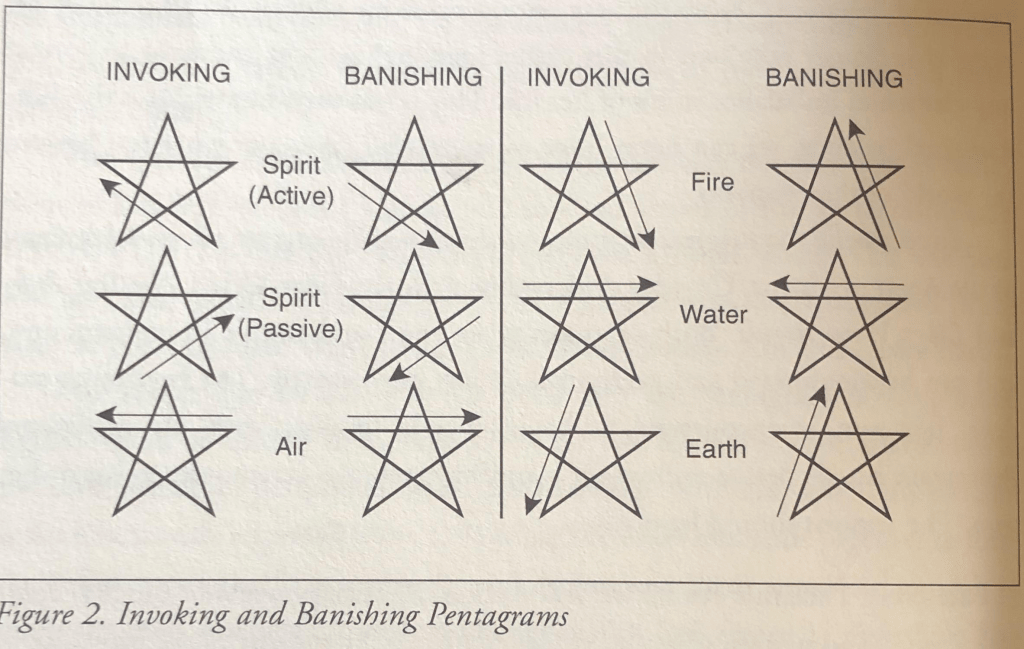
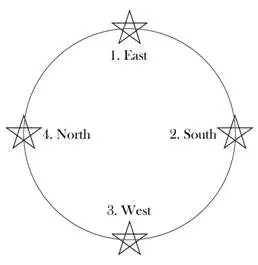

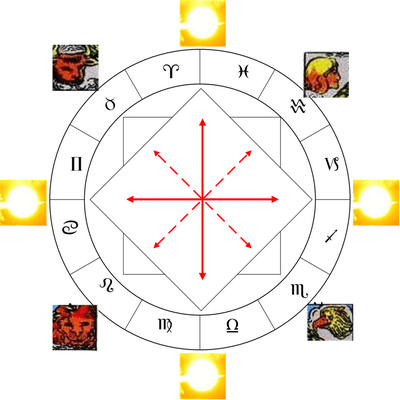

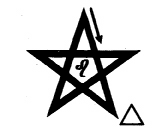
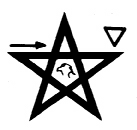
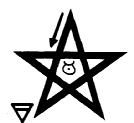
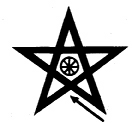
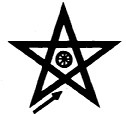
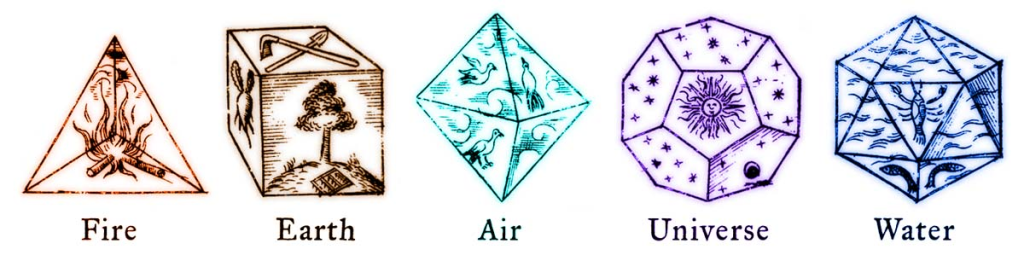
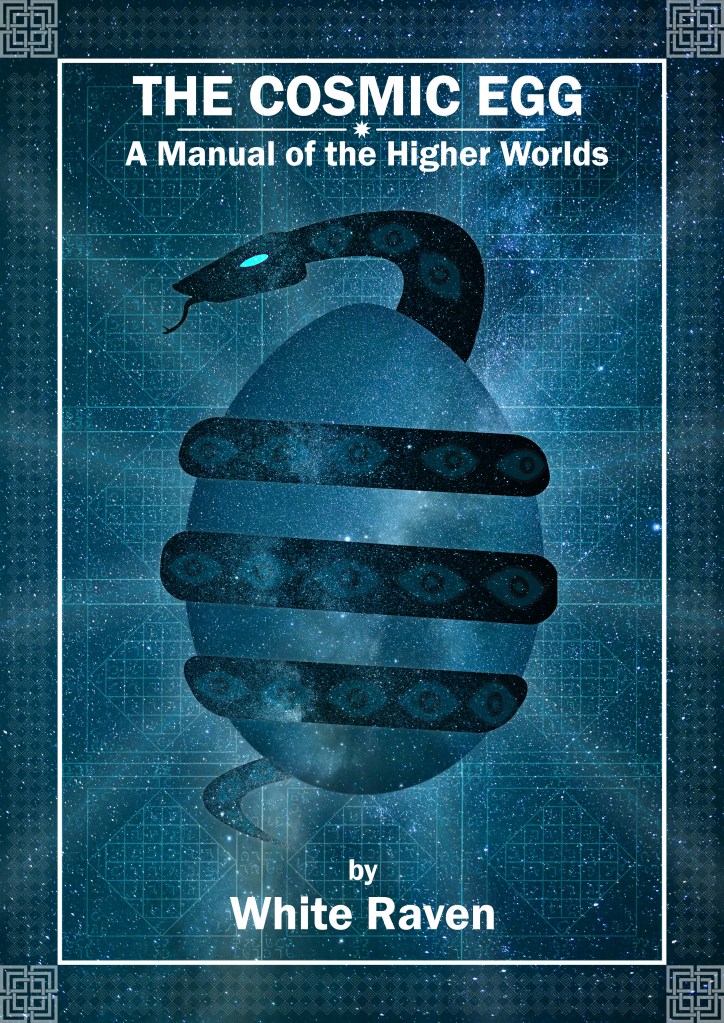

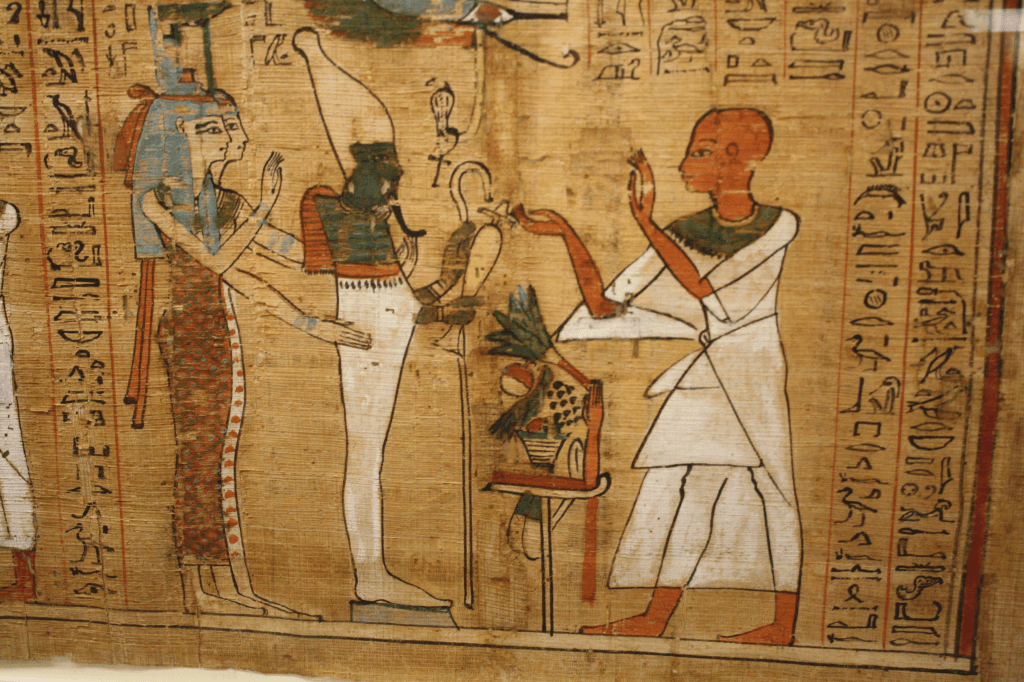
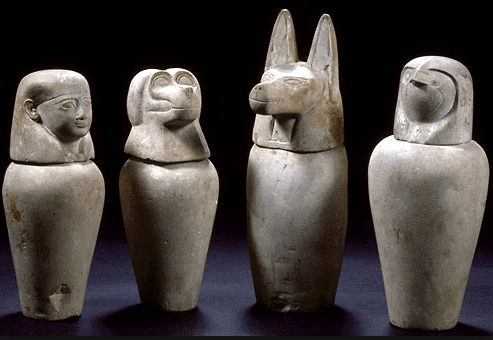



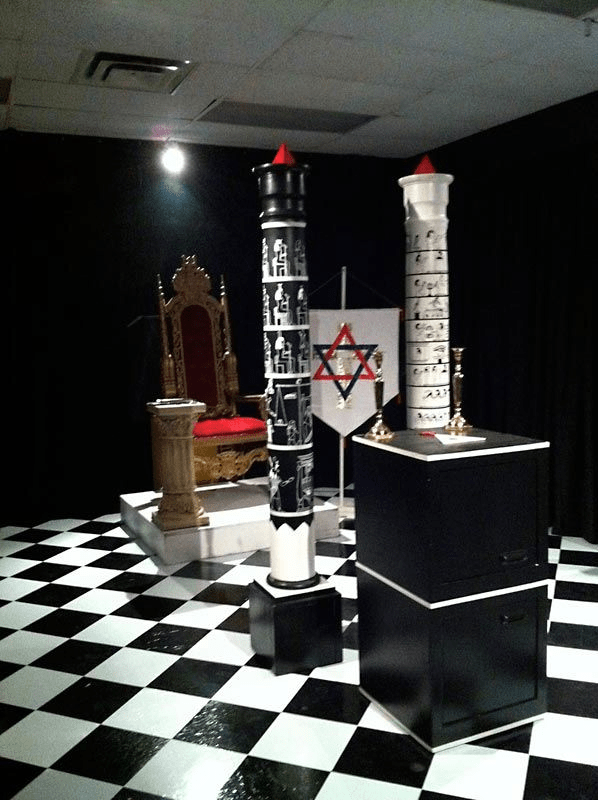
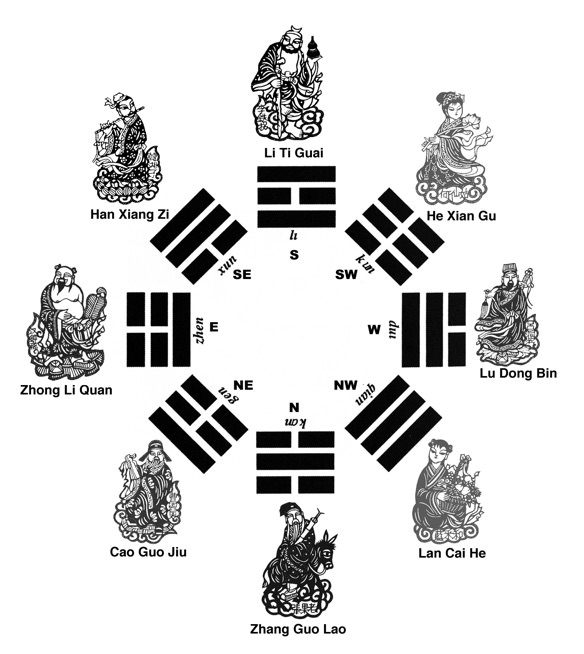
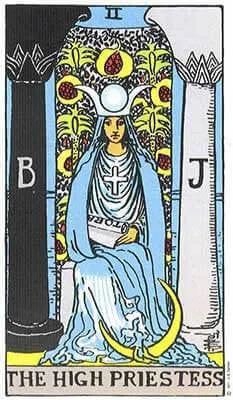

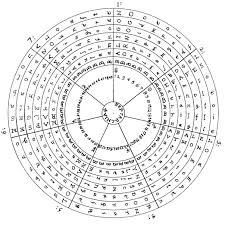

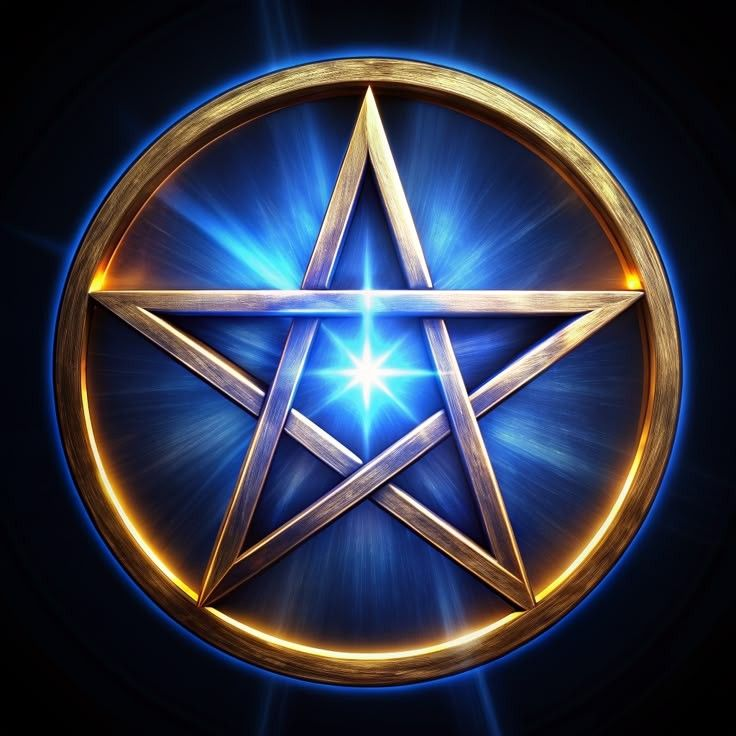

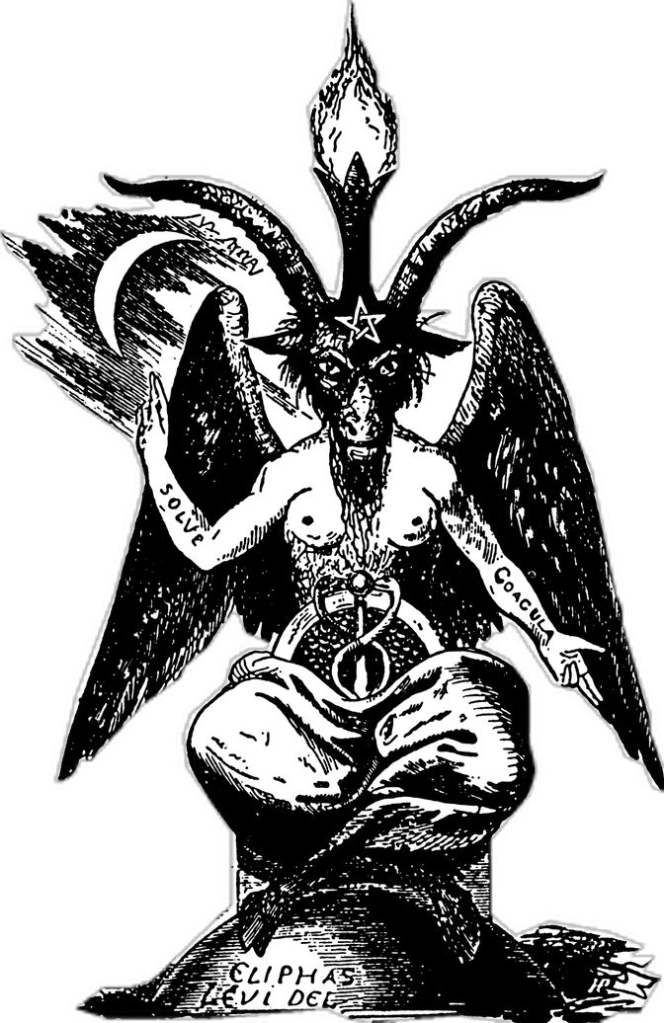
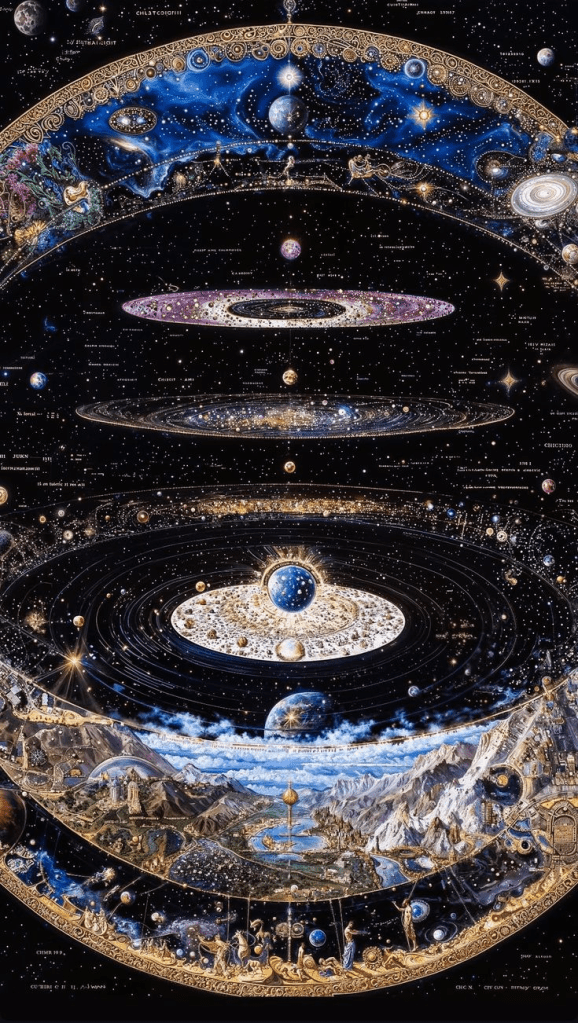


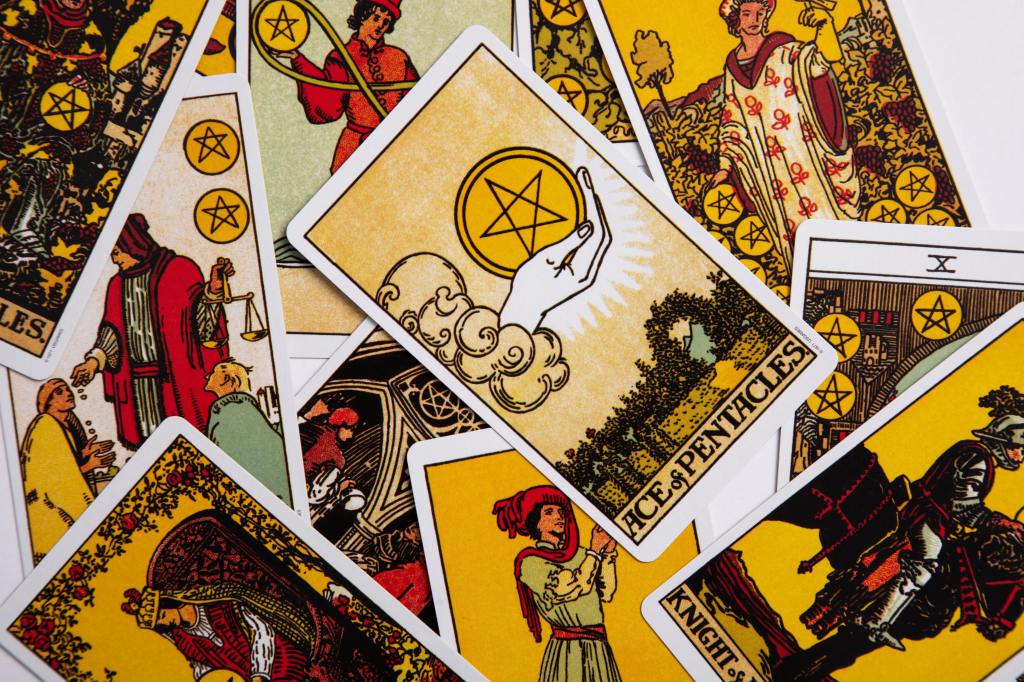








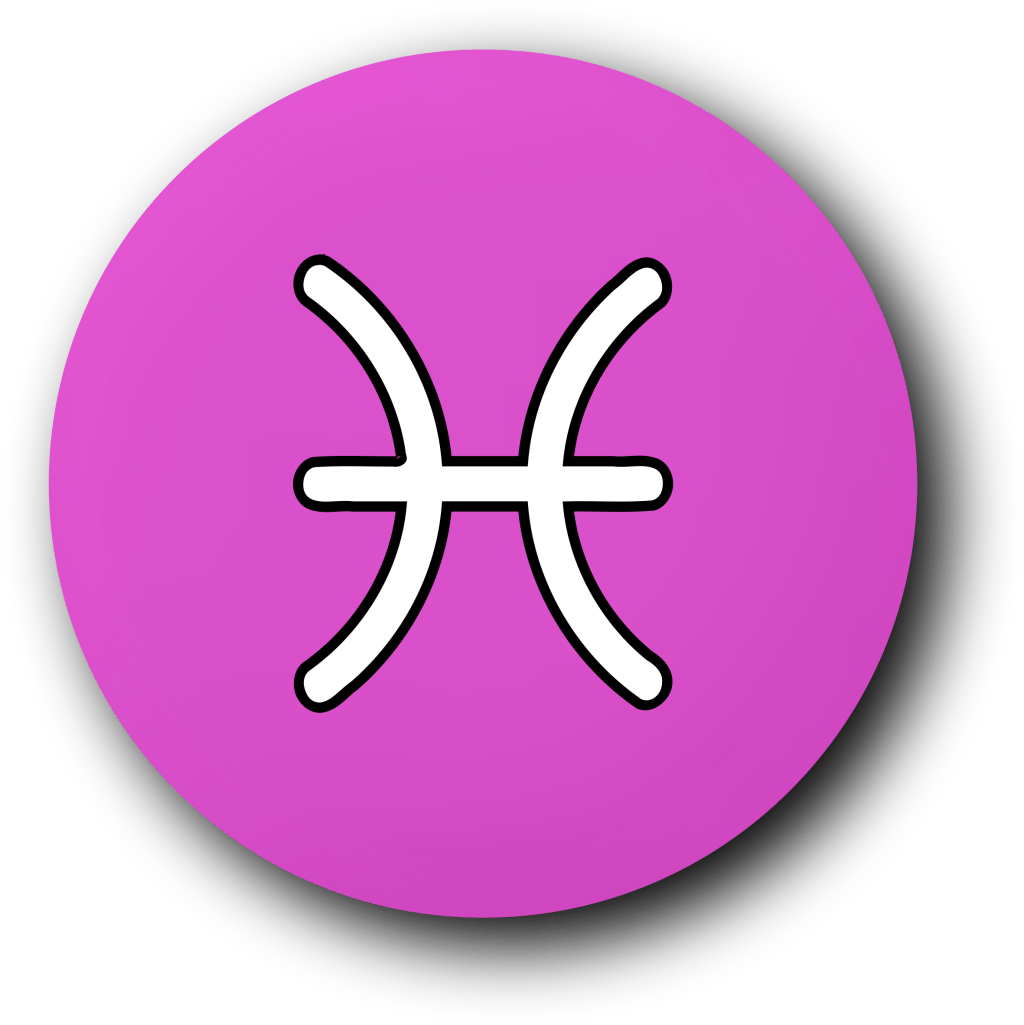
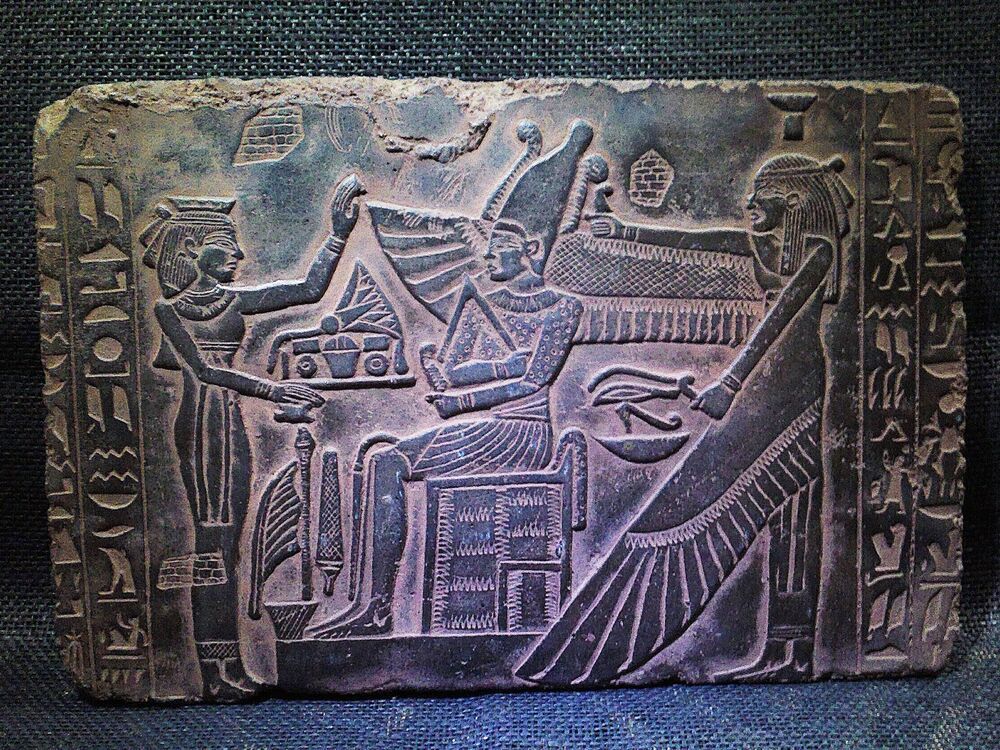








 Between The Pillars