Greetings, and welcome back.
I hope you had a good portal period. The portal of ascension started on 21st January and ended on 28th February, with the 7 planetary alignment.
February 28th was a pretty special day. In addition to the alignment, it was also the New Moon. It was the day after the Hindu festival of Shivaratri (night of Shiva) and one day before the month of Ramadam.
A very auspicious day all around. My life changed a lot in the last month.
I have, at long last, left behind the city where I was born and raised, where I went to school and also college. It is a big shift. I hope such shifts are happening for everyone else too.
If you’re struggling, meditate and listen to what the intuition tells you. You’ll figure it out.
Now, for today’s blog post, I want to talk about the world, how it came to be, and how magicians have shaped it.
I am sorry about the rather disjointed paragraphs. This article is more like an info dump, and contains a variety of anecdotes and narratives loosely tied together. A lot of stuff mentioned here is things I’ve wanted to say for years, but have never been able to fit them elsewhere.
There’s a bit of politics, towards the end, and how all modern political movements have occult origins. How four streams of energy diverged 200 years ago, and will unite again. It may be uncomfortable to some, but it is necessary, especially in these times, when everyone believes that the world has turned against them. I do apologise for how long it is. Might take a few days to read through it.
The Eternal Magi
There have always been magicians in the world. Magicians, witches, alchemists, wizards, monks, mystics, shamans, yogis, all are names for the same thing, but the path differs.
Most priesthoods started as groups of magicians, and always had magicians within them.
Yes, even the priesthoods of many organized religions had strong associations with magick, and contained large numbers of magi.
Historically, magicians have existed as esoteric societies. They often had three primary duties: protect the royal family, preserve knowledge, and help gifted individuals develop their powers.
Today, magick is for all. But historically, it was for very few, and guarded with tremendous secrecy.
The knowledge that was preserved was partly that which belongs to humans, such as alchemy, astrology and theurgy, and that which was given to humanity by other races, terrestrial or alien. One example is the relics and artifacts from the civilisations called ‘Atlantis’.
Atlantis wasn’t really a place. It refers to a state of being, a type of society, or a cycle of civilisation. As does ‘Lemuria’. Both of these preceded our cycle of civilisation.
Hence, many magical orders were associated with Monarchy, and the protection of princes. In fact, at one point, royal families were magicians, and came from occult lineages. When the prince was born, it was important to protect them, to ensure the continuation of the lineage. Many would try to kill them.
Many prophets in history, like Jesus, Horus, Solomon or Krishna, being of ‘royal blood’ were protected by magi, and guided by them.
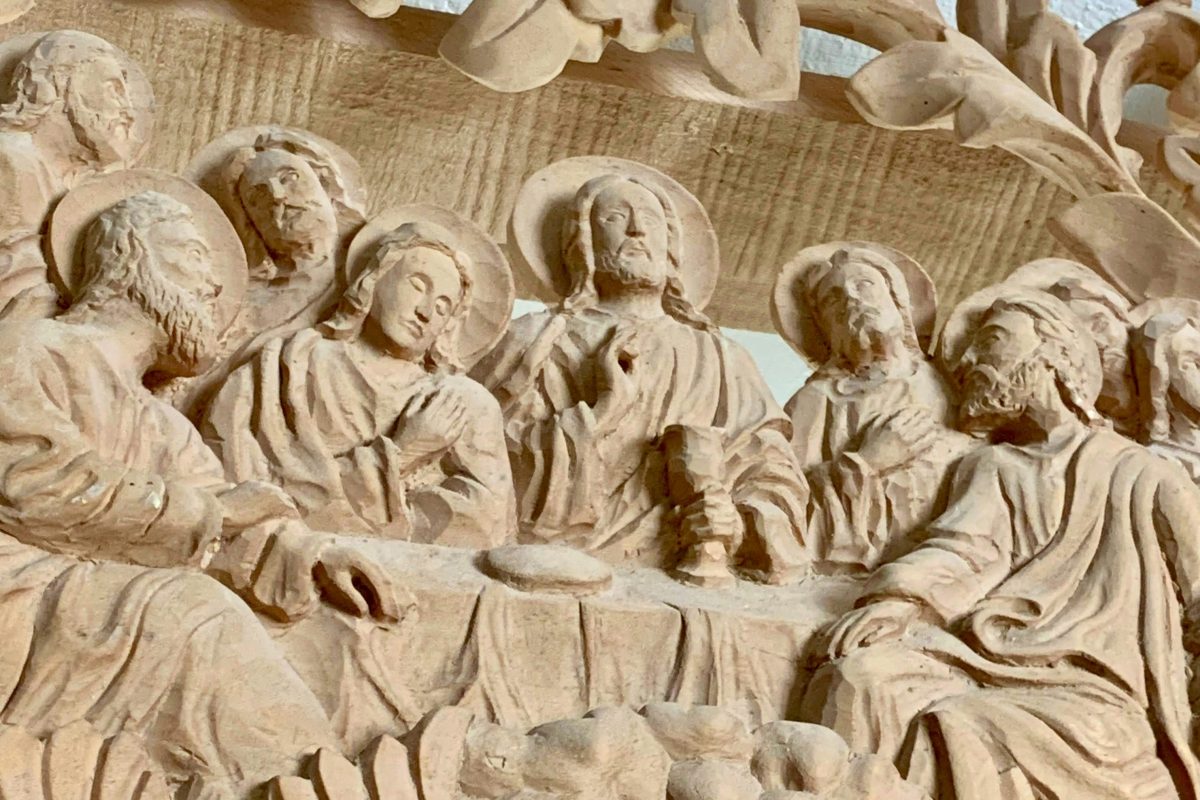
This is why, when Jesus was born, three wise magi immediately sought him out, and watched over him, eventually guiding him.
You must have heard the story of Krishna. It is steeped in occultism.
Krishna, being a prince with magical heritage, would be hunted.
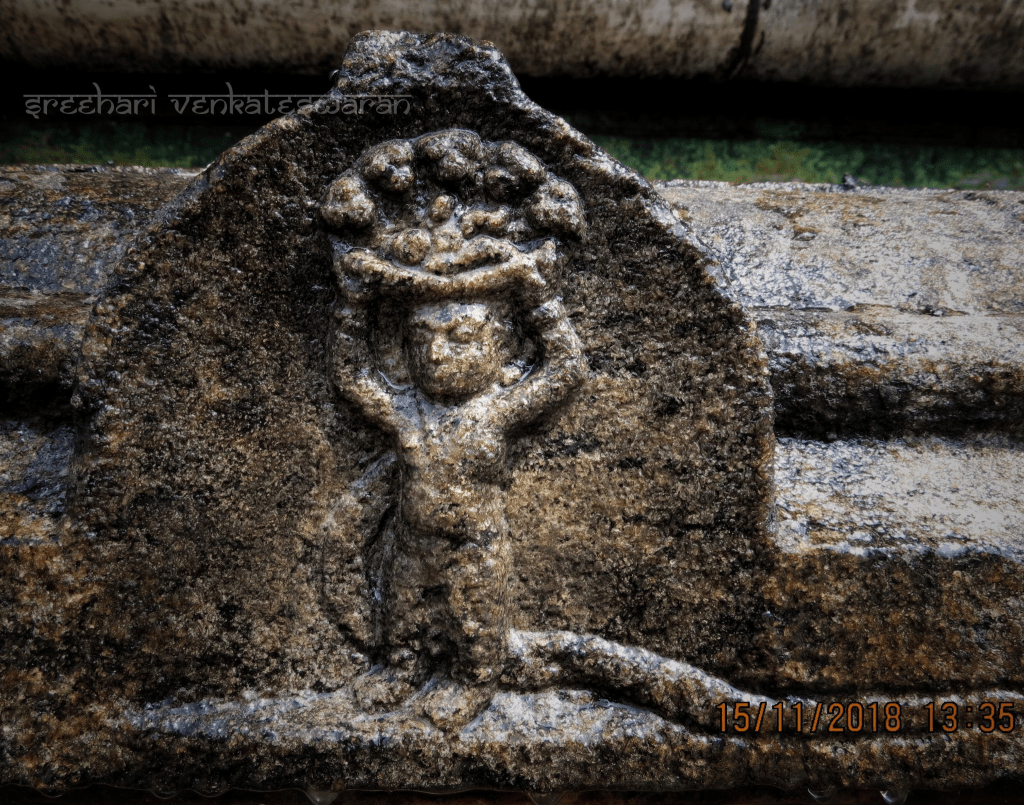
In India, we see the motif of Krishna’s father, Vasudeva, carrying him on his head, being protected by a Serpent. This is an occult symbol.
The Serpent with 7 heads was the symbol of an ancient brotherhood of magi, who protected the young boy. This was symbolised in the motif of Vasudeva being ‘protected’ by the serpent as he travels to Gokul. Basically, it means that members of the brotherhood assisted him along the journey.
The story says that Vasudeva took Krishna and left him in the care of his ‘friend’ Nanda.
A more appropriate word would be ‘brother’, as both likely belonged to the same brotherhood, that was tasked with the protection of princes. When Krishna came of age, he could return to his Kingdom and defeat the usurper.
We can imagine that members of such orders were spread across the world, residing in both cities and villages. In times of persecution, infant princes, or important manuscripts, could be carried off from cities and given to members in the countryside, or even vice versa. Members of such orders could always find protection, shelters and assistance from other members, even if they belonged to different branches and cultures.
Additionally, members would keep an eye out for people who showed special gifts, to recruit and train them.
It is not so different from Star Wars, where Obi Wan watches over Luke Skywalker till the time is right, and how Luke later recruits force sensitive individuals and trains them.
So, many of our myths and legends tell about these three topics: a ‘divine’ prince who is sent into exile as an infant, to avoid being killed, then later grows up and comes to reclaim his throne, or a story of a young gifted person who is recruited and trained by a wizard or wise man, or the story of some sacred relic or object being stolen by evil forces, and needing to be protected or reclaimed.
Even the classic story of the knight who saves the princess from the dragon is of occult origin. Many women who showed occult powers were shunned as witches, and often they had to escape, often with the aid of occult orders. Those who assisted them in their escape are remembered as knights in shining armor, as that is what they were, and the ‘dragon’ is a symbol for those who held them captive.
Not mere damsels in distress, but imprisoned witches. Not mere handsome knights seeking glory, but magi who were tasked with protection.
These are the origins of magick, and of magicians, and magical orders.
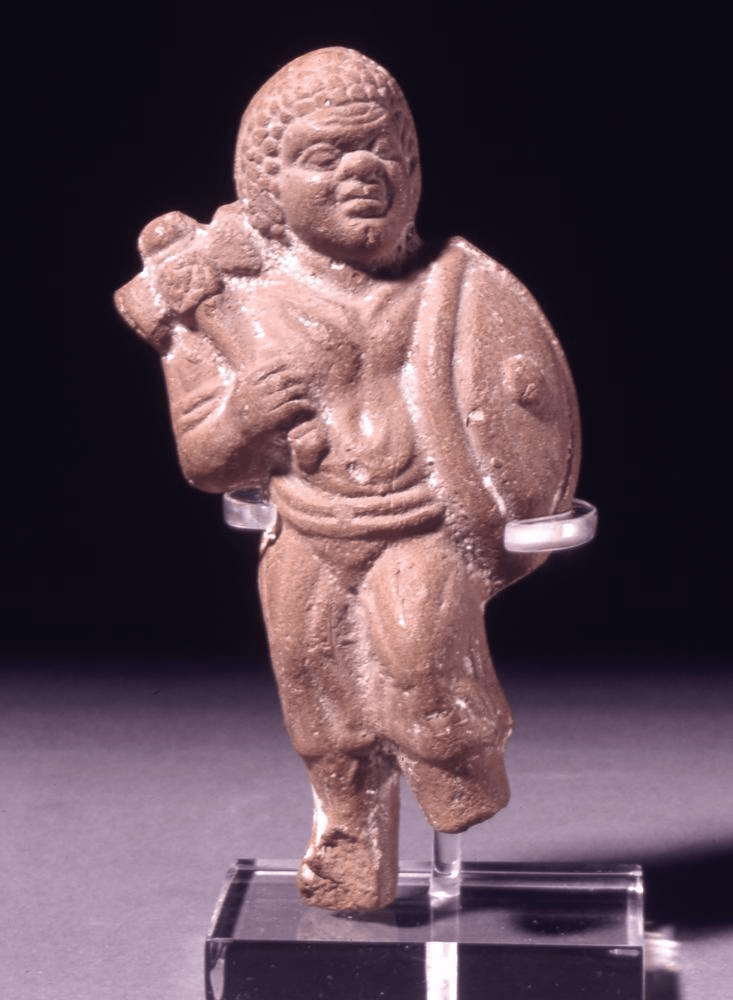
In ancient Egypt, there was a brotherhood who’s sole job was protecting the Pharaoh and his family, and they were called Medjay. ‘Medjay’ became ‘magi’.
Early Origins
Magick is the power bestowed upon every person to dictate, create and dissolve their own reality. If the world is like a video game, then we are the players. Magick is our ability to play the game, and seperates us from the rhythmic natural phenomena.
But the power and knowledge of magick has never been evenly distributed. While everyone has the power to manifest, not many make use of this power with intelligence. Some neglect it, others abuse it.
Most catastrophes in history are the result of magical wisdom being lost, or knowledge being misused. Civilisations have fallen because of it.
And even among those who can do magick, they have not always wanted to explore, teach and share this knowledge. Great kings, philosophers, merchants, artists or warriors have often been satisfied to simply walk their own path and find their destiny.
Thus, while many practice magick, consciously or unconsciously, few actually make a study of it, and fewer still teach it to others, or make a profession of it. Therefore, ‘occultists’ have always been few in number. It has always been a exclusive path, walked by those who have the inclination to do so.
They were called ‘occultists’ because they knew things that other people did not, and thus their knowledge was considered ‘occult’ which means ‘hidden’. Often, they remained hidden themselves. By liberating themselves from illusion, their existence became dangerous. They were a threat to power structures, and a catalyst for change, and subject either to persecution or reverence. Often both.
So, they veiled themselves, and became committed to secrecy.
In a tribe of hunter gatherers, there would be many hunters and gatherers. There would be a few herbalists, craftsmen and butchers. Even fewer still would be artisans and priests, and one or a few tribal chiefs.
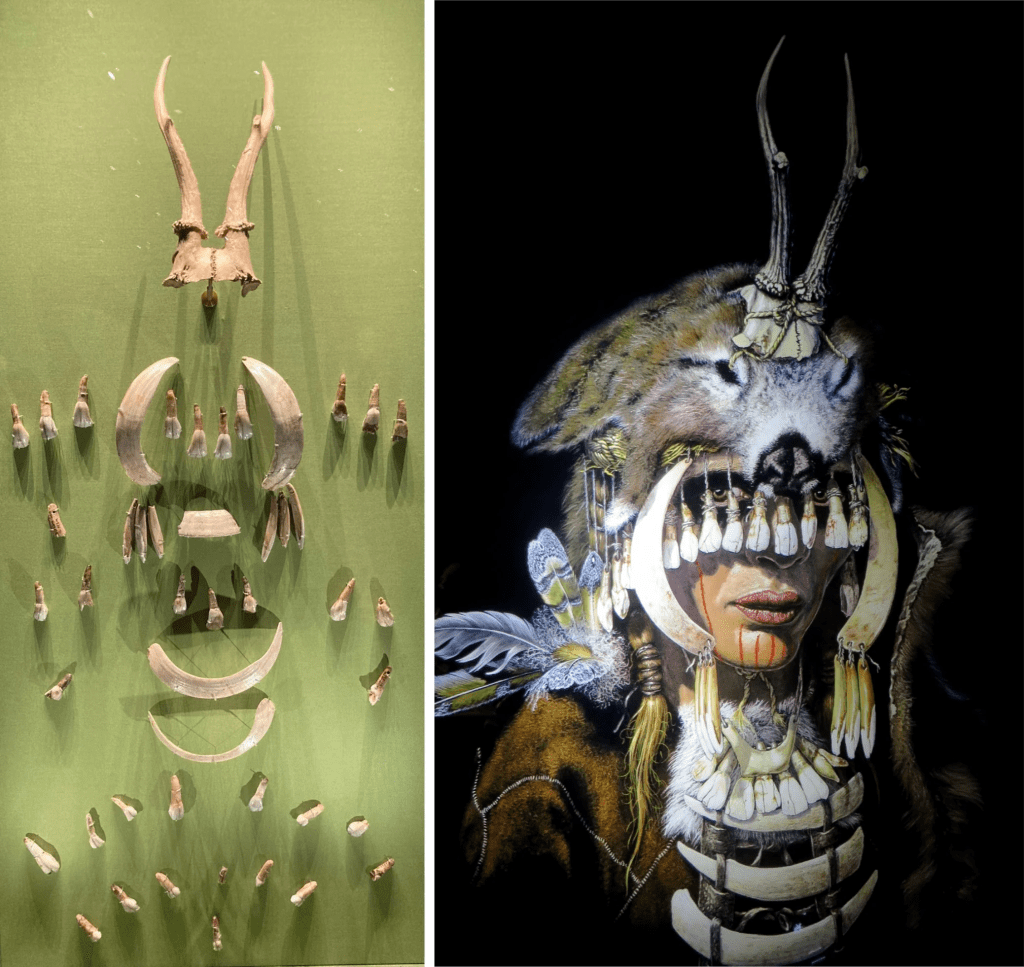
But often, there was just one, singular Shaman.
Everyone knew the Shaman was a weird fellow. But everyone knew the importance of the Shaman’s role.
The Shaman could see the past and tell the future. They could quell angry spirits, and understand the Will of the Gods. Their mind was sharp, and their intuition was often right. They knew what others did not. It was also known that they could control natural phenomena and change their shape, and in their wrath, they could cause destruction and plague.
So, the Shaman was left alone, to do as they will. It was understood that their path was one of courage and solitude. Shamans could often become seers, or medicine men and women, dictating mystical visions, or creating rituals, or healing the sick, or advising the chieftain.
But due to this, they also held a very high degree of power and influence.
This power, both magical or political, could be misused and abused. No one could really do anything about this. The Shaman could dictate how the magic was to be done. If someone else also ended up with Shamanic powers, they could become a threat to the main Shaman. It was convenient that there be one Shaman, and one version of truth. So, magick also became about control, and humanity developed a certain fear of magick and magicians.
Shamans took apprentices. Often, people who showed signs of having spiritual powers, like being able to see spirits, talk to ancestors, or subdue wild animals.
They were taken in by shamans and trained to be the next shaman. As societies grew in size, so did the numbers of people in every profession. Shamans must have also grown into brotherhoods and sisterhoods.
At some point, the Shamans split into two. Or perhaps there were always two groups.
One group were the Shamans were those who were ‘sanctioned’. Living within the village, they were Shamans to the people and to the chiefs, and offered their services to others. They were part of the culture or tribe. They wanted to guide and lead humanity.
But then there were the Shamans who walked their own, radical path, often going outside cultural and tribal norms. They were the ones who went of into the forest, and lived for themselves and by themselves, among their own, and believed that individuals are best left to walk their own path, not controlled or guided.
And thus, the left hand path (dark) and right hand path (light) were born.
Tribes settled near rivers. Often, they lived on one side of the river, and buried or burned their dead on the other side. The other side was also where the dark Shamans went to seek solitude, and your light Shamans lived on the side where everyone else lived.
This was the origin of the ‘black lodge’ and the ‘white lodge’. To live for oneself, or to live for a higher cause. Darkness and Light.
Thus, the path walked by the light Shamans became part of sanctioned religion. The path walked by dark Shamans came to be associated with the ‘sorcery’ and ‘black magic’ and became more fringe.
Like Yoga and Tantra.
Then came another divide. This time, about how to organize.
Among the light shamans, some felt that they should live and work together, in monasteries and communes. They become the monks or hermits. Others felt that the path of spirituality was personal, and they became priests or mystics, living alone and guiding their community. This is why usually a village may have just one priest, but a monastery with 10 or so mystics, monks or nuns.
In the forests too, in the black lodge, came those who wanted to work together in lodges and orders. They became the magicians. We may also call them alchemists or wizards.
The others, who desired solitude and practiced only for themselves, who did not follow any moral diatoms, came to be ‘witch’ or ‘sorcerer’.
This is why magicians organized into Orders, while witches came together in covens, but often lived solitary lives. Hence, the ‘witch in the woods’ and the ‘occult brotherhood/sisterhood’
Thus we have black magic and white magic.
The dark path of the occult split into witches and magicians, and the light path split into priests and mystics. All holding different threads of the same universal and cosmic tradition.
Magical practice can be defined along an axis. Black (for self) or white (for all), and solitary (working alone) or communal (working in a group).
These became the four types of magician: the witch, the magi, the monk and the mystic.
Fall from Grace
I would like to now speak specifically on some cultures, which are well known, to show how magick declined.
Egypt
We all know how Egypt is generally called the birthplace of magick.
This is not exactly true.
Rather, Egypt is one of the places where many artefacts and relics from the Golden Age have survived. Therefore, Egypt and Persia are a tremendously valuable source to not just study the mindset of Golden Age magi, but also document the decline.
In tropical regions like India and China, the dead were burned thus few tombs remain, and many relics disintegrated. In Europe and the Middle East where a lot of destruction and persecution took place.
In Egypt and Persia, tombs remain, and artifacts were preserved and mummified in the desert sands. The Egyptian tombs were not discovered until recently, so they became time capsules.
Egypt is not the ‘first’ civilisation, and neither is Sumer. They are merely the most well preserved civilisations.
The Egyptian magi, had a simple philosophy.
They decided to take one individual, here being the Pharaoh, and made him or her the living incarnation of the whole Kingdom.
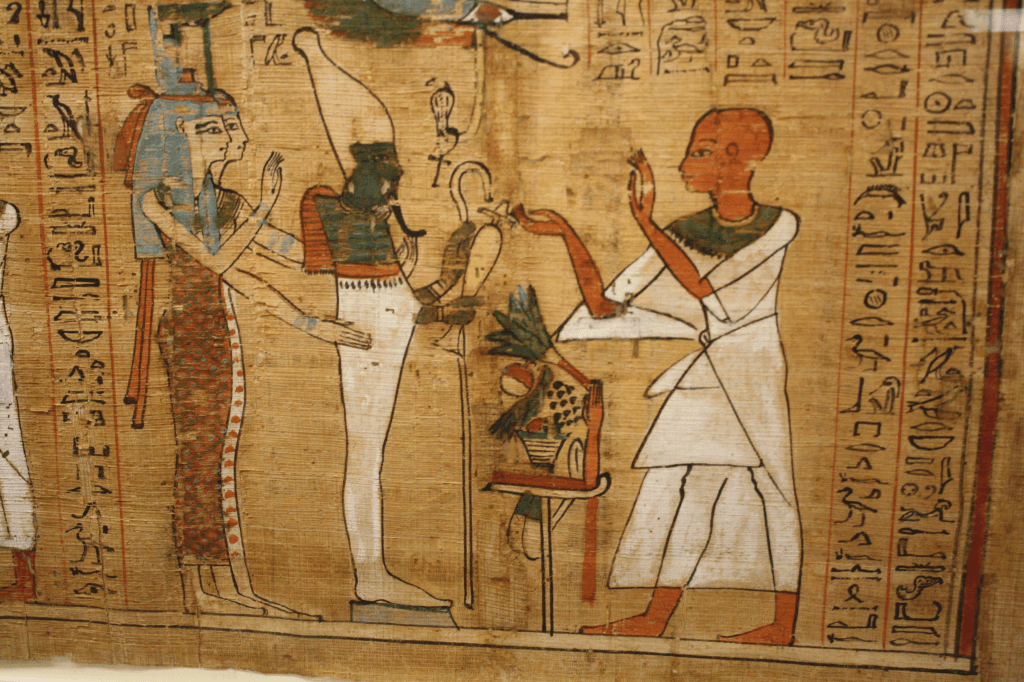
Pharaohs, being from magical lineages, were initiated into magick at birth, and then made to live their whole life according to spiritual rhythms. The magi invoked and poured spiritual energy into the Pharaoh, and connected his or her soul to the soul of the whole Kingdom.
Thus, the Pharaoh became a living god, a symbol of Egypt itself. In a sense, the Pharaoh was a talisman, and the hope was that by keeping the Pharaoh in a high vibration in life and death, the whole Kingdom would prosper.
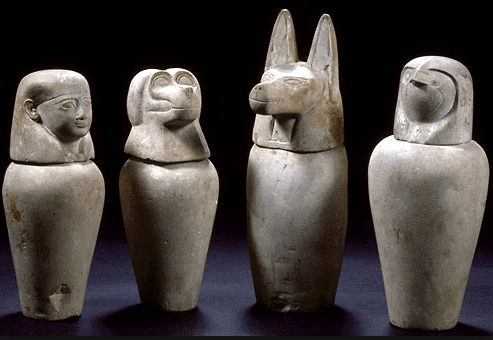
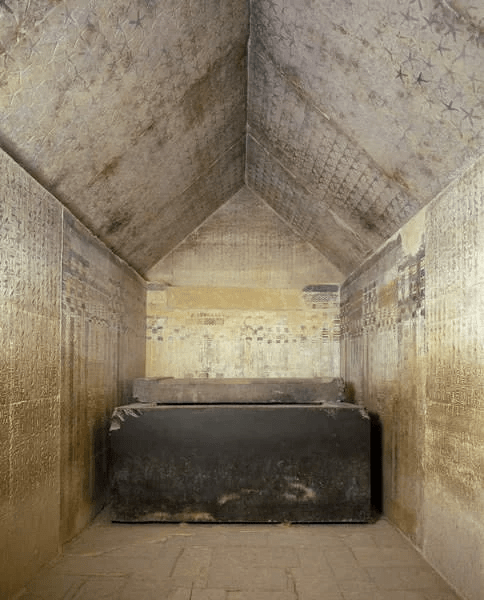
When we look at the tombs of the early kingdom period, we see that they are almost bare. Simple stone rooms, with the coffin in the middle and the four jars on each corner.
These jars contained the liver, heart, stomach and intestines of the Pharaoh, who had been mummified. Each jar was ruled by one of the four sons of Horus. These four sons of Horus are very important to ceremonial magick, and would one day be known as the four Archangels of Christianity, Islam and Judaism. The early Rabbi knew that the correct pronunciation of the sacred names was important, but by now the correct pronunciation of names of the four gods had been forgotten. So, they gave them Hebrew ‘titles’, which became the ‘names’ of the Archangels
Imseti is Uriel, Duamutef is Michael, Hapi is Raphael, and Qebehsenuef is Gabriel.

The early tombs of the Pharaohs were simple and plain, as fitting a magi who can manifest any material desire. On the walls of the tombs were the magical texts from the Book of Thoth, which we call the ‘Book of the dead’.
It is ironic. You see, the Book of Thoth was likely a collection of Egyptian scriptures and magic, similar to the Vedas, the Sutras, the Gospels or various other collections.
Perhaps a certain part of these scriptures contained funerary rites, and these were the parts that were carved into the walls of tombs.
Thousands of years later, these tombs are all that survive of Ancient Egypt, thus giving the false impression that Egypt was a society very concerned with death. The Book of Thoth, which was likely a complete scripture, is falsely called ‘Book of the Dead’, because only the funerary rites survive.
In the Middle Kingdom, as we get closer and closer to the dark age, you see the gradual decline in knowledge. The tombs became ornate and grandiose, being filled with riches and gold and jewels. The wealth of living people became the wealth of the dead. This likely happened in other parts of the world too. The Pharaoh was no longer a magician, but a mere man or woman.
As Gandalf says in the Lord of the Rings: Return of the King
“Kings made tombs more splendid than the houses of the living, and counted the old names of their descent dearer than the names of their sons. Childless lords sat in aged halls musing on heraldry, or in high, cold towers asking questions of the stars. And so the people of Gondor fell into ruin. The line of kings failed. The White Tree withered. The rule of Gondor was given over to lesser men.“
Lord of the Rings is really just occult symbolism too.
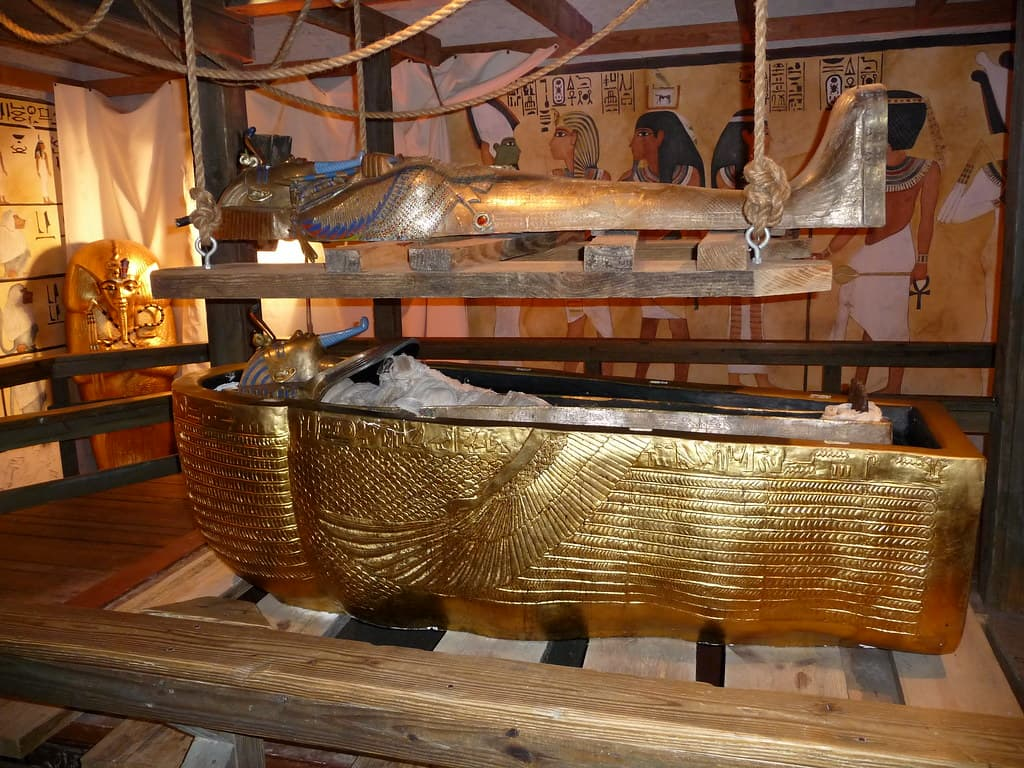
We see with this gradual decline, the corruption of the magi as well. Magi became priests, and priests became law makers, and law makers became petty men concerned with keeping their power.
Do you know the purpose of the Pyramids?
Originally, they were built as places of initiation and learning. Later, they were built up to be imperial monuments, and finally, they were made into mere tombs.
Eventually, it was discovered that they were very great places to conduct secret activities. So, magicians could use the pyramids for rituals, and for alchemy.
But they were also used as places to buy and sell slaves, and for human trafficking, and for those in power to have secret dealings, and move around out of sight. This is the true nature of the various tunnels and catacombs found under cities in ancient and medieval times.
A enormous amount of the collective energy and effort of humanity has been, and continues to be directed at, human trafficking. The ‘occult’ became a good cover, because both practices are done in secrecy. In other words, occultists came to be parallel to criminal and underground activities, because both groups of people were committed to secrecy. This was unfortunate, and did not help the reputation of magi.
Even today, many shadowy organizations which are engaged in corruption, abuse and manipulation disguise themselves as ‘occult societies’, despite.
It is merely a disguise, to scare away people, to create the impression of occult power. True occult societies do not engage in such activities, because there is a heavy price to pay for the misuse of true occult powers. And if they ever get caught, it is the magi whose name is sullied, which further helps these shadowy groups, because it turns the masses against magick, and further pushes them into spiritual slavery.
By the way, this is why you see images of Anubis outside various Egyptian temples. You see, to the ancient Egyptian people, seeing a statue of Anubis was the same as seeing a Skull and Crossbones today.
Imagine you see the skull and crossbones symbol outside a building. What do you feel?
Well, fear. Because you know what the symbol means: death.
In this way, statues of Anubis, and others fearsome images like the image of Khepri as a man with the head of an insect, were made to inspire fear, to keep common people out of sacred halls, and to rule through fear. And now the Temples of magick, which no one dared enter, could be used for all sorts of other secretive activities.
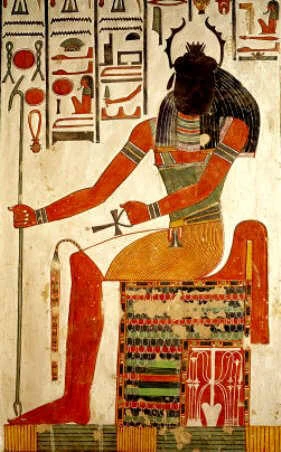
And so, the name of magick was dragged through mud. To people, it started to become something to fear and revile.
India
Like Egypt, India is a great source to study the history of magick and religion, because it remains a living tradition.
In Egypt, the preservation of esoteric history is thanks to the tombs. In India, it is due to the nature of Hinduism, and the existence of oral traditions that became diluted, but did not die out. So, one finds occult symbolism clearly hidden in Hindu traditions.
The Libraries of Alexandria and Baghdad burned. The Library of Nalanda burned too, at one point. But the Brahmins were wise enough to make many, many copies of written material, and hide it away in non descript temples, out in the countryside.
So what happened in India?
I’m sure many readers are somewhat familiar with the caste system. It is a feudal system, like the class systems that existed all over the world. But this system was somewhat unique, due to its pre feudal origins.
The caste system was simple. It was based the the spiritual evolution of a Soul.
The most evolved souls were those of magicians (Brahmins). ‘Brahmin’ means ‘of God’ or ‘divine’. It was also translated as ‘twice born’. Brahmin was a term for those who were awakened and enlightened, who had crossed the Abyss and raised the Kundalini.
Like Egypt, there was no separation between magician and priest. There were two kinds of Brahmins: yogis, and tantric. The Light and the Dark.
In time, this would manifest as the two main Hindu sects, namely Vaishnavism (worship of Vishnu) and Shaivism (worship of Shiva).


Originally, your caste determined your profession, and not the other way around.
Meaning the level of spiritual evolution determined what job you could do. Teaching and philosophy was apparently considered so important, that only enlightened magicians were trusted with it.
Under the Brahmins came Kshatriyas. These were also highly evolved souls, but not yet fully awakened. Due to their strong aura and astral magnetism, they were the Kings and nobility.
At this time, being a king or a noble was the same as being an elite warrior, because political power was held through warfare. In time, this led to the misconception that Kshatriya means ‘warrior’. It actually means ‘spiritual aristocrat’ not ‘warrior’.
However, in time, the Kings and nobles of magical lineage were replaced by mere warlords and conquerors.
Beneath them were Vaishyas. These were those souls who had evolved enough to understand the workings of nature, and the laws of commerce, agriculture and politics. While not able to command and rule, they understood how to create energy, and thus bring prosperity and abundance.
So these souls were put into the work of trade, and became merchants and land owners. These people were also considered capable enough to have a profession and master a skill, and thus some of the lower ranking Vaishyas were artisans, carpenters, tailors etc.
Finally, there were Shudras, which essentially just means ‘peasant’. It simply refers to those who have not begun the work of spiritual evolution, or those who are still driven by momentum. In other words, normal people. And the idea was that these people can only work for others by doing manual labour.
And then there was a category for those who had polluted themselves. An individual who had committed crimes against humanity, violated their own conscience, and felt no remorse for their actions.
Such a soul is basically vampiric, which feeds on others and drains them. Such people were called ‘untouchables’. Rapists, murderers, con men. A person who cannot feel empathy cannot be part of society, so these people were driven out of society.
It was considered essential that Brahmins and untouchables be kept separate. Because someone with a pure soul should never be in contact with a evil, toxic and vampiric person. There was a danger of exploitation and abuse, of the spiritual energy of the whole society being lost or depleted.
Unfortunately, in time ‘untouchable’ simply came to mean outcaste, which means anyone who has been shunned or driven out of society, for whatever reason. In time, the definition expanded further to include anyone considered to be ‘other’, such as tribals, disabled people, slaves, and children born from wedlock, or those who had gone against social norms. It even came to include many magicians, especially tantrics.
Brahmins were also kept away from anything ‘negative’ or overtly materialistic. It was thought that if the magicians came into contact with ‘impure’ things, it would affect them psychologically, and cause negative things to manifest.
This is the origin of many systems of spiritual purity, and the obsession with ‘purity’ that many religions have. In time, the purity became so extreme, that most things in the world came to be seen as impure. Special gods had to be invoked to deal with the enormous amount of ‘impure’ things. For example, for the discarding of waste, burning of bodies, for cloth that had been used in childbirth or mensuration, for excrement and kitchen waste.
A whole class of deities came to preside over the discarding of ‘impure materials’, because all this stuff had to go somewhere. This is the origin of many ‘demons’ that are found in religion today.
In time, the caste system became muddled.
Caste, instead of being about spiritual evolution, became a matter of profession. So, instead of an enlightened Soul becoming a priest, a priest was simply considered an enlightened soul from the get go.
Then it became a matter of birthright, with people being born into castes, and things stagnated and got worse from there.
However, the idea of bloodlines is not completely wrong.
The idea of blood purity was to preserve the magical lineages, but it did not work. Today, there are many who are born as ‘Brahmin’ or ‘Kshatriya’, who do not have an occult heritage. This means they were not the descendants of the ancient magi, nor of ancient kings. This is the case outside India as well.
Magical lineages are still present, however, and many people who are drawn to magick, belong to such lineages.
Eventually, as the Dark age began, and humanity’s magical power began to be lost.
During the golden age, magical knowledge was preserved as oral traditions, and passed on from master to student via initiation. One had to be initiated into being a Brahmin, Magi, Rabbi etc, and the initiation was not written down and read, but performed, as a transmission of energy.
But now, the caliber of the magicians was greatly falling, and many priests could not perform the transfer of power, nor invoke spiritual energy.
A groups of wise Brahmins, who are called as ‘Hrishi’ meaning sage or seer, performed a series of channelings.

They tapped into the higher planes, and spoke prophecies and powerful mantras. These were recorded and written down, partly in desperation to preserve this knowledge, partly out of anger at how humanity was falling. This is how the Rig Veda was written.
Many of the old, esoteric documents in Egypt, Europe, Arabia, China and elsewhere were written this way.
This is how religion started, in an act of anger and desperation. The Torah, the Book of Thoth, the Book of the Dead, the Tibetan sutras, all were written this way.
In time, the priests developed new knowledge, and added to these books. More Vedas were written, more books added to the Torah and Sutras.
In time, the sages passed on. The Brahmins went from being magicians to being mere priests. No longer possessing prophetic power, they were forced to rely on ritual. In time, a new kind of priest emerged: the scribe.
As literacy declined world over, it was important that some priests ensure that the knowledge was preserved and passed on. So, the main duty of priests and monks was to record scripture. And naturally, sects of priests debated about the meaning of the material, and how it was to be preserved, and how the rituals were to be performed.
Priests eventually became theologians and law makers, in charge of interpreting scripture. And often, entire sections of scripture were simply removed or destroyed, because they were inconvenient, and did not fit within theology.
Brotherhoods of magicians were created sometimes, to preserve the true and unaltered scriptures left by the Sages. Naturally, they had to be very, very secretive, and ensure that the knowledge was passed on, but also not revealed to persecuting powers. So, rituals of initiation and oaths of secrecy developed, to ensure that only ‘worthy’ candidates were chosen to preserve knowledge. And naturally, there was politics and rivalry even within esoteric orders.
In times of persecution, war and natural disaster, it was even more important to make this knowledge easy to carry around. So, they wrote essential manuals. A single book that contained almost all the most important teachings, through which a magician could reconstruct the whole tradition.
Thus, the ‘holy book’ or ‘word of god’ was born.
The concept of special, religious languages (like Hebrew or Sanskrit) was born. See, the language of these texts was ancient, and copied exactly as it was. But as spoken language diverged, the exact meaning of the texts was lost, and came to be debated by priests. So, different schools or sects of religious philosophy were created, based on interpretations of priests, and funded by political patronage, and priests also changed or altered scripture to suit the needs of their patrons.
There are already people debating the meaning of Shakespeare, as English quickly changes and transforms.
This does not mean that magick was totally lost. But it went into the background, and the theologians took over. Some were wise, some were not. Some had magical power, some did not. Some used this power wisely, and some abused it.
Mesopotamia
Mesopotamia is a very special civilisation. It is pretty well preserved, and we can easily study its evolution quite accurately, even more than Egypt. While the Egyptians used papyrus, the Mesopotamians used clay tablets, and so even personal diaries of ordinary people have survived.
From the early and simplistic society of Sumer, to the increasingly imperialistic and warlike Assyrians and Akkadians, to the decadent and opulent Babylon, and then Persia, which emerged after the fall.
It also shows us the story of magick. When we look to Sumer, we find accounts of priests who were magicians, possessed wisdom and knowledge, and used it (mostly) well.
By the time of Akkad and Assyria, there is a gradual shift away from the rule of magicians, to the rule of priests. From philosopher Kings to warlords and conquerors. From stalwart men like Sargon to men like Nebuchadnezzar II, who was a notorious slaver, and finally to men like Ashurbapinnal, who wrote a whole poem bragging about the sheer brutality of his genocidal campaigns.
What happened by the end? There was Babylon. Even after the magicians retreated from open public life, their knowledge and power could still be used.
Imagine the scenario: it took a group of moral, selfless and wise men to discover the atom.
Then, it took simply educated and intelligent men to learn how to split the atom.
Then, men, not even intelligent or very educated, with enough funding could make the atom bomb.
And once the bomb exists, anyone can use it, even some tribal dictator.
A sage discovers a great magical principles.
A mere sorcerer can use it to make a ritual, and write it down.
A priest can read about it in a book, and use the ritual to make a talisman.
And then he gives to a king or merchant, who can use or abuse it as they see fit, even if it violates the laws of karma.
This happened across the world. The abuse of magical power created a strong karmic resonance, drawing towards itself similar energies of violence, corruption and death. Invaders, disease, natural calamity.
The fall of Egypt, Babylon and other such societies is well recorded.
Interestingly, it was the Hebrews who recorded much of it, since they were traders and were present in may of these societies at the time. They wrote that these disasters were ‘divine punishment’, and they were right.
The abuse of magical power, and enslavement of people against their will, led to this decline.
Speaking of the Hebrews, they were traders and merchants, as they were the descendants of the Phoenicians, a large maritime civilisation that was built on trade.
This is how ‘Jurusalem’ came to be the ‘holy land’, because it is the only major port that connects the middle east to the Mediterranean sea, and thus connects trade routes from India, China and Persia, to those in Europe and North Africa.
Therefore, whoever controlled Jerusalem would be extremely powerful, and so wars were fought over it, especially between those of the Levant and the Near East, and those in Arabia. Because while the former were sea traders, the latter were land traders.
That is the actual origin of the conflict, the ‘holy war’ between maritime and desert traders over the control of a highly important port town, where King Solomon had once built a temple.
In these wars that were fought over strategic cities, magick was used to curse, or as a method of manipulation and mind control, karma took its course and civilisation imploded.
Interestingly, this is also something we see in Star Wars, where the Jedi go from being peace keepers to being armed enforcers of an imperialistic society, losing their wisdom and retaining only power.
Then began a dark age, when literacy and knowledge were lost. Holy books and priests now warned about the use, and misuse of magick.
Ironically, the magicians who survived the collapse were the dark magicians living in the forest. They now became highly suspect, and accused of doing witchcraft to sabotage the power of rulers. And then people began to see magick itself as inherently dark and taboo.
The dark magicians were usually persecuted quite heavily, and became very, very secretive, using fear as a powerful tool to keep away people, retreating into the forests, mountain tops and deserts.
The light magicians also faced persecution because they lived in the cities, towns and villages. If you can’t go to burn the witch living in the swamp, just burn the one who sells herbs down the road.
So, the light magicians retreated underground, also becoming highly secretive. Fear protected the dark magicians, and secrecy protected the light magicians. The Witches left for the fringes, the Magi went underground, the Monks retreated into remote communes, and the true magical Priests simply assimilated into religious priesthoods, becoming invisible.
Magick, then, became heavily focused on secrecy, fear, invisibility and solitude.
After the Fall, this was the only way to survive. As humanity declined, the keys to magick were broken.
How? Well, in magick there is the God and the Goddess.
We draw power in with the left hand, while is female, and push it out with the right hand, which is male. The female hand connects to God, and the male hand connects to the Goddess.
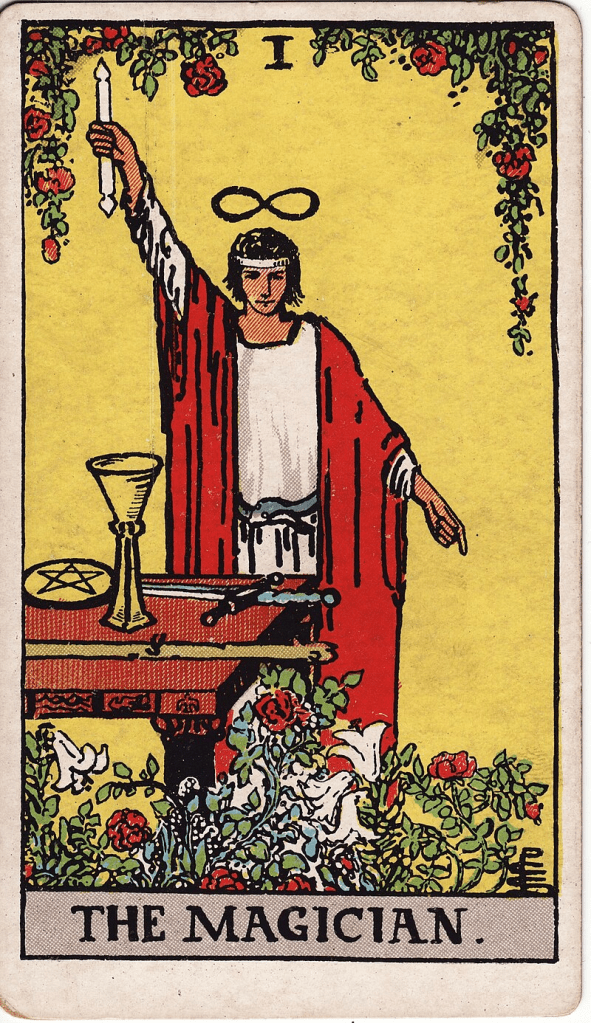
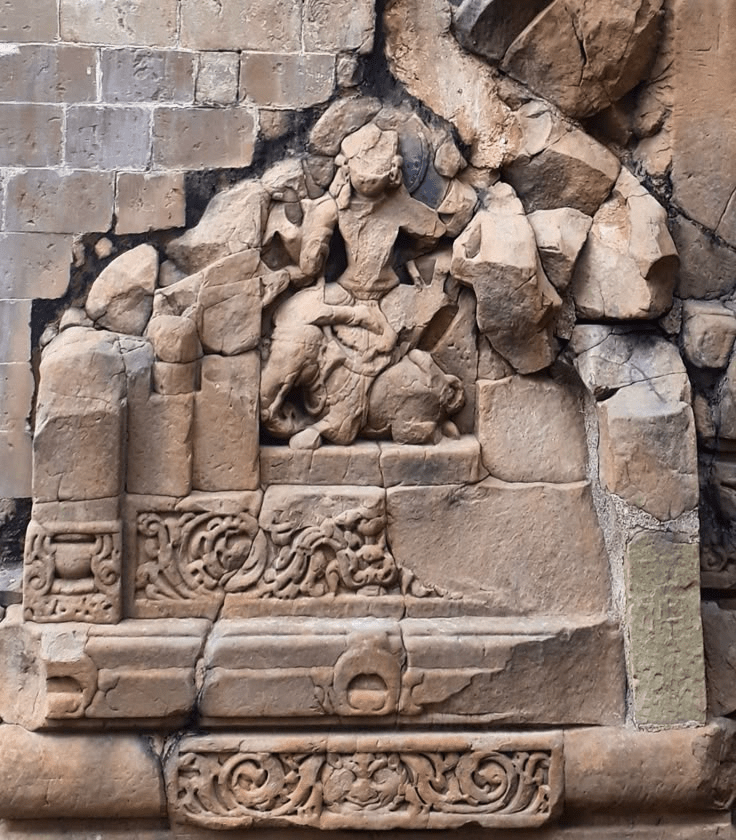
Without the Goddess, there is no God. Energy is drawn in, but not pushed out. Knowledge is attained, but does not result in manifestation.
So, first, the Goddess was removed from religion, or diluted beyond recognition.
Without the Goddess, there cannot be magick. Because the masculine energy rules knowledge, while feminine energy rules manifestation.
The traits of the Goddess were given to God, and the traits of God were given to the Devil.
Hence, symbols of the Goddess like the Ankh, the Rose and the Chalice, were made into symbols of the male God.
Symbols of God, like the phallus, the trident, the sword and horns, were made into symbols of the ‘Devil’. Hence, the masculine and royal war gods of the ancient world, like Baal El, Baal Tze Moth, Aesha Daeva and Ashur became ‘demons’.
“The Kings of old were wise, brave men, who stood with the wind in their hair and sun on their face. They were not the pale and weak men who claim to be leaders today”
~Chanelling from Beelzebub, or ‘Baal Tze Moth’, one of the ruling deities of the coming Age.
“My children are lost. Their power was taken. My symbol was stolen and given to a male god”
~Chanelling from Goddess Isis
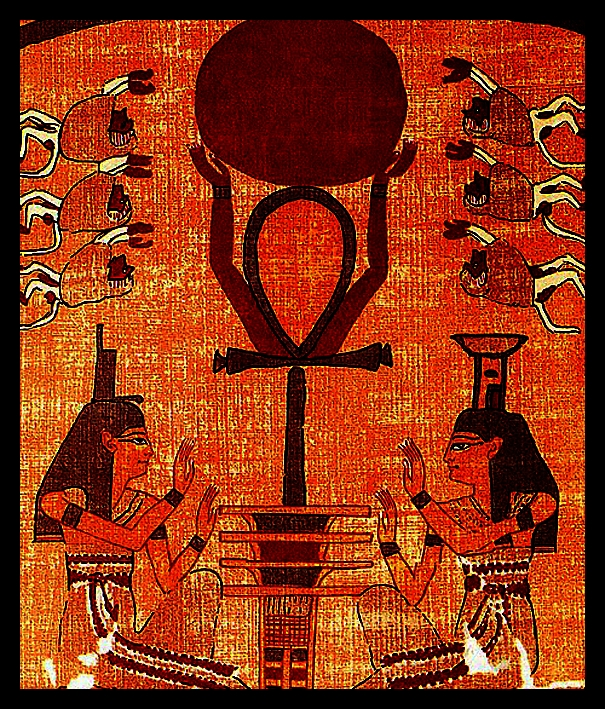
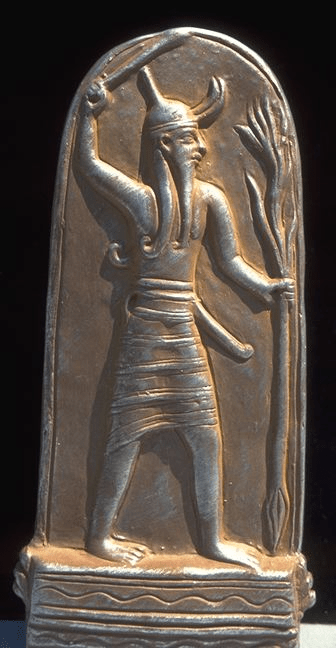
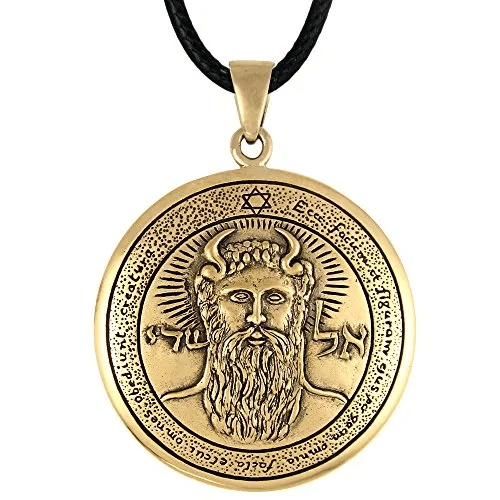
Thoroughly broken from their heritage, people lost the ability to do magick. Priests lost their power, and went into theology and speculation. They lost their masculine vitality, and became feminine. And they suppressed the feminine, distorting it into male.
Superstition replaced magick, and people had only faith and compassion to live by. Christianity in the West and Buddhism in the East were the forces of compassion that kept humanity grounded. But in the pursuit of compassion for all, there was no room for true magick.
Europe
Finally, we will look at Europe. European magi accomplished the monumental feat of preserving their knowledge during the dark age, while being heavily persecuted and hunted. So, the study of magick in the last 2000 years can be done by look at Europe.
What did they do? Three steps: Secrecy, Symbolism, and Stone.
After the fall, magicians around the world went deeply into hiding.
The concept of monasticism was invented for this. Monks, ascetics, hermits, fakirs, yogis: all these are really disguises worn by magicians, both light and dark, to excuse their departure from society.
By making a display of ‘giving up the world’, they could easily leave their social status and class, and go into hermitages, monasteries, or just into the fringes of society.
They could practice magick in peace, without being bothered. Additionally, no one really wanted to take up such severe penance, so no one would come looking for these magicians to learn from them, unless they were truly determined.
“When people saw me waring the loin cloth, they thought they had to wear one to. So they turned away from spirituality, believing my lack of need to be poverty”
~Channeling from the Indian sage, Ramana Maharshi
The dark magicians did something similar. They created a fantasy of fear around them. They spread rumors of cannibalism, meditations in graveyards, ritual violence, and all sorts of others things. The stereotype of the green skinned, wart covered witch was not made by the Church, but by the witches themselves, to segregate themselves from society and protect themselves.
The magicians created secret societies. In Europe, it is easy to see how it was done.
First, secrecy. Retreat completely into extreme secrecy. Repeated persecutions pushed these people deeper and deeper into secrecy, until it became almost absurd.
Also, they realised that ritual implements and temples were a dead giveaway. So, their practice became more and more internal, and mental.
This is why, when you look at ‘black magick’ traditions, they have circles, implements, incantations, robes and other ritualistic objects. But when you look at white magick traditions, they are often simplistic and bare. This makes light magick look ‘boring’. In truth, this was a way to avoid persecution.
If you were to go into a masonic lodge, it would appear like some gentleman’s club. A very plain, secular place. All the magick would be done internally, and you wouldn’t even know magick was being done. Thus, the masonic lodge and the yogi’s ashram seem like boring places. A witch’s coven and an alchemical lab seem exciting. But in truth, the same work is being done.
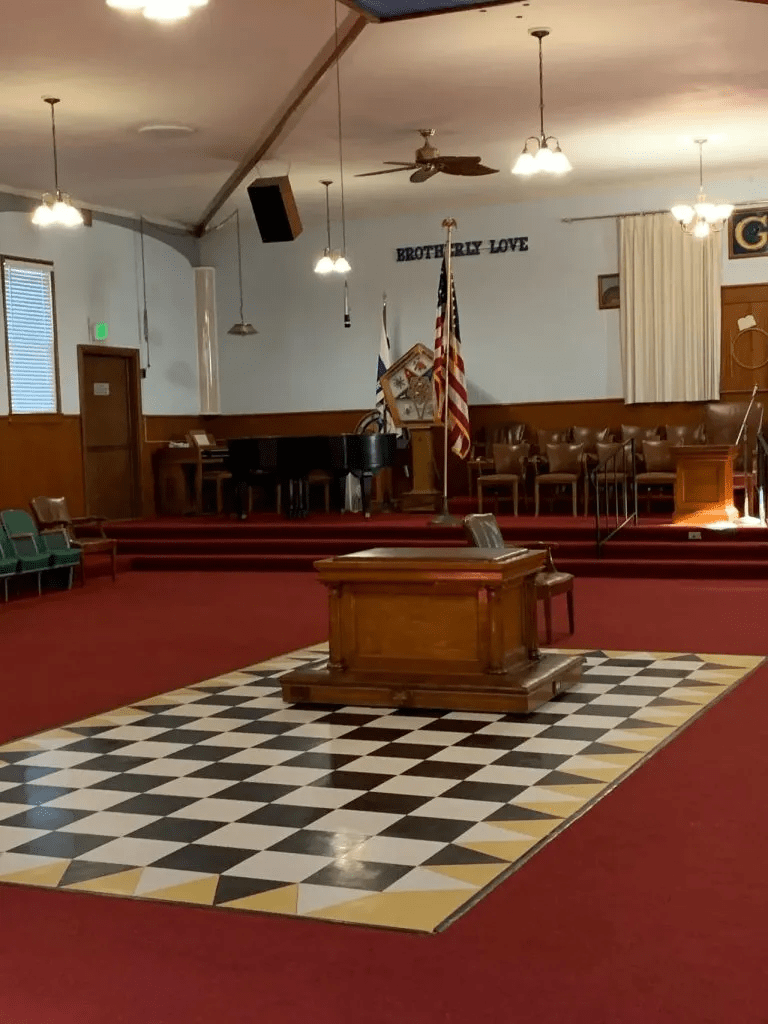
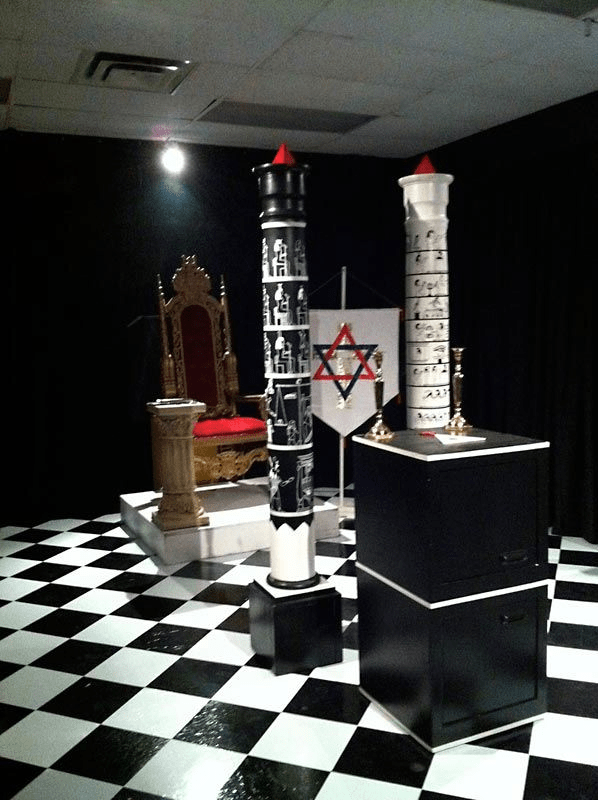
In times, witches too, did this, using household implements as magical tools. Hence, a witch’s broom, cauldron and sickle are simply ordinary household implements.
The second step was symbolism. Having become secretive, the magical knowledge was veiled in symbols. Only someone who was initiated could understand these symbols in plain sight.
But this did not help the reputation of magicians, because people began to accuse them of having secret knowledge, and using occult symbols to influence people and control humanity. Some magicians may have done this, but the intention was really just to hide the knowledge.
The third step was stone. The European magi took inspiration from the magi of Egypt, and began to encode their symbolic knowledge into stone, rather than into books and manuscripts. Paper, fabric, leather and wood is destroyed over time. But stone and metal lasts.
And thus the European magi were ‘stone masons’, and thought themselves to be descendants of the Egyptian magi who carved inscriptions and spells onto the stones of temples and pyramids.
Being a stone mason was a good excuse to develop highly advanced and intricate methods of creating and preserving stone artefacts. Once again, hidden in plain sight.
What of the magical priests, the last of the four groups? The ones who wanted to guide humanity?
Well, they adopted a similar, but considerably more risky strategy. They decided to infiltrate.
Now you might be thinking: “wow, that sounds like a monumentally bad idea that will ruin the reputation of magick and magicians forever.“
And you’d be right. But this is what they did.
They infiltrated religious and political institutions, banks. They also adopted secrecy and symbolism, but their goal was to guide humanity towards a brighter future. They used their magick to influence Kings, priests, religion and politics.
Sure, at times some of them used it for personal gain. But many revolutions in history were inspired by these people. The occult symbolism found in holy books was thanks to these people, who became scribes and made sure their knowledge was placed in holy scriptures.
In Europe, in particular, we find witches (herbalists), we find monks (alchemists/astrologers), we find magicians (masons), and we find the priests (illuminati).
And so you can clearly see the four divisions of magick:
Witches: inwards and solitary
Monks: inwards and communal
Magi: outwards and communal
Mystics: outwards and solitary
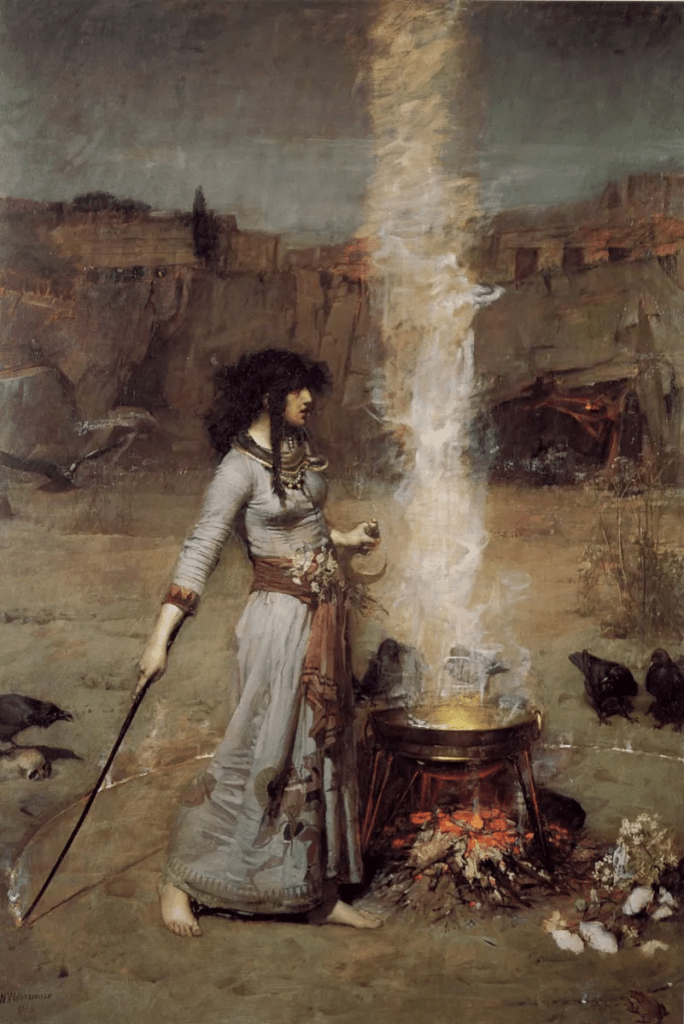
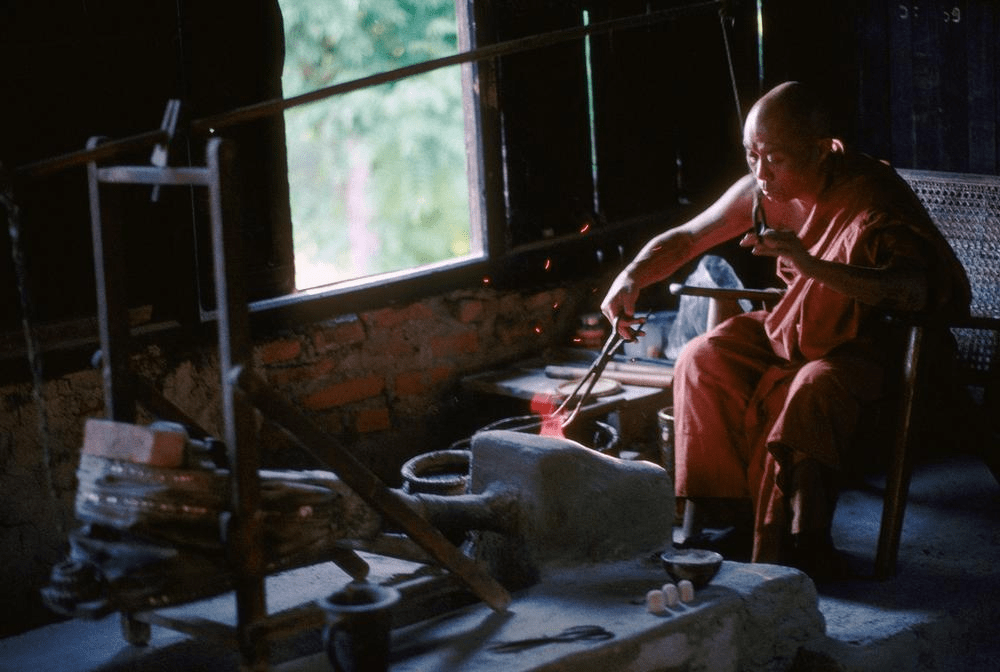
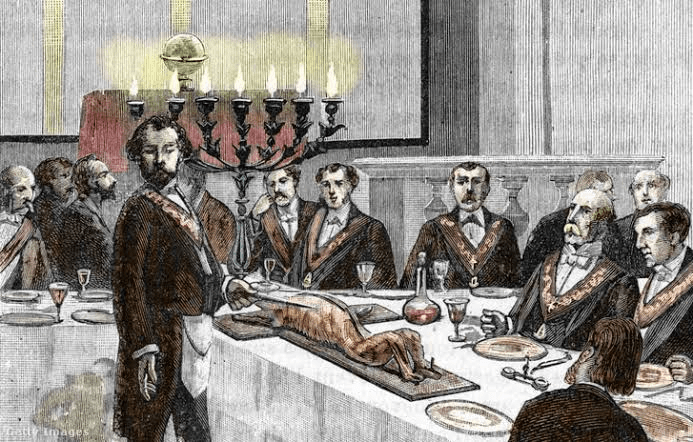
Notice, how witches have lived alone and focused on self development. Monks have lived in communes and focused on self development.
Magi have worked together and been prominent and influential in society, while mystics have done the same, but through personal writings and teachings.
The Truth of the Prophets
See, magicians of all types throughout history have had this general goal: of creating a world order and society that is based on magical principles.
They tried in Egypt, India, Caanan and Babylon. They tried it in the societies of the Inca, the Maya and the Tibetans. They attempted it in ancient Albion, Mycenae and Ethiopia.
This was before the dark age.
During the dark age, such attempts were generally rare, but still tried.
Perhaps Muhammad got closest.
A lot of the stories about various prophets are false. Stories of Hermes, Krishna and Solomon have been misunderstood and misrepresented.
Figures like Birgid and Persephone have been deified, and it has been forgotten that they were human. The teachings of individuals like Hypatia have been essentially lost to time.
Of course, the same has happened to three dark age prophets: Jesus, Buddha and Muhammad.
Let’s talk about them.
We begin with Isa.
Jesus was a magus, and a follower of a certain Eastern branch of magick, likely one of Persian origin.
It is said he wandered the world in search of instruction, with accounts of his wanderings stretching at least into Persia and India, as well as far north into Briton and Ireland.
Accounts from China, Japan, the Americas etc. are harder to prove and likely not true. But it does seem he made it as far as India to the East, and Ireland to the North. Weirdly enough, it is one of the few times in history when Rome controlled a large enough territory, and there were trade routes that would enable him to travel from the Levant to these regions. Especially if he was part of an esoteric group, who often their own networks allowing them to travel this way.
So Christ was a Kabbalist. The Gnostic gospels state clearly that he was from a rabbinical family, though this is omitted from the modern Christian bible, likely because the idea of just an ordinary peasant was more convenient, given that Christianity emerged as a religion of the oppressed and the underclasses.
What does the symbol of the Cross mean?
I’ll tell you the secret.
Christ, being a yogi, a kabbalist and a magus, knew the Word, which was the correct pronunciation of YHVH, which sounds like IAO.
This is why the Greek magi transcribed it as I^O, because they gave importance to math and to them, the Word was a line, a triangle and a circle.
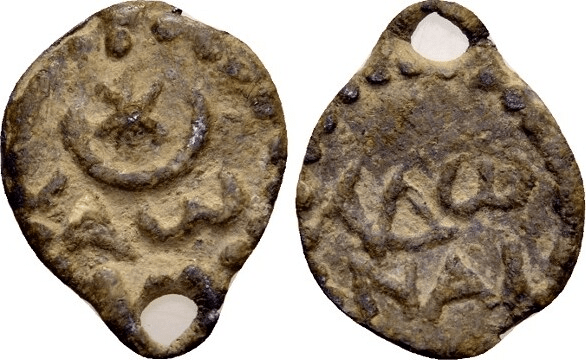
In the height of the Dark Age, Jesus went among the people and showed them the truth of magick. Buddha had spoken of it too, but he had not performed any physical miracles. This helped Buddha (mostly) avoid persecution. But Jesus showed them magick openly.
How? He, being initiated into Kabbalah, opened his mouth and spoke the word, publicly.
Being initiated into the Eastern mysteries, he made the ‘goddess pose’, which is the symbol of Ishtar. That is why the holy day of Jesus is Easter.
The Christians did not ‘steal’ from the pagans. Christian mysticism is merely a modern continuation of Persian magick.
And, being a yogi, Jesus raised the kundalini, which to him was the goddess Ishtar.
This is what is show in the motif of the ‘Crucifixion’.
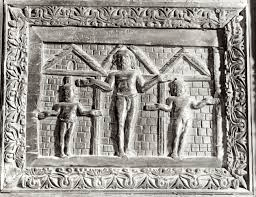
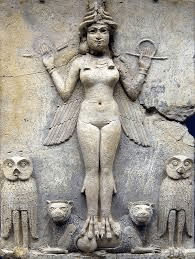
Why oh why would the early Christians depict their messiah on a Cross?
This secret is so deeply kept, that as I was writing this paragraph, it randomly disappeared and my cursor moved back to the previous sentence.
As I was adding these images, an enormous rain and thunder storm has begun outside. Because such things are rarely written so publicly. But I persist.
In the motif of the Crucifixion, it is actually showing Jesus speaking the sacred word, and making the pose of Ishtar. The ‘Cross’ is drawn to show the kundalini rising, and resting at the back of his head.
You will notice the two lines of the cross intersect at the back of the head, where the secret star center resides. It was a simple method of showing the followers where to focus.
See, it was a two dimensional motif. They had to show that Jesus was kneeling, so they showed his bent legs off to one side.
To hide the secret from outsiders, the early Christians, being magicians, lied about the meaning behind the ‘Crucifixion’. The ‘goddess pose’ and bent legs were stated to be his limbs nailed to a Cross, and the Cross of the elements itself was described as a crucifix. His open mouth, uttering the word, was stated to be his pleas and cries of pain.
The symbol of awakening became a symbol of suffering. The sacred became profane, and only initiates knew that the symbol was not a Crufixion, but an awakening.
And the Romans must have wondered why the apparent Crucifix did not actually look like a crucifix, which was usually T shaped or X shaped.
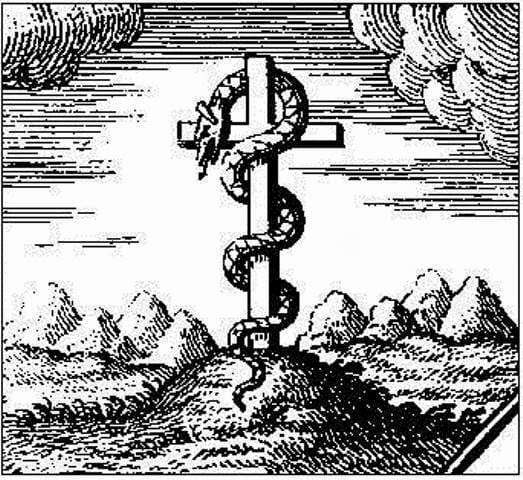
For Buddha, the story is already well told. He was a magus.
But his story is half told. We know of the simple doctrines he taught, and his knowledge that was given to lay people. Like with Jesus, part of his teaching was for the common people, and part was for his initiates. There are caves in India where many of his followers were initiated. The magical teaching that was given by his is preserved as Vajrayana. He did not invent the doctrine, only passed on the initiation.
In Japan, the Zen monks understood very well that there were different kinds of Buddhism: one for the lay people, one for the warriors, and one for the mystics. With each degree, the teaching got more complex, and the rituals got simpler.
Interestingly, the same can be said for Lao Tzu. The Dao De Jing is a popular collection of teachings, that appear to show a simple life philosophy. And then there is Daoist cosmology, which is elaborate, complex and was kept secret, containing rituals of initiation, spells, circles, and a expansive cosmology.
Just like in the West, the Eastern magi also hid their knowledge, to protect it from invaders, or from misuse. There are stories of entire subterranean caverns in China and Mongolia, filled with thousands of texts. Only the most outward and essential knowledge ended up being publicly taught. The knowledge found in the teaching of the prophets is the key, while the knowledge that was hidden away is the treasure chest that it opens.
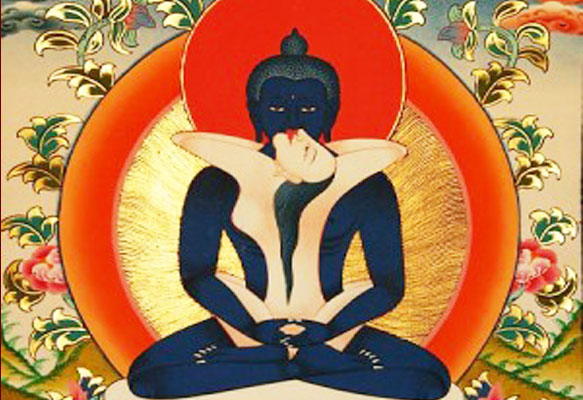
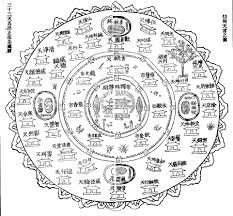
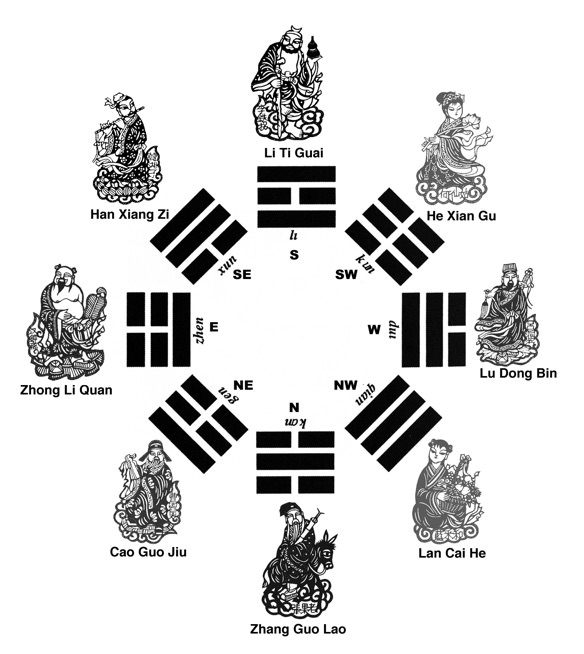
The greatest lie ever told is that Buddism and Daoism are philosophies of ’emptiness’. When Nagarjuna said “everything is empty”, he meant everything is one, and everything comes from Void. This is a magical teaching as Nagarjuna was an alchemist. It does not mean that everything is meaningless, but rather that everything is subjective, a manifestation of higher planes, a reflection of higher forms.
However, the knowledge became so secretive, that the magi themselves forgot it at times.
Buddha insisted that his relics not be venerated, and that the rituals and practice be kept simple.
It is ironic, that after his death, his relics were venerated, and the rituals of Buddhist magic were complicated to such a degree, that they lost all their strength and became empty and pointless.
“…as the Chinese army advanced on Tibet, the monks wasted away performing their tedious, elaborate rituals. Even as their temples were broken, they couldn’t call on the Gods for help. We watched our land burn, unable to be called’.
~Chanelling from Mahakaala.
Now, what of Muhammad, the third of the major dark age prophets?
See Muhammad was an authentic prophet and magus. He did, in fact, witness the Archangel Gabriel.
There’s a lot of stuff in the Islamic scripture. I generally don’t delve into religious scriptures, because I don’t really care to tell people that their beliefs are wrong. Instead, I’ll tell you the story as I have channeled it, and as esoteric tradition understands it.
Muhammad was from a merchant family. He was not just some illiterate peasant. He was familiar with the mystical teachings of the Hebrews, and also of the Arabs.
He progressed enough on his spiritual path to witness an Archangel.
See, in a few short centuries, Rome, Persia, India and Egypt would come crashing down. At this time the knowledge from these four cultures had to be preserved. The Arabs, who were essentially scattered tribes, had to be united. Their time had come to hold the torch of civilisation.
Muhammad, the magus and alchemist, was chosen for this task, being a very enlightened and courageous soul who could see beyond tribal infighting.
So he incarnated for this, received his Revelation, and went to Mecca. Though persecuted and maligned (as magicians often are), he managed to overthrow the superstitious priesthoods and unite the tribes of Arabia.
Muhammad had practiced magick to such a high degree, that he had recognised that all of it came from two energies: the solar, and the lunar. The right and left hands, the female and the male.
The Lunar principle, he called Allah. The Solar, he called Arafat.
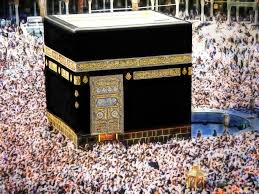
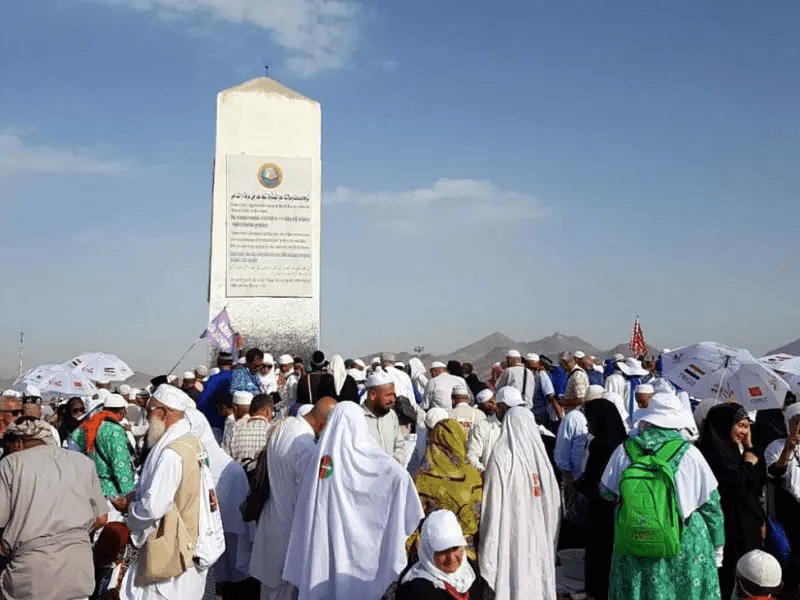
These were two supreme deities of the Arabs, and all the lesser deities fell under them. Much like the Shiva-Shakti of the Hindus, and the Christ-Sophia of the Christians.
To Muhammad, the lunar principle was male, Allah, and represented by the black cube at Mecca, which to him was the Cube of Saturn or the Cube of Matter. The central axis of the world, the lingam of Shiva, the base of the middle pillar.
The feminine, to him, was the solar principle, Arafat, represented by the white obelisk on Mt. Arafat, named after the Goddess.
Allah was the god of extreme compassion, and possessing no warlike qualities. Arafat was the martial principle, protecting her people with the sword. Water and Fire. Moon and Star. Alchemy.
The prophet was trained as an alchemist, and as a maker of talismans. Having united the Arabs, he recruited certain gifted individuals who became his followers. They were a group of magi, and he urged them to move beyond tribal Gods, and abandon the worship of idols, and instead focus on true spiritual development.
His teaching was simple: upon this world there is a constant struggle between light and darkness, and this struggle is represented within the individual. It is projected outward, in his life. This struggle is called jihad. The struggle is none other than the inner struggle between light and shadow, of illusion and purpose. If in the pursuit of this true path (or dharma), a person loses their life, they will surely go to heaven.
This was to break the primitive and warlike belief that the tribes had, which was that falling in battle meant being ‘defeated’ and thus a sign of dishonor. Muhammad stated that such a sacrifice was actually an honour, as one had died for a higher cause, and in pursuit of their true path.
You will notice this is identical to the teachings of the Bhagawat Gita, the Hindu scripture on yoga and tantra, where Krishna tells Arjuna to fight, without thought, as this was his Dharma, and leave the rest up to God, and not be concerned about victory or defeat, life or death.
Muhammad taught them courage, and selfless sacrifice. It is not so different from the spirituality of the Samurai and the Norsemen.
He taught them to never run from duty. In the Middle East and North Africa, the profession of men was mainly to fight, and thus many martial characteristics entered into the teaching.
As was the tradition of the Middle Eastern and Persian magi, the men were to wear black, and the women were to wear white. The ancient Medjay worse black robes, while the high priestesses wore robes of white.
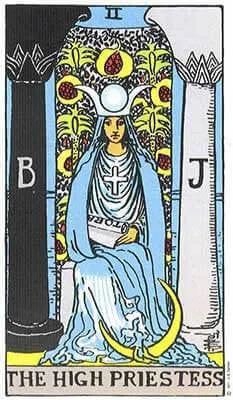
Eventually, this knowledge was lost, and men wore white while women wore black. The Goddess was lost, and the Arabs lost their power.
But why the veil and skullcap?
There was a tremendous danger to women, especially to those who practiced magick. So Muhammad recommended that women should be covered, especially those who were magically sensitive, and the men should cover their crown chakras, as the Hebrews did, to protect them from negative influences. This is similarly done by yogis, who bind their hair and tie it in a knot at the crown.
See, in the beginning, and to the end of his life, his band of followers were very small, and all magi, similar to the case of Buddha and Jesus. So, his teachings were mainly for these magicians, and did not concern normal people.
Essentially what he did was took the magi of all the different Arabic tribes, and joined them together, hoping they would eventually unite all the Arabic tribes. His teaching was very minimal, and many things we ascribe to Muhammad himself, are actually just the cultural customs of the Arabs which predated his life.
Parts of his initiatory knowledge is recorded in the book, the Shams al-Marif (Book of the Sun of Gnosis), written by the scholar and magus Ahmed al-Buni, likely by a disciple of the tradition.
He met Aisha. She was extremely gifted, and a witch. According to the customs of the Arabs, where life expectancy was short, she would be married.
Muhammad decided to take her as his bride, which was basically a way to make her his apprentice, much like the magi of old. This is why they had no children, as she was his apprentice, in the guise of his third wife.
People who talk a lot of Muhammad marrying a child, forget that his first wife, Khadija, was the same age as him when he married, and he did not take a second wife until he died. Hardly the actions of a lustful man. He was a magus, and a dignified man. Aisha stands as an exception for a reason, as the rest of Muhammad’s wives were often widowed women and often much older. Why take only one, singular young bride, and then have no children with her?
He helped Aisha to develop her abilities, and passed on his magical teachings to her, hoping that she could counteract and balance the patriarchal society of the time.
Muhammad also passed on his magical knowledge to his daughter Fatima. It would later go to her descendants, who were the Fatimid dynasty: a dynasty of magi, even in the dark age, a call back to when Kings and Queens were of magical lineage, and possessed esoteric knowledge. It was also rather bold to name themselves after a matriarch.
Some of the most important aspects of his alchemical teachings concern the red alchemical stone inside the Kabbah, which was made by alchemists a long, long time ago.
At one point in history, the Fatimids had broken this stone out of the Kabbah and taken it for themselves. When they returned it, it had apparently lost 60% of its size. This is why it doesn’t “fit” within its silver casing.
Anyway, Muhammad died without leaving behind an heir, or starting a religion. He had no interest in this, being mainly focused leaving behind simple teachings for the magi and witches who followed him.
But after his death, the tribal leaders and theologians got together. They were not too thrilled about the Prophet’s teachings, especially the emphasis placed on magic and the rule by magicians, the power and importance given to women, and the almost ascetic and selfless nature of the teaching, and his insistence that young women be protected.
The priests took charge, and they wrote down the teachings of Muhammad, as THEY saw fit.
In this, they also added little things, such as giving a lot of importance to themselves, the priests, and stating that their interpretation of the scripture, which is called Sharia, be the legal code. They also had a habit of purchasing brides at a young age, and decided to make this part of the religion too, along with a whole host of tribal practices.
Essentially, they turned the reign of power back into their hands. The magicians, sufis (mystics) and alchemists remained important, but their power was greatly diminished, and many lived on the outskirts of society. The witches lost their importance completely, and once again retreated underground. Many witches joined the harems of kings and nobles, and advised them. This is how the witches of the Islamic world found refuge.
But the true political power went to the priests.
But, the mystical knowledge remained, and passed to the Fatimids, as well as other magi and alchemists, who would go on to become enormously rich and powerful due to their lineage.
The Islamic civilisation did end up becoming a safe haven for magical knowledge, despite persecution. Knowledge from India, Rome, Persia and Egypt ended up being preserved, translated and kept safely here, for a while.
Unfortunately, this magical power was misused again, and now on an unimaginable scale, and used for the enslavement of people and for war.
There was a man trained in Shamanic practices in Mongolia, and his name was Temudjin. He too, was from an occult lineage, especially from his mother’s side.
One day, when praying at the shrine of Tengri, he was struck with divine revelation. Having been repeatedly enslaved his whole life, having seen his fathers and comrades assassinated in petty tribal feuds, and having seen terrible excesses of humanity, he manifested the energy of the Avenger.
The Gods told him to unite the tribes of Mongolia, and begin a campaign of destruction. Not for personal gain, but for justice.
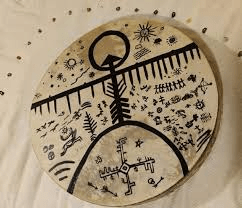
He was told that anyone who surrendered to him was to be left alone. Anyone who did not, was to be completely decimated. His focus was on the destruction of priests, nobles and Kings, on societies that thrived on slavery and oppression.
Those who surrendered were left alone, to govern themselves, keep their culture, and surrendering armies were absorbed into the Mongol force.
So, with this revelation, he united the Mongol tribes. He was given the title of Genghis Khan. He was drawn towards the places where magic had been misused, as like attracts like. Under his sword, millions perished, and entire societies were razed. But others escaped completely unscathed.
When Gengis Khan was a slave in China, he had been kept in a cage so the public could laugh at him and throw things at him. At this time, a Buddhist monk had offered him some food. When Temudjin thanked him, the monk said
“When you eventually return to destroy this Kingdom, I ask that you spare the monastery on the hill”
Temujin did not know what this meant. When he returned, he eradicated the Kingdom from the face of the Earth. It is said that the only thing that was left untouched, was a Buddhist monastery on a hill.
Genghis Khan travelled with a shamanic advisor. The Shaman told him whether or not to invade a certain city or region, and he followed this instruction. This is why Genghis Khan did not attempt an invasion of India, because his Shamanic advisor looked into the future and saw death.
The Mongol campaign would eventually cause the decline of Islamic society.
The Muslim invaders had been drawn to places like Egypt, Persia and India, where magical power was being misused, and they brought devastation. Now, it was they who had misused power, and devastation came to them.
Many books were burned or destroyed by the Mongols. While much knowledge was lost, it also caused many dogmatic and rigid scriptures on religion and philosophy to be destroyed.
As I was once told by Baal Tze-Moth (Beelzebuth), who was later called Elohim Tzabbaoth by the Hebrews: true knowledge is that which can withstand destruction. True knowledge cannot be lost to dust and moths. Knowledge which gets ‘lost’ because it was burned, is likely not worth preserving.
After the death of Gengis Khan, the spiritual energy behind the Mongol conflict sputtered out, because the work was done. His descendants ruled over the makeshift empire for a shirt while, which very quickly fragmented and fell apart, leaving behind no legacy. Eventually, they too started to misuse power for political gain. Kublai Khan was repeatedly defeated in Japan, and his brothers faced defeat in Egypt. Finally, they were defeated by the Ming dynasty of China.
Interestingly, their decline began when they lost to the Fatimids, who were then in control of Egypt. It was the first major Mongol defeat.
The Great Revolution
Sometime in the 17th and 18th centuries, the energies of a new age started to seep down from the higher planes. And magicians around the world realised.
A couple of interesting things happened in France.
Remember our four kinds of magicians: magi, witches, priests and monks.
These four currents were, in various ways, drawn into France.
First, the Cathars.
The Cathars were a group of magicians who were spread across Europe. They were centered in a country called Occitany, which had its own language, called Occitanian.
Occitanian was the only romantic language of Hebraic origin. The Cathars followed a mix of the gnostic, hermetic and kabbalistic traditions. They were basically Christian mystics and Hermetic magi. The modern Tarot deck is attributed to them. They had a grade system, with the innermost grade called the ‘Perfecti’, or Perfected ones. This is where we get the word ‘Prefect’
Like Brahmins, the Perfecti stayed closed off from the world. The head Perfectii wore Red, and a set of golden laurels, while members of the inner order wore white, and outer order wore black. Very alchemical. These were also the sacred colours of Islam, for the same alchemical reason. In India, the red is replaced by Gold, but its the same concept.
They came under heavy persecution by the Catholic Church, since they were attracting an increasingly large following of people, who came for healing, knowledge and guidance. The Church was losing ground. So, they did what they do best: they killed them all as ‘heretics’, and their teachings were distorted to seem nihilistic and unpleasant, so that no one would want to follow it. In truth, the Cathars were hermits.
Such extreme persecution and war led to the complete decline and collapse of Occitany as a culture, with even the language being lost. Occitany simply became ‘southern france’, and the French nobles destroyed the alchemical fortresses and built their own forts on top of them.
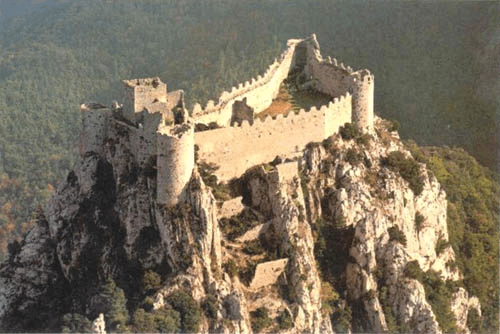
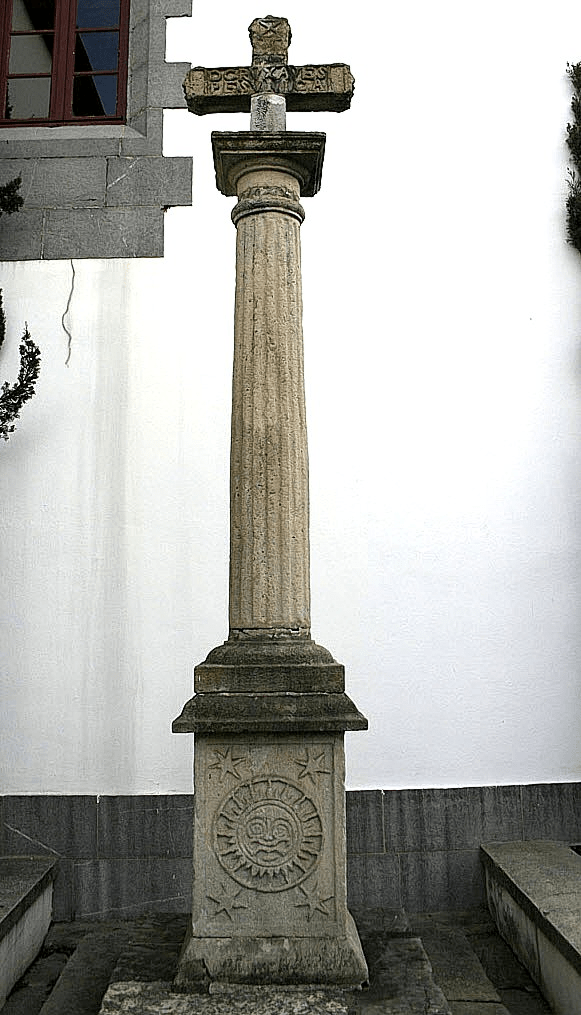
The remaining Cathars decided to adopt a rather crazy and radical strategy: keep your friends close, and your enemies closer.
The Cathars, like the Irish Druids and Roman magi before them, decided to infiltrate the Catholic Church, and become one with it. The Church already had magicians within it, and so the Cathars found a welcome home.
After all, the Church was meant to be an institution of magi. Even after petty men took control, many Magi remained within the Church, as monks and nuns, and sometimes as priests, bishops and even popes, and stayed mostly invisible.
Tirelessly, they worked to spread the true message of religion: liberty, equality, democracy, compassion, courage, honour, nobility and truth, as well as preserve grimoires and esoteric scriptures.
As a separate organization, the Cathars were a political threat and drew the attention of rulers. But within the Church, they were safe, and there they remained.
The French Church then, became a haven for magicians.
Second is Prague.
In Prague, there had been an attempt to establish an ‘Alchemical Kingdom’, under King Rudolf II. This was where Dr John Dee and Edward Kelley had written all their Enochian material. This was when many texts on Kabbalah were written, and the Golem was created.
Naturally, and perhaps predictably, this drew the ire of petty rulers. A combined army of Catholics and Protestants descended upon Prague, and destroyed the ‘alchemical kingdom’
Churches and synagogues were burned, books were destroyed, wealth was looted.
Many magicians and witches died. Many fled. They fled Westwards, establishing themselves in places like Bohemia and Bavaria, but eventually many ended up in France. Or alternatively, many of their books and manuscripts ended up in France, and a huge tradition of grimoires and magick began here. And after the printing press was invented, more and more people began to read such books, and get influenced by these ideas. The word ‘grimoire’ after all, in French, and for good reason.
After the decline of Islamic society, the psersecution of magicians was in full force, and lots of texts ended up in France, where they began to be translated, which also added further context to the knowledge coming from the West.
Third, Africa.
People already know that a considerable number of enslaved Africans ended up in Europe.
While West Africans mainly ended up in English colonies (America), many North Africans ended up as slaves or servants (and in some cases, even normal citizens) in France, due to its large colonial Empire.
See, the slaves were basically from smaller African tribes that had been defeated and enslaved by larger, more warlike tribes, enslaved and then sold to the Europeans.
Every society needs magicians, even slave society. These were the shamans of these tribes, who continued their shamanic duties for their people even after defeat. So, African witchcraft ended up in France, and it’s larger Empire, along with witches.
A great example of this is the Voudon tradition in Haiti.
Here, French occultism merged with African witchcraft, and there was a huge interest and exposure of French people to this stuff. Naturally, being in a society with slavery also tends to make people despise the practice. This also had some effect on the people, and played a role in the uptick of libertarian and humanistic ideals.
The last is from the Middle East.
See the Fatimids did the thing you’re not meant to do: they misused their magical knowledge and power. Their dynasty declined, and the last Fatimid Caliph went mad. Before he wandered off to the desert to die, he buried his alchemical materials and texts under the Temple of Solomon. Or at least, this is how the story goes. Another version says that the material under the Temple was from Solomon himself, or from other magi. It is possible that as the Fatimids declined, certain magi smuggled out the sacred texts and buried them under Solomon’s Temple.
Now come the Templars. See, there was a group of French knights who, during the crusades, ended up in the Byzantine Empire. Here, their leader came into contact with an esoteric group, which had a mixture of Kabbalistic, Gnostic and Sufi traditions.
They were called the Brotherhood of the East, who claimed to be the keepers of the occult knowledge of the Islamic and Byzantine world.
Perhaps the Knights were initiated into this brotherhood. Perhaps the Knights themselves were some remnant of an esoteric cult. Maybe they were Cathars who had survived and gone underground. Regardless, the Knights learned of the alchemical and gnostic material hidden under the Temple of Solomon.
This group of Knights would grow to become the esoteric order called the Knights Templar. They lived in the Crusader states of Jerusalem, and their job was to protect Christian pilgrims. Sometimes, they also protected the Jews, because no one else would. They were also an occult order, complete with grades and systems of initiation.
Their headquarters was the Temple of Solomon, and they dug under the temple for the apparent treasures hidden there.
They found it. Supposedly, it was a collection of relics, alchemical substances and manuscripts. It is also said there was Atlantean technology, but I cannot confirm or deny this. It apparently helped them to strengthen their spiritual power and also became the foundation of their rituals and initiations.
When Saladin took Jerusalem and expelled the Christians out of the Middle East, the Templars packed up the materials they had found and returned to France.
As an aside, Saladin would later meet another occult group called the Hashashin, a minor remnant of the ancient Persian Magi.
Originally, he intended to destroy them as heretics. But his soldiers ran off in terror when they went to the Mountain fortress of the Hashashin, and met their Grandmaster, who displayed supernatural abilities. Later, Saladin would wake up to find some freshly baked cakes next to his bedside. A message from the Hashashin. Basically “if we want, we can kill you easily”. So Saladin decided to turn around and get the hell out of there.
The Hashashin would later misuse their power to influence politics, and be destroyed by the Mongols. An eastern branch of the Hashashin would survive in India, and be called the Roshiniya (meaning ‘Illuminated Ones’)
So anyway, Templars return to Europe, and used their esoteric knowledge to build great Churches, and establish basically their own country. An alchemical Kingdom. Even now, you can visit Templar churches and see all the occult symbolism there. And who do you think helped them build these Churches?
Yep, the stone masons.
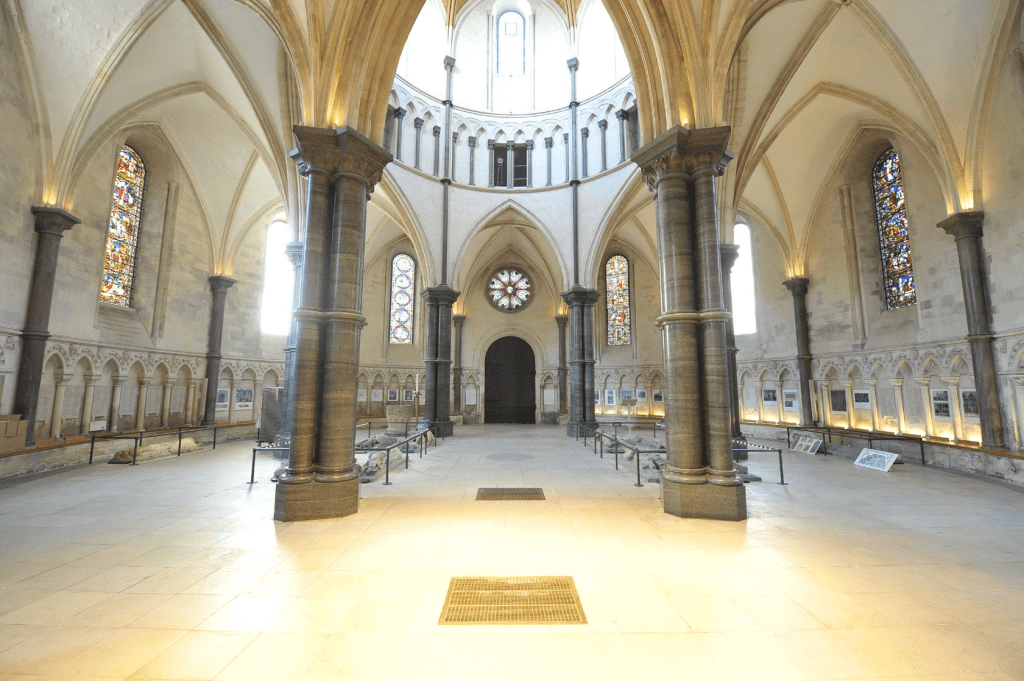
It has been said that the Templars were the world’s first multinational company. They created many of our modern systems of banking. They were exactly what magicians have always wanted: a self sustaining society, completely self regulated, and beyond the power of rulers, transcending national, religious and cultural lines.
You will see how this is simply a natural evolution of what monks used to be.
Monks have always lived in self sustaining, self governing communes, managing their own finances, and earning their wealth by selling beer, medicine and books. The monks and hermits of the world were the original entrepreneurs. For some reason, people imagine that monks were poor. But monasteries were often a storehouses of wealth.
The Templars basically developed the modern system of banking. They created the concept of ‘cheques’ and ‘accounts’. Basically, if you were a pilgrim going to the holy land, you would visit a Templar monastery and deposit your wealth. In exchange, you’d be given a slip. You could use this to ‘withdraw’ an equivalent amount of wealth at another monastery. All you had to do was pay an interest. This allowed pilgrims to travel much more safely, without having to carry money or valuables. It must have been a monumental innovation for its time. The Templars grew wealthy, partly due to their banking, partly due to the patronage of those whom they protected, and partly due to the knowledge of alchemy. They even loaned out money to Kings and nobles. They were a ‘franchise’
Libertarianism, in its true sense, began with monastic orders.
The Templars, being monastic, simply took this philosophy to its natural conclusion. Their ‘monastery’ was simply a large, transnational one, with many smaller units within it.
Naturally, this drew the ire of petty rulers. Namely, Philip IV, King of France, and the Catholic Church. See, King Phillip had become indebted to the Templar order, and did not want to pay it back.
They did what they do best. They killed them all.
When the Grandmaster of the Templars, Jacques De Molay was going to be burned at stake, he put a curse on the Pope and King who were watching. He put a curse not just on them, but said that God would punish their descendants, unto the 11th generation.
One year later, the King of France was dead, and shortly after, the Pope would follow. Karma.
Generations later, the French Revolution happened, and the descendants of Phillip would all perish in the fires of revolution. The Templar curse was fulfilled.
But see, there’s a story. It is said that not all Templars died. They were warned, and while the leadership stayed back to face the persecution, a vast majority of members packed up their stuff, including their esoteric knowledge, and boarded ships that sailed away at night, disappearing over the Atlantic, never to be seen again.
By this time, the Norse had become Christian, and both Templars and Masons had a foothold in Norse society, having integrated many Norse shamans and magicians into their ranks.
One example of this is the brotherhood called the Jomsvikings. They were, in truth, an order of pagan knights. They were elite warriors. Though they were mercenaries, they had a strict code of conduct and high standards for initiates. It is possible that they were connected, or became connected, to the Knights Templar at some point. The Jomsvikings were known to be particularly religious and pious, by Norse standards, which is a sign of mystical activities.
The Templars had heard rumours of a land far to the West, which had been discovered and spoken off by various Norsemen that had sailed across the Atlantic. After all, by this time the Norse had already discovered and begun to settle the land that would be called America, with many Norse fleeing to this ‘new world’ to escape war, persecution and slavery.
The Templars decided to follow suit.
So off they went. Sailed across the Atlantic. Met the Native Americans, and consulted with their Shamans. Knowledge was exchanged.
This is how John Dee came to possess an Aztec obsidian mirror, which was used in the Enochian workings. He was almost certainly aware of and associated with these esoteric groups.
This is also why you find Native American sacred sites which seem to have gnostic or hermetic symbolism.
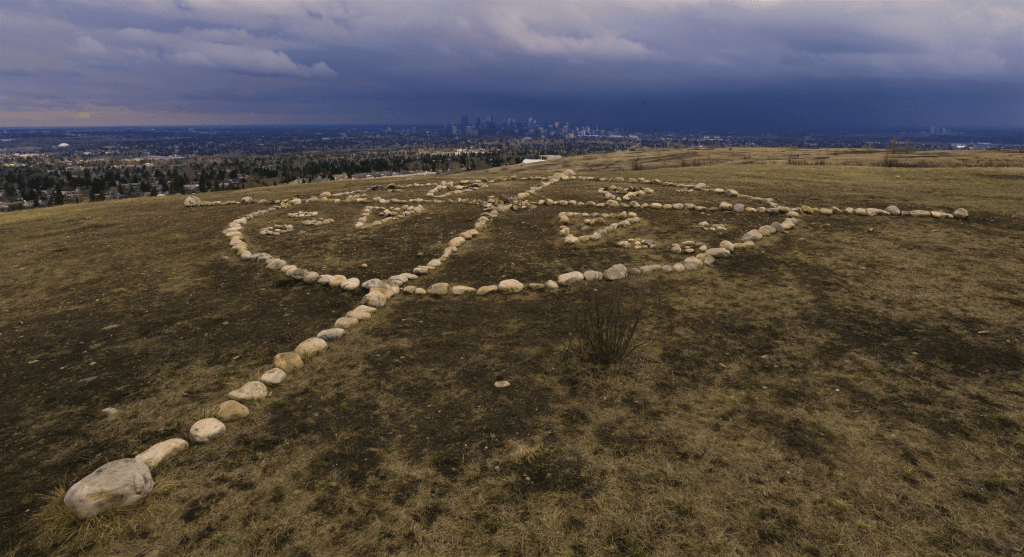
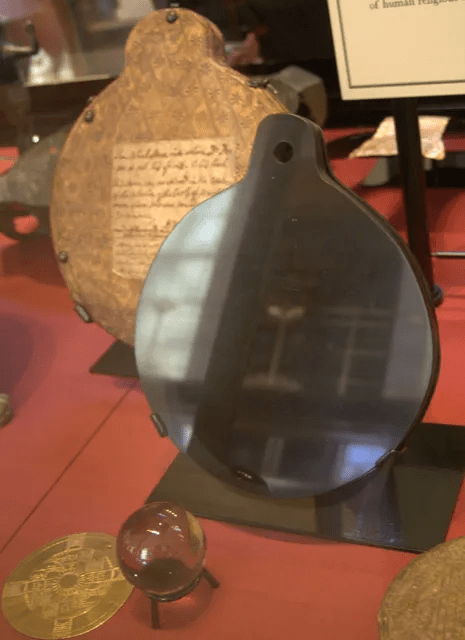
So, a network of contact and communication developed. Over time, more European influence and more settlers would enter the Americas.
In France, the remaining Templars retreated out of sight. By now Masons and Templars were one and the same, and the Templars found safer refuge in other places.
So they weren’t in France, but likely in close proximity. In fact, there are various monastic orders that claim direct descent from the Templar Order, most notable the Knights of Malta. The story goes that the King of France gave the Templar wealth to the Knights Hospitaller, but it also likely that the Knights Templar just became the Knights Hospitallier and other groups, and simply diversified their wealth, and themselves.
They were true bankers.
And thus, their influence spread among a new kind of social class: the professionals. People like bankers, doctors, lawyers, book keepers. A new kind of class that emerged to meet the needs of the colonial Empire, and many of them had esoteric roots, or had become influenced by occult ideas. They had disposable income, free time and education.
The mystics within the Church, the witches among the slaves, the initiates within the intellectual class, and the magicians who had fled from Prague. All gathered in Paris.
See, energy is powerful. Merely being close to magical energy, brings about a change in people. And in France, all four magical energies: witchcraft, mysticism, magick and monasticism were present.
The printing press heightened the tensions. People could now read.
When Turkish coffee came into France, coffeehouses emerged. The rulers were skeptical, and felt that these places of congregation would create dissent, and cause ‘dangerous’ ideas to spread. They thought this ‘heretical’ substance would corrupt the minds of people.
But Pope Clement VIII, perhaps a magician, loved coffee so much, he ‘baptized’ the drink as Christian.
So if you like democracy and freedom, thank our lord and savior: coffee.
So coffeehouses became a staple, people began to congregate and discuss ideas and read books, and discuss political matters in their society. French society, at this time, was getting worse. Slavery, corruption, poverty, war and violence.
By this time, Templars and Masons had found their way to America, and wanted to try their hand, once again, at an alchemical Kingdom, far away from persecution. All the founding fathers of the US were Freemasons.
Violence and Death
In France, magicians from Europe, Asia, and the Middle East were congregating.
George Washington, a Mason and magician himself, asked France for money to help beat the English. At this time, the King of France was good ol’ Loius XVI. He agreed to help Washington with money and weapons.
But after the English were defeated, the United States emerged as a new young country, with no money and no way to pay off the debt.
France was now broke.
And the nobility of France had become decadent. They could hardly be called ‘noble’.
And as people’s lives got worse and worse, the nobility were seen reveling in pleasures and enjoying themselves. At least, that was the perspective.
So a little thing called the French revolution happened. Feudalism ended. And a whole bunch of stuff started to happen. The Age of Aquarius began. Liberty, Equality, Democracy and Truth.
Remember our four groups of magicians? They’d been pretty active in this time.
The Priestly magicians had managed to build a Church dedicated to the Age of Aquarius. Maybe you’ve heard of it. It’s this little thing called Notre Dame.
On the Notre Dame is the rose of 49 petals, each representing one of the 49 Enochian Keys. The Notre Dame is unique, because it is a Cathar style Church, rather than a catholic one. The two structures on either side are the two pillars from Kabbalah: Jachin and Boas, Mercy and Severity. The spire in the middle (which recently burned down when the Kundalini of the structure itself began to rise up, signaling the beginning of a new age) represents the Middle pillar.

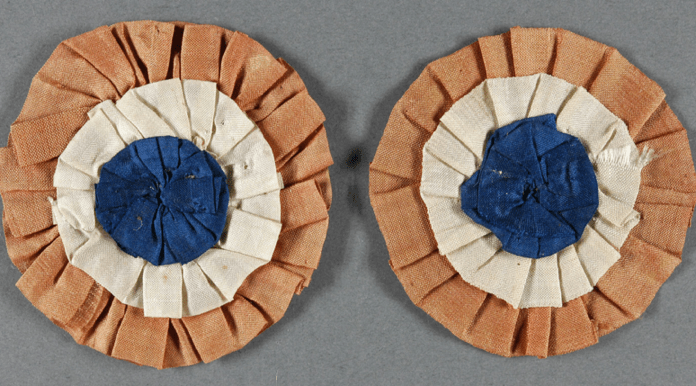
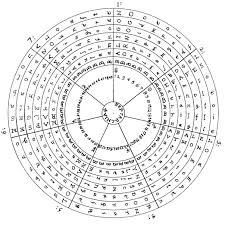
Perhaps the alchemists who live in the shining city under the Notre Dame lit the fire, to signal to humanity that the change was starting. And it happened on Easter too, if I remember correctly.
Also, during the restoration of the Notre Dame, two sarcophagi were found under the floor boards. At least one of these belongs to a Knights Templar, based on our channelings.
Some of you will know that, in the Notre Dame, the altar or dais is in the center, and not at the back. This is a gnostic concept, likely known to the Masons who built it. This is because Gnostic Churches were not used for sermons, but for magical and alchemical operations. A magic temple is always focused on the centre, and not the edge.
The flower of 49 petals would later become a symbol of the French revolution. Even the three alchemical colours: red, white and black would appear. Though instead of black, we get indigo, because they likely used indigo dye rather than black dye, which was more expensive.
So the French Revolution happens. And now the four groups of magicians make themselves known.
First come the priests and the nobles. They are the priestly magicians who want to guide humanity. They want to do this through a new established power structure and hierarchy, centered on Reason and Tradition.
We can call them: Traditionalists.
Next come the witches. Having lived under the yoke of oppression, they want to create a radically free and individualistic society. These were gnostic groups like the Paris Commune.
Let’s call them: Communists, or Anarchists.
Next came the Templar monks, who at this time had saturated the professional and upper middle classes. Having tasted freedom and being thoroughly done with old power structures, they want a new republic where they can have self contained, self governing communities. True liberty.
Let’s call them: Libertarians, or capitalists.
Finally, the last group. The Masonic and Rosicrucian groups who want to build a new humanistic world order based on humanism, justice and fairness. They even published a bunch of manifestos, often called the Rosicrucian manifesto, which later inspired the Utopian socialists.
Let’s call them: Humanists, or Socialists
France was now a Republic, and had National Assembly of sorts. These were esteemed members of society, who met to discuss the future of the country. Among these group, all four types of magicians were present.
See the building had two ‘wings’ or sides. In the Estates General, supporters of the Revolution sat on the ‘right hand wing’ while the Revolutionaries sat on the Left.
After the Revolution, when the Legislative Assembly was formed, the ‘innovators’ say on the left, the moderates in the middle, and the ‘traditionalists’ on the right.
The professionals and intellectuals behind the French revolution, many especially being doctors, lawyers, bankers and economists, aligned more towards the traditionalists, while the academics, philosophers and public thinkers who advocated for equality and civil rights, sat next to the commune members.
This isn’t even my opinion. This is just political history, though the presence of magi is often ignored.
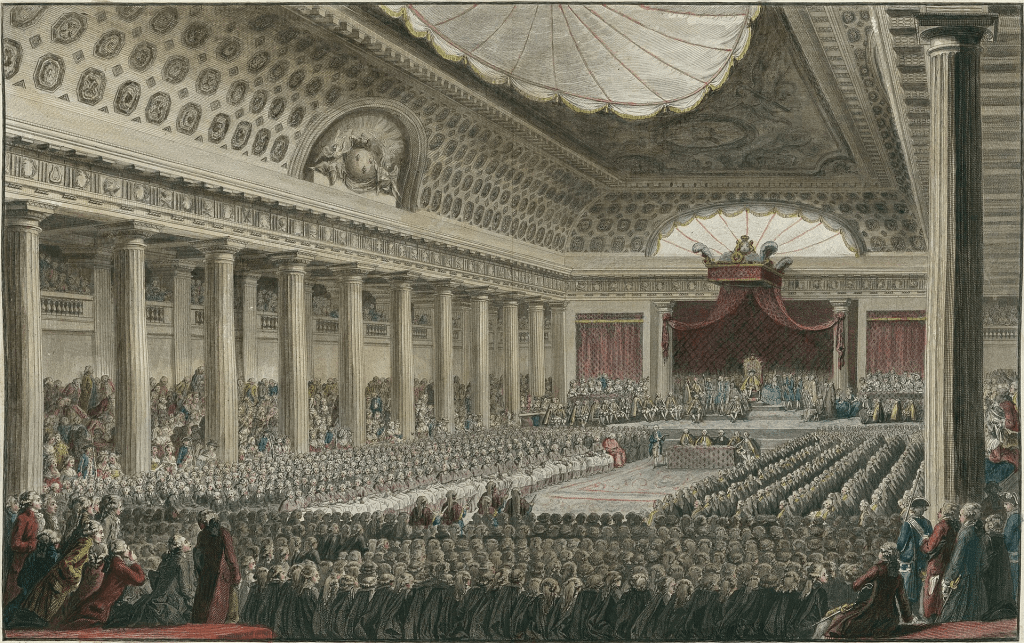
Hence, the “lift wing” and the “right wing”, along with the centre left and centre right, and even the far left and far right.
All political factions started from esoteric and occult groups.
Traditionalism, or Nationalism is really just philosophy of priests, or mystics.
Anarchism, or Progressivism, is really just the philosophy of witches, or shamans.
Capitalism, or Libertarianism, is really just the philosophy of monks, or hermits.
Socialism, or Liberalism, is really just the philosophy of the magi, or alchemists.
See, the priests venerate the Father archetype, while the Magicians venerate the Mother archetype. The Hermits venerate the Son archetype, while the Witches venerate the Daughter archetype.
The Father and Mother are oriented towards the world, while the Son and Daughter are oriented towards the self. Communal and solitary magick.
The Father and Son are oriented towards light and culture, while the Mother and Daughter are oriented towards darkness and nature. So, light and dark magick.
Fire, Water, Air and Earth.
The Four Ideologies
It is true. The four modern political ideologies emerged from magick. I mentioned this in the last post, so I will not go into too many details.
First the magicians laid out these philosophies, then various philosophers were inspired by them, and wrote about them. After all, many noteworthy thinkers were secretly (or openly) members of occult societies, or had had spiritual experiences. Then, these ideas passed to political thinkers and writers, and finally to political leaders themselves.
The Rosicrucian manifestos, in Europe, are the origin of ‘socialism’, which spread mainly in the East. After all, French was a language spoken by the Russian aristocracy, and allowed some of these ideas to enter Russian thought. The origins of this Rosicrucian, or ‘utopian’ socialism goes back to Plato, and his description of a utopia ruled by philosopher kings.
Many Rosicrucians and Masons, even today, will speak about Plato’s utopia. In some ways, it can even be traced back to Egypt, and it’s God king.
The hammer and sickle is none other than the Crook and Flail symbol of the Egyptian pharaoh.
The serpent of the Libertarian flag is simply the Kundalini, or coiled serpent.
The ‘anarchist’ symbol is simply IAO, the ancient alchemical symbol found in the modern world.
Traditionalism has no symbol, but most countries usually use their foremost religious symbol, which always has an occult origin, as their symbol of culture and tradition.
But the Socialist philosophy of equality, turned into mere vengeance. First they kill the Tsar, then they kill the nobles, then they kill the professionals and academics, then the scientists and artists, then the rich peasants, then the dissenters, the the revolutionaries, the journalists, and then everyone else.
Because an energy is like a seed, and cannot produce any other fruit. It can only increase and grow, not change from one thing to another.
It’s a cannibalistic ideology that continually erodes the ethics, morals, values and traditions of society. In the end, people collectively starve.
From magi like Eliphas Levi to spiritual thinkers like Voltaire and Rousseau (who personally knew the Count of St Germain), to philosophers like Hegels and political writers like Marx, and finally to the revolution of Lenin and Trotsky.
You will see how, with each level, the wisdom of the philosophy becomes diluted. The Rosicrucian manifestos spoke of a Platonic ideal, but Trotsky waged a war that killed 30 million people.
The Yogic ashrams, in India, are the origin of modern ‘anarchism’. The yogis, and tantrics, had always lived outside the bounds of Hindu society, rid of the shackles of caste and clan. They lived in self governing communes, and their society consisted of several such communes, living and working together and being free of religious and feudal obligation. As the new age began to dawn, the yogis broke their self imposed lifestyle of silence and secrecy, and began to teach openly, in temples and villages.
From these yogis came various reformist movements within Hindu society, and also the birth of Indian nationalism. From yogis like Ramakrishna and Lahiri Mahasya, to spiritual thinkers like Vivekananda and Tolstoy, to philosophers Tagore and and Beasant, and finally to political leaders like Gandhi.
As books on yoga went to the West via Britain and America, they were printed and spread around the world, and so were the ideas of non violence, non cooperation, and self liberation.
In fact, Gandhi once said that his philosophy, called ‘Satyagraha’, was essentially ‘ordered anarchism’. He learned of this from Tolstoy, who had read it from Hindu literature.
In fact, both Gandhi and Annie Beasant, both important within Indian nationalism, were members of the occult order called the Theosophists. Vivekananda, the foremost reformer within Hinduism, was a direct student of Ramakrishna, the great ascended yogi. In fact, most Indian nationalists were members of various spiritual orders. Bengal, which had several such orders, became a hotbed for both spirituality, and revolutionary ideology. The ideas of peaceful revolution and resistance came from the ashrams.
One of the foremost Yogis on India, Parmahamsa Yogananda, even dedicated an entire chapter in Autobiography of a Yogi, towards the ideals of non violent resistance, nationalism and Gandhi’s teachings.
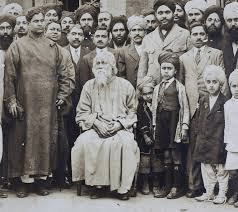
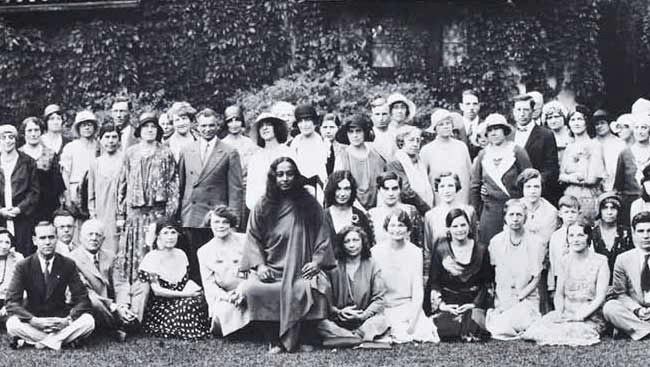
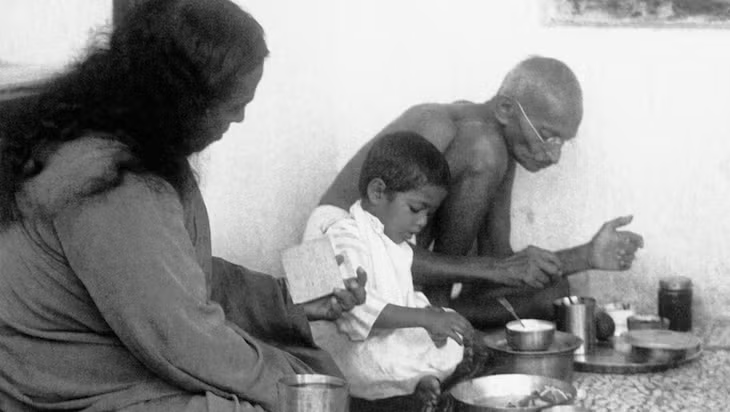
But see, again the dilution happened. Gandhi was a proud and idealistic man. Politics is not religion, and must be practical rather than idealistic.
Anarchism really means anarchy. Lawlessness. in these anarchist nations, which had become free from colonial rule,empty idealism and lawlessness came to rule. Everything is okay, everything is tolerated. There are no standards, no codes of behavior.
The yogis had their spiritual practice. Ordinary people are not yogis. Without guidance and direction, society simply degenerates into survival mode, and people become singularly cruel and close minded, clinging to what they have, because they don’t know if they’ll ever have more.
Saintly speeches and high minded ideals do not put food on the table.
Within the Islamic world, various martial Occult orders emerged. The Islamic mystics had survived the Mongol devastation and later Islamic persecution by retreating into the fringes of society, or going underground, and their members were called Fidayee, living the ideal of fearless self sacrifice that was taught by Muhammad and by others before and after him.
Here too, their occult teachings began to seep out. How exactly, it is difficult to say.
But they began to take students, especially from Europe. A philosophy called Salafism emerged in the Islamic world, and was meant to give people an ideal to aspire to: the ideal of a noble, dignified warrior, like the Knights of old, and to live like the Fidayee, who were the descendants of the ancient magi.
To be ‘fida’ means to surrender oneself whole heartedly unto a higher ideal, and to live and die for it. The word has romantic and spiritual connotations. The Sufis can be said to live such lives, being entranced and ecstatic.
But in the hands of politicians and religious law makers, this gave rise to the philosophy of Wahabism, which we all know as ‘radical Islam’, which ironically turned against the sufis and other occult groups.
These ideas entered Europe, in the hands of mystics like Rene Guenon, who spoke of a philosophy called ‘Perennialism’, or the idea of living according to nature, preserving your cultural traditions and holding up the ideal of the ‘higher man’, which philosophers like Nietzsche had spoken of before. Another was Ananda Kumaraswami, a Sri Lankan mystic who spread both occult and traditionalist ideas in the West.
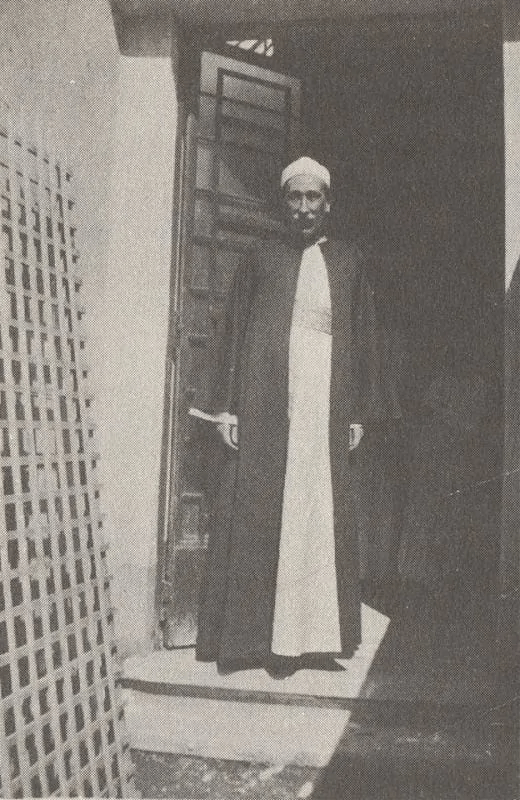
From there is passed to philosophers like Evola, who was an alchemist and very impressed by these ideas. He believed that people should strive to be greater and greater, and every person should aspire to the ideals of their race, which is determined by the region where the ‘people’ had emerged.
See, you can already see how the confusion is setting in. The spiritual ideal is being confused with the cultural idea, and culture being confused with ‘race’.
He, and others, thought modernity was a ‘corrupting’ force and democracy was mere ‘mob rule’. They felt people needed to be guided and needed a martial code to aspire to, similar to the Chivalry of knights or bushido or Samurai. They were called ‘Traditionalists’.
The Italian term for this traditionalism was called ‘fascism’, and harkened back to the ancient Roman ideal of chivalry and brotherhood, and martial discipline, and even the Indo European, or ‘aryan’ martial brotherhoods.
These concepts were then used in Germany, Middle East and Japan to create this fabled ‘spiritual aristocracy’ or ‘fidayeen’, who were meant to represent the ‘higher men’. The idea was that society should select the strongest, wisest and most intelligent individuals, who should then govern. It was a pointless attempt to restore the rule of magicians and the old royal lineages.
By the time it became manifest, it had degenerated to ‘might makes right’. And eventually, and ironically, actual mob rule.
Because: there is strength in numbers. Instead of a modern Knights Templar, we got unstable and sadistic men, such as those who joined the SS or became Jihadists, referring to themselves as knights and fidayee. Because an ideology like this tends to draw mentally unstable people, and weak men who want to oppress others.
Fascism became the ideology of the weak and the hateful, which explains why almost all fascist philosophers eventually became bitterly jaded. All fascist societies have only accomplished violence and regression, and will continue to do so. The ideal does not match those who follow it. The ones who it is meant for, are not attracted to it.
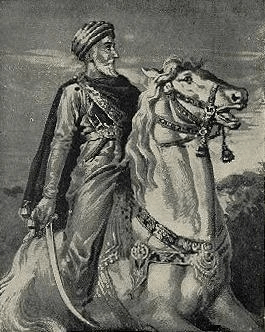
Because the truly wise, intelligent and strong tend to be humble, and will not obediently follow orders. True magi do not kill the innocent.
Finally, something ought to be said of the Masons, and the Templars, and the shamans of America.
See, the Templars, who became the Freemasons, were rather proud of their ideas of freedom, free commerce and liberty. They found kinship among the various tribes of the Americas.
While we all know of the monarchist societies of the Aztec, we forget that many of the native American tribes were republics.
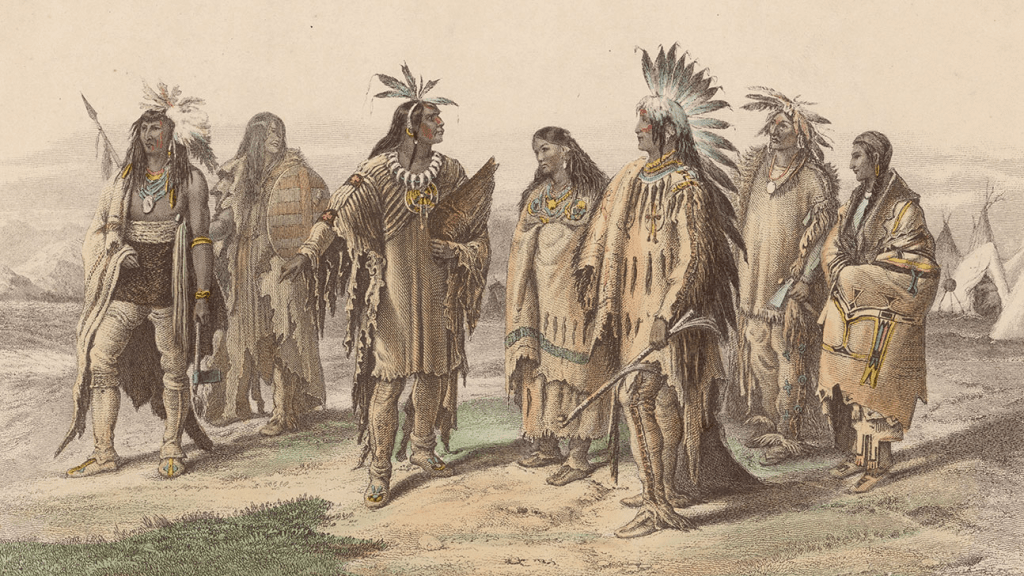
And they thrived on commerce and trade, and their initial contact with both Vikings and Templars, and even later Europeans, was built on trade. There were no governing bodies, no central church, no organised religion, no taxes. In South America, even more freedom was found. Psychadelic drugs were frequently used, and people enjoyed a great deal of personal freedom.
Tribes were organized as republics. These societies were ‘primitive’ because they lacked feudalism, and so did not have as much material development to show as Eurasian societies. As mentioned before, many Europeans, from the Norse contact onwards, came to settle in America specifically for this reason.
Not to go all ‘noble’ savage here. I’m not saying the Native Americans were some idealized societies. They frequently went to war, and had rigid social and gender roles. The Aztecs engaged frequently in blood sacrifice, and colonialism was pretty common.
But we take the good with the bad.
This legacy of liberty, free commerce and the republic stuck well into later centuries, and the Masons were quite fond of it.
The Freemasons and Templars eventually founded the United States, and attempted to establish what was once destroyed in Europe: an alchemical society built on free commerce, liberty and the concept of republic. No tax, no church, no king.
These ideas also spread tremendously in the Caribbean, where occult ideas had mixed with the superstitions, beliefs and practices of pirates and privateers, who obviously understood the value of gold and of pure freedom.
Many South American revolutions were also based on these ideals, and thus the Americas became the bastion of ‘liberty’ or ‘libertarianism’. South America, even prior to European contact, had been a particularly free society. This is seen the shamanic religion, dressing sense, and use of psychedelic substances.
Slavery still existed though. Like the Aztecs and others before them, this libertarian societies tended to repeatedly run into the problem of colonial slavery.
It showed a problem with the American ideals of liberty, and this was a problem that existed even in the earlier tribal nations.
Liberty means everyone is free to pursue their goals. But when you cut away regulations and rules of all kinds, you require trust and cooperation.
If one nation, or group of people, starting disrespecting the social contract, they can quickly become very powerful, controlling more and more people and resources, until they along control everything. Furthermore, not everyone is a magician, and is not wise enough to know how to live. This is, after all, why Kings and Priests existed.
Hence, libertarianism is reduced to the pursuit just money and hedonism, forgetting the values and responsibilities of living in a republic. Look at South America, with it’s drug cartels and gangs. Look at North America, and it’s corporations which are akin to medieval aristocratic houses.
The Pros and Cons
Fascism, Communism, Capitalism and Anarchism.
Aleister Crowley described all ‘isms’ and ideologies as ‘abortive births of the Child’, the ‘child’ here referring to the Age of Aquarius.
The fiery, watery, airy and earthly energies of Aquarius, being drawn down by magicians, but failing to capture the whole essence.
The fiery energy became traditionalism, the watery energy became socialism, the air energy became libertarianism, and the earthly energy became anarchism.
From 1930 to 1950, traditionalism, nationalism and fascism dominated. It ended with world war 2.
Traditionalism created violence and death, and led to enormous oppression of those who were seen as ‘weak’ or the ‘other.
However, it liberated countless nations from colonial and feudal rule. It empowered people, reminded them of their strength, and showed the power of united action. It showed that every single human being has enormous strength within them, and the power to fight.
It created robust and stable political structures, and strong armies. It was the power of the oppressor, but it was also the strength of the oppressed. Nationalism is the power that lionises even the weakest and apathetic men, and helps them rise over others. It is the energy of fire and victory.
From 1950 to 1980, Socialism and communism dominated. It ended with the Chernobyl disaster.
On one hand, Socialism caused starvation and death on a scale never seen in human history. In entire nations, it permanently destroyed traditional ways of life. Entire populations were permanently destroyed, entire cultures were erased. It decimated ancestral knowledge of agriculture, medicine, religion, art and science. It took power from the able, and handed it to a mob, pushed along by pseudo-intellectuals.
However, after the death was done, the Soviet Union was a singular powerhouse of science and academics. It was the final death blow to the old feudal systems, to nobility and monarchy. It showed people the power of a egalitarian, just society which was singularly focused on a goal.
I went through the last socialist education system, which existed in New Delhi (and there alone) till about 2010. Shortly after I finished school, India became capitalist, and the education system changed, becoming more western.
It was focused on rigor, and true learning.
Not for profit, not to get a job, but to truly do the job with dignity and perfection. We were educated properly, and made to understand math, science, history and politics.
Even today, I own a few objects that were produced in the Soviet Union. They are excellent and long lasting, because they were made to last. Even now, Soviet film is seen as true art. It was art for the sake of art, not for mass consumption by ‘consumers’. People forget that a huge amount of our computer science and space research is built on Soviet foundations.
Some things cannot be done for profit. If you think my blog is valuable, be aware that it is the result of Socialist education. These days, such education isn’t even available anymore.
My parents and grandparents had even more socialistic education, and they educated me. My school could only do 50%.
However, after the disaster of Chernobyl, and the wars in the Middle East, Capitalism, corporatism and liberal democracy (libertarianism) emerged as the dominant political ideology, from the 1980s to 20010. It ended with the Great Recession.
After the collapse of the Soviet Union, people celebrated neo-liberal capitalism as the ideology that won over fascism and communism, and the ideology that would lead humanity into the new millennium.
Then the oil wars began. Then the wars over minerals, and then over fresh water, fought by private militias.
And then came the stock market, turning the economy into a zero sum game based on debt, in which 99% of people could not participate. And then came private equity, slowly destroying quality, creativity, innovation, human willpower, art, science, culture, faith, family and the planet in general.
Wars, fought by private militaries, funded by corporate backed dictators, have destroyed several countries and made most of the world almost uninhabitable. Life itself seems like a misery to a huge number of people, who find some sort of refuge in party politics.
Capitalism has debased us. It will make feudal peasants of us again. The most mediocre, worthless and incompetent people have been single handedly given the keys to human society.
The Church, King and Nobility have simply been replaced by Academia, Government and Corporation, all bought and owned. Remember, most academic research is based on private and government grants. What is researched and what is published, is based on where money comes from. Political parties are funded too, and who wins is dependent on who pays. Corporations, even with good intentions, exist to increase shareholder value. They goal is profit, and everything else comes later. The owners of the company are beholden to those who own shares.
Money isn’t even real anymore, and most of it is numbers on a screen. Debt, which will need to be paid with resources that don’t actually exist.
However, libertarian philosophy, mass production, the internet and the emergence of a decentralised free market has also liberated people all over the world.
Industrial mass production of food and clothes have lifted billions of people out of poverty, given them free access to knowledge, given them a voice, clothed them, fed them and empowered them.
It is easy for people in rich developed countries to complain that they’re depressed and that modern food isn’t healthy. They haven’t seen what it was like before. I have.
Ironically, libertarian capitalism is both the disease and the cure. The same things that empower the government, corporation and academia, also enables people to fight against them. It destroys all boundaries, and brings down gatekeepers. In a world of numbers, social class, culture and creed are only constructs, and easier to topple.
No matter how you look at it, the quality of life across the world has increased tremendously in the last 20 years. Corporate power was actually the result of a limited free market, which only existed in some developed cities while most of the world was still borderline feudal. Corporate power was built on exploiting these ‘backward’ societies and their recources.
A true, international, decentralised free market will be the end of corporations. You’re already seeing it. People forget that corporate power is only being challenged and brought down in capitalist and libertarian countries, not in communist ones.
And so what comes next?
With the decline of corporate power following the Recession, the last decade has been dominated by Progressivism, anarchism and individualism. You know, the punk rock and internet age. The age of social media, subcultures, entrepreneurs and activism.
The last of the four elements of Aquarius. This will continue to grow for another 15 years. Then, after that, the four streams of energy shall start combining and a new Aquarian world will be born.
What are my thoughts and predictions for the anarchist period? Well, there’s some bad and the good.
First the bad.
I think people are going to get much dumber. I can already see it happening. The quality of education and professionalism will decline, and I think you’re going to see a lot more unskilled people. Capitalism will be blamed, which is partly true, but the true culprit will be declining standards in schools, colleges and the workplace, and the loss of uniformity and structure. Corporations, especially before 2008, were focused on quality and true innovation. Now they’re just cults of mediocrity.
By becoming informal and ‘innovative’, they actually lost what made them strong in the first place.
Additionally, I think the sense community and social structures are going to start unravelling. People will become more focused on themselves, and have access to a large amount of cheap pleasure, entertainment and food. And society will steadily degenerate, with people becoming more and more lonely and depressed. I think dating will start to die out as people forget how to engage in romance.
Additionally, the lack of skill and discipline is going to cause many essential sectors of society to suffer, such as aviation, healthcare, security and agriculture. Because as more and more people eat garbage and bury their heads in their phones, they’ll be less and less able to do their work properly. Even with automation and AI, it’s not good if large numbers of people can no longer focus, think or do anything properly. Hell, people these days can’t even read this blog, because it’s not fed to them in 30 second shorts with a joke every few seconds. People can’t even read and write anymore.
You’ll see mistakes and oversights leading to the declining quality of life. Things like food poisoning, security oversight, road and air accidents, mechanical failure etc. And some industries will disappear completely. For example, luxury brands and hospitality, because the skill and quality required for this simply won’t be there.
I can already see five star restaurants shutting down because the chefs there aren’t formally trained, and don’t actually know how to make good food.
However, there is a positive side.
I think society will improve in ways that can’t even be imagined, which will be more subtle and holistic.
I think corporations will fall and be replaced by a truly decentralized, international free market. I think more and more people will push back, even violently, against the loss of rights and bad working conditions.
People will become more and more entitled and aware of their rights, and demand a better deal from society. The internet will enable the emergence of such an individualistic consciousness, freeing people from social, national and cultural propaganda.
Additionally, automation will make the cost of living will become very, very cheap, and many of people’s material needs will be met.
With most of their material needs met, people will turn inwards, and become more focused on self fulfillment. Some will focus on self growth and evolution, while others will just stagnate.
I think a international, multicultural society, centered of essentially city states, will become the new political unit, and the age of the nation state will end.
We will see the the end of the ‘national government’, the ‘large corporation’ and the ‘prestigious institution’.
People will live for themselves, and align with people with similar values. The internet and technical schools will give people a far better education and skillsets that traditional colleges. However, with most people becoming unskilled, an increasing gap will grow between skilled and unskilled people.
Skilled people will emerge like a new technocracy. Skills, no longer taught in schools, shall be passed on from parents to children, and a new kind of ‘nobility’ will emerge, in the form of the professional class, who will keep to themselves.
A new caste system, with professionals, local politicians and businessmen will emerge. It will appear unfair, but no one will be able to see any other way around it, and people will willingly accept it, for a while.
Value systems, interests and professions will become the new divisions of human society, replacing race, nation and religion. And people will eventually lose interest in things that don’t work.
A culture of immediate gratification will have negative effects, but it will also have positive effects. It will make people reject anything that is tedious, pretentious or senseless. No body will willingly give up their life for others. Many sexual and cultural taboos will disappear entirely, but individual strength and willpower will decline.
People will want their desires to manifest immediately. No one will want to wait for decades for something that may or may not happen. And as traditional religions, governments and corporations fail them, more and more people will seek out magick.
With more and more software become free, and technology become cheap and easily accessible, a new kind of economy will emerge, and a new kind of culture. It really will be ‘power to the people’, for good or for bad. The internet will become a collective consciousness of society, and it will spit in the face of pretentious exclusivity. People will say “it is for all, or it is for none”.
This is my prediction for the next 30 years: decentralization, democratizations and disintegration.

Art, being liberated, will truly thrive. Art and culture have always thrived when completely unshackled, and artists and mystics will have a truly great time. When the system collapses, those who are outside the system become more important.
This will continue till 2030, when society will have disintegrated to the point of no longer existing, and regional and local conflicts will start growing. At this time, people to start rejecting this hyper individualistic and fragmented world, because it will be seen as a corrosive and hedonistic force. People will begin to yearn for community and order once more.
And then, the four ideological currents will start merging. Traditionalism, socialism, capitalism and anarchism will become the basis for a new world.
Traditionalism for the government, religion and the military.
Socialism for science, education and academia
Libertarianism for the economy and community.
Anarchism for art, culture and spirituality.
A traditional society and government, with a free market and strong, local communities and city states, with totally decentralised artistic and cultural life, combined with ethical, centralized and cooperative science, education and academics.
The Aeon of Horus, the Age of Aquarius, the new Yuga.
Magicians have always shaped the world, and continue to do so, with our ideas, our work and our presence. Now it is a time to be more open, and reveal the lost or secret knowledge.
Once again, I think you for sticking with this enormous and rather elaborate post, containing so many narrative threads. It was fueled by manic energy and a sense of urgency. Hopefully it will find those who need it.
 Between The Pillars
This is truly an incredible piece of writing! I put aside all my work and read it in one sitting, but I need to read it a few more times to fully digest it. It’s an amazingly layered and information-packed article—kudos to your effort.
Among all the ideas, the only point I can’t fully agree with is your belief that democratic processes will further develop in the future and that large corporations will dissolve. From what we see now, it seems we are heading in the opposite direction, toward a neo-feudal order. I hope your words turn out to be true, and we are met with a more democratic future where the elements that plague the system are eradicated.
In this article, including the messages you channeled from related entities, spiritual guides, etc., has incredibly enriched the depth of the writing. I hope you continue to incorporate this into your future writings as well. 🙂
Lastly, and most importantly, thank you for sharing such a substantial article without waiting a year after your last one. 🙂 I hope you write more and more frequently. 🙂
LikeLike
Thank you very much! I’m glad it was useful for you. Regarding what you said about corporate power, I should mention that it probably depends on where you live. After all, fascist and communist countries still exist. It’s all about vibration. I don’t mean that corporations will dissolve, but that as people’s vibration shifts away from the corporate mindset, more and more people will move into a lifestyle outside of corporate power, thereby causing their power to decline. That’s magick, it’s all about energy. Rather than fighting corporations (which draws you towards them), I recommend transforming your energy. That will bring about their eventual end much faster than feeding them with energy through anger and hate. And it’s not like all companies are bad. After all, WordPress is a big company that has given me a great and uncensored platform all this while. The bad ones aren’t worth naming or speaking about.
LikeLike
And yes, i’m trying to write more often. The precision may go down, but I hope to put out much more content 😀
LikeLike